


Key Points
- The XPeng L03 is priced from $41,900 before on-road costs, with first Australian deliveries expected from November 2026.
- The RWD Long Range variant offers 520km of WLTP range and 236kW peak DC charging, more than the Atto 3 Evo Premium, Geely EX5 or Leapmotor B10.
- The L03 is XPeng's first model with native Google Maps, and the top-spec Ultra is due to get NGP (VLA 2.0) self-driving software via a 2027 update.
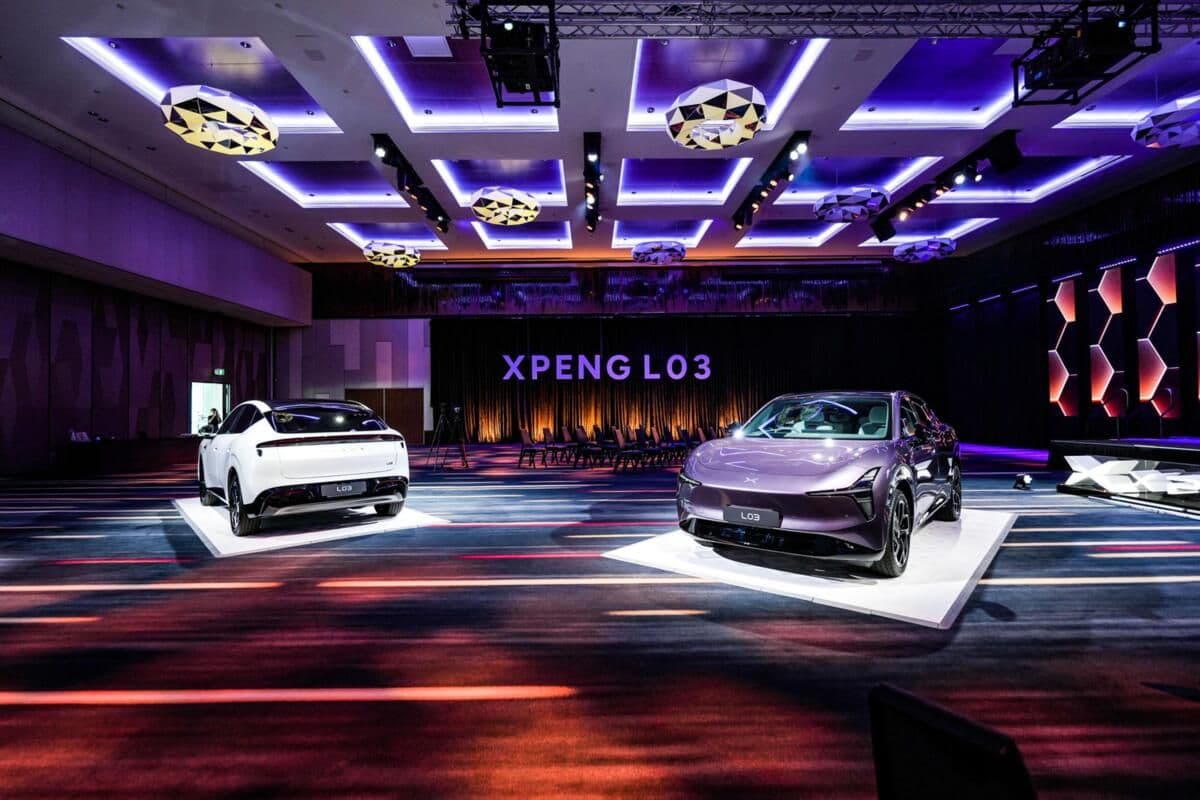
XPeng revealed the L03 to Australian media ahead of first customer deliveries, expected from November 2026. The mid-size SUV coupe is priced from $41,900 before on-road costs across four variants, including XPeng's first range-extended electric vehicle for Australia.
I spent time with the L03 at its local reveal. On paper it is one of the strongest cars in the mid-priced small to medium SUV segment for range and charging, and in person the design and cabin back that up. The bigger questions sit outside the car: whether XPeng's self-driving software gets approved here, and whether buyers trust the brand after the TrueEV episode.

XPeng L03 battery, range and charging
Battery, range and charging are where the L03 stands out against the competition. The entry RWD Standard Range uses a 58.3kWh LFP battery for 445km of WLTP range and charges at up to 193kW DC. The RWD Long Range steps up to a 71.2kWh LFP pack, 520km of WLTP range and 236kW peak DC charging. XPeng quotes a 10 to 80 per cent DC charge in around 20 minutes across the range.
For the money, that makes the L03 a top performer in the mid-priced small and medium SUV segment. The RWD Long Range at $46,900 goes further and charges faster than any direct rival at a similar price.
XPeng L03 battery, range and charging
Spec | RWD Standard Range | RWD Long Range | AWD Performance Ultra | Power-X Long Range |
Battery | 58.3kWh (LFP) | 71.2kWh (LFP) | 71.2kWh (LFP) | 37.2kWh (LFP) |
WLTP range | 445km | 520km | 440km | 215km electric / 1,017km combined |
Max DC charging | 193kW | 236kW | 236kW | 123kW |
Max AC charging | 11kW | 11kW | 11kW | 6.6kW |
10-80% DC charging | Approx. 20 min | Approx. 20 min | Approx. 20 min | Approx. 20 min |
The Power-X Long Range is an interesting option in the line-up. It pairs a smaller 37.2kWh battery with a 1.5-litre petrol engine that acts only as a generator, giving 215km of electric range and more than 1,000km combined. It suits buyers who regularly drive long regional distances and are not ready to rely on public charging. Its key competition in this space comprise the BYD Sealion 6, Leapmotor C10 REEV and Geely Starray (EM-i).

Where the L03 sits in the segment
The L03 lands in the mid-priced small to medium SUV segment. Its closest rivals are the BYD Atto 3 Evo, Geely EX5 and Leapmotor B10, all priced from around $40,000 to $47,000 before on-road costs. Here is how the L03 RWD Long Range compares with the closest variant of each.
XPeng L03 vs rivals
Spec | XPeng L03 RWD Long Range | BYD Atto 3 Evo Premium | Geely EX5 Extended Range Inspire | Leapmotor B10 Design Long Range |
Price (before on-road costs) | $46,900 | $46,990 | $45,990 | $40,888 |
Battery | 71.2kWh (LFP) | 74.88kWh (LFP) | 68.4kWh (LFP) | 67.1kWh (LFP) |
WLTP range | 520km | 510km | 450km | 434km |
Peak DC charging | 236kW | 220kW | 100kW | 168kW |
Drivetrain | RWD | RWD | FWD | RWD |
Length | 4,650mm | 4,455mm | 4,615mm | 4,515mm |
Wheelbase | 2,850mm | 2,720mm | 2,750mm | 2,735mm |
The L03 has the longest range, fastest peak charging and the longest wheelbase of the group. It is also the largest car here, which puts it close to the next size class up.
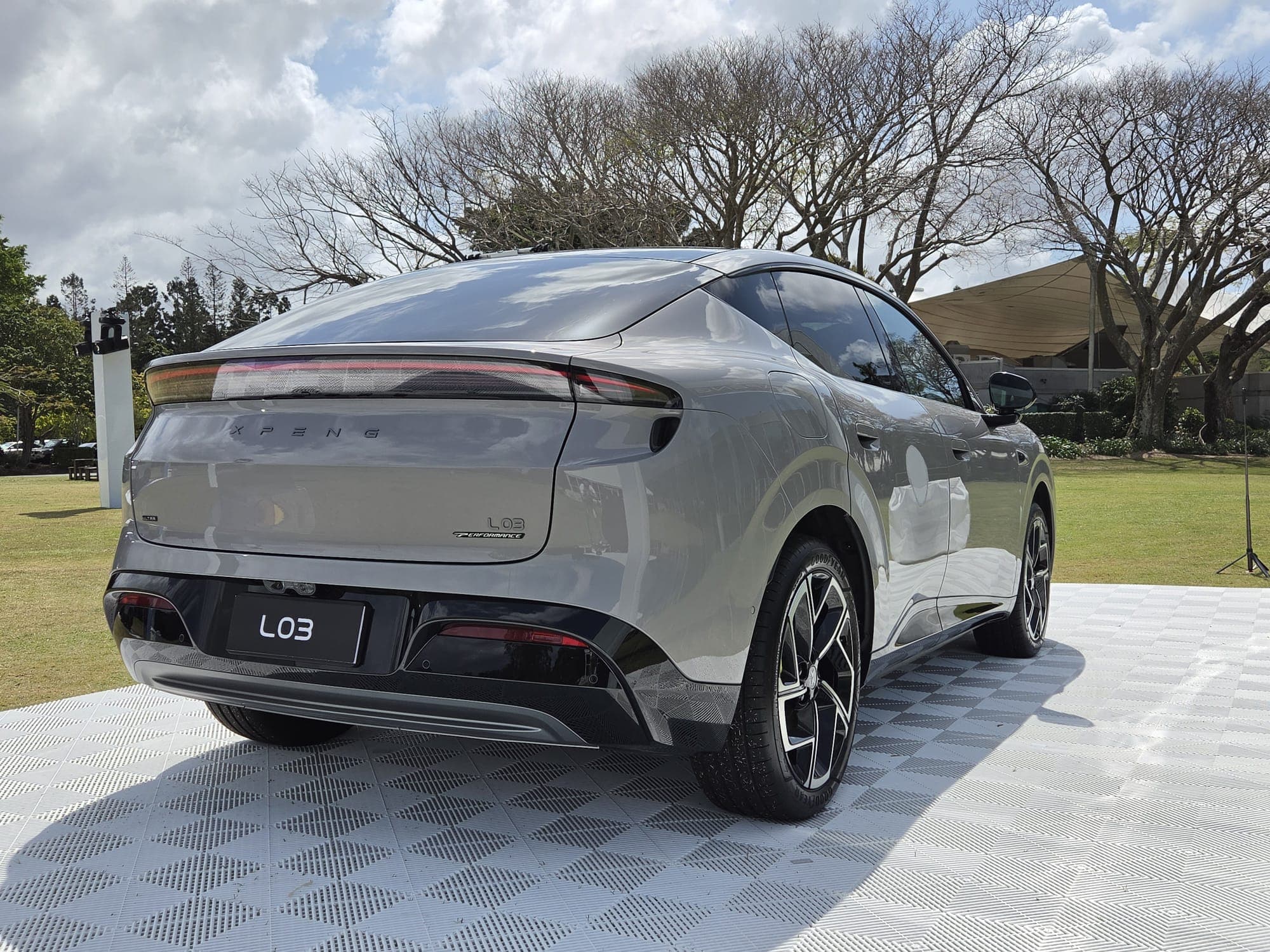
That is why I expect some buyers shopping the Tesla Model Y, BYD Sealion 7, Zeekr 7X and XPeng's own G6 to cross-shop the L03. While it is a bit smaller than the aforementioned category leaders, the L03 comes close across a number across most key specs and for considerably less money.
XPeng L03 design
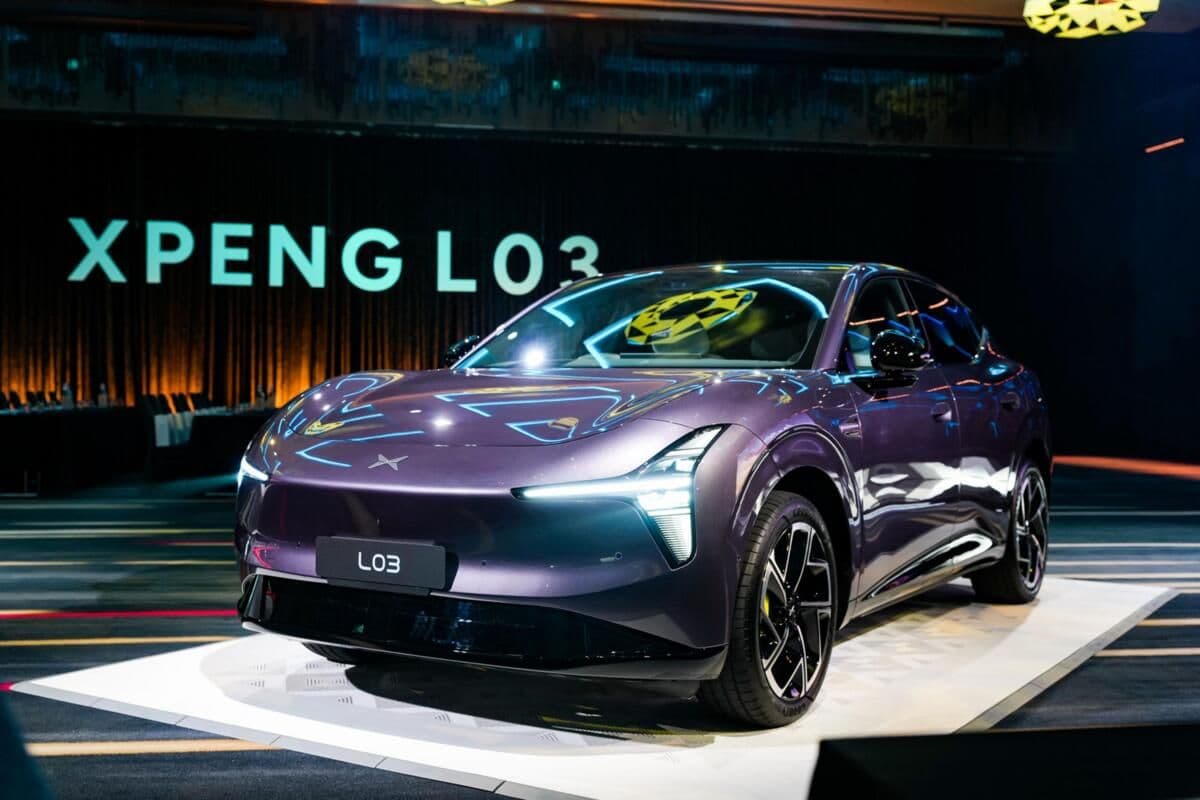
Design and packaging are the L03's other strong suit. The car was developed under JuanMa Lopez, XPeng's design lead and a former Ferrari exterior design chief. It has a wide stance, a fastback roofline, frameless doors and frameless mirrors, and a claimed drag coefficient of 0.228Cd.
Crossovers in this segment tend to look alike, but the L03 does not. It looks distinctive and attractive from every angle I viewed it, and the low, coupe-like profile stands apart from the taller, boxier shapes of the Atto 3 Evo and EX5.
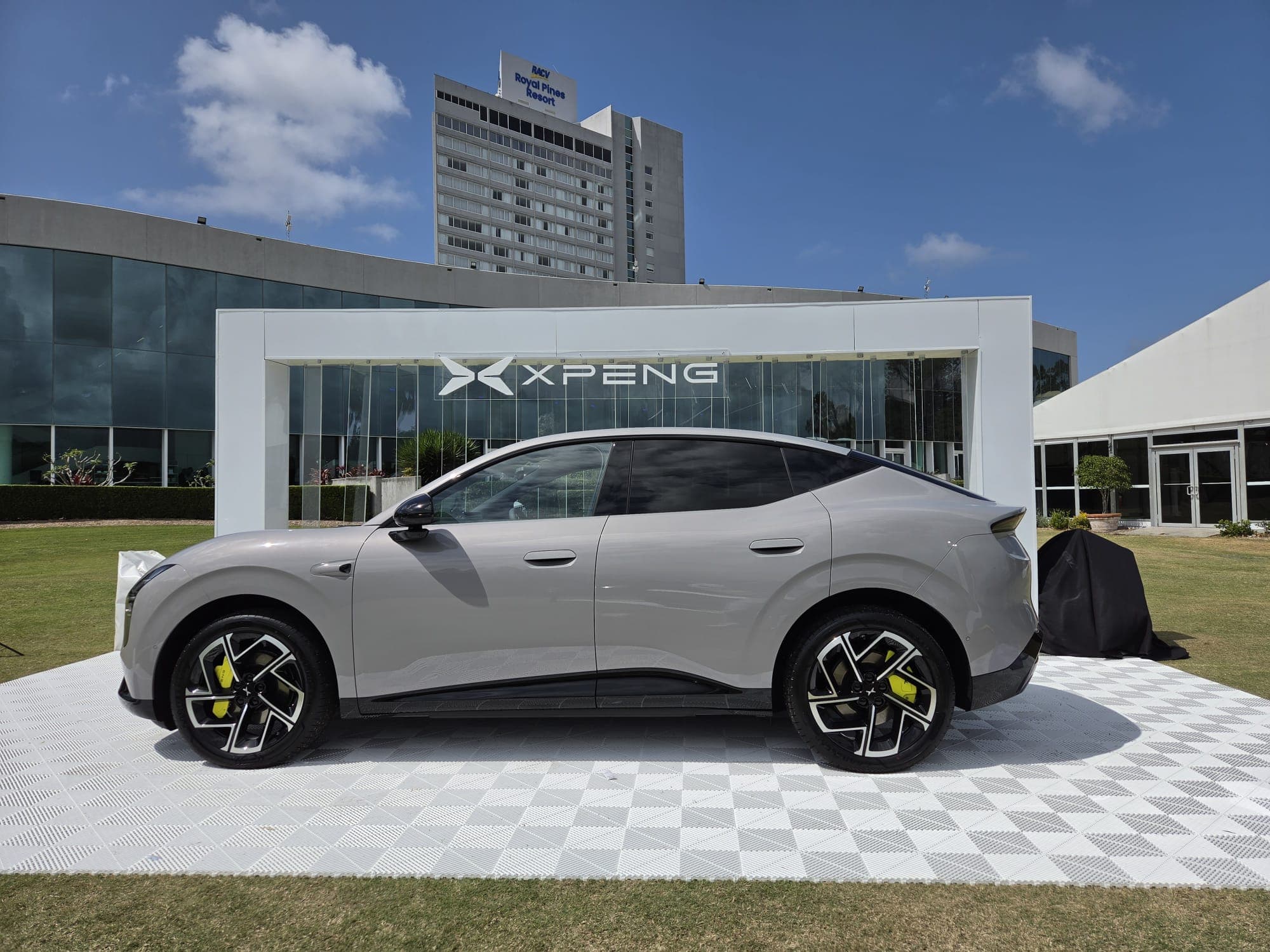
The L03 measures 4,650mm long, 1,920mm wide and 1,600mm tall. Despite the sloping roof, packaging is well resolved: there is a 539-litre boot including underfloor storage, a 10-litre pull-out drawer under the boot floor, and a front boot on the battery-electric variants (102 litres on RWD models, 69 litres on the AWD Ultra).
XPeng L03 interior
The interior is simple but well thought out. The cabin feels open and airy, there is plenty of space front and rear, and the materials are of high quality. Standard equipment includes a 15.6-inch central touchscreen, a 26.8-inch head-up display, heated and ventilated front seats and electrically adjustable rear seats.
I found it hard to pick a difference in cabin quality between the L03 and the XPeng G6, which starts at $51,800 before on-road costs. Customers eyeing a G6 will have an interesting conundrum when visiting Xpeng showrooms given the L03 is priced around $10,000 less.
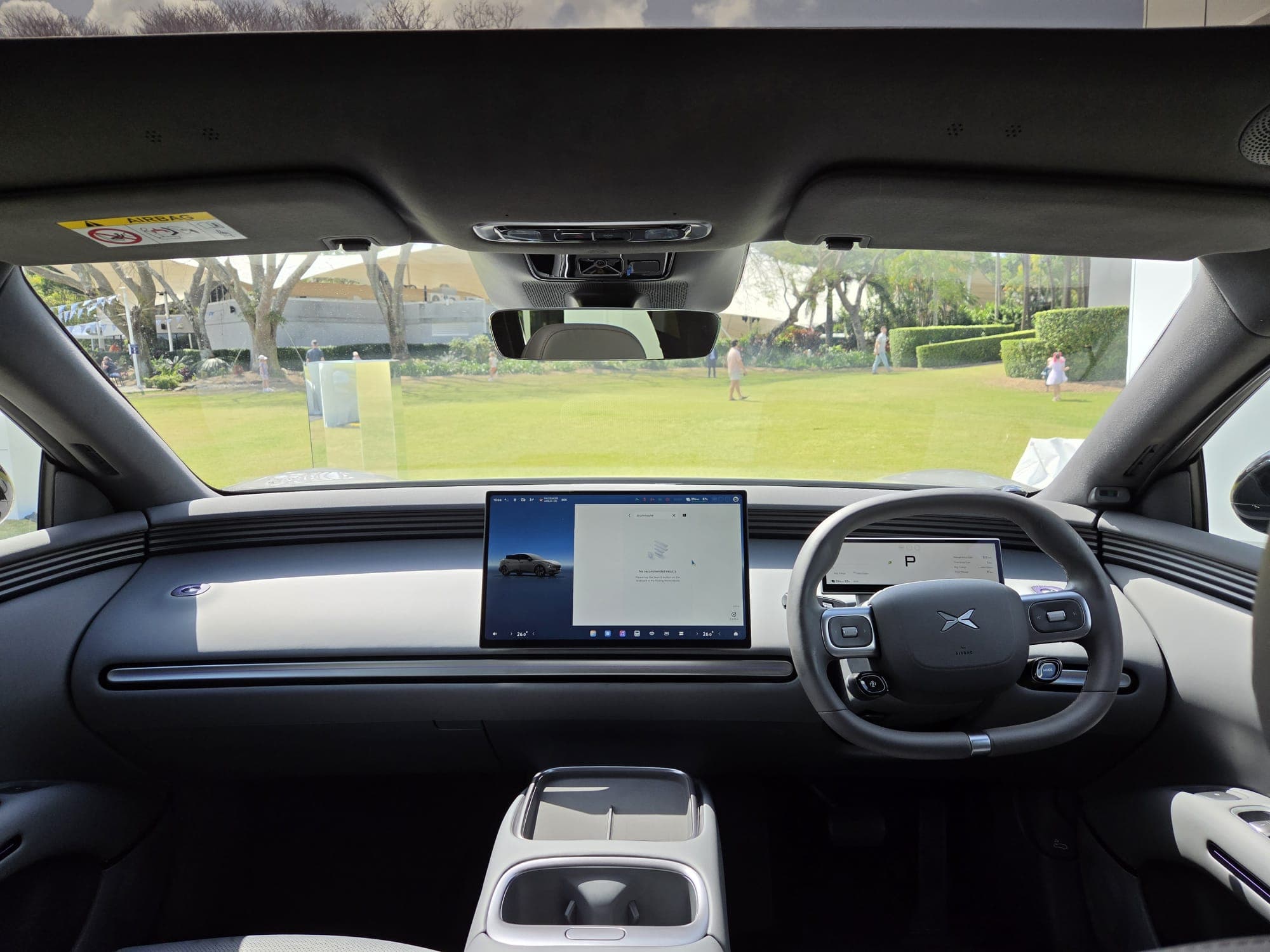
Xpeng have also thoughtfully included a set of eight flush magnetic mounting points and five 1/4-inch threaded mounts around the cabin. They let owners attach phone holders, tablets, hooks and other accessories without drilling or adhesive mounts. XPeng says the L03 has 37 storage spaces in total.

XPeng L03 technology
The L03 is the poster child for XPeng's identity as a technology company. It brings several XPeng firsts for the Asia-Pacific region.
Native Google Maps
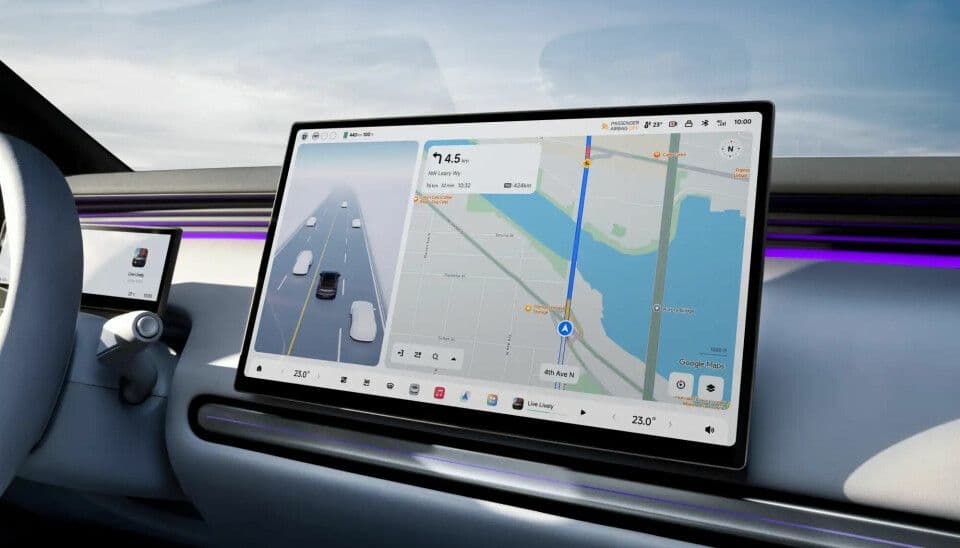
The L03 is XPeng's first model to run the Google Maps Auto SDK. XPeng says this makes it the first automaker from the Asia-Pacific region to ship a car with native Google Maps integration. Navigation runs in XPeng's own XOS 6.0 interface using Google Maps data, so drivers do not need to mirror a phone. Apple CarPlay and Android Auto remain standard.
A path to self-driving in Australia
The L03 is also XPeng's entry point into self-driving in Australia. The AWD Performance Ultra is fitted with three XPeng Turing AI chips, which XPeng says deliver up to 2,250 TOPS of computing power. It will run NGP (VLA 2.0), the latest version of XPeng's XNGP driving software, via an over-the-air update planned for 2027, subject to local regulatory approval.
Tesla's FSD (Supervised) has had no direct competitor in Australia since it arrived. If NGP can come close to or match its performance in China once it reaches Australian roads, Tesla FSD will finally have a genuine alternative here. XNGP is however still pending regulatory approval and once landed will need time to adapt to local conditions.
The other three variants run XPeng's XPILOT Assist suite, which covers adaptive cruise control, lane centring, autonomous emergency braking, blind spot detection and automated parking. XPeng has told Zecar they could later receive VLA Lite, a lighter version of the software. There is also a possibility a Long Range ‘Ultra’ variant could appear for customers that want the self-driving option along with the longer range offered (520km).

XPeng L03 variants and pricing
XPeng has put a lot of thought into who each variant is for. Rather than a simple good, better, best ladder, each targets a different buyer.
XPeng L03 Australian pricing
Variant | Powertrain | Price (before on-road costs) | Best suited to |
RWD Standard Range | Electric, RWD | $41,900 | Value-focused buyers and novated lease customers using the EV FBT exemption |
Power-X Long Range | Range-extended electric, RWD | $41,900 | Regional drivers who want electric driving day to day without range anxiety |
RWD Long Range | Electric, RWD | $46,900 | Buyers who drive long distances and want the most range and fastest charging |
AWD Performance Ultra | Electric, AWD | $53,900 | Early adopters who want NGP self-driving, 317kW performance and top-spec features |
The three battery-electric variants qualify for Australia's EV FBT exemption, which makes the Standard Range and Long Range strong novated lease options. The Power-X does not qualify, because it uses a petrol range extender.
The AWD Performance Ultra adds a 0-100km/h time of 4.5 seconds, 20-inch wheels, an 18-speaker sound system, front seat massage and the Turing AI chip hardware needed for NGP.
Given the majority of electric cars sold are through novated leases, it is likely the Power-X variant won’t be as popular as the others as it will be relatively more expensive due to absence of tax benefits.
Get a novated lease quote
Customer support and after-sales service
The question hanging over the L03 (and XPeng generally) is whether Australian buyers will be comfortable buying an XPeng so soon after the TrueEV episode. TrueEV was XPeng's original local distributor. The arrangement ended in 2026, followed by a receivership over some G6 stock and a Federal Court dispute, which left some owners unsure who would honour their warranty and promotions.
XPeng has since taken direct control through XPENG ANZ, its factory-backed local subsidiary, and has prioritised Australia as a key strategic market. It appears to be making the necessary investment across the board, including customer service and support. XPENG ANZ has appointed dealers in five states with plans for up to 50 outlets, opened a genuine parts warehouse in Melbourne with FedEx for next-day delivery to major cities, and expanded its Australian customer care team.
It has also committed to honour warranty, cashback and servicing promises made to TrueEV customers, and extended its 7-year warranty to those buyers. XPeng has not yet confirmed the L03's warranty terms, so check them with a dealer before ordering.

XPeng L03 first impressions
From my time with the car, the L03 is one of the most complete products in its segment. It leads its closest rivals on range and charging, has a distinctive design, a spacious and well-finished cabin, and technology no rival at this price offers.
What the L03 cannot answer on its own is brand trust or lack thereof for some. XPeng's strong investment in its local operation however is a good sign of things to come.
If Xpeng can regain the lost trust of some customers, the L03 will almost certainly be a best-seller.
We will have a full review once we have driven it on Australian roads.

About the author

Danny is a consultant and entrepreneur working at the cutting edge of the electric vehicle and energy transition. He is passionate about educating and helping consumers make better decisions through data.
