


Key Points
- Hyundai will launch its first extended-range electric vehicle (EREV), the Santa Fe, in North America in the first half of 2027, and Hyundai Australia has confirmed it is coming here with no date.
- Genesis will add an EREV SUV in early 2027 targeting more than 640 miles (about 1,030 km) of total range, but Genesis Australia has only confirmed hybrids for 2027.
- Australian PHEV sales hit 11,745 in October 2026, up 149 per cent on a year earlier, and plug-in hybrids now make up 36 per cent of plug-in sales.
Hyundai Motor Group will add extended-range electric vehicles (EREVs) to the Hyundai and Genesis line-ups, with the first two models launching in the first half of 2027. Hyundai announced the plans at its 2026 CEO Investor Day on 26 August 2026, according to Car and Driver.
Hyundai Australia has said the Santa Fe EREV is coming to local showrooms, but has not given a date. The news lands as plug-in hybrid sales in Australia reach record levels.
What Hyundai and Genesis announced
The first model is the 2027 Hyundai Santa Fe EREV. Hyundai said it will launch in North America in the first half of 2027 with a combined range of more than 600 miles (about 965 km) and acceleration similar to a fully electric car.
The Santa Fe EREV is expected to use two electric motors, driving the front and rear axles for all-wheel drive. Hyundai has not published battery size, electric-only range or pricing.
Genesis will follow with an EREV SUV in early 2027. Hyundai said it targets more than 640 miles (about 1,030 km) of total range. The company has not named the model. Car and Driver says the compact Genesis GV70 will likely be first, but it is unclear whether it shares the Santa Fe's powertrain. The GV70 is currently built in Ulsan, South Korea.
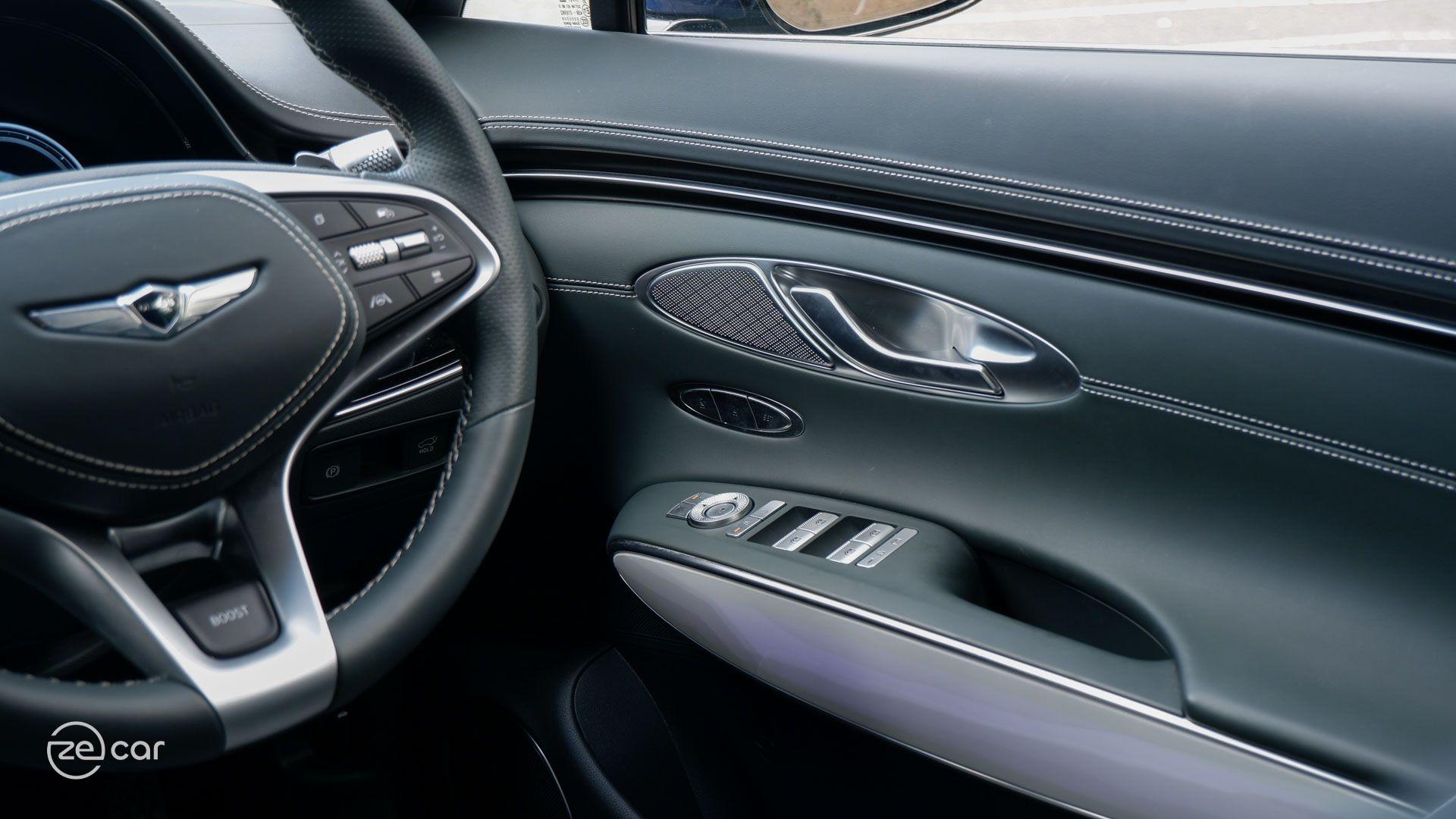
Genesis announced the GV80 Hybrid the week before, but that model gets a more traditional hybrid system, not an EREV.
Hyundai also plans to launch or refresh more than 100 vehicles by 2030. A range-extender version of the Hyundai Ioniq V is planned for China in 2027. In North America, Hyundai plans more than 10 new hybrid models by 2030, with hybrids expected to make up half of its sales there, and a new body-on-frame platform for pickups and SUVs previewed by the Boulder concept. Those plans are for North America, and Hyundai has not said what applies to Australia.
How an EREV differs from a conventional plug-in hybrid
An EREV is a type of plug-in hybrid. It uses a smaller battery than a full EV, and a petrol engine acts as a generator that recharges the battery when needed. Hyundai says this delivers an EV-like driving experience without range anxiety.
In an EREV, electric motors drive the wheels. A conventional PHEV can also send engine power to the wheels. Both types can be charged from a power point.
Which models matter for Australia
Hyundai Santa Fe EREV. Hyundai Australia has confirmed it is coming. Right-hand drive supply is likely to come from Korea or Europe. Australia currently gets the Santa Fe with petrol and hybrid powertrains, but not the plug-in hybrid sold in other markets.
Genesis EREV. Genesis Australia has confirmed hybrid models for 2027. They previously advised they could not say which Australian models get hybrids or when. It has not confirmed an EREV for Australia. Genesis has said EREVs are planned for North America and China.
Hyundai dual-cab ute. Hyundai Australia executives have said a plug-in hybrid or EREV is the preferred setup for the ute, which is due to be revealed in 2027. Carsales reported a General Motors partnership is one option under evaluation. The target is the Ford Ranger and BYD Shark 6, and rival PHEV utes already include the GWM Cannon Alpha, JAC Hunter and Ford Ranger PHEV.
Hyundai has not confirmed a local launch date for the ute, and the powertrain is not final.

Hyundai's current EV line-up in Australia
Hyundai sells a full battery-electric range here, but no plug-in hybrid at the moment. The line-up is the Inster, Elexio, Kona Electric, Ioniq 5, Ioniq 5 N, Ioniq 6, Ioniq 9 and Staria Load electric van. The Ioniq 6 N is listed as coming soon, and the Ioniq 3 is reported for the first half of 2027 with up to 496 km of range.
Hyundai EV prices and range in Australia
Model | Price from (before on-road costs) | WLTP range |
$39,000 | 300 km | |
Hyundai Ioniq 5 RWD | $72,000 | 507 km |
Hyundai Ioniq 6 RWD | $73,300 | 614 km |
$121,750 | 600 km |
Prices are from zecar's Hyundai page. The Zecar EV Database has the full variant list, including the Elexio, Kona Electric, Ioniq 5 N and Staria Load. Current Hyundai EV deals are listed separately.
Six of Hyundai's seven electric models start below the $91,387 luxury car tax threshold, which keeps them FBT exempt on a novated lease, according to Zecar's Hyundai page.
PHEV sales in Australia are growing faster than BEVs
Plug-in hybrids have gone from a niche to a large share of plug-in sales in under four years. Based on Zecar's monthly sales data:
- 2023: 11,245 PHEVs and 82,278 BEVs. PHEVs made up 12.0 per cent of plug-in sales.
- 2024: 22,812 PHEVs and 90,607 BEVs. Share rose to 20.1 per cent.
- 2025: 53,502 PHEVs and 103,355 BEVs. Share rose to 34.1 per cent.
- January to October 2026: 97,008 PHEVs and 163,890 BEVs. Share is 37.2 per cent.
PHEV sales for the first ten months of 2026 are already 81 per cent above the whole of 2025. Compared with January to October 2025, they are up 127 per cent. BEV sales are up 96 per cent over the same period.
Excluding June, October 2026 was the strongest month on record for both types. PHEVs sold 11,745, up 149 per cent on October 2025 (4,724). BEVs sold 20,677, up 181 per cent on 7,361. The PHEV record month was June 2026 at 16,068, alongside 32,570 BEVs, which coincides with the end of the financial year.
PHEVs briefly outsold BEVs in January 2026, with 5,161 against 3,832. That was a weak month for BEVs and has not repeated. Since February, PHEV share has stayed between 33 and 43 per cent.
EV Sales in Australia
BEVs still lead on volume. The gap in October was 8,932 vehicles. But PHEV growth has been steeper in percentage terms since early 2025, which matters for Hyundai. Its EREVs and a likely PHEV ute would enter a segment buyers are already moving into.

About the author

Danny is a consultant and entrepreneur working at the cutting edge of the electric vehicle and energy transition. He is passionate about educating and helping consumers make better decisions through data.
