


The BYD Shark 6, already Australia’s best-selling PHEV ute, has been beefed up with the addition of the Performance variant. With a larger 2.0-litre turbo hybrid system, 350kW, 700Nm and a 3,500kg braked towing limit, it arrives as BYD’s answer to every critic who said the original Premium was a lifestyle ute dressed up in work clothes.
We spent two days with the Shark 6 Performance at a media drive event in Victoria, covering highway, off-road, uphill terrain and towing a 3.5-tonne caravan. Here’s how it performed.
zecar verdict
The Shark 6 Performance is a master of all trades. It tows 3.5 tonnes confidently, delivers SUV-like comfort on the highway and backs up an 80km electric range claim that actually holds in the real world.
zecar rating
Good points
- Confident, planted towing at the full 3,500kg braked limit
- Excellent value versus Ford Ranger PHEV and GWM Cannon Alpha PHEV
- High-quality, SUV-like interior with strong tech and comfort
- Real-world EV range close to the claimed 80km WLTP figure
- Crawl Mode and Hill Descent simplify off-road driving for most users
Could be better
- 790kg payload is below the diesel ute segment average
- 40kW DC charging is modest for a 2026 PHEV
- Lacks low-range gearing and locking differentials for hardcore off-roading
Price and key features
The Shark 6 range comes in three variants:
- Dynamic Cab-Chassis: $55,900 before on-roads (trade and fleet-focused)
- Premium: $57,900 before on-roads (unchanged from launch)
- Performance: $62,900 before on-roads (tested here)
That $5,000 step from Premium to Performance comes with mechnical upgrades. The Performance swaps the 1.5-litre hybrid (321kW/650Nm) for a 2.0-litre turbocharged DM Super Hybrid with 350kW and 700Nm, and lifts braked towing from 2,500kg to 3,500kg.
This puts it on equal footing with the Ford Ranger PHEV and GWM Cannon Alpha PHEV on tow rating, while undercutting both on price and beating them on system outputs and 0–100km/h performance. It also now also on par with diesel utes such as the Ford Ranger and Mitsubishi Triton, which all have a tow capacity of 3,500kg.
The extra power also enables the Performance model to hit the 0-100km/hr sprint in 5.5 seconds (0.2 seconds faster than the Premium), making it the fastest ute on the road.
Key standard features (Performance):
- 2.0-litre turbo DM Super Hybrid AWD (DMO) – 350kW, 700Nm
- 3,500kg braked towing capacity
- 29.58kWh LFP Blade Battery, ~80km EV-only range (WLTP)
- Total claimed range of 640km
- 15.6-inch rotating infotainment screen with wireless Apple CarPlay/Android Auto
- 10.25-inch digital instrument cluster and head-up display
- Dynaudio 12-speaker audio system
- Heated and ventilated front seats, wireless phone charging
- 6.6kW Vehicle-to-Load (V2L) – one 230V outlet in cabin, three in tub
- Crawl Mode (standard on Performance; OTA to other variants later)
- Full ADAS suite with 360-degree camera
- Five-star ANCAP safety rating
- 18-inch alloys and spray-in bedliner
BYD Shark 6 variant pricing
Variant | Price (before on-roads) |
Shark 6 Dynamic Cab-Chassis | $55,900 |
Shark 6 Premium | $57,900 |
Shark 6 Performance | $62,900 |
BYD Shark 6 Performance vs PHEV ute rivals
Specification | BYD Shark 6 Performance | GWM Cannon Alpha PHEV | Ford Ranger PHEV |
System power | 350kW | 300kW | 210kW |
System torque | 700Nm | 750Nm | 430Nm |
Braked towing | 3,500kg | 3,500kg | 3,500kg |
Battery | 29.58kWh LFP | 37.1kWh | 11.8kWh |
0–100km/h | 5.5s | 6.8s | ~7.0s |
Price (before on-roads) | $62,900 | ~$69,990 | ~$71,990 |
The Shark 6 Performance clearly leans on value and performance: it is cheaper than both main rivals while offering more power and quicker acceleration, with an EV range that is competitive for the class.
👉 Get a novated lease quote and see what the BYD Shark 6 could cost you per week.
Exterior design and size
Our test vehicle, finished in white, suits the Shark 6's proportions well. The styling is confident but not overdone, with a wide stance, sharp LED lighting front and rear, flush door handles and standard 18-inch alloys with side steps.
Build quality is impressive and what you would expect from BYD. Every new BYD model we’ve reviewed has demonstrated subtle improvements and the Shark is no different. BYD's experience building EVs at scale shows here it is a really well put together vehicle.
BYD Shark 6 Performance dimensions
Specification | Measurement |
Length | 5,456mm |
Width | 1,960mm |
Height | 1,870mm |
Wheelbase | 3,270mm |
Tray length | 1,520mm |


Interior, space and technology
Inside, the Shark 6 Performance and it feels more like a well-specced SUV than a traditional ute.
Soft-touch materials cover the dash top, door cards and key touchpoints, while the switchgear feels solid and precise. Orange accent stitching gives the cabin a sportier, performance-oriented character that some will love and others may find a bit bold.
The 15.6-inch infotainment screen is the visual centrepiece. It’s sharp and responsive - definitely best in class by quite a white margin. Wireless Apple CarPlay and Android Auto worked cleanly during our drive, and Google Automotive Services integration improves the native software experience.
The 10.25-inch digital instrument cluster is clear and functional, and the head-up display is a
welcome inclusion at this price point. The Dynaudio 12-speaker audio system is excellent – one of the better factory systems in any ute currently on sale.


Rear seat space is a standout. Two adults can comfortably sit behind two adults, with good headroom and legroom. The completely flat floor – enabled by the DMO AWD layout without a mechanical driveshaft – makes the middle rear seat genuinely usable. Rear passengers also get air vents and USB-C charging.
In the tray, you get 1,520mm length and 1,500mm width, a standard spray-in bedliner and six tie-down points. The tailgate can be opened via the key fob, a dash button, the infotainment screen or a physical switch on the tailgate.


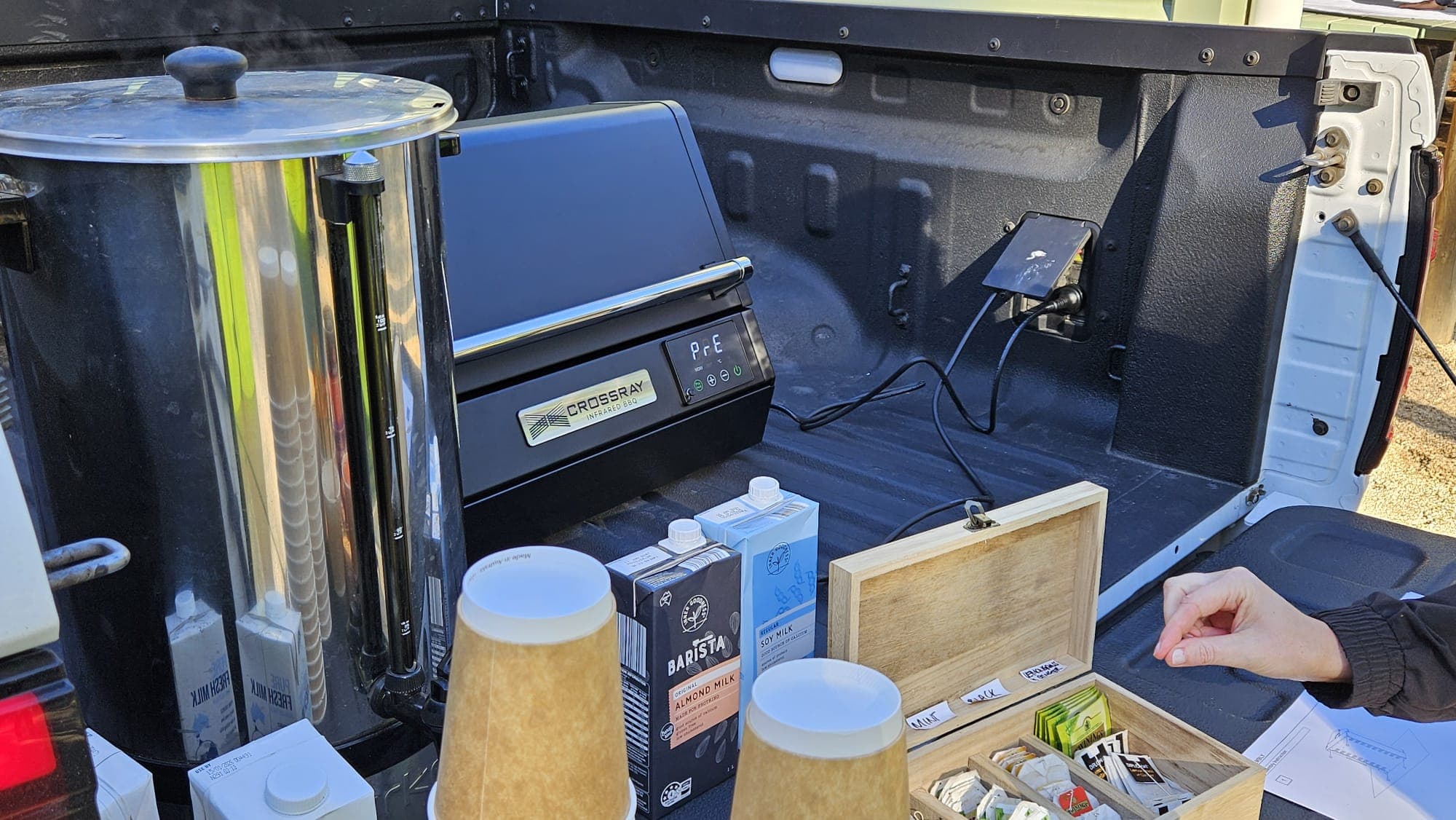
The 6.6kW V2L system (three 230V outlets in the tub, one in the cabin) is particularly useful for camping, worksites or running tools and appliances off the vehicle’s battery.
The main caveat is again payload: at 790kg, heavy commercial users may find it limiting compared with diesel workhorses.
On and Off-road performance
Highway Driving – Tullamarine to Torquay
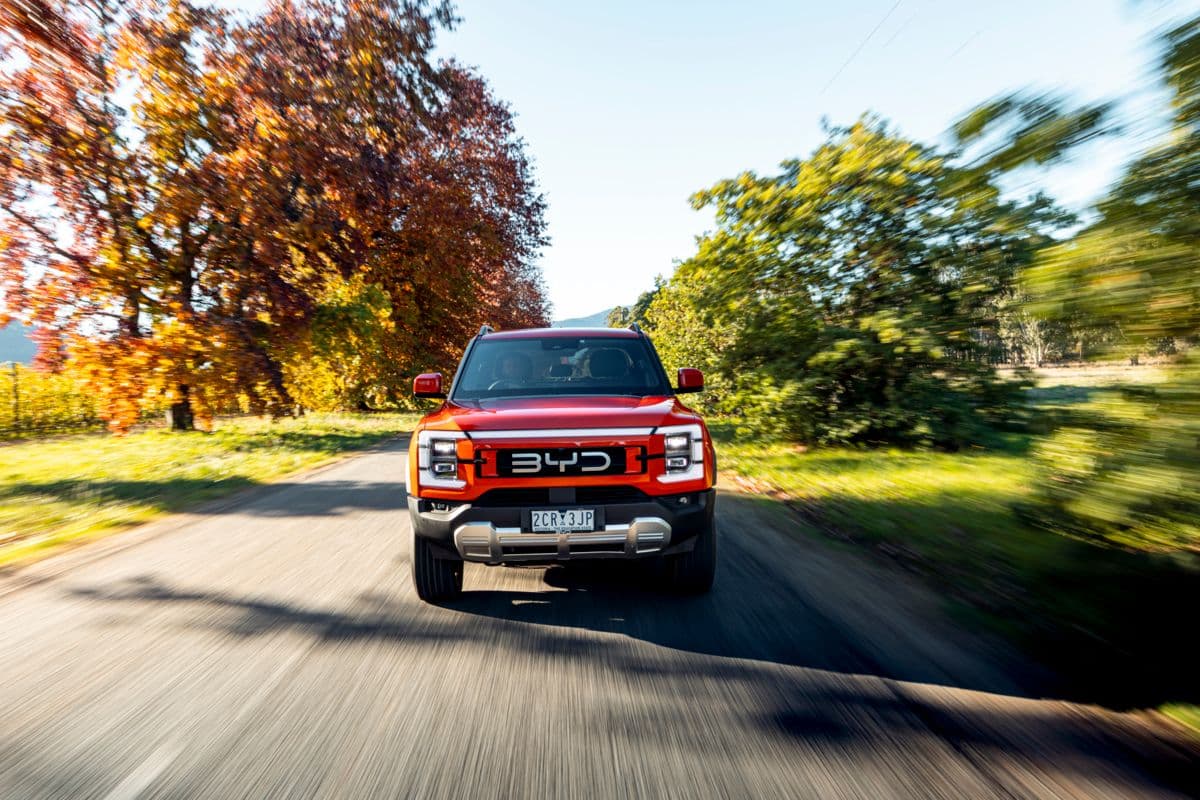
The first leg from Melbourne Tullamarine Airport to RACV Torquay highlighted how different the Shark 6 Performance feels to a diesel ute.
Starting in EV mode, it is quiet and smooth, with no diesel clatter or idle vibration. At highway speeds, wind and road noise are well contained, helped by the independent rear suspension and the structural stiffness from the Cell-to-Chassis Blade Battery integration.
In urban and suburban sections, the Shark 6 ran purely on electric power. Once the battery dropped to around 20% state of charge, it transitioned into Hybrid mode, bringing the 2.0-litre petrol engine online. On the highway, the engine will also engage proactively to optimise efficiency, even before the battery is low.
The DM Super Hybrid system seamlessly shuffles between EV Pure, HEV Series and HEV Parallel modes. Transitions are smooth and largely imperceptible, so the driver rarely needs to intervene.
Ride comfort on the freeway is among the best in the ute segment and rivals the noised and comfort levels of many electric SUVs. The double-wishbone suspension front and rear keeps the body settled over expansion joints and coarse-chip surfaces.
By the time we reached Torquay, we had covered roughly 80km on electric power, closely matching the WLTP claim – a rarity among PHEVs.
The ADAS suite (lane keeping, adaptive cruise, 360-degree cameras) worked well, with no phantom braking or over-sensitive alerts that have plagued some other recent Chinese EVs in Australia.
Off-road
Day two included a medium-difficulty off-road course with dirt, rocks and muddy inclines. The Shark 6 Performance handled it all without fuss.
The new Crawl Mode (standard on Performance, OTA to other variants later) was particularly useful on muddy climbs. It caps speed at 20km/h and continuously adjusts torque between the front and rear electric motors to minimise wheel slip. This removes much of the need for delicate throttle control on tricky surfaces and keeps progress smooth and controlled.
Hill Descent Control worked as expected on steeper descents, holding a steady speed without driver input. The DMO AWD system, with independent electric motors front and rear, allows precise torque vectoring that traditional mechanical drivetrains can’t easily match at this price.
It’s important to note that the Shark 6 Performance does not have low-range gearing or locking differentials, so it’s not aimed at hardcore rock-crawling or heavily modified 4WD territory. Instead, it’s tuned for the kind of off-road driving most Australians actually do: fire trails, farm tracks, corrugated dirt roads, muddy creek crossings and moderate inclines. For those use cases, it’s more than capable.


Uphill
On steeper uphill sections, the combined 350kW and 700Nm made climbs feel easy. The electric motors provide instant torque from rest, ideal for steep starts where building momentum is difficult. The petrol engine joins in HEV Parallel mode to sustain output and top up the battery as needed.
Power delivery is linear and predictable, with no hunting between modes or hesitation. In instances where the vehicle got momentarily stuck, the intelligent AWD system adjusted and propelled the vehicle uphill.
Towing a 3.5-tonne caravan
Towing is where the Shark 6 Performance has the most to prove, and it delivered - at least based on the track we were on.
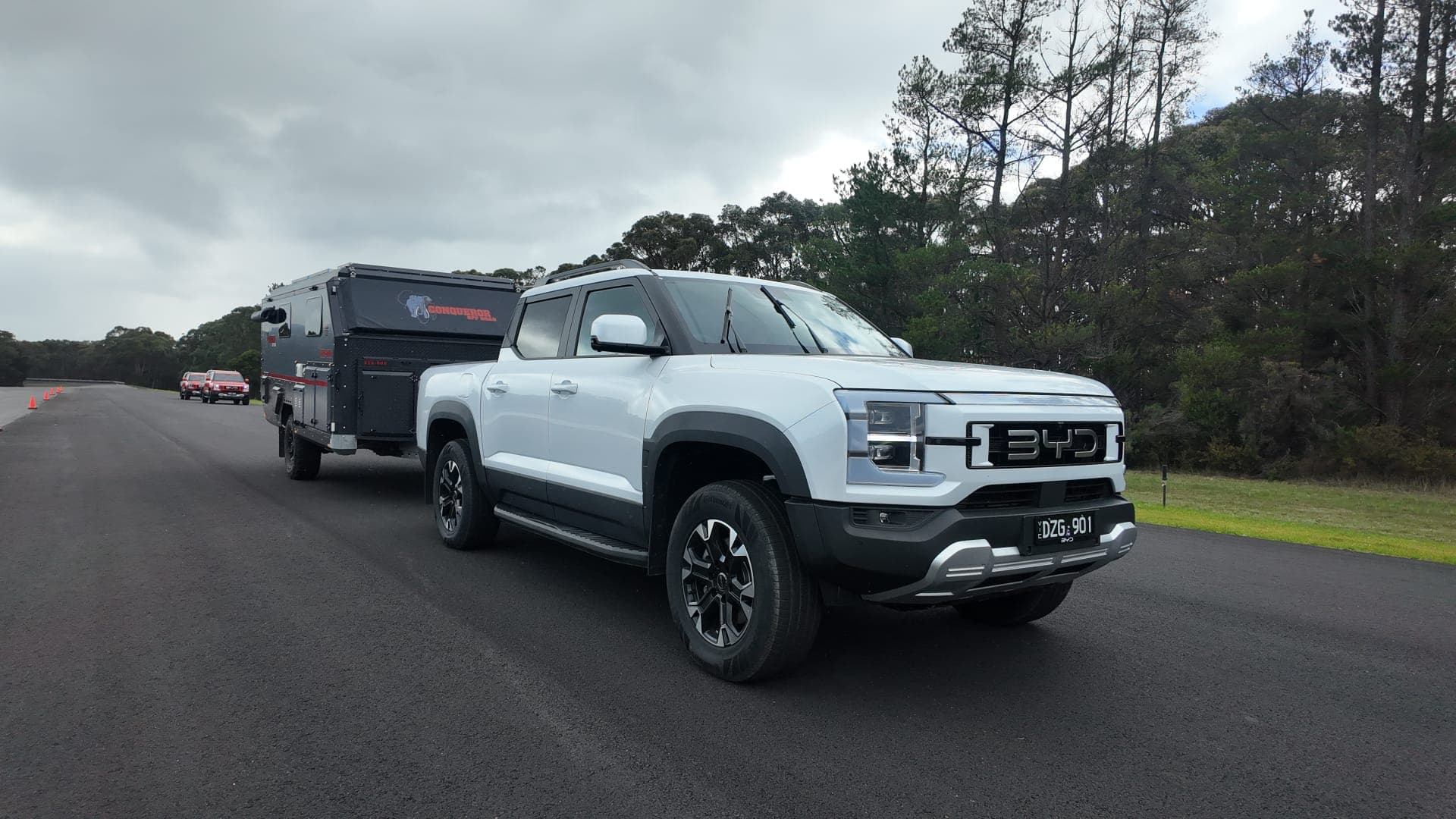
Hitched to a 3.5-tonne caravan, right at its maximum braked tow rating, the Shark felt planted and composed, even at 100km/h. Steering remained direct and stable, and the combination never felt strained or nervous.
From the driver’s seat, it was surprisingly easy to forget we were towing at the limit. Braking performance with the van attached was reassuring, with well-managed weight transfer and no drama under deceleration.
Trailer stability control and sway management systems are fitted and operate quietly in the background. We didn’t deliberately engage them, but it’s good to know they’re there.
Notably, we did not engage a dedicated tow mode during testing – the standard drive mode managed the load effectively.
This towing performance is the main argument for choosing the Performance over the Premium. The jump from 2,500kg to 3,500kg braked towing is the difference between a large family caravan and a lighter camper trailer. If you plan to tow serious weight, the Performance is the variant you want.

Battery, Range and Charging
The Shark 6 Performance uses the same 29.58kWh LFP Blade Battery as the rest of the Shark 6 range.
- EV-only range (WLTP): 80km
- Total claimed PHEV range: 640km
Our first day's highway run returned close to the 80km electric range despite significant freeway driving, suggesting BYD's claim is realistic. As always, real-world range will vary with speed, load, terrain and temperature.
V2L is available at 6.6kW via three 230V outlets in the tray and one in the cabin. This is a practical feature for camping and worksites and one of the strongest V2L offerings in the ute segment.
We did not test charging speed during the event. Published specifications from BYD are shown in the table below.
Specification | Figure |
Battery size | 29.58kWh (LFP Blade Battery) |
EV-only range (WLTP) | ~80km |
Total PHEV range (claimed) | 640km |
AC charging | 11kW |
DC charging (peak) | 40kW |
V2L output | 6.6kW |
V2L outlets | 3 in tub, 1 in cabin |
Warranty, running costs and FBT
Warranty
Item | Detail |
Vehicle warranty | 6 years / 150,000km |
Battery warranty | 8 years / 160,000km |
Roadside assistance | 6 years |
BYD's warranty package on the Shark 6 is competitive for the segment. The vehicle is covered by a six-year/150,000km warranty, with the battery backed by an eight-year/160,000km warranty.
Running costs and FBT
The average annual service cost for a BYD Shark 6 is ~$552 under the vehicle's 11-year capped-price servicing scheme. Service intervals are set at every 12 months or 20,000 km.
As a plug-in hybrid, the Shark 6 does not qualify for Australia's EV FBT exemption that currently applies to eligible battery electric vehicles.
If you're considering a novated lease, this is important. A comparable BEV may deliver a significant tax advantage, depending on your income and lease structure. It's worth running the numbers with your salary packaging provider.
On the plus side, the ability to cover most daily driving on electricity should keep fuel bills low for owners who regularly plug in at home or work.
👉 Get a novated lease quote and see what the BYD Shark 6 could cost you per week.
Should you buy the BYD Shark 6 Performance?
The BYD Shark 6 Performance fixes the biggest criticism of the original Shark 6 Premium by matching its PHEV rivals on 3,500kg braked towing.
At $62,900 before on-roads, it undercuts the Ford Ranger PHEV and GWM Cannon Alpha PHEV while offering more power, quicker acceleration and a more upmarket interior.
Across two days of testing, it proved:
- Quiet and composed on the highway, with genuine SUV-like refinement
- Capable off-road on realistic Australian terrain, with Crawl Mode and Hill Descent doing useful work
- Effortless on hills, thanks to 350kW/700Nm and instant electric torque
- Convincing as a tow vehicle at the full 3.5-tonne rating, with excellent stability and braking
There are a few trade-offs:
- Payload of 790kg is below diesel ute norms and may limit heavy commercial use
- 40kW DC charging is slow but its an option likely seldom used and it’s better than not having the option.
- No FBT exemption as a PHEV, which may reduce appeal for novated leases
Who is it for?
The Shark 6 Performance suits:
- Daily drivers who want a dual-cab ute that feels like an SUV inside and drives like on
- Owners who tow regularly – especially caravans up to 3.5 tonnes
- Families doing annual caravan trips and weekend adventures
- Buyers who want ute practicality without diesel running costs, and can charge at home
It’s not the ideal choice if you need a heavy-duty workhorse with maximum payload or hardcore off-road capability. But for what most Australian ute buyers actually do: commuting, family duties, towing on holidays and light-to-medium off-roading – the Shark 6 Performance hits the brief strongly and offers sharp value.
If you don’t need the additional towing capacity, save yourself $5,000 and get the Premium variant at $57,900 before on-roads
zecar rating: 8.4/10
Zecar attended this media drive event as a guest of BYD Australia. Travel and accommodation were provided by BYD.
👉 Get a novated lease quote and see what the BYD Shark 6 could cost you per week.

About the author

Danny is a consultant and entrepreneur working at the cutting edge of the electric vehicle and energy transition. He is passionate about educating and helping consumers make better decisions through data.
