Key Points
- Xpeng P7+ targets large electric sedan segment vacated by Tesla
- Ultra-fast charging and 800-volt architecture headline specifications
- Interior space prioritised through thin battery and long wheelbase
- Xpeng positions itself as technology-focused challenger, not budget brand
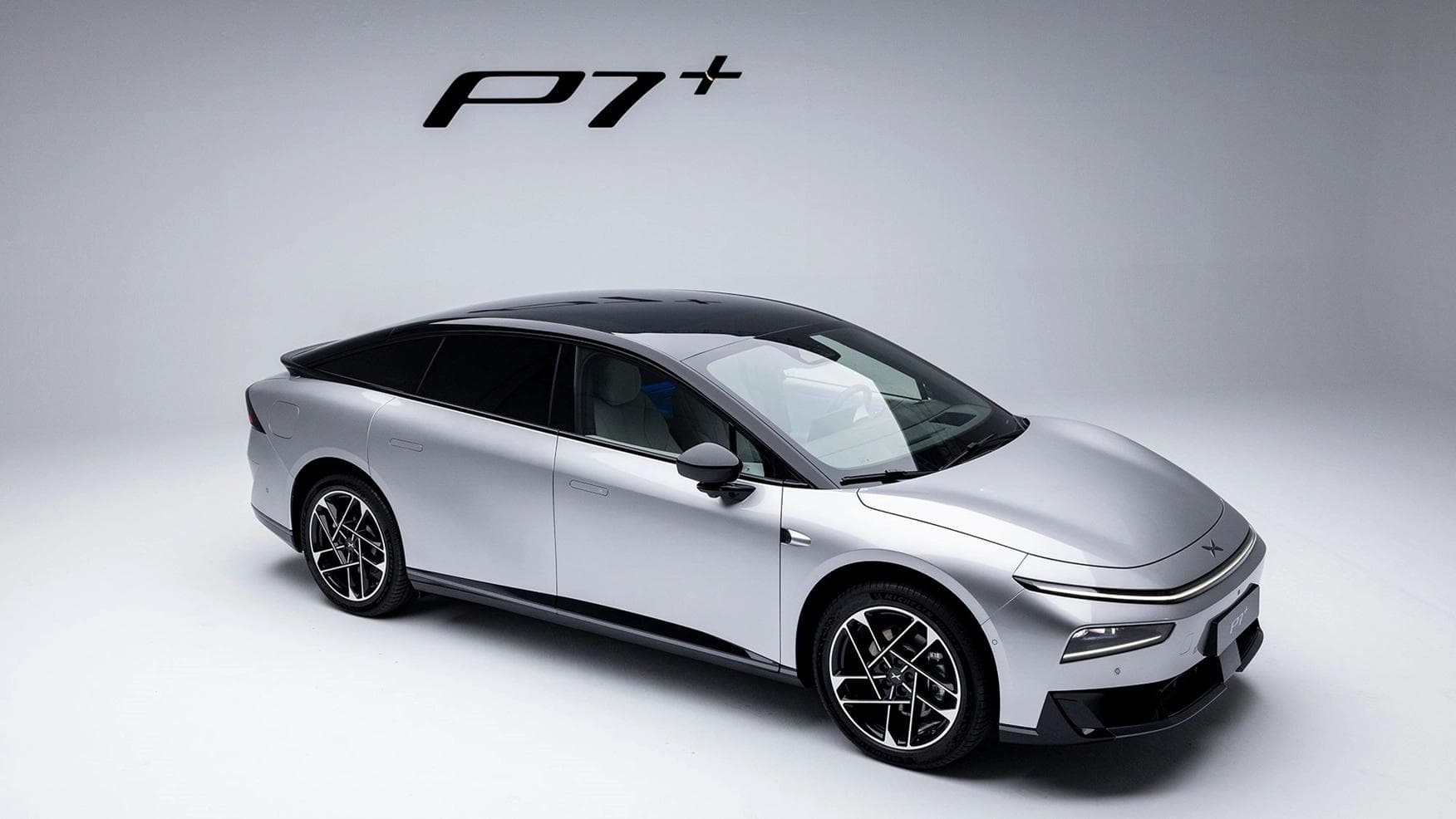
As electric vehicle competition intensifies globally, Xpeng is preparing its most ambitious move yet into Western markets with the P7+, a large electric fastback aimed squarely at a segment once defined by the Tesla Model S.
The P7+ has been on sale in China since 2024, but 2026 marks the brand’s first concerted effort to position the vehicle as a mainstream alternative in Europe, with broader international markets expected to follow.
Rather than competing purely on price, Xpeng is leaning heavily on charging performance, interior space and advanced driver assistance systems to differentiate the P7+ from established rivals.
▶️MORE: XPeng Confirms Arrival Timeline for Three New EVs in Australia


Positioning beyond price alone
In its home market, the P7+ starts at 209,000 Yuan, roughly equivalent to £23,000 / A$44,358 / US$29,926, though pricing in Europe is expected to rise once local taxes and import duties are applied. Even so, Xpeng has signalled its intention to undercut premium electric sedans such as the Volkswagen ID.7, while offering comparable or superior specifications in several key areas.
Xpeng’s strategy centres on three pillars:
- Advanced driver assistance and AI-led software development
- Class-leading charging performance through 800-volt architecture
- Interior space and practicality typically reserved for higher-priced vehicles
The company has invested significantly in artificial intelligence and semi-autonomous driving systems, and the P7+ represents the first opportunity for European buyers to experience that technology in a production vehicle.
While regulatory requirements will limit some functionality compared to Chinese-market cars, the system remains among the most advanced offered in this segment.
▶️MORE: 2025 Xpeng G6 Price and Specs: Undercuts Tesla Model Y
Large footprint, efficiency-focused design
The P7+ is a substantial vehicle by any measure, stretching beyond five metres in length with a wheelbase exceeding three metres. Xpeng has used an unusually thin battery pack, measuring just 109mm, to lower the roofline while preserving interior space.
That engineering decision delivers multiple benefits:
- Increased rear-seat legroom without raising vehicle height
- Improved aerodynamic efficiency through a lower roof profile
- A drag coefficient of 0.211Cd, lower than several European rivals
Interior packaging benefits are significant, particularly for rear-seat passengers, and boot capacity exceeds that of both the Volkswagen ID.7 and Audi A6 e-tron Avant.
▶️MORE: Australia's EV Sales 2025: Complete Year in Review


Rapid Charging performance
All P7+ variants use an 800-volt electrical architecture, enabling charging speeds well above the segment average. Xpeng claims peak DC charging capability of up to 446kW, allowing a 10 to 80% recharge in as little as 12 minutes under optimal conditions.
This places the P7+ among the fastest-charging electric sedans currently announced for Western markets, reducing one of the most common pain points for long-distance EV drivers.
Powertrain options
European buyers will be offered three variants, designed to cover efficiency, extended range and performance priorities. Rear-wheel drive configurations dominate the lineup, with a dual-motor setup reserved for the flagship model.
Key differences between variants include:
- Battery size and resulting driving range
- Power output and acceleration performance
- Drivetrain layout, with AWD exclusive to the performance model
Xpeng P7+ detailed specifications (European models)
▶️MORE: When is V2G Really Coming to Australia?
Market-specific changes
Xpeng has made modest cosmetic updates for European-bound vehicles, while keeping the underlying platform unchanged.
These changes include:
- Revised front splitter with active air management
- Full-width LED front light bar
- Updated rear bumper detailing
- Driver assistance recalibration to meet European regulations
While autonomous functions are more restricted than in China, early evaluations suggest the system remains highly competitive within current legal frameworks.
Looking ahead
Alongside the P7+, Xpeng is developing a next-generation sedan known simply as the P7, built on the company’s SEPA 3.0 platform. That model, due to enter production in China in 2026, will introduce Xpeng’s latest AI hardware and software and place greater emphasis on driver engagement.
Xpeng says the next P7 will offer:
- Higher power outputs across the range
- More advanced AI decision-making through its Turing chip
- A stronger focus on driving dynamics alongside autonomy
For now, the P7+ represents Xpeng’s clearest statement of intent. Rather than chasing volume at the bottom of the market, the company is targeting a segment that values technology, space and charging performance, and one that has been left increasingly underserved.
