


Key Points
- XPENG plans to offer its Turing AI driver assistance to new buyers by subscription from the second quarter of 2027, including in Australia.
- Customers who order before the subscription starts will keep their driver-assistance entitlements for life, according to XPENG chief executive He Xiaopeng.
- XPENG also unveiled its Turing Physical AI Architecture and its IRON humanoid robot at its AI Day in Guangzhou on 25 November.
XPENG will move its driver-assistance software to a subscription for new buyers, including those in Australia. The Chinese carmaker announced the worldwide change at its eighth AI Day on 25 November.
The same event set out XPENG's wider plans for cars, humanoid robots, robotaxis and flying vehicles.
What changes for Australian XPENG buyers
The subscription for Turing AI Driving is due to start in the second quarter of 2027. Anyone who orders before then keeps their current entitlements for life, He Xiaopeng, XPENG's Chairman and CEO, said.
XPENG has not announced pricing or which functions buyers will need to pay for. XPENG says the system needs continuous training and software updates, and that subscriptions will help fund long-term research and development.
Tesla is currently the only other brand offering a similar driver-assist option in Australia. Its Full Self-Driving (Supervised) subscription costs $149 per month for eligible cars upgrading from Basic Autopilot.
Order timing is worth watching if you are considering the XPENG G6 SUV or the XPENG X9 people mover. You can also check current EV offers and deals before ordering.

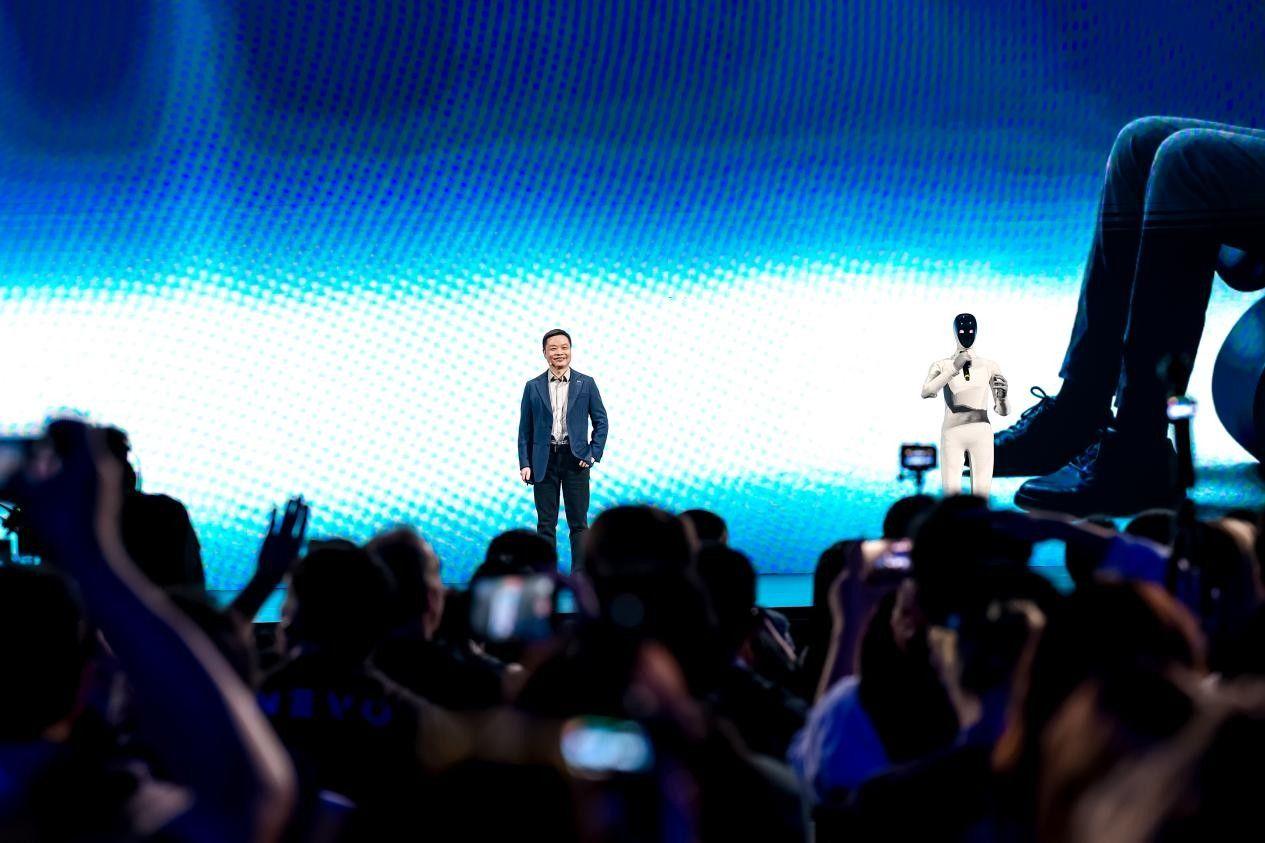
VLA 2.0 rollout and hardware
XPENG is targeting the first half of 2027 for the first global deliveries of VLA 2.0, its second-generation vision-language-action driving model. XPENG told zecar at the L03 launch that Australia would be among the first markets. The full system needs three of XPENG's Turing chips, which will feature in the upcoming XPENG L03.
The NGP intelligent driving system, powered by VLA 2.0, has completed public road testing in Munich in July, Amsterdam in August and Paris in October. XPENG then opened public urban test rides at its Paris store in November. It says it is the first Chinese carmaker to offer high-level assisted driving experiences at a European retail site.
The latest software, version 6.4.0, adds:
- Support for left-hand and right-hand drive markets worldwide
- Reversing and escape assistance in all scenarios
- Customisable driving styles
- Agent-driven closed-loop training, which XPENG says makes overall training 10 to 12 times faster and supports self-improvement of the model
A smaller VLA Lite version for older China-market cars with two Nvidia Orin-X chips starts rolling out in China in December 2026. XPENG also reports a 13.93 per cent fall in vehicle accident claims in China since VLA 2.0 rolled out.
New vehicle features and faster charging
XPENG's X-VMC 2.0 motion control system links propulsion, braking, steering and suspension, so AI can influence driving, safety, cabin comfort and energy use.
The first Turing AI Co-driving feature is VLA Adaptive Deceleration. It reads the road scene and adjusts slowing and energy recovery when the driver lifts off the accelerator. XPENG's urban congestion tests showed 12.4 per cent more usable range than with energy recovery switched off. The first over-the-air rollout is due in December 2026, but Australian timing is not confirmed.
XPENG is also developing AEX 360-degree active avoidance, which coordinates the car's movements to respond to possible collisions.
A staged software update will lift charging from 5C to 6C on vehicles with 5C lithium iron phosphate and ternary batteries. XPENG claims this cuts a 10 to 80 per cent charge from about 12 minutes to 10.7 minutes. It has not said whether overseas cars will get the update.
The company's first X-Energy megawatt charging station is operating in Hong Kong, with a wider global rollout planned from 2027.
One AI architecture for cars and robots
The Turing Physical AI Architecture (VLA 3.0) is a shared foundation for XPENG's cars and humanoid robots. It joins three systems in a continuous loop, with the results of each action fed back so the AI can adapt.
System | Role |
System 0 (ultra-fast) | Controls the physical body, coordinating power, energy, communication and execution, and reports whether it can act safely |
System 1 (fast) | Uses VLA 2.0 to read the surroundings and turn them into actions in real time |
System 2 (slow) | Interprets goals and plans complex tasks, using vision-language planning and an agent runtime state machine |
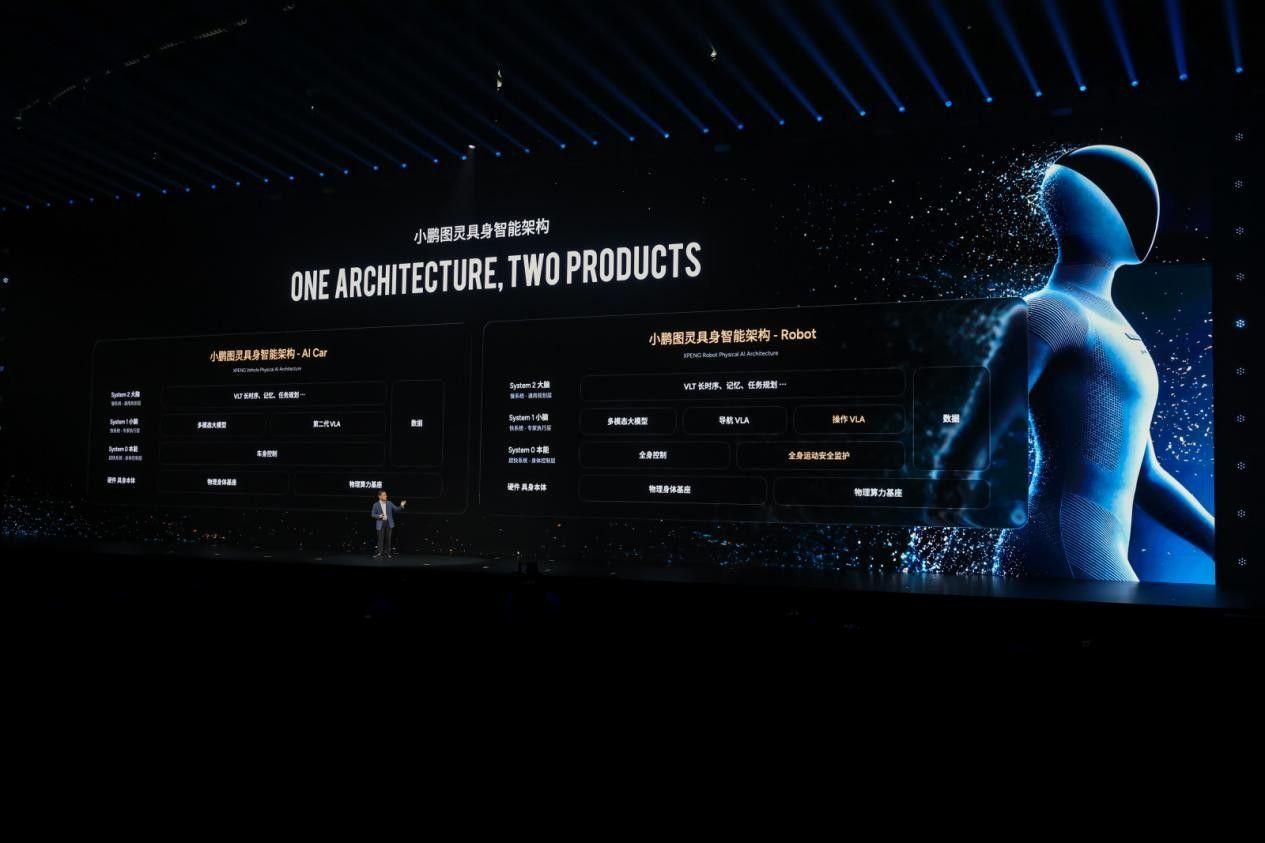
XPENG is building the whole technology stack itself, from chips and AI models to perception, software, control systems and hardware. Cars and robots share computing, data, control and safety technology. Each also has specialised abilities, and lessons from one can feed into the other.
"For years, the AI industry has focused on making the brain smarter. But humans do not learn through the brain alone. We learn by touching, moving, trying, failing and trying again. I believe Physical AI must evolve in the same way," He Xiaopeng said.
"Origin is about returning to that fundamental truth. The brain and body must evolve together. By connecting intelligence all the way through to physical action, we want to build AI that does not simply understand our world, but can work alongside us and grow through real-world experience."
IRON humanoid robot to start work in stores
IRON, XPENG's advanced general-purpose humanoid robot, made its first public appearance at the event. It is due to start training as a store assistant in XPENG shops in the first quarter of 2027, with an official public release targeted for the second quarter.
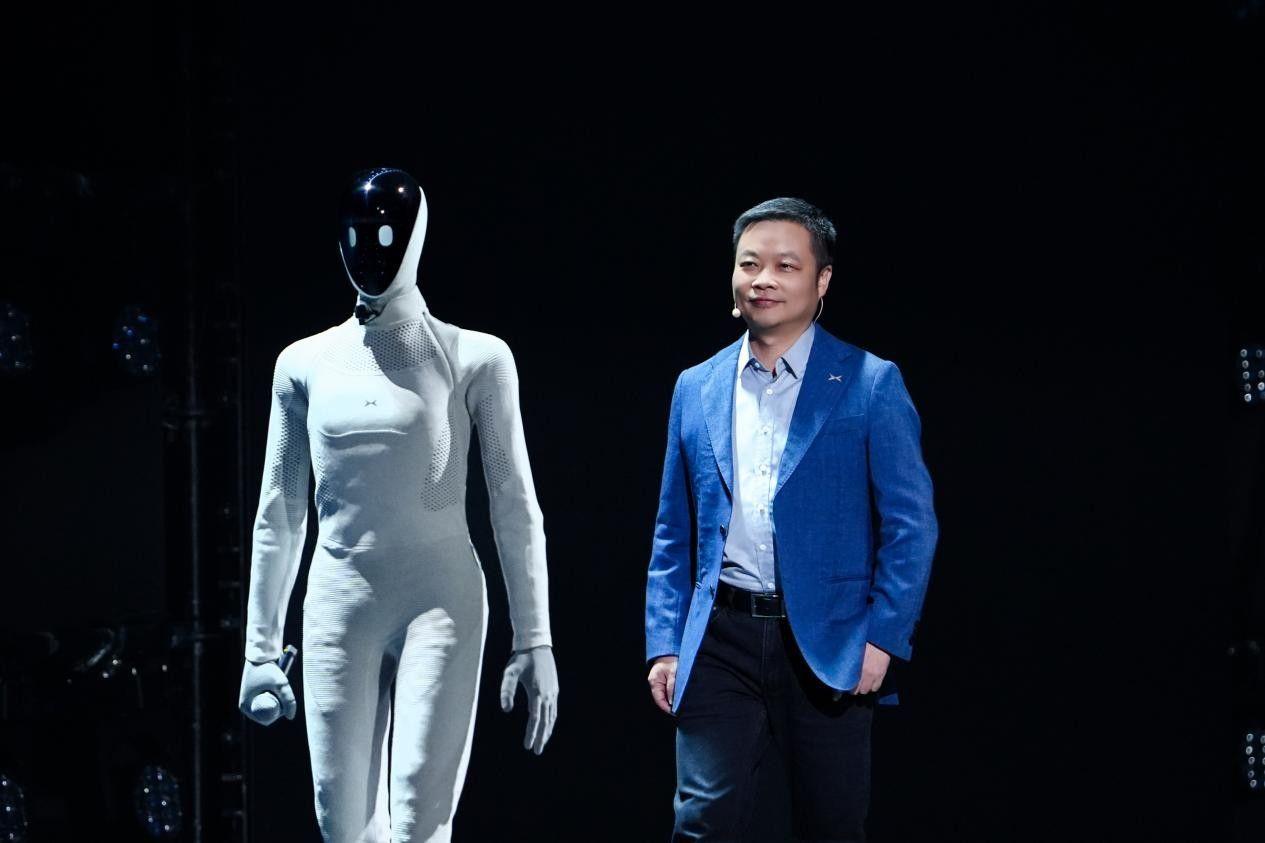
- 76 degrees of freedom
- More than 1,500 touch sensing points, covering over 80 per cent of key body areas
- Three XPENG Turing AI chips for onboard AI and whole-body control
- Autonomous navigation and charging
- Task creation by voice or app, plus fault reporting and health monitoring
A Robot Data Factory covering more than 250 scenarios and 15 job categories supports development, reusing tools from XPENG's car business. A dedicated automated assembly line has more than 600 AI holographic quality inspection items and over 1,000 tests for complete robots and key parts.
Partners will be able to download capability packages, customise functions and develop new skills. XPENG plans to earn money from hardware sales, software subscriptions and the open platform. It is also exploring token-based subscriptions and services for specific uses.
Robotaxis and flying vehicles
XPENG's robotaxi program moved from staffed to driverless road testing in eight months. It received a Level 4 demonstration operation qualification in Guangzhou 11 months after the business was announced. Driverless passenger tests under the YOYO name have begun, with demonstration services in selected areas of China planned by the end of 2026.
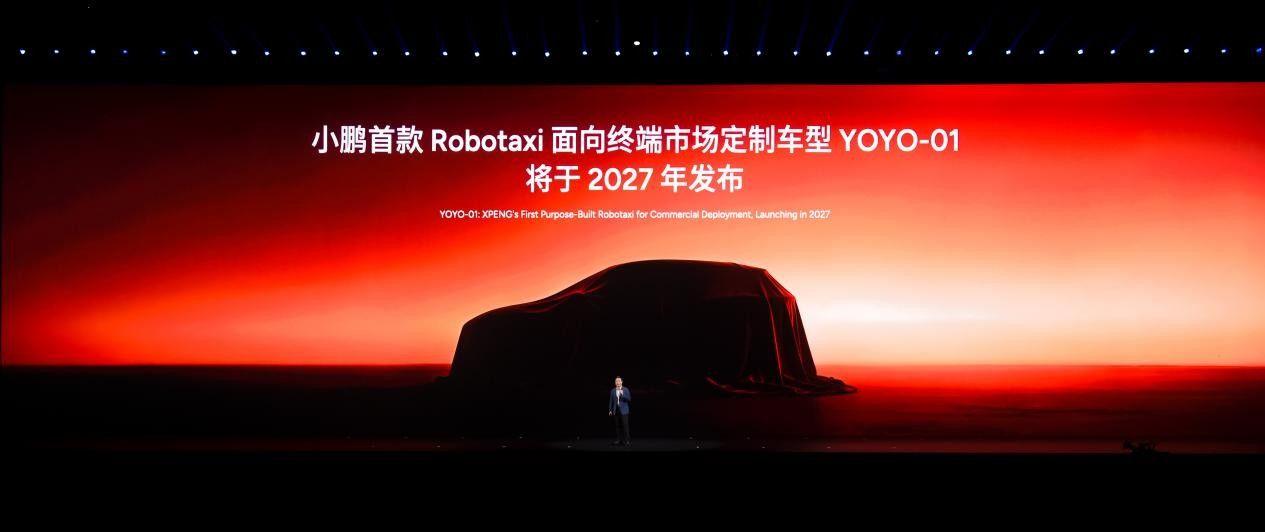
YOYO-01, XPENG's first purpose-built robotaxi for commercial use, is scheduled for release in 2027. XPENG will supply vehicles and self-driving technology to operating partners rather than run fleets itself, and aims to expand globally through them.
XPENG ARIDGE, its flying vehicle business, has received Type Inspection Authorization documents and completed certification flight testing for its crewed electric vertical take-off and landing (eVTOL) aircraft. It is still working towards airworthiness certification. In the United Arab Emirates, ARIDGE is working with local partners on a low-altitude regulatory sandbox for testing and international cooperation.
About the author

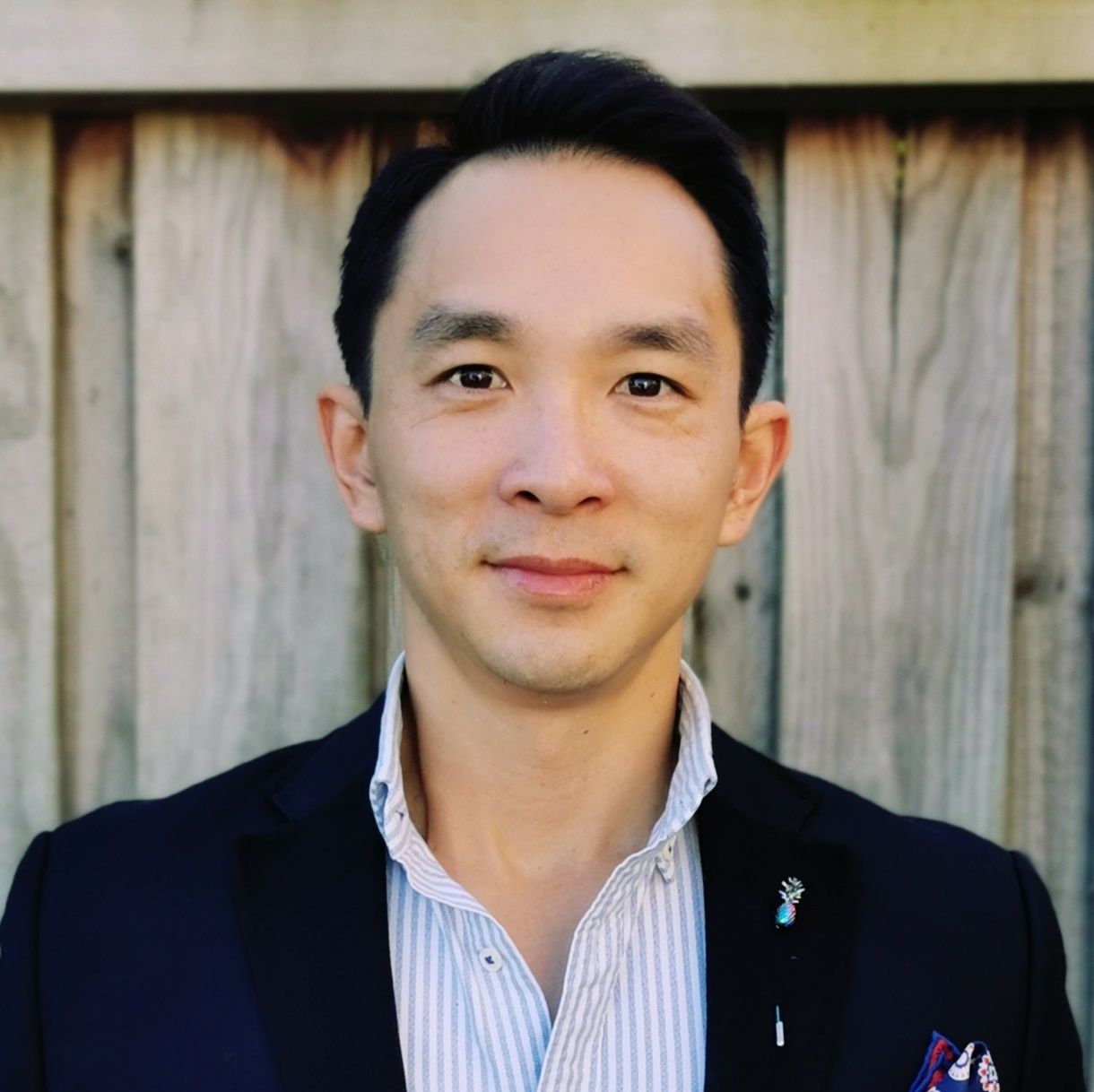
Danny is a consultant and entrepreneur working at the cutting edge of the electric vehicle and energy transition. He is passionate about educating and helping consumers make better decisions through data.
