


Businesses, strata buildings and fleet operators need more from an EV charger than a home wallbox offers. It has to control who plugs in, share limited power across several bays, and report usage to billing or fleet software.
This guide ranks 8 commercial AC chargers sold in Australia in 2026, led by the Autel AC Single. It also explains which features matter, what installation costs, which rebates and grants are available, and who sells and installs commercial charging stations.
Commercial EV chargers compared
Zecar spoke to several commercial EV charger installers when compiling this list, and every charger on it has been deployed in commercial settings. Each has confirmed OCPP support, load management and access control, and chargers marketed mainly for homes have not been included.
Charger | OCPP | Load management | Access control | Supply price |
1. Autel AC Single | 1.6J, 2.0.1 | Dynamic load balancing | RFID, optional tap-and-pay | $1,210 |
2. Schneider EVlink Pro AC | 1.6J | Dynamic Energy Management | RFID, NFC | $2,810 (ex GST) |
3. ABB Terra AC Wallbox | 1.6J | Static built in, dynamic with ABB meter | RFID | About $2,200 to $2,400 |
4. Delta AC MAX Smart | 1.6J (2.0 upgradable) | Static limit, multi-charger via NHP | RFID, ISO 15118 | $2,290 |
5. Ocular IQ Commercial | 1.6J (2.0.1 via firmware) | Via Ocular Load Controller or OCPP | RFID | $2,279 (ex GST) |
6. MSI Eco Premium (Commercial) | 1.6J (OCA certified) | Via energy management platform | RFID, app, QR code | On application |
7. Wallbox Commander 2s | Yes | Dynamic Power Sharing | RFID | $2,100 |
8. StarCharge Artemis Smart 22kW | 1.6J | Local dynamic with Peak Controller | RFID, app | On application |

What to look for in a commercial EV charger
A commercial AC charger does the same basic job as one of the home EV chargers. The difference however is in control, reliability and how well it fits into the software a business already runs. These are the attributes to check before buying.
OCPP support
Open Charge Point Protocol (OCPP) lets a charger talk to charge point management software from a different company. Operators use it to bill drivers, manage access and pull usage reports.
OCPP 1.6J is the current baseline. OCPP 2.0.1 adds stronger security and better smart charging controls, so it is worth having on a new install. A charger locked to its maker's own app ties the site to that maker's software if the business wants to change provider later.
Load management
Most sites cannot run every charger at full power at the same time. Load management caps total charging current so the site stays within its electrical supply.
Static load management sets a fixed limit. Dynamic load management provides more flexibility by reading the building's real-time demand, usually through a CT clamp or energy meter, and gives the chargers whatever capacity is spare. Load sharing across a group of chargers lets a site add bays without upgrading its supply, which is often the biggest saving on a multi-bay project.
Access control and payments
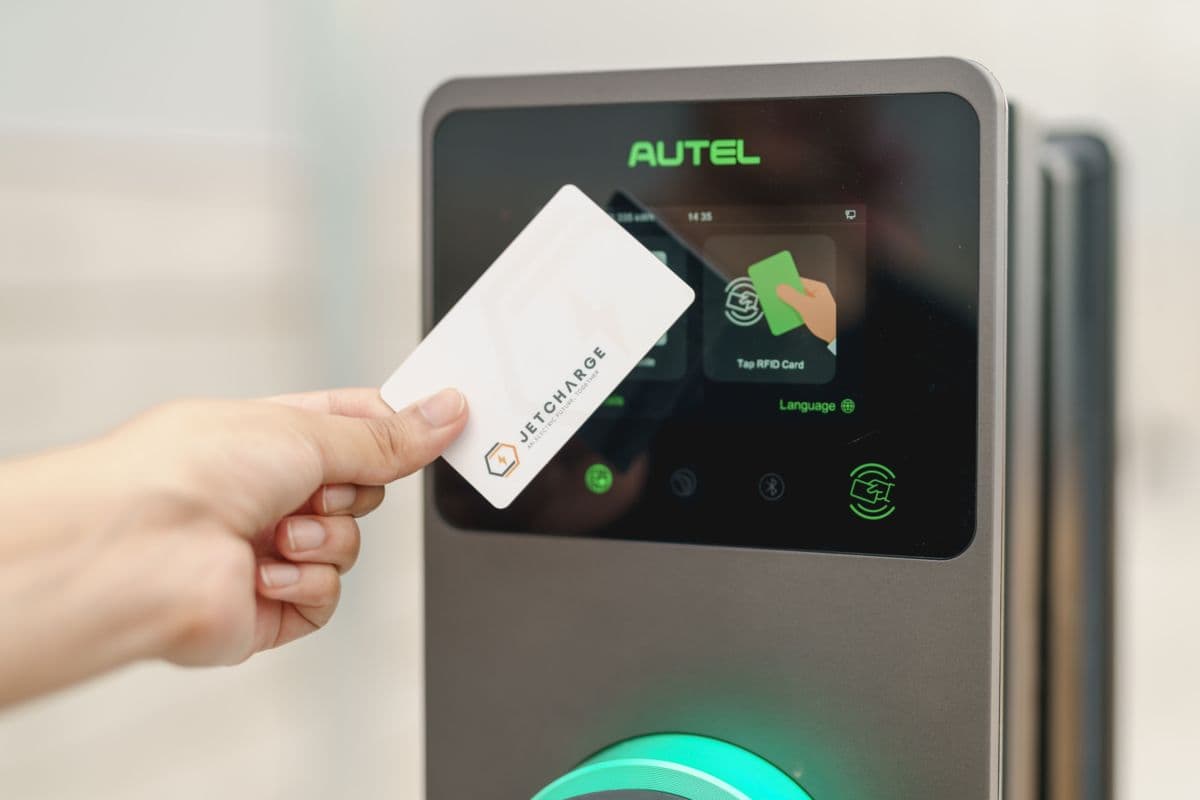
RFID cards or fobs stop unauthorised use and let a business track charging by driver or tenant. App-based authentication works well where drivers are already set up on a platform.
For public or semi-public sites, look for contactless card payment at the charger or ISO 15118 Plug and Charge, which starts a session automatically when a compatible car plugs in.
Connectivity
A commercial charger needs a stable connection to report sessions and receive updates. Ethernet is the most reliable option. Built-in 4G suits basement car parks and remote sites where Wi-Fi is weak. Wi-Fi alone is fine for small sites with good coverage.
Power output: 22kW and three-phase chargers
Single-phase AC chargers top out at 7.4kW. Three-phase chargers can deliver up to 22kW. Multiphase chargers switch automatically between the two, which helps when a business is unsure what supply it has or plans to upgrade later.
The cars onboard charger limit however decides the final speed. Many EVs accept only 7kW or 11kW on AC, so a 22kW charger will not charge every car at 22kW. Currently there are only a handful of EV models capable of 22 kW AC charging. Check the onboard AC charger ratings of the cars you expect in Zecar's EV database.
Weather and durability ratings
Outdoor commercial chargers should be rated at least IP54 for dust and water, with IP65 offering more protection. An IK rating measures impact resistance. IK08 is a reasonable minimum for shared car parks, and IK10 is better for public sites where chargers may be bumped by cars or trolleys.
Metering and billing rules
Businesses that bill drivers per kWh need to know the trade measurement rules. According to the National Measurement Institute (NMI), EV supply equipment made on or after 1 April 2026 must comply with general certificate of approval NMI 14/4/0. It must also be marked and sealed, and pattern approved. Verification is not yet required.
Chargers made before 1 April 2026 do not need to meet NMI 14/4/0, but the NMI says it is still an offence to supply less energy than a driver is charged for. The rules do not apply to chargers that are not used to measure energy for billing. Ask the supplier whether a model is marked under NMI 14/4/0 before using it for paid charging.
Socket or tethered cable
A tethered cable is easier for drivers, who do not need to carry their own lead. A Type 2 socket avoids damaged or stolen cables at public sites and lets drivers use whatever lead they have. For sites used by the public, site owners typically use untethered AC chargers due to the lower cost of long-term maintenance.
Certification, warranty and local support
Any charger installed in Australia must carry RCM certification. Warranties on this list range from two to five years. Local stock, an Australian support line and installer training matter as much as the warranty length, because a faulty charger in a shared car park affects every driver who relies on it.
The 8 best commercial EV chargers in Australia
1. Autel AC Single
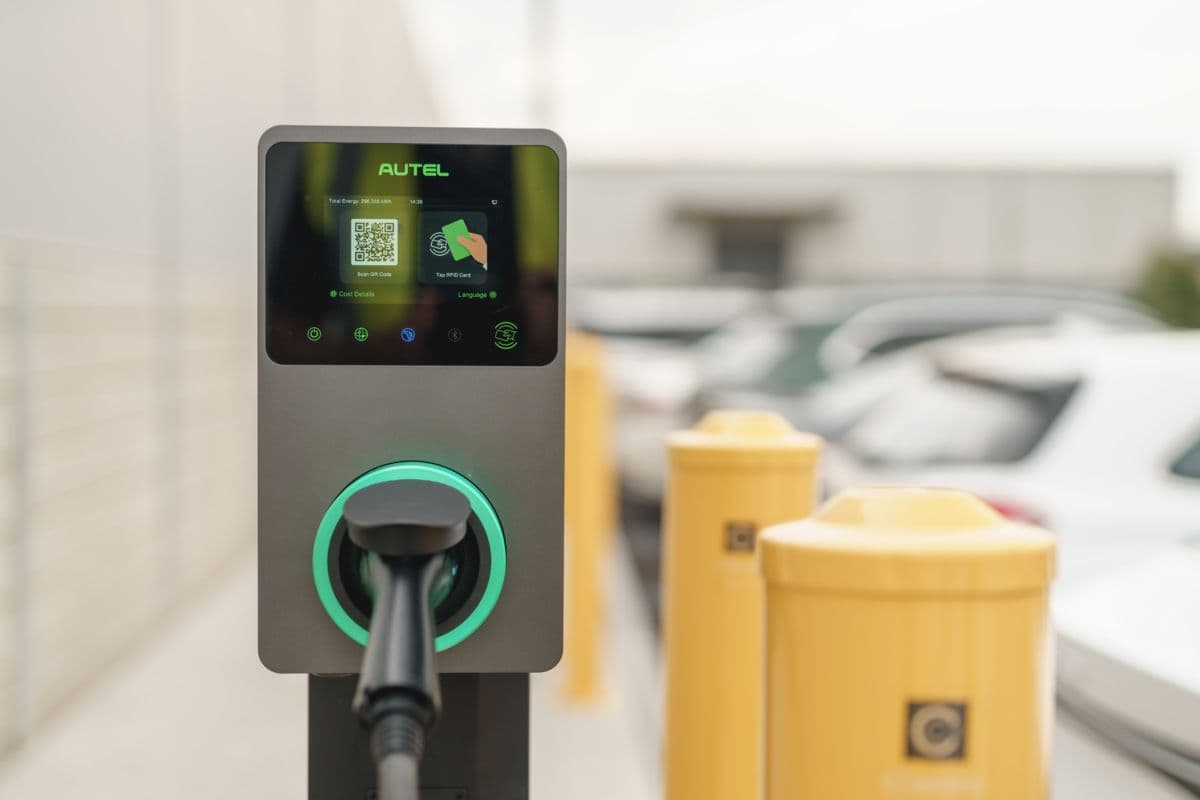
The Autel MaxiCharger AC Single is built for sites between a home garage and a large commercial installation, such as small business car parks, workplaces and body corporate bays. It comes in 7.4kW single-phase, 22kW three-phase and multiphase versions.
It supports OCPP 1.6J and 2.0.1 and has built-in 4G. It is also the only charger here with an optional tap-and-pay version, so operators can take contactless card payments without an app or RFID tag. Autel lists dynamic load balancing, and with optional CT accessories the charger can also prioritise charging from excess solar.
- OCPP: 1.6J and 2.0.1
- Load management: dynamic load balancing
- Access: RFID, with an optional tap-and-pay version
- Connectivity: Wi-Fi and 4G
- Rating: IP65
- Warranty: up to 5 years, depending on supplier
- Price: from $968 (7.4kW), $1,210 (22kW) or $1,730 (multiphase specs)
The Autel MaxiCharger AC Single has been deployed a dozens of Wooloworths (customer charging), Ikea sites (depot charging) and shopping centres around the country.
Best for: workplaces, small businesses and fleet depots that want OCPP 2.0.1, 4G and the option of card payments.

2. Schneider Electric EVlink Pro AC
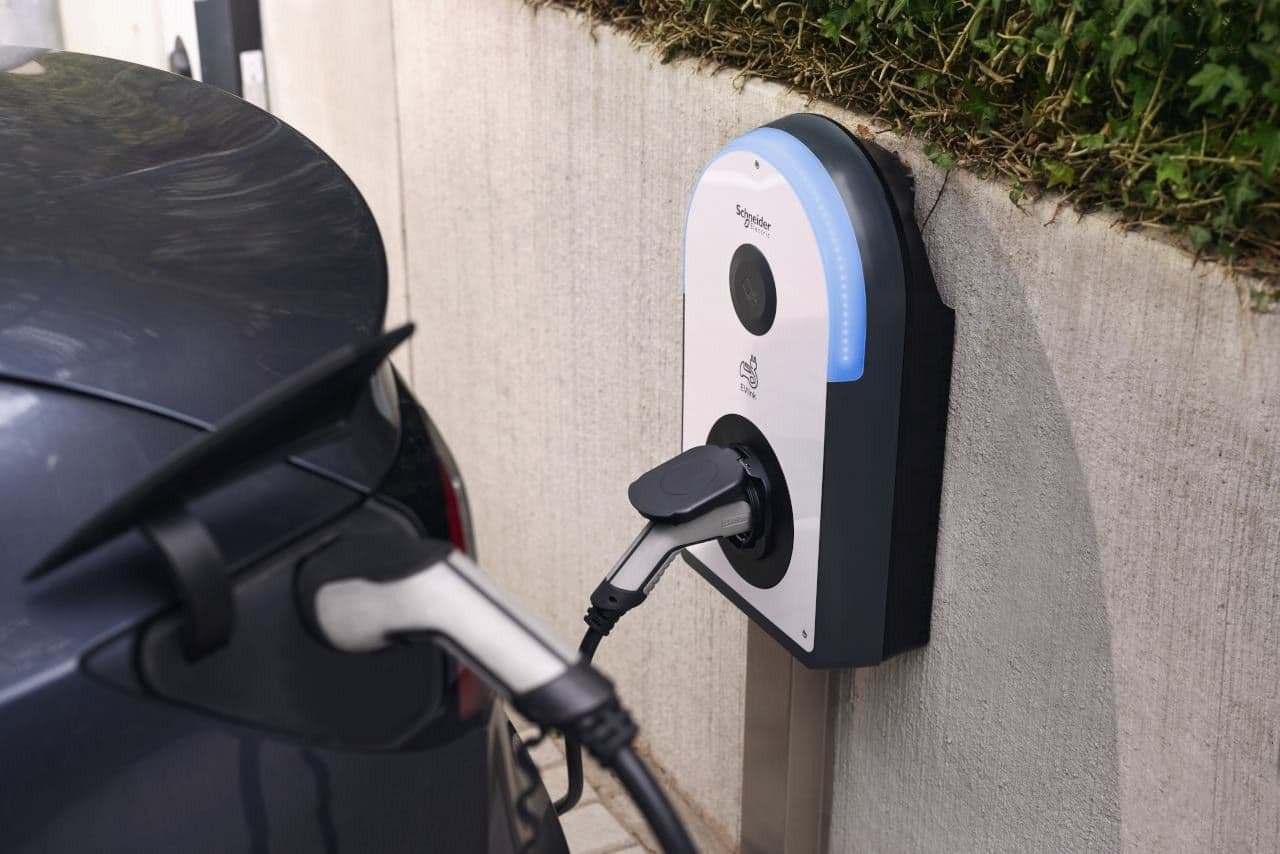
Schneider Electric's EVlink Pro AC is a heavy-duty charger designed for commercial and fleet sites. It has two Ethernet ports, Modbus TCP and an optional 3G/4G modem, which makes it easy to wire into building management systems.
Schneider says the charger has a built-in Dynamic Energy Management function, and larger sites can add its EcoStruxure EV Charging Expert system. It can be wall-mounted or fitted to a pedestal, and the IK10 rating suits public car parks.
- OCPP: 1.6J, with ISO 15118 listed
- Load management: Dynamic Energy Management
- Access: RFID and NFC, or free access
- Ratings: IP55 and IK10
- Warranty: 2 years
- Price: $2,810 excluding GST (22kW Type 2 socket version, via JET Charge)
The EVlink Pro AC has been commonly deployed in commercial office carparks.
Best for: larger commercial sites and council car parks that need wired networking and integration with building systems.
3. ABB Terra AC Wallbox
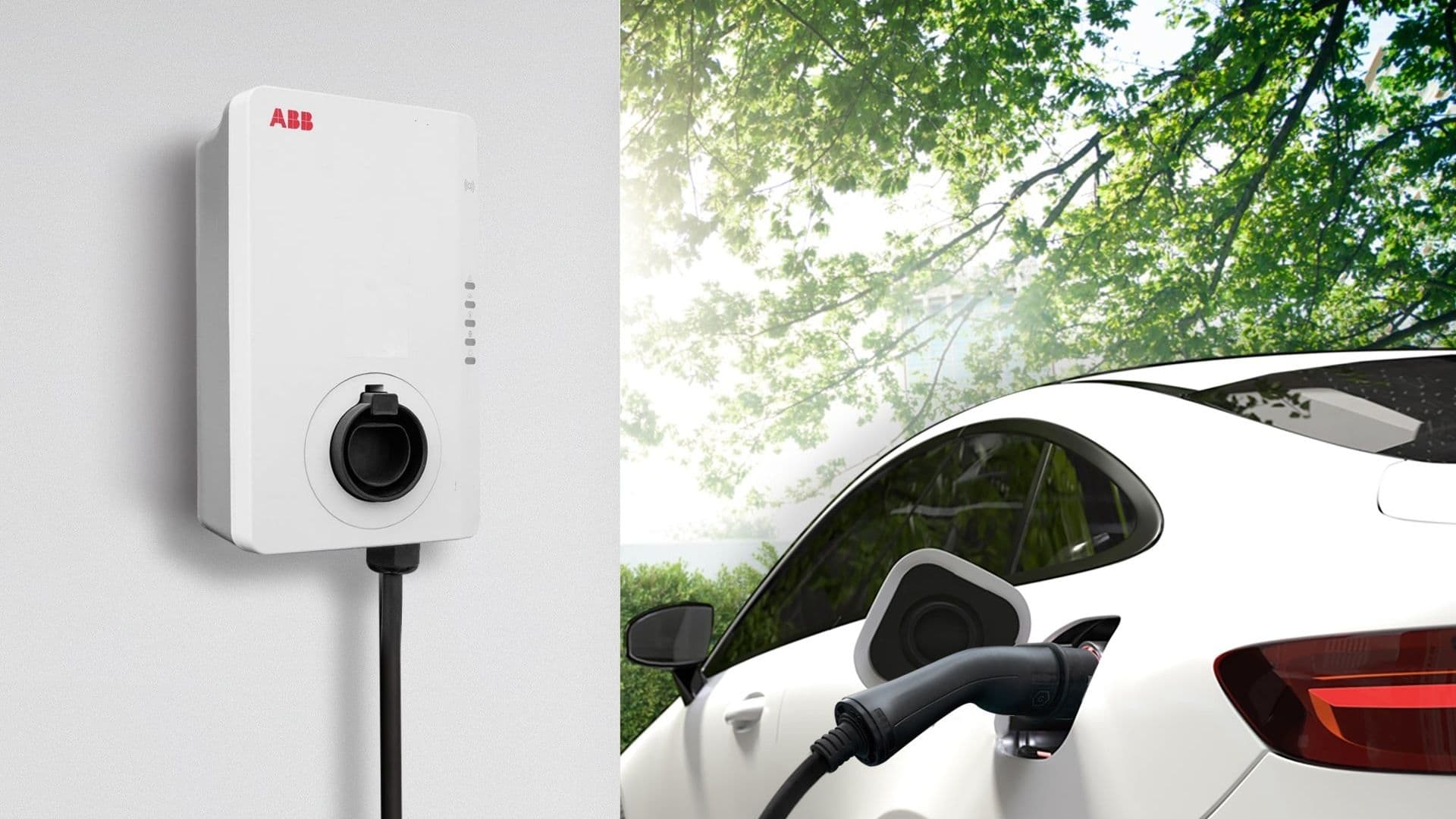
The ABB Terra AC Wallbox is one of the most widely installed commercial AC chargers worldwide. Commercial variants support OCPP 1.6J, RFID, Ethernet and 4G. Static load management is built in, and dynamic load management works with ABB's external energy meter.
Some variants sold locally for homes use ABB's own app rather than OCPP, so confirm the exact model code with your installer.
- OCPP: 1.6J (commercial variants)
- Load management: static built in, dynamic with ABB's energy meter
- Access: RFID
- Connectivity: Ethernet, Wi-Fi, Bluetooth and 4G (varies by variant)
- Ratings: IP54 and IK08
- Price: about $2,200 to $2,400 for the 22kW model, depending on supplier (ABB Terra AC specs)
Best for: businesses that want a proven global brand with wide installer support.
4. Delta AC MAX Smart
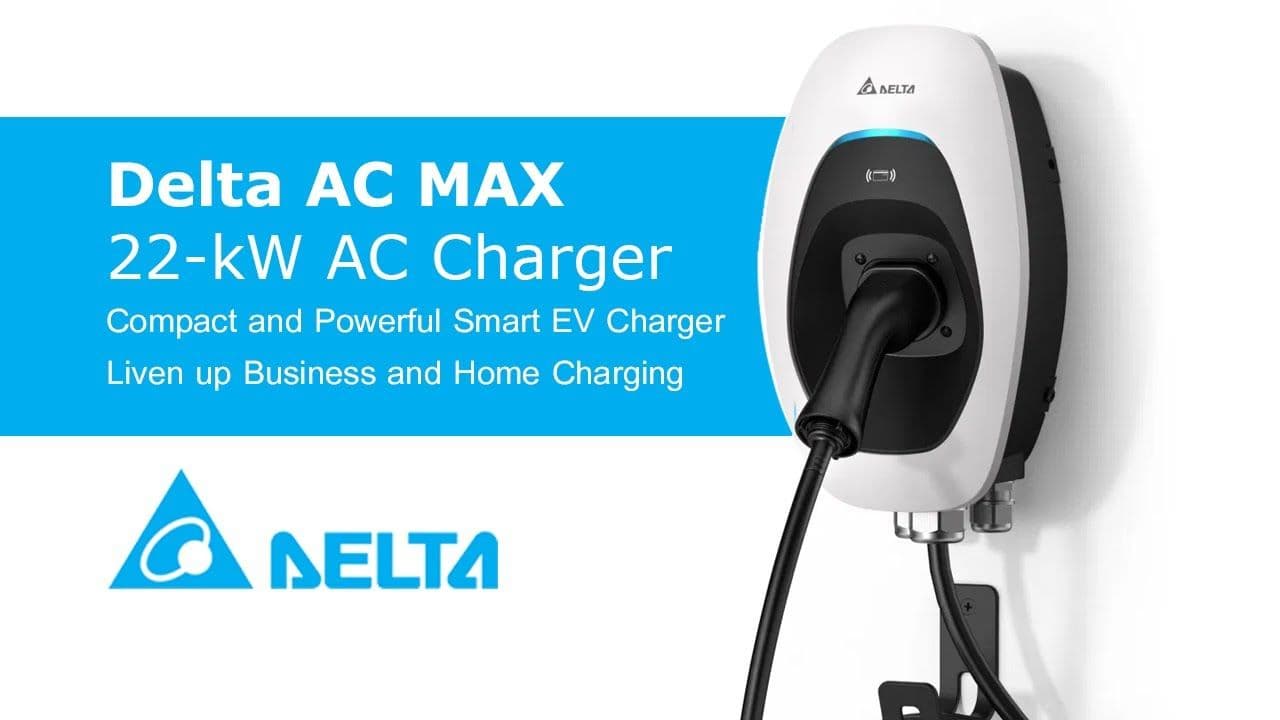
Taiwanese power electronics company Delta sells the AC MAX in Basic, Smart and Premium versions. The Smart version is the one for commercial sites because it adds OCPP and an RFID reader. The AC MAX also appears on the NSW Government's approved charger list for its EV destination charging grants.
It supports OCPP 1.6J, upgradable to OCPP 2.0, with Bluetooth, Ethernet, Wi-Fi and 4G connectivity. Installers can set a fixed current limit from 6A to 32A inside the unit. NHP, Delta's Australian distributor, handles load management for multi-charger sites on request, so confirm the setup before ordering.
- OCPP: 1.6J, upgradable to 2.0
- Load management: static current limit, with multi-charger load management through NHP
- Access: RFID, with ISO 15118 authentication listed
- Connectivity: Bluetooth, Ethernet, Wi-Fi and 4G
- Ratings: IP55 and IK09
- Warranty: 2 years, extendable through NHP
- Price: $2,290 for the 22kW Smart (Delta AC MAX specs)
Best for: sites that require 4G and RFID from a large electrical brand.
5. Ocular IQ Commercial
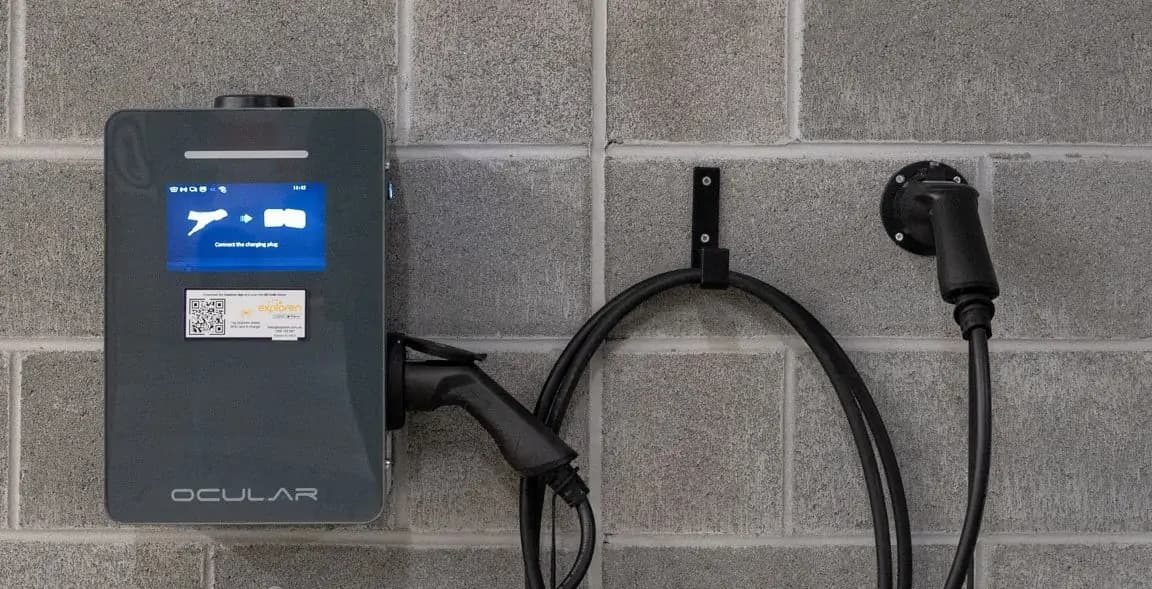
The Ocular IQ Commercial comes from EVSE Australia, a business founded by Australian EV charging specialists. It is the commercial version of Ocular's IQ range and appears on the NSW Government's approved charger list for its EV destination charging grants.
It supports OCPP 1.6J, with 2.0.1 available through a firmware upgrade. Load management runs through the separate Ocular Load Controller or OCPP smart charging profiles, and drivers authenticate with RFID cards.
- OCPP: 1.6J, with 2.0.1 via firmware upgrade
- Load management: Ocular Load Controller or OCPP smart profiles
- Access: RFID
- Power: 7.2kW single-phase or 22kW three-phase, socket or 5m tethered cable
- Connectivity: Ethernet and Wi-Fi, with optional 4G and Modbus
- Rating: IP54
- Warranty: 2 years, with extended warranties available
- Price: $2,279 excluding GST for the 22kW socket version (NSW grant list)
Best for: strata, destination and light commercial sites that want a local supplier.
6. MSI Eco Premium (Commercial)
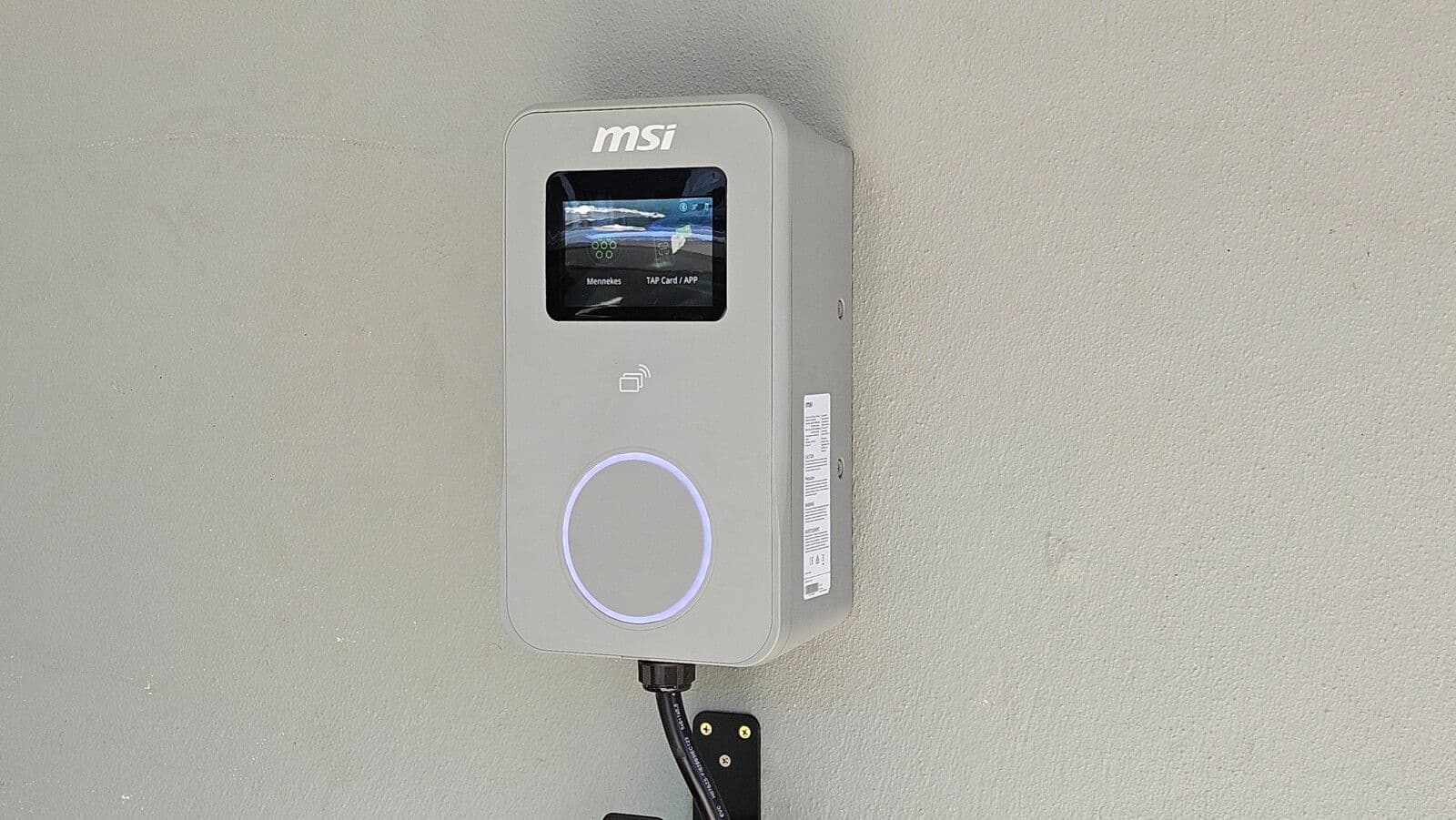
The MSI Eco Series replaces MSI's first-generation EV Life charger, which has featured in several commercial deployments in Australia. MSI hardware is installed at Sierra Hawthorn in Victoria, a 241-apartment building with 252 charge points delivered by NOX Energy. Eco Premium chargers also let shoppers charge at Scorptec's Clayton store in Melbourne.
The commercial versions of the Eco Premium add OCPP 1.6J, which the Open Charge Alliance certified in April 2026, plus Modbus solar integration and optional 4G. MSI builds the OCPP board in at the factory, so the home and commercial versions cannot be converted after purchase. Load management runs through a compatible energy management platform, such as the centralised system NOX Energy uses at Sierra Hawthorn.
Zecar tested the Eco Premium at a commercial site in Sydney and rated it Excellent. Its 5-inch screen shows charging status on the unit, which helps in shared car parks where drivers do not always have the app open.
- OCPP: 1.6J, certified by the Open Charge Alliance (commercial versions only)
- Load management: through a compatible energy management platform
- Access: RFID, app or QR code, plus MSI AutoCharge
- Power: 7kW single-phase or 22kW three-phase, tethered or socket
- Connectivity: Bluetooth, Wi-Fi and LAN, with optional 4G
- Ratings: IP65 and IK08
- Warranty: 3 years
- Price: on application (the home Eco Premium, without OCPP, is $1,199)
Best for: strata buildings and shared car parks that want an on-unit screen from a brand already used in large apartment deployments.

7. Wallbox Commander 2s
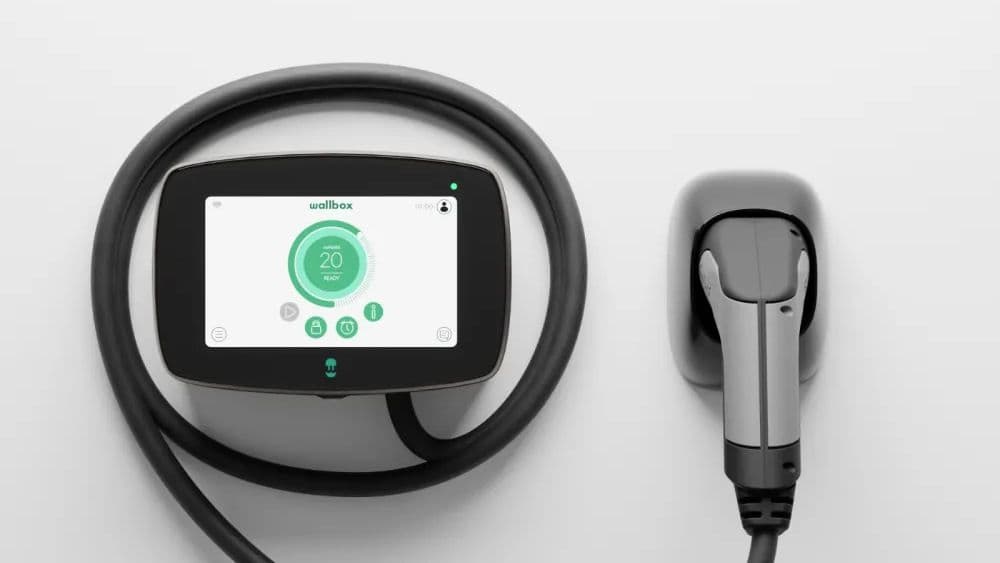
Wallbox sells the Commander 2s directly in Australia. Its datasheet lists OCPP compatibility, RFID user identification and Dynamic Power Sharing, plus an optional MID meter. Wallbox does not state which OCPP version the 2s supports, so confirm this before connecting third-party software.
- OCPP: compatible (version not stated)
- Load management: Dynamic Power Sharing
- Access: RFID
- Connectivity: Wi-Fi, Ethernet and Bluetooth, with optional 4G
- Ratings: IP54 and IK10
- Warranty: 3 years
- Price: $2,100 (22kW, 5m cable)
Best for: offices and small sites that want a polished unit with built-in power sharing.
8. StarCharge Artemis Smart 22kW
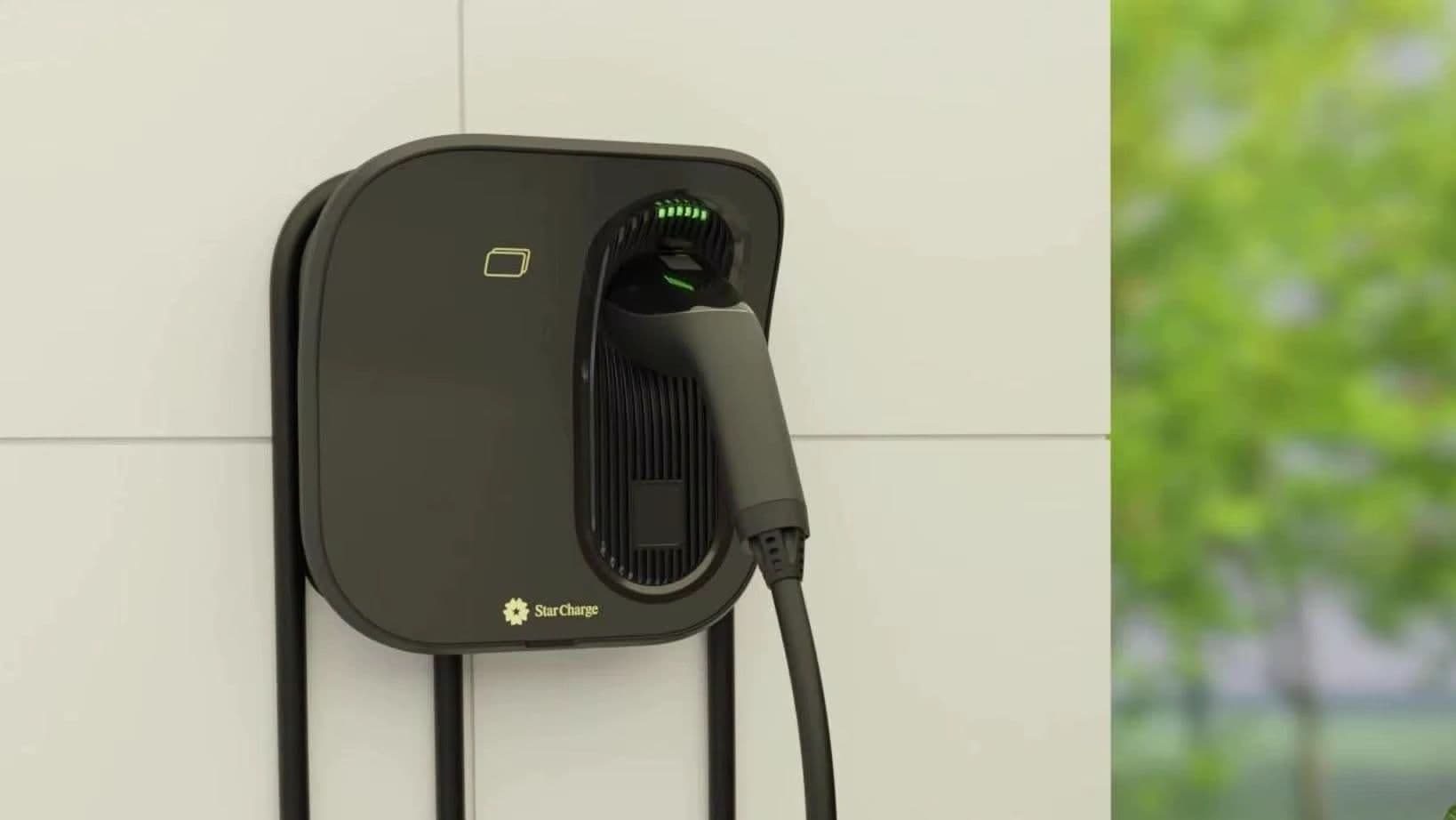
StarCharge sells the Artemis in Basic and Smart versions. Only the Smart version adds OCPP, so it is the one to choose for commercial sites, and it is the only Artemis model rated at 22kW. StarCharge pitches the Artemis range at homes, destination charging and car parks.
The Smart 22 supports OCPP 1.6J and authenticates drivers by RFID card or app. Local dynamic load management works with StarCharge's optional Peak Controller, connected over Ethernet. It also has 4G, Wi-Fi, Ethernet and RS485 connectivity, and an IK10-rated enclosure.
- OCPP: 1.6J
- Load management: local dynamic load management with optional Peak Controller
- Access: RFID card or app
- Connectivity: 4G, Wi-Fi, Ethernet, RS485 and Bluetooth
- Ratings: IP55 and IK10
- Cable: 5m tethered Type 2
- Price: on application (the 7kW Artemis Basic is $770)
Best for: council and destination car parks that want built-in 4G and a tough IK10 enclosure.

How much does commercial EV charger installation cost?

Installation is priced separately from the charger. Future Services estimates a simple single-phase 7kW installation at roughly $600 to $1,500 and three phase $800 to $2000 per charger. Multi-charger installations with load management typically fall between $8,000 and $20,000, depending on the number of units and site conditions.
The main factors that push up the cost of a commercial EV charging station are:
- Distance from the switchboard: longer cable runs cost more, and distant bays may need a dedicated EV distribution board
- Trenching: SolarX Energy puts trenching at $50 to $100 per metre for residential jobs, and commercial surfaces vary
- Supply capacity: a switchboard upgrade or larger supply may be needed, and moving to three-phase can require network approval
- Mounting: pedestals cost more than wall mounting
- Software: charge point management platforms often carry ongoing subscription fees
Load management lets a site add chargers without upgrading its electrical infrastructure. Load management is recommended for sites installing more than two or three chargers.
Zecar can connect businesses with qualified installers for commercial EV charger installation.
EV charger rebates and grants for Australian businesses
Funding for commercial charging changes often and differs by state. Check each program's current terms before you apply.
NSW EV Fleets Incentive
NSW EV Fleets Incentive (kick-start funding) closes to applications at 5pm on 30 November 2026. It covers battery electric vehicles plus optional smart charging infrastructure for eligible businesses. Sites with mixed AC and DC chargers can claim 50% of costs per port, capped at $18,000 to $30,000 per port depending on the vehicles supported and the DC charger type. Some sources put support for smart AC chargers at up to $3,000 per port, so confirm the current caps before you budget.
NSW kerbside charging and fleet funding
NSW is investing $16.5 million across 37 local government areas in kerbside charging and fleet funding. Commercial car parks are eligible for kerbside grants for the first time, and sites must use 100% renewable electricity.
Federal DRIVEN charger rebate
The DRIVEN charger rebate stream is for dealerships and EV repairers rather than general businesses, and it is currently closed or between rounds. One source lists up to $3,000 per eligible smart plug, capped at $21,000 per site, with an earlier version at $2,500 per charger. Another says the stream is closed and reopening soon, so check for the next round.
Household loan schemes that can cover a charger
These state schemes target households rather than businesses:
- ACT Sustainable Household Scheme: loans for homeowners that can cover a home charger or an EV. Sources disagree on the rate and limits, with one listing 3% interest up to $15,000 and another $2,000 to $20,000 at 3%. One source says the scheme ends in 2026 unless extended.
- Tasmania Energy Saver Loan Scheme: interest-free loans of up to $10,000, which can go towards a home EV charger and other efficiency upgrades.
- NSW Home Energy Saver: one source lists zero-interest loans of up to $15,000 for eligible upgrades, including Level 2 EV chargers. Only one source reports this, so check with the program before relying on it.
Fleet EV charging: what depots need
Most fleet vehicles park overnight, so AC charging is usually enough. A 7kW charger running for 10 hours delivers around 70kWh before charging losses, which is similar to the battery size of many electric vans.
Depots should prioritise OCPP for integration with fleet software, RFID or app access so charging can be allocated to each driver or vehicle, and load management so the depot does not exceed its supply. For businesses moving to electric vans, Zecar's EV fleet transition service can help plan vehicle choice and charging together.


Commercial EV charger FAQs
How much does a commercial EV charger cost?
Among the chargers on this list with published prices, supply costs run from $968 for the Autel 7.4kW to $2,810 excluding GST for the Schneider EVlink Pro AC 22kW. Installation is extra. A simple single-phase 7kW install is roughly $600 to $1,500 per charger, and three-phase is $800 to $2,000. Multi-charger sites with load management typically cost between $8,000 and $20,000.
What does commercial EV charger installation involve?
A licensed electrician connects the charger to the site's supply. The main costs are the cable run from the switchboard, any trenching, and whether the supply needs upgrading, and moving to three-phase can require network approval. Mounting and software subscriptions add to the total. Zecar can connect businesses with qualified installers.
What size commercial EV charger does a site need?
AC charging suits most workplaces and depots. Single-phase chargers deliver up to 7.4kW and three-phase chargers up to 22kW. The car's onboard charger sets the final speed, and many EVs accept only 7kW or 11kW on AC, so a 22kW charger will not charge every car at 22kW. A 7kW charger running for 10 hours delivers around 70kWh before losses, which covers overnight fleet charging.
What is the difference between a commercial and a home EV charger?
A commercial charger adds control and reporting to the job a home EV charger does. It supports OCPP so it can connect to charge point management software, controls access by RFID or app, and shares power across bays with load management. It also carries tougher weather and impact ratings. Chargers that bill drivers per kWh must meet National Measurement Institute trade measurement rules.
Does a commercial EV charger need OCPP?
For most commercial sites, yes. OCPP lets a charger work with software from another company, so a business can bill drivers, pull usage reports and change provider later. OCPP 1.6J is the current baseline, and OCPP 2.0.1 adds stronger security and better smart charging controls.
Can strata buildings and tenants install EV chargers?
Usually yes, but the owners corporation or landlord has to approve the installation first, and the rules differ by state and territory. Load management lets a building add many bays without a supply upgrade. NOX Energy delivered 252 MSI charge points at Sierra Hawthorn, a 241-apartment building in Victoria.
Are there rebates for commercial EV chargers?
Yes, but funding varies by state and changes often. The NSW EV Fleets Incentive closes to applications at 5pm on 30 November 2026 and can cover smart charging infrastructure for eligible businesses. The rebates section above covers NSW kerbside funding and other schemes.
Zecar has previously produced content in partnership with Autel Energy and MSI. This list is based on conversations with commercial EV charger installers, published specifications and pricing.


About the author

Danny is a consultant and entrepreneur working at the cutting edge of the electric vehicle and energy transition. He is passionate about educating and helping consumers make better decisions through data.
