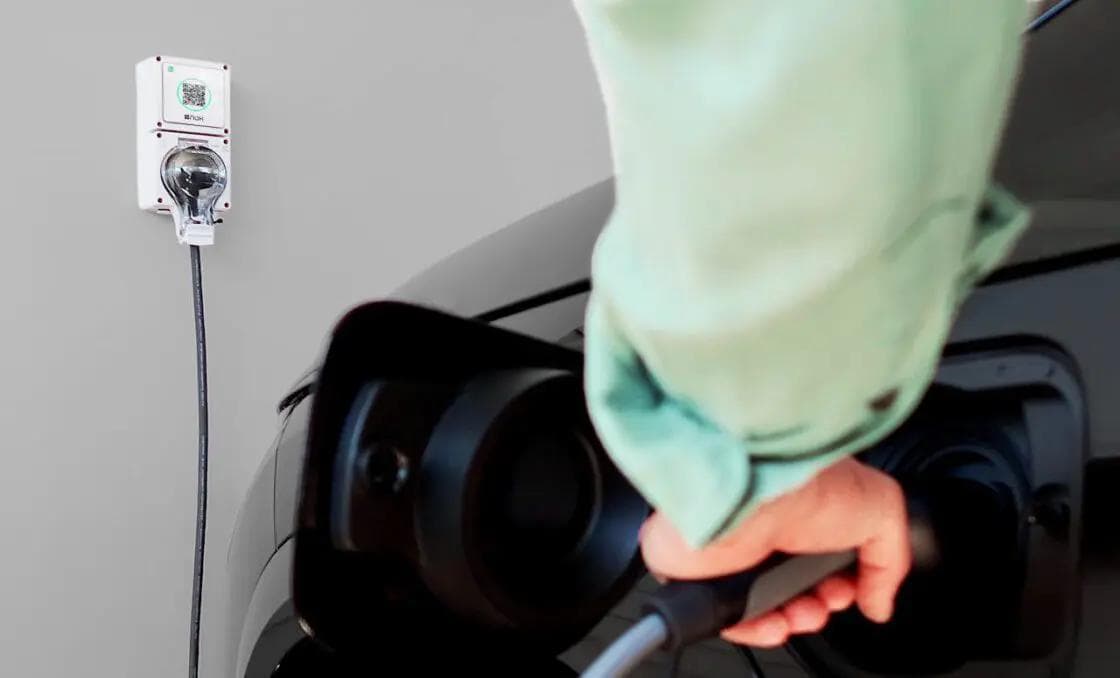
The new rules eliminate one of the biggest administrative headaches in EV fleet management: tracking actual electricity consumption for home charging. Previously, employers faced complex calculations or needed to install expensive smart chargers or separate metering systems to accurately determine reimbursement amounts. This created a significant barrier to EV adoption in company fleets.
With PCG 2024/2, the ATO has introduced a flat rate of 4.20 cents per kilometre that applies to any FBT year or income year starting on or after 1 April or 1 July 2022. This means employers can now reimburse employees for home charging costs without requiring detailed electricity bills, smart charger data, or separate metering infrastructure. The simplicity of this approach is expected to accelerate EV adoption in Australian fleets and make novated leases more attractive and easier to administer.
The Simple Rule: 4.20 Cents Per Kilometre
At the heart of PCG 2024/2 is a straightforward flat rate: 4.20 cents per kilometre for battery-electric vehicles. This rate is applicable for any FBT year or income year starting on or after 1 April or 1 July 2022, providing retrospective relief for employers who have been struggling with home charging reimbursement calculations.
This is by far the simplest reimbursement method available. Employers only need two pieces of information: the total kilometres travelled by the vehicle during the year, and odometer readings at the start and end of the year. That's it. No electricity bill reconciliation, no charger data downloads, no expensive hardware installations, and no complex calculations.
The flat rate approach recognises that while electricity costs vary by state and charging times, the 4.20 cents per kilometre figure provides a reasonable average that balances simplicity with fairness. It's based on average electricity costs and typical EV efficiency rates, making it suitable for the vast majority of EVs on Australian roads.
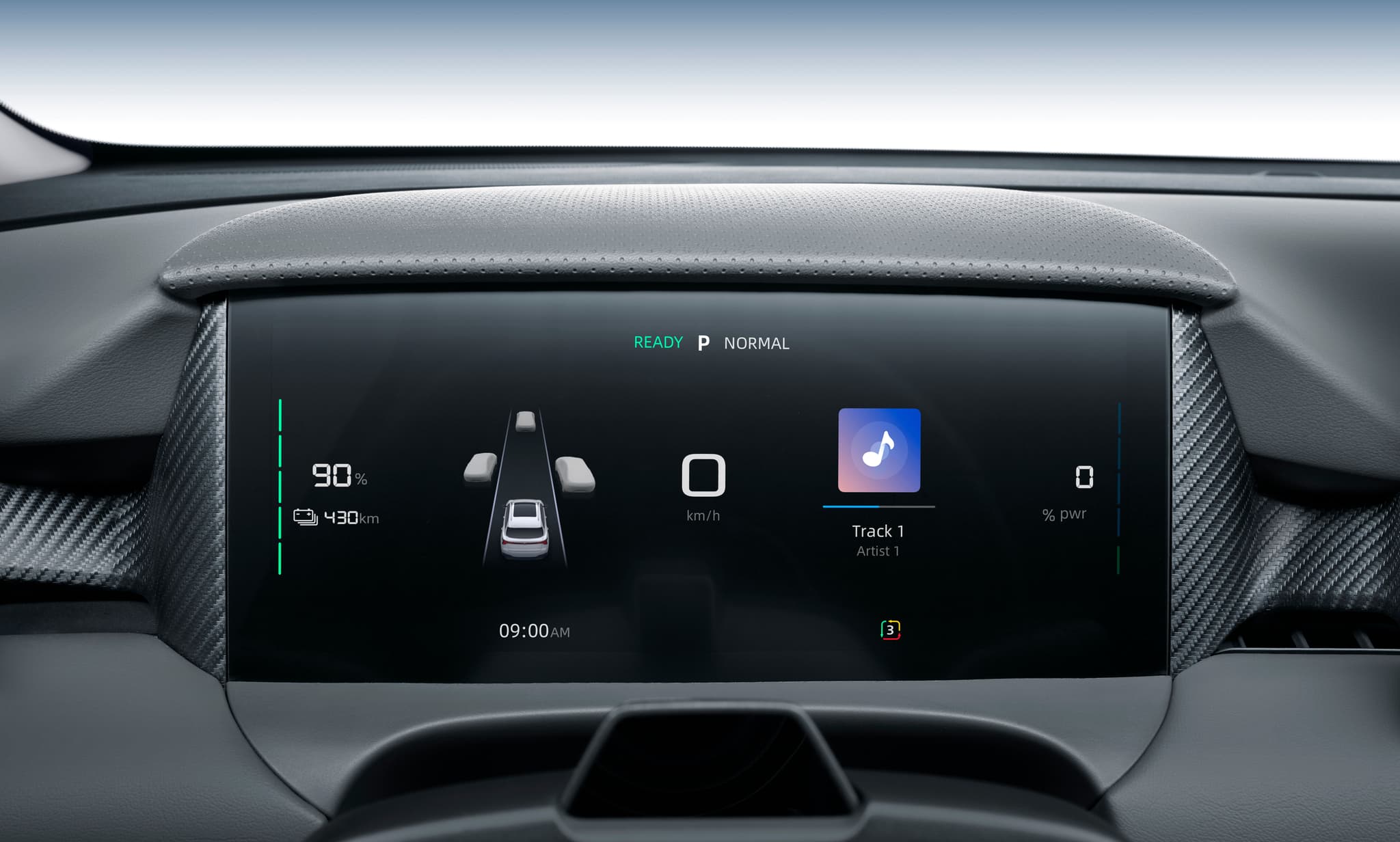
For fleet managers, this means you can implement a standardised reimbursement process across your entire EV fleet without worrying about individual vehicle efficiency differences or regional electricity price variations. The administrative burden is minimal, and the process is transparent and easy to audit.
How to Calculate the Reimbursement
The calculation couldn't be simpler. The formula is:
Home charging cost = Total kilometres travelled × 4.20 cents
The ATO provides a clear example in the guidance: if an employee travels 10,000 kilometres in their EV during the year, the home charging reimbursement would be 10,000 km × 4.20c = $420.
This calculated amount can be used in several ways depending on your fleet structure:
• As a recipient contribution under the operating-cost method for FBT calculations
• As a recipient contribution under the statutory FBT method
• As an exempt expense-payment fringe benefit for employee-owned vehicles, including novated leases
To help fleet managers understand the financial impact, here are some common scenarios:
These amounts represent genuine cost recovery for employees who are charging their company or novated lease EVs at home. For a typical fleet vehicle travelling 15,000-20,000 kilometres annually, the reimbursement ranges from $630 to $840 per year, a meaningful amount that ensures employees aren't out of pocket for electricity costs.
Commercial Charging Rules
One important limitation of the ATO's simplified method relates to commercial or public charging. Most EVs cannot accurately report what percentage of their charging occurred at home versus at public charging stations. This creates a compliance challenge that the ATO has addressed with clear rules.
If the vehicle cannot accurately report home-charging percentage (which applies to most EVs currently on the market), employers must choose one of two approaches:
Option 1: Use the 4.20c/km ATO rate for all kilometres travelled, and ignore any commercial charging receipts. This means even if the employee uses public fast chargers occasionally, you apply the flat rate to total kilometres and don't separately reimburse commercial charging costs.
Option 2: Reimburse actual commercial charging costs only (based on receipts), and do not apply the ATO's 4.20c/km rate at all. This approach works for employees who predominantly use public charging infrastructure.
The critical rule is: you cannot mix both methods. You must choose one approach and apply it consistently for that vehicle for the entire year.
However, there is an exception: if the vehicle can accurately report home-charging percentage through its telematics system (some OEM platforms offer this capability), you may claim both commercial charging costs based on receipts AND the home-charge amount using the ATO method. This provides the most accurate reimbursement but requires sophisticated vehicle tracking systems.
For most fleet managers, the simplest approach is Option 1: apply the 4.20c/km rate to all kilometres and treat it as covering all charging costs, whether at home or commercially. This eliminates the need to collect and process charging receipts while still providing fair reimbursement.
Plug-In Hybrid (PHEV) Requirements
While the rules for battery-electric vehicles are straightforward, plug-in hybrid electric vehicles (PHEVs) require a more complex methodology. This is because PHEVs use both petrol and electricity, and the ATO needs to ensure that only the electric portion of travel is reimbursed at the 4.20c/km rate.
For PHEVs, fleet managers must follow this step-by-step process:
1. Substantiate actual petrol costs for the year (collect all fuel receipts)
2. Calculate total litres of petrol purchased during the year
3. Convert litres to petrol kilometres using the vehicle's fuel consumption rate
4. Subtract petrol kilometres from total kilometres travelled to determine electric kilometres
5. Apply the 4.20c rate to electric kilometres only
6. Add petrol costs and electricity costs to determine total fuel cost for FBT purposes
This methodology is mandatory if you want to use the ATO's simplified approach for PHEVs. There's no shortcut or flat rate option that avoids the need to track petrol consumption.
The complexity of PHEV calculations creates a significant administrative burden compared to pure EVs. Fleet managers need to collect and verify fuel receipts, calculate fuel consumption rates, and perform multiple calculation steps. This may influence fleet policy decisions, potentially favouring battery-electric vehicles over PHEVs for their administrative simplicity.
For organisations with mixed fleets containing both EVs and PHEVs, it's worth considering whether the additional complexity of PHEV administration justifies their inclusion in the fleet, particularly as pure EV range and charging infrastructure continue to improve.
FBT Implications for Employers
Understanding how the ATO's 4.20c/km method interacts with Fringe Benefits Tax (FBT) is crucial for fleet managers and payroll teams. The good news is that the method integrates seamlessly with existing FBT frameworks and can be used across multiple benefit types.
The ATO method can be applied to:
• Car fringe benefits (calculated using either the statutory formula method or the operating cost method)
• Car expense payment benefits
• Residual fringe benefits
• Reportable Fringe Benefit Amounts (RFBA), even if the EV is exempt from FBT under the Electric Car Discount rules
Key FBT Scenarios
a) Novated Lease Reimbursement: When an employer reimburses an employee for home charging costs on a novated lease vehicle, this is treated as an exempt car-expense payment benefit. This means there's no FBT payable on the reimbursement itself, making it a tax-effective way to support employees with EVs on novated leases.
b) Recipient Contributions: If an employee pays for home charging out of their own pocket and declares the amount using the ATO rate, this acts as a recipient contribution that reduces the taxable value of the car fringe benefit. This works under both the statutory formula method and the operating cost method, providing flexibility for different FBT calculation approaches.
c) FBT-Exempt EVs and RFBA: Even if your EV qualifies for the Electric Car Discount and is exempt from FBT, you still need to calculate the taxable value for Reportable Fringe Benefits Amount (RFBA) purposes if it exceeds $2,000. The ATO's 4.20c/km method can be used in this calculation, ensuring consistency across all reporting requirements.
The integration with existing FBT frameworks means fleet managers don't need to develop entirely new processes. The 4.20c/km rate simply provides a standardised way to calculate the electricity cost component, which then flows through to existing FBT calculations and reporting systems.
Record-Keeping Requirements
While the ATO's method significantly simplifies the calculation process, there are still important record-keeping requirements that employers and employees must meet to rely on the guidance. Proper documentation is essential for audit purposes and compliance.
What Employers Must Keep
To rely on the ATO's 4.20c/km method, employers must maintain the following records:
• Odometer readings at the start and end of the FBT year (1 April to 31 March) or income year (1 July to 30 June)
• For PHEVs: evidence of actual petrol costs for the year (fuel receipts)
• If using the operating cost method for FBT: a valid logbook showing business versus private use
• A declaration from the employee confirming the kilometres travelled and that the vehicle was charged at home
The odometer readings are the most critical piece of evidence. Fleet managers should implement a systematic process for collecting these at the start and end of each FBT year. This could be done through:
• Photographs of the vehicle's odometer display
• Service records that include odometer readings
• Telematics data from fleet management systems
• Employee declarations with odometer readings
What Employees Must Keep
Employees who are claiming deductions for home charging costs (for example, if they own the vehicle and use it for work purposes) must keep:
• At least one electricity bill for the year (to demonstrate they have access to electricity at their residence)
• Logbook records showing work-related travel (if claiming via the logbook method)
• Odometer readings at the start and end of the income year
The requirement for only one electricity bill is deliberately minimal—the ATO recognises that the flat rate method eliminates the need for detailed electricity consumption tracking. The bill simply serves as evidence that the employee has electricity available at their home.
Fleet managers should develop clear policies and procedures for record collection and retention, ensuring all required documentation is gathered at the appropriate times throughout the year. Setting calendar reminders for odometer reading collection at the start and end of the FBT year is a simple but effective compliance measure.
Transitional Rules
The ATO recognises that many employers and employees were not aware of the need to record odometer readings at the start of the 2022-23 and 2023-24 FBT years, as the guidance was still being developed. To address this practical challenge, the ATO has provided transitional relief.
If odometer readings were not recorded at the start of the relevant year, the ATO will accept reasonable estimates based on available evidence such as:
• Service records that include odometer readings from around the start of the year
• Logbook records showing kilometres travelled
• Historical travel patterns and average annual kilometres
• Telematics or fleet management system data
This transitional relief applies to:
• Battery-electric vehicles for the 2022-23 and 2023-24 FBT years
• Plug-in hybrid electric vehicles for the 2024-25 FBT year (as the PHEV methodology was finalised later)
The key requirement is that the estimate must be reasonable and based on objective evidence. Fleet managers should document the methodology used to arrive at the estimate and retain supporting evidence in case of audit.
From the 2024-25 FBT year onwards (for EVs) and 2025-26 onwards (for PHEVs), actual odometer readings will be required—estimates will no longer be acceptable. This gives fleet managers time to implement proper recording processes going forward.
zecar's take
This ATO guidance is a practical win for fleet managers and employers. The 4.20 cents per kilometre rate removes a major administrative burden that has held back EV adoption in company fleets. Previously, employers faced complex calculations or needed to install separate metering for home charging, adding cost and complexity to EV programs.
The flat rate makes novated leases more attractive and easier to administer. For employees, it means fair reimbursement without needing expensive smart chargers or separate electricity accounts. The method is transparent and simple to audit.
However, the PHEV rules remain complicated, requiring detailed petrol tracking. This may push fleet managers toward pure EVs rather than plug-in hybrids, which could accelerate the transition to fully electric fleets.
The inability to mix commercial and home charging rates (unless the vehicle has accurate reporting) may disadvantage employees who regularly use public chargers. As telematics improve, this limitation should become less relevant.
Overall, this guidance provides the clarity the market needed. It should encourage more businesses to add EVs to their fleets and make novated leases more accessible to employees. The ATO has struck a good balance between simplicity and fairness.
