
Key Points
- Coles will install fast EV chargers at dozens of supermarkets over the next two years in partnership with Evie Networks.
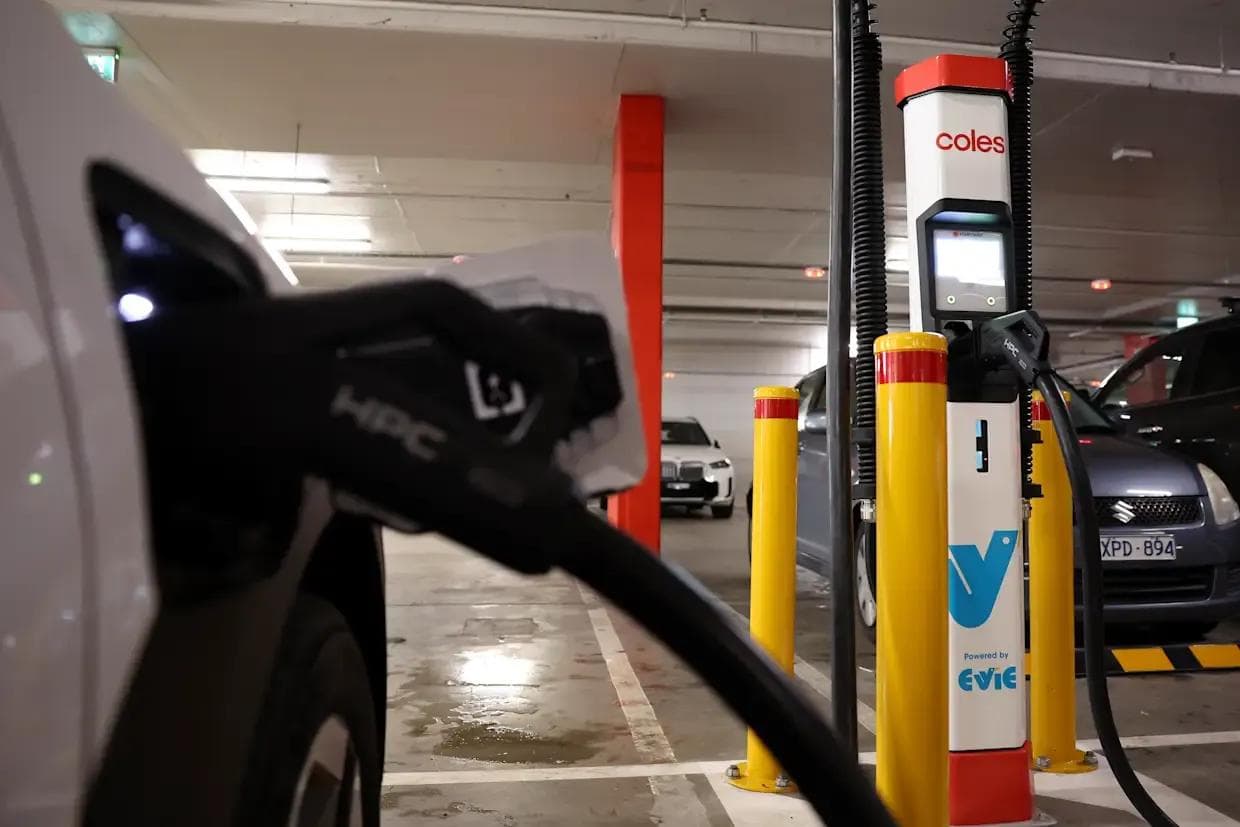
- The first site opens at a Coles store in Melbourne's east, running four charging bays on Kempower hardware.
- EV sales in Australia hit a record in June, reaching 23.5 per cent of new car sales, more than double the share recorded in February.
Coles is installing fast electric vehicle chargers at supermarkets across the country over the next two years. The retailer has partnered with charging network Evie Networks to roll out 30 stations, giving EV-driving shoppers somewhere to charge while they do the groceries.
The rollout follows a record month for EV sales in Australia. In June, electric vehicles accounted for 23.5 per cent of new car sales, more than double the share in February, driven largely by BYD and Tesla. Rising petrol prices, pushed up by the closure of the Strait of Hormuz, are adding to the pressure on drivers to look at alternatives.
First site opens in Melbourne
The first Coles charging site is at a supermarket in Melbourne's east. It runs Kempower charging technology across four bays, the first Coles location to use this hardware. More sites are expected to open in Victoria and Queensland by the end of the year, with the full 30-station rollout planned over two years. Coles has not yet detailed a state-by-state schedule beyond this.

Why Coles is backing charging infrastructure
Coles head of energy Jane Mansfield said EV drivers look for charging that fits around the time they already spend at a location. She said the rollout is meant to build a more accessible charging network and give shoppers another reason to choose Coles.
Evie Networks chief executive Chris Mills said supermarket charging fits naturally into a driver's daily routine, and the partnership is designed around that.
Evie Networks' existing footprint
Evie Networks, backed by businessman Trevor St Baker, already operates more than 1000 fast chargers across 340 locations in Australia. The company has charging partnerships with several other businesses, including Hungry Jack's.
Evie has also been the subject of takeover interest. Reports last month said the company had engaged corporate advisory firm Tallarook to explore a sale, drawing interest from trade players including Chargefox, which is owned by state motoring clubs NRMA and RACV. Evie separately raised $50 million in debt from Canberra credit fund Infradebt to support its expansion.
Woolworths has already started
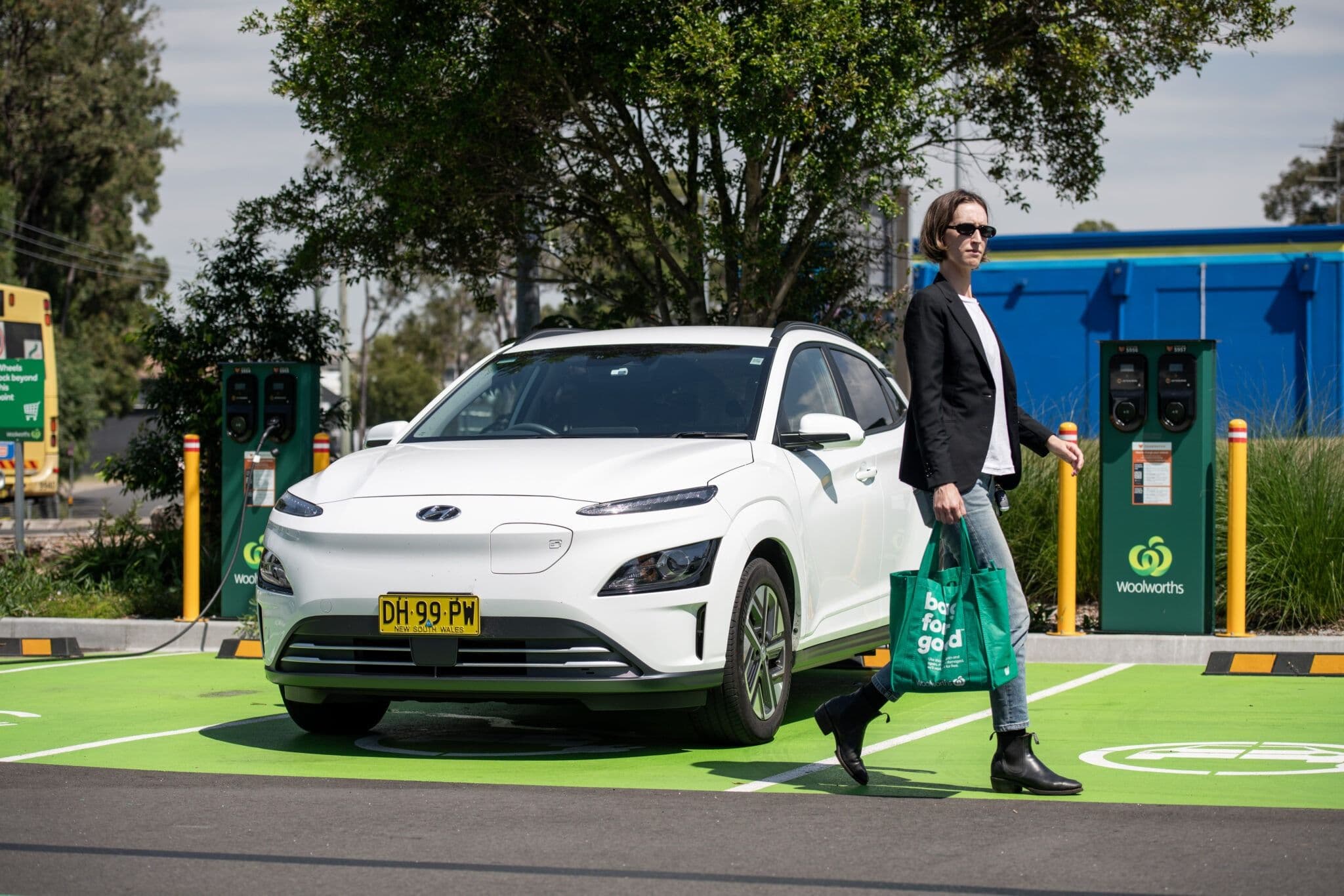
Coles isn't the first major supermarket chain into charging. Woolworths has already rolled out more than 100 EV charging plugs across roughly 20 to 25 supermarket locations nationwide, working with JET Charge and Chargefox.
Its North Parramatta store in Sydney is one example: eight plugs split evenly between four DC Kempower chargers and four AC Chargemate units, run through the Chargefox network.
A trend playing out overseas too
Supermarkets adding charging isn't unique to Australia. In the US, Walmart has become one of the fastest-growing EV charging networks in the country. It added 368 new charging ports in the second quarter of 2026 alone, second only to Tesla among all US charging operators that quarter, and ahead of established networks like Electrify America and EVgo.
This is a worldwide trend we are seeing across the globe. Retailers with large carparks and reliable foot traffic are becoming charging destinations in their own right, not just petrol station alternatives.
Supermarket EV charging rollouts compared
Retailer | Charging partner(s) | Scale | Market |
Coles | Evie Networks | 30 stations planned over 2 years | Australia |
Woolworths | JET Charge, Chargefox | 100+ plugs across ~20-25 locations | Australia |
The bigger picture on EV sales
EV sales in Australia climbed to a record in June, with EVs making up 23.5 per cent of new car sales, according to Evie's annual driver survey conducted in May. That's more than double the February figure. BYD and Tesla accounted for most of the growth. Once concentrated in inner-city buyers, EV uptake is now broadening as fuel prices climb, giving charging providers a bigger incentive to build out sites like these.
Add zecar as a preferred source on Google Search 🔍


About the author

Danny is a consultant and entrepreneur working at the cutting edge of the electric vehicle and energy transition. He is passionate about educating and helping consumers make better decisions through data.
