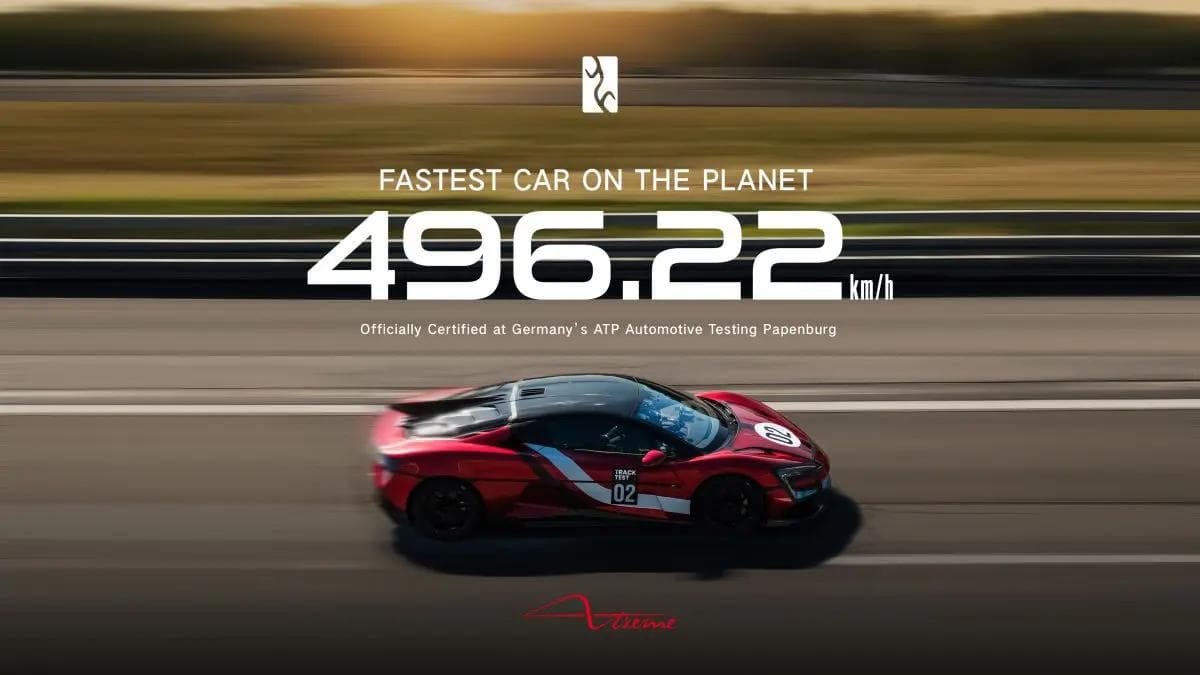
BYD has turned the global hypercar conversation on its head. A few months ago, the company’s Yangwang division pushed an electric prototype past a speed that sounded impossible. The U9 Xtreme development car clocked 496 kilometres per hour and dethroned some of Bugatti’s most outrageous combustion-powered machines. Until recently, everything about that record-smashing run lived online, in test-track videos and whispers from engineers.
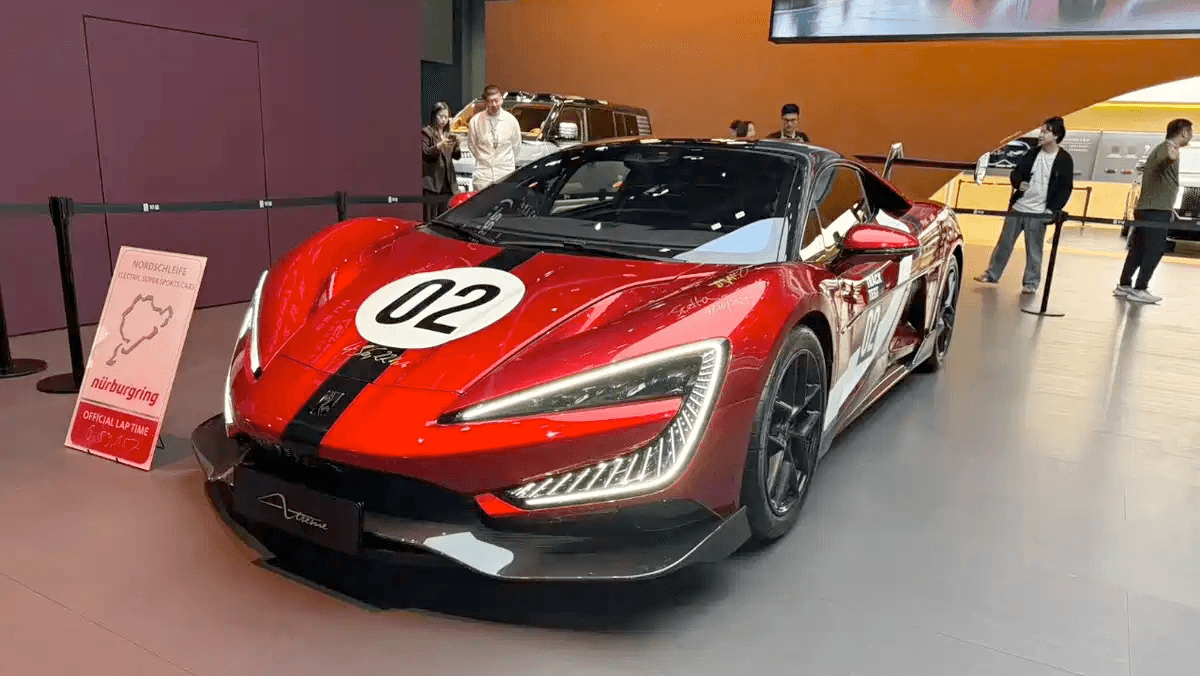
That all changed when the doors opened at the 2025 Guangzhou Auto Show. BYD wheeled the U9 Xtreme into the spotlight for the first time. Under the expo lights, painted in a deep metallic red, the hypercar drew thousands of people into the Yangwang stand. I was among them, and no photo has ever captured how extreme this machine looks up close. It carries the presence of a prototype fighter jet that somehow became road legal.
Visitors crowded around the speed-record display, which showed footage of the German proving ground where the 496 km/h run was recorded. It was the star of the entire event.
The Lap Time Heard Around the World
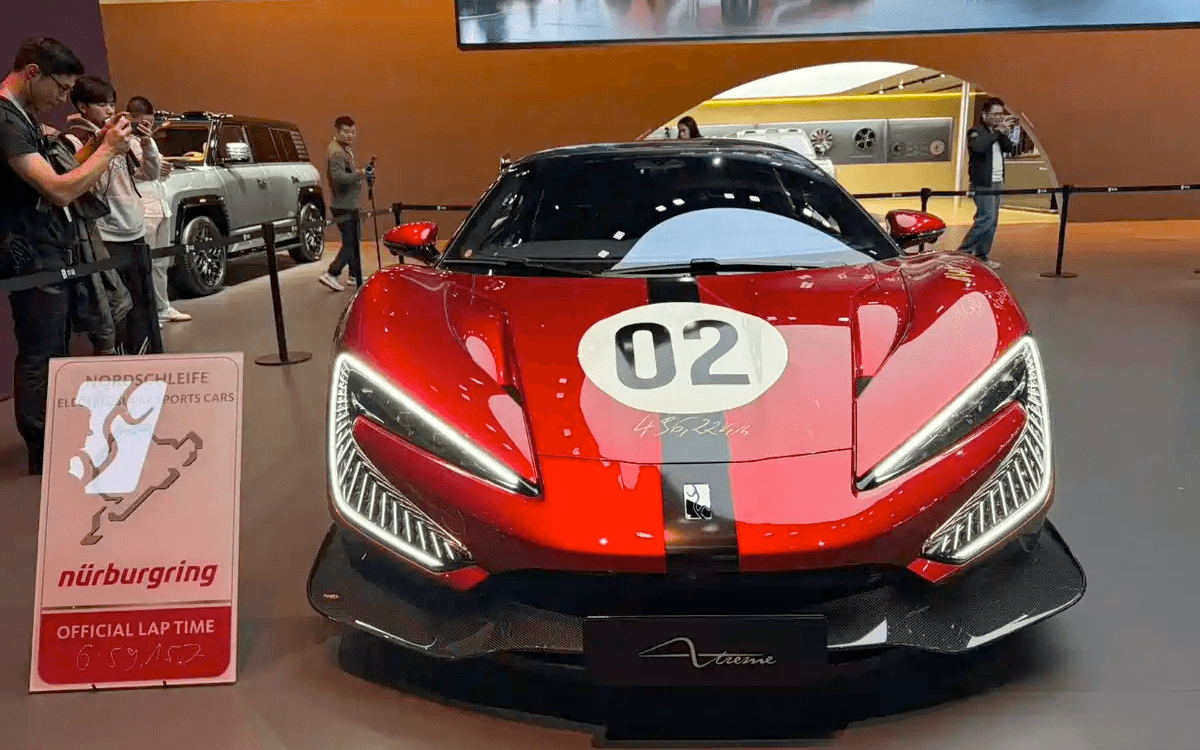
The U9 Xtreme didn’t just chase top speed. It also punched through one of performance motoring’s biggest benchmarks: the Nürburgring Nordschleife. The final number was 6 minutes and 59.157 seconds, comfortably under the seven-minute barrier that keeps engineers awake at night.
For context:
- The Xiaomi SU7 Ultra previously held the fastest electric production car lap
- That time was just under 7 minutes and 5 seconds
The U9 Xtreme not only broke that record, it did so with the confidence of a car that still has more to give.
On home turf in China, it has been shredding circuits as well. At the Shanghai International Circuit, the car stopped the clock at 2 minutes and 04.563 seconds. BYD’s own Weibo page shared the run, noting that conditions were not ideal yet the team continued regardless. The tone of the post made it clear that this is a development program fuelled by stubborn ambition.
▶️MORE: 5 Cheapest Electric Cars in Australia (2025)
From First U9 to Full Xtreme Beast
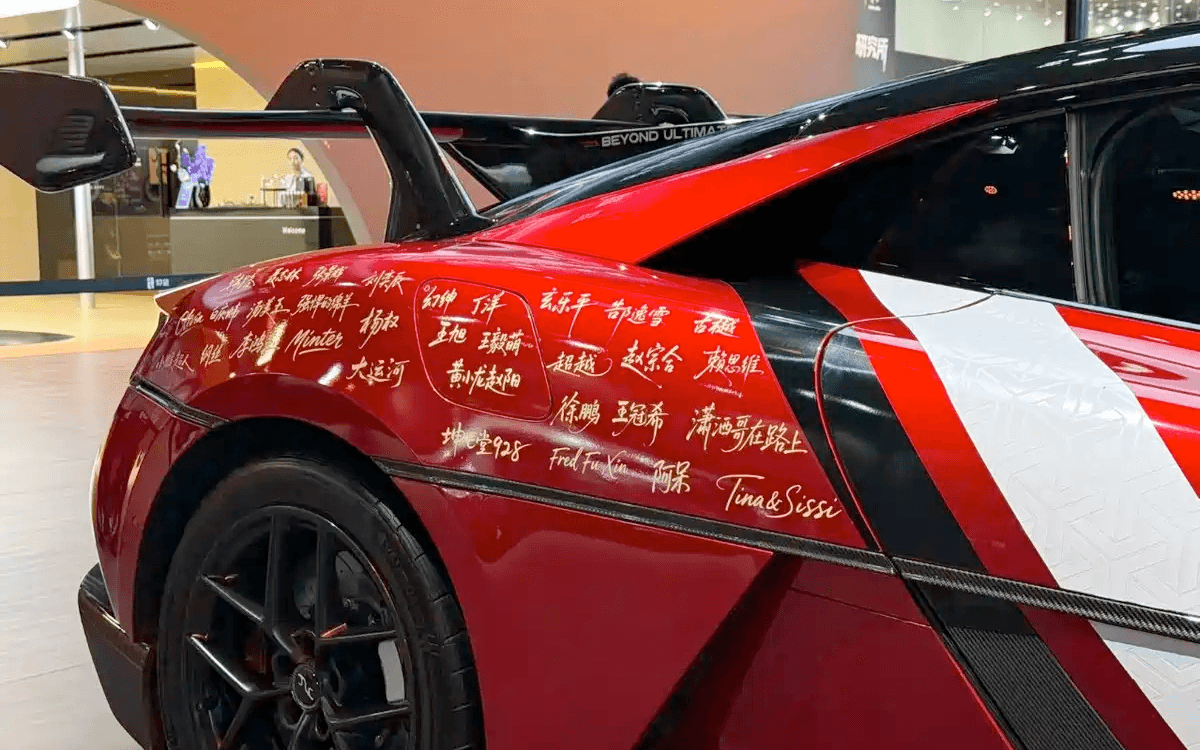
The original Yangwang U9 launched in 2023 with huge power and even bigger expectations. Early prototypes were caught exceeding 375 km/h during testing. That car used a quad-motor configuration that delivered 960 kW, which already put it among the most powerful road-legal EVs in the world.
Within months, Chinese regulatory filings hinted at something wilder. Engineers were preparing a variant capable of producing 2200 kW using four 555 kW motors. That car became the U9 Xtreme and later delivered the 496 km/h record.
The regular U9, which is already on sale in China from the equivalent of 230 thousand Australian dollars, manages 0 to 100 kilometres per hour in around 2.36 seconds. The Xtreme version is expected to eclipse that, although BYD is keeping the specific figure quiet for now.
Both versions share the company’s 1200 volt electrical platform and an 80 kWh Blade battery, good for up to 450 kilometres CLTC. In real-world WLTP terms, that’s likely mid 300s. At full throttle on a track, much less again.
Only 30 Xtreme cars are planned. That number alone guarantees collector status.
Aerodynamics That Border On Excess
BYD did not simply add power. The U9 Xtreme’s body is almost entirely redesigned to cope with the insane speeds.
Highlights include:
- A dual-channel bonnet design that feeds high-pressure air over the front end
- A massive carbon fibre front splitter with deep, downward-curved endplates
- Front fender extensions and a waistline that sweeps dramatically toward the rear
- 20 inch lightweight twin five-spoke wheels
- High performance semi slick GitiSport e GTR2 PRO tyres rated for 500 km/h
- Titanium alloy brake calipers
- An upgraded carbon ceramic braking package with expanded cooling area
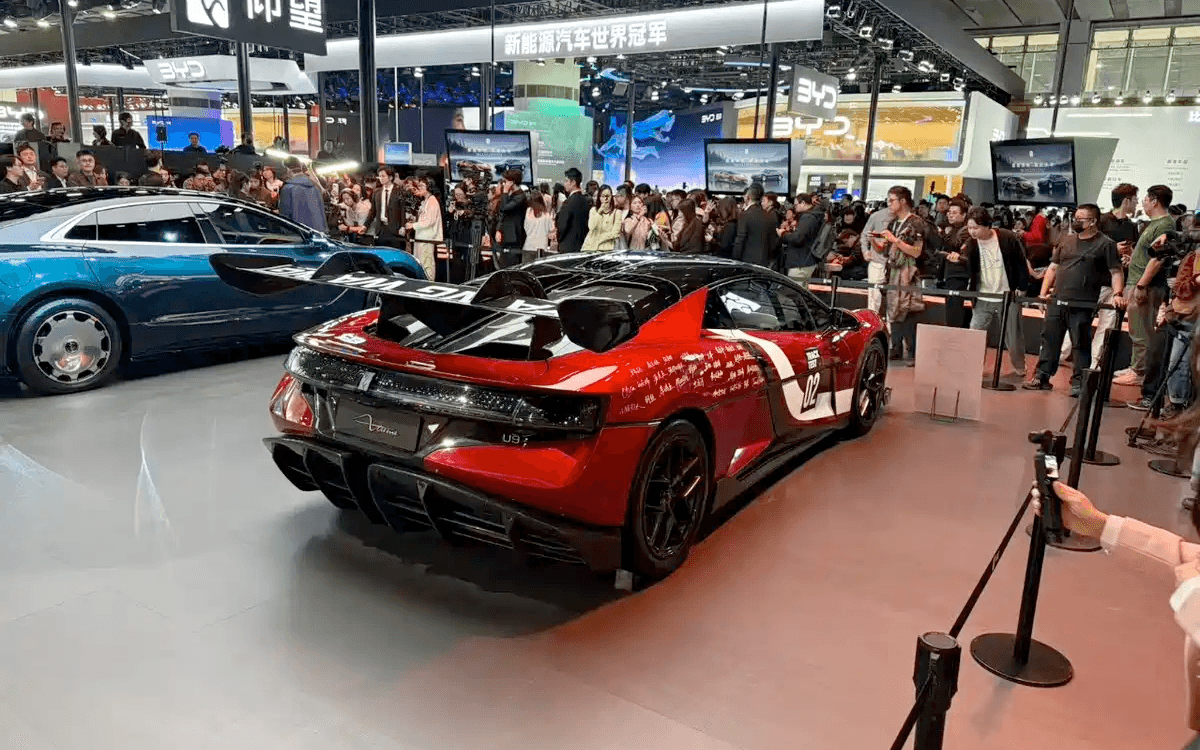
At the rear, things look even more serious. The window area is sculpted with layered aero blades, feeding air into a towering swan-neck carbon wing. Below it, the bumper houses a double-layer diffuser that would not look out of place on a Le Mans prototype.
This is a car shaped by airflow rather than trends.
▶️MORE: What BYD electric cars are coming to Australia?
The Tech That Makes It All Work
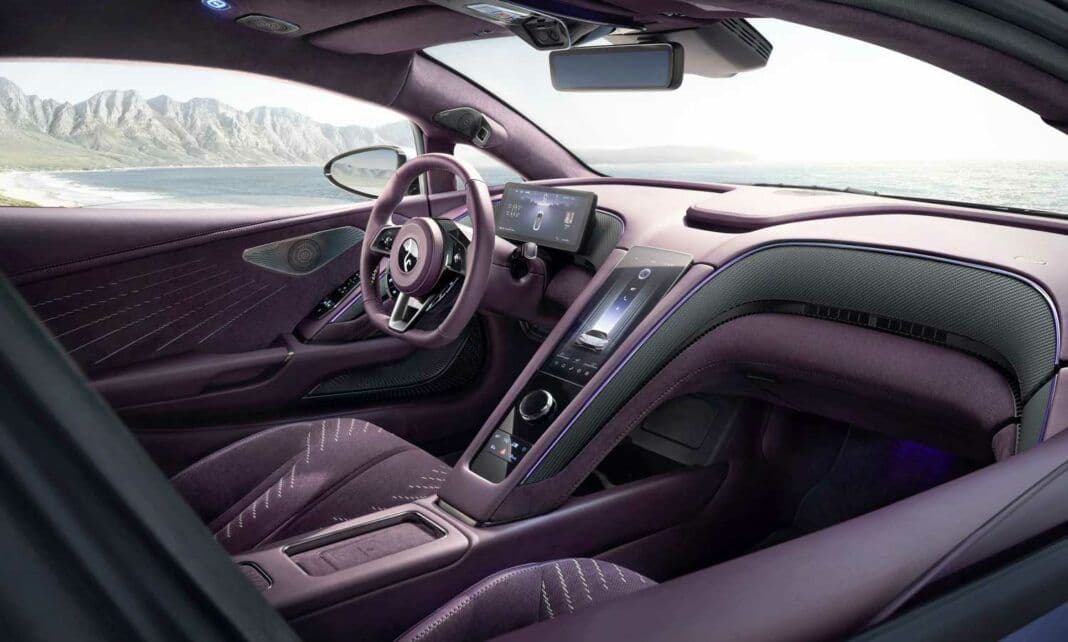
Under the skin, BYD combines its e4 all-wheel drive system with DiSus X active body control. The four motors distribute torque individually to each wheel while the suspension uses an external dual-valve layout that independently manages upward and downward wheel movement. The result is near-instant vertical response and razor sharp torque vectoring.
Key technical elements:
- 1200 V architecture
- Four motors with a combined output of 2220 kW or 2977 horsepower
- Power-to-weight ratio of 1217 hp per tonne
- Track grade Blade Battery with new cooling and low resistance design
- Battery discharge rate of up to 30C
▶️MORE: Best Selling Electric Cars in Australia in 2025
What Comes Next for Performance EVs
The U9 Xtreme might be limited to 30 units, but technology never stays limited for long. BYD has already been testing the upcoming Denza Z for a 2026 release, and engineers hinted that lessons from the Xtreme program will influence future high-performance road cars. The trickle-down could be significant. High discharge batteries, advanced aero modelling, rapid torque vectoring and ultra high voltage systems are all technologies that scale surprisingly well.
If one thing is obvious from Guangzhou this year, it is that electric hypercars are no longer niche experiments. They are becoming proof-of-concept machines for the next generation of fast EVs. And if BYD can turn what it learned from a 496 kilometre per hour monster into something more attainable, then the next few years are going to be very exciting for Australian EV fans.
