
Key Points
- Victoria has released its EV Charging Regulatory Statement, setting out steps to lower charging costs, speed up network connections and remove barriers to kerbside charging.
- EV owners can already save around $2,000 a year on fuel and maintenance. Vehicle-to-grid technology could add another $1,000 in annual savings.
- NSW has also updated its EV strategy and introduced a right-to-charge law giving apartment owners the ability to install EV chargers.
The Victorian Government has released its EV Charging Regulatory Statement. The document sets out new steps to remove barriers slowing down the rollout of EV chargers across the state.
Victoria already has around 100,000 EVs on its roads and approximately 300 public fast charging sites. But the government says more needs to be done to support the private market as EV sales continue to grow.
The statement focuses on four priority areas: affordable charging rates, faster and cheaper network connections, kerbside charging access, and vehicle-to-grid (V2G) technology.
Where Victoria Stands Now
Victoria is one of the leading states in EV sales as a share of new vehicle registrations. ZEV market share has grown from 1.2 per cent in 2020/21 to 11.3 per cent in 2025/26. The government's target is 50 per cent ZEV light vehicle sales by 2030.
EV prices have also dropped sharply. Entry-level models now start from around $25,000, down from roughly $44,000 in 2020. There are now 29 battery EV models priced under $50,000 in Australia, a tenfold increase since 2020.
EV owners save an average of $2,000 a year on fuel and maintenance compared to petrol vehicles. For households with rooftop solar, the savings can be even greater.
Victoria EV Market: Key Numbers
Metric | Figure |
EVs on Victorian roads | ~100,000 |
Public fast charging sites | ~300 (24% of national total) |
ZEV market share (2025/26 YTD) | 11.3% |
2030 ZEV sales target | 50% of new light vehicle sales |
Average annual savings vs petrol | ~$2,000 per year |
Entry-level EV price (2026) | From ~$25,000 |
Making Charging More Affordable
One of the biggest issues for charging operators is network tariffs. These are fees charged by electricity distribution businesses, and they directly affect how much it costs to run a public charger.
The government wants tariffs that reward charging during the day when solar energy is plentiful, and stronger price signals during evening peaks. This would lower costs for operators and drivers alike.
Victoria has formally asked the Australian Energy Regulator (AER) to require distribution businesses to run EV charging tariff trials covering all forms of public charging, including fast chargers, through the 2026-31 Electricity Distribution Price Review.
If the AER does not deliver suitable tariff trials in its April 2026 final determination, the Victorian Government will step in with its own regulatory reforms.
The government will also fix a problem with demand tariffs. These charges can spike sharply when a single high-powered charging session occurs, making ultra-rapid chargers expensive to operate. A 2021 Order in Council allows eligible operators to opt out of demand tariffs, but distribution businesses have not been applying this consistently. The government will enforce this through regulatory reform.
Faster and Cheaper Network Connections
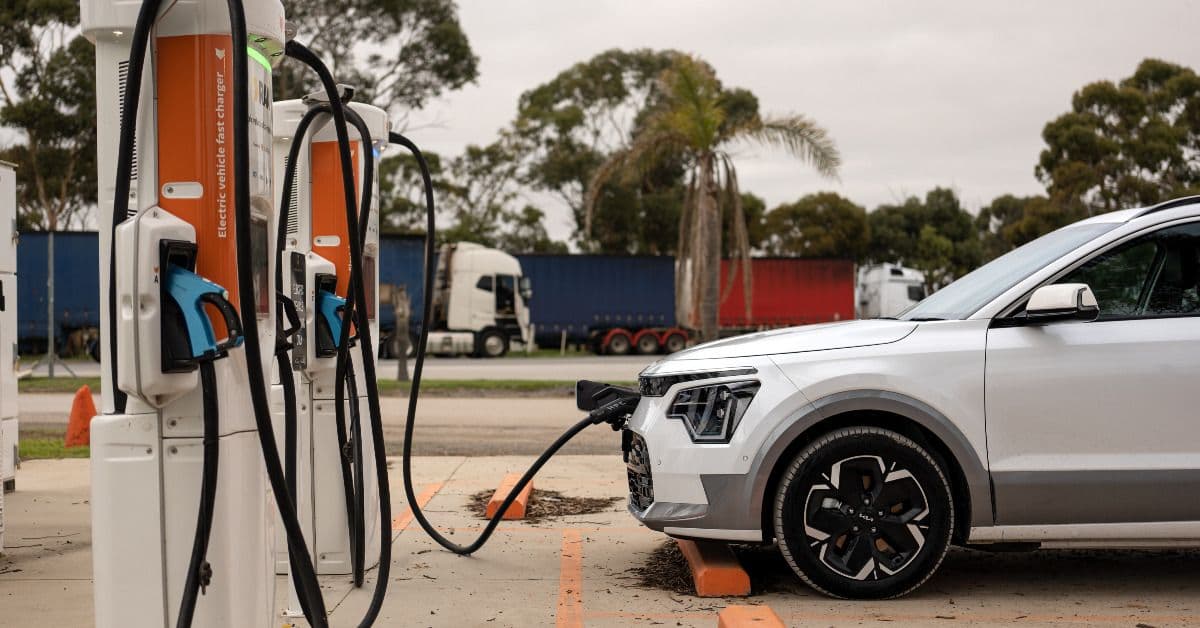
Connecting a new EV charger to the electricity network can be slow and expensive. Industry has flagged this as a key barrier to expanding the charging network.
A major issue is the lack of visible network capacity data. Without knowing where spare capacity exists, operators are effectively guessing when they apply to install a new charger. This leads to delays and wasted costs.
The government will introduce regulatory reforms in 2026 to require distribution businesses to publish low voltage network data. This will help operators identify suitable sites faster and reduce back-and-forth in the application process.
Distribution businesses will also be required to publish data on connection timeframes and costs, and report publicly on their performance. This will make it easier to identify where further action is needed.
The government has also been working with industry on technical rules for connections, including second point of supply connections. These allow a charging operator to connect directly to the electricity network at a site, separate from the building's main supply. Updates to the Victorian Services and Installation Rules (VSIR) in 2025 have helped, but the government is now conducting a broader VSIR Governance Review to be completed by Q2 2026.

Kerbside Charging for Renters and Apartment Residents
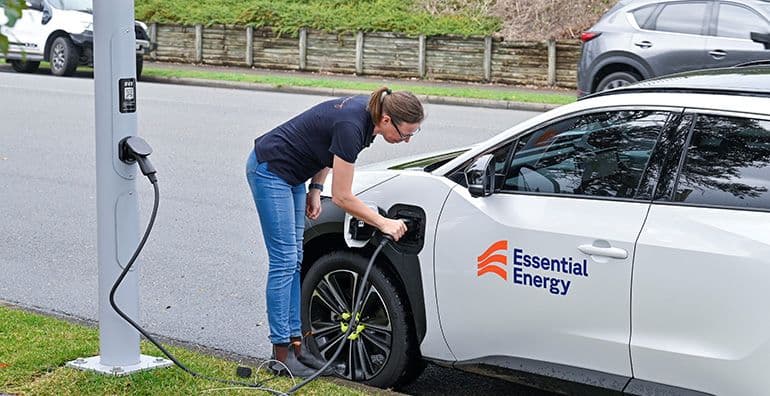
Not everyone can charge at home. Renters, apartment residents and people without off-street parking rely on public and kerbside charging. Kerbside chargers, often mounted on street poles, are a key solution for these drivers.
The problem is that access fees for using poles owned by distribution businesses are currently unregulated. Fees vary widely between distributors, creating uncertainty for operators who want to invest in kerbside charging.
The AER proposed reforms in September 2025 to introduce regulatory oversight for pole-mounted EV charging in Victoria from 1 July 2026. The Victorian Government is monitoring these reforms and will consider direct regulation if the AER's approach does not go far enough.
Vehicle-to-Grid: Saving Money by Sharing Energy
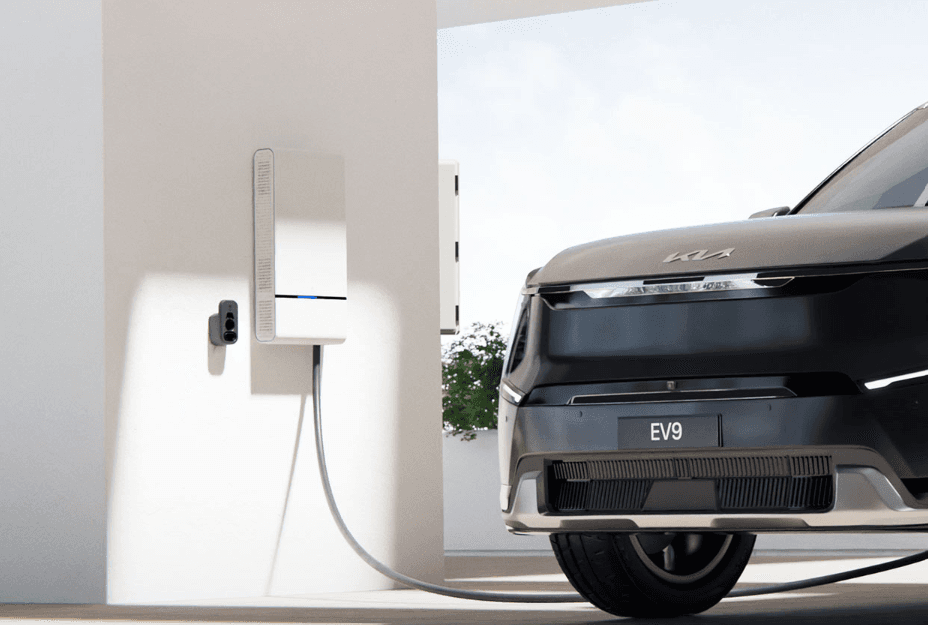
Vehicle-to-grid (V2G) technology lets an EV act as a battery. When plugged in, the car can power your home or export energy back to the grid during peak demand periods.
The government estimates V2G could save EV owners up to $1,000 a year on top of the $2,000 already saved by switching from petrol. Nationally, V2G has the potential to deliver up to $2.96 billion in total system savings by reducing peak demand and deferring costly grid upgrades.
Three energy retailer-led V2G trials are currently underway across Australia, with many participants in Victoria. Several V2G inverters are already available on the market, and widespread uptake is forecast by 2030.
Victoria is working with the Australian Government and other states to resolve remaining technical and regulatory barriers through the National Consumer Energy Resources (CER) Roadmap. The Minister has also asked the State Electricity Commission to explore using the government's own EV fleet for V2G, with the aim of saving taxpayer money.
Potential Annual Savings for EV Owners
Saving Type | Estimated Annual Saving |
Fuel and maintenance (EV vs petrol) | ~$2,000 |
V2G energy export to grid | Up to $1,000 |
Combined potential saving | Up to $3,000 per year |
NSW Also Steps Up on EV Policy
Victoria is not the only state taking action. NSW recently launched its updated 2026 Electric Vehicle Strategy, backed by $100 million in funding. The strategy targets fast charging gaps, kerbside charging, electric trucks, workforce training and better information for drivers.
NSW has also introduced legislative changes including a right-to-charge law. This gives apartment owners and strata residents the legal right to install EV chargers in their buildings, removing a major barrier for the growing number of Australians who live in apartments.

EVs now make up 15.6 per cent of new car sales in NSW, with more than 117,000 EVs registered in the state. The NSW government says switching to an EV can cut fuel costs by up to $3,000 a year.

What This Means for EV Drivers
For current and future EV owners, these changes should mean more chargers in more places, lower charging costs and new ways to save money through V2G technology.
For renters and apartment residents, kerbside charging reforms and right-to-charge laws are a step toward making EV ownership more practical, regardless of where you live.
The Victorian Government has flagged this statement is not the end of the story. It will continue to update its approach as the EV market grows and new challenges emerge.


About the author

Danny is a consultant and entrepreneur working at the cutting edge of the electric vehicle and energy transition. He is passionate about educating and helping consumers make better decisions through data.
