
Key Points
- The Tesla Model Y Performance costs $89,400 before on-road costs, $16,500 more than the Zeekr 7X Performance AWD at $72,900
- The Zeekr 7X Performance produces more power at 475kW against the Model Y Performance's 343kW, though Tesla claims the quicker 0-100km/h time at 3.5 seconds against 3.8 seconds
- The Model Y Performance claims a longer 580km WLTP range against the 7X Performance's 543km, but the Zeekr charges faster on DC power, up to 420kW against Tesla's 250kW
The Tesla Model Y Performance and Zeekr 7X Performance are the two quickest electric SUVs on sale in Australia under $90,000. Both use dual-motor all-wheel drive, both claim sub-4-second 0-100km/h times, and both target buyers who want SUV practicality without giving up outright pace.
The Model Y Performance is the flagship of Tesla's facelifted, German-built Model Y range, priced from $89,400 before on-road costs. The 7X Performance sits atop Zeekr's three-variant 7X line-up at $72,900 before on-road costs. On paper the Zeekr has the power advantage, the faster charging and the lower price. Tesla counters with a quicker claimed sprint time, a longer claimed range and full access to its own Supercharger network.
Editor's note: pricing, specifications and offers for both models are subject to change. Figures below reflect Zecar's EV database and manufacturer-published specs as of July 2026.y 2026.
Pricing
Both cars are sold as the range-topping performance variant in their respective line-ups. The Zeekr undercuts the Tesla by $16,500 before on-road costs.
Variant | Price (before on-road costs) | Drive type |
Tesla Model Y Performance | $89,400 | Dual-motor AWD |
Zeekr 7X Performance AWD | $72,900 | Dual-motor AWD |
The price gap has FBT implications for novated lease buyers. The Zeekr 7X Performance sits under the luxury car threshold that determines the full fringe benefits tax exemption on EVs, while the Model Y Performance's $89,400 list price puts it closer to the reduced-benefit tier once on-road costs are added. Buyers comparing the two on a novated lease should get a specific quote, as the FBT outcome depends on the final drive-away price.
Tesla's Performance is built in Germany and carries a five per cent import tariff as a result, a first for a Model Y sold in Australia. The Zeekr is built in China.
Dimensions and Size
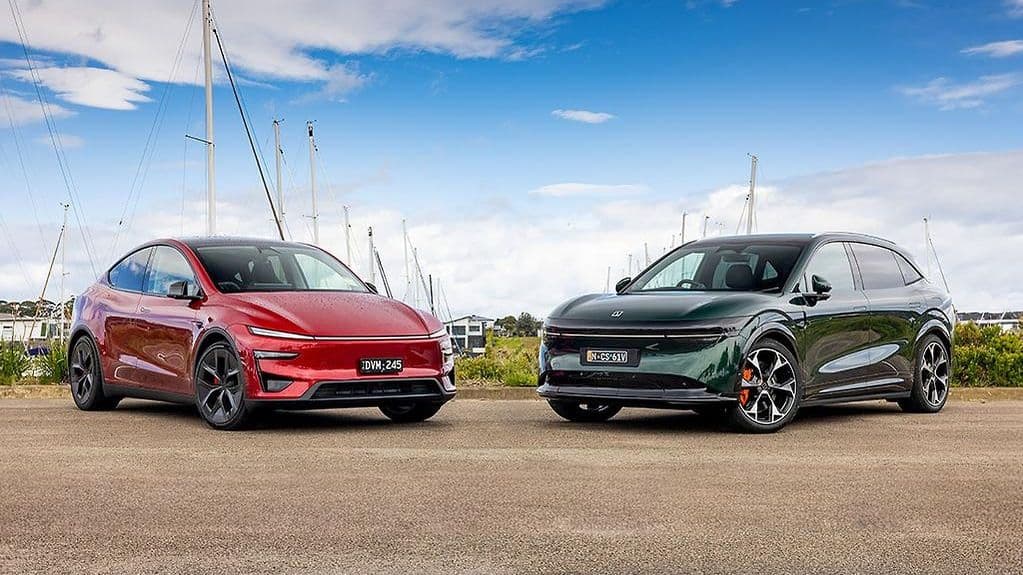
The Zeekr is larger in every exterior dimension except height, where the two are close. The 7X also carries considerably more kerb weight.
Dimension | Tesla Model Y Performance | Zeekr 7X Performance | Difference |
Length | 4,796mm | 4,787mm | Model Y +9mm longer |
Width | 1,921mm | 1,930mm | Zeekr +9mm wider |
Height | 1,611mm | 1,650mm | Zeekr +39mm taller |
Wheelbase | 2,890mm | 2,900mm | Zeekr +10mm longer |
Ground clearance | 151mm | 172mm (adjustable, air suspension) | Zeekr +21mm |
Kerb weight | 2,033kg | 2,475kg | Model Y 442kg lighter |
Boot capacity (approx) | 854L / 2,138L | 539L / 1,978L | Model Y more standard boot space |
The 442kg weight difference is significant for a like-for-like performance comparison. Tesla's smaller battery keep the Model Y considerably lighter than the Zeekr, which carries a bigger 100kWh battery pack and a larger body. Tesla’s significantly larger boot is partly due to its different measurement methodology. Tesla measures boot volume all the way up to the roof and includes the underfloor storage compartments, which differs from the traditional industry-standard.
Range and Performance
This is where the two cars are most sharply differentiated. The Zeekr has a clear power advantage, but Tesla claims the quicker sprint time thanks to its lighter weight.
Tesla also claims the longer range, despite a smaller battery, on the strength of superior efficiency.
Spec | Tesla Model Y Performance | Zeekr 7X Performance |
Power | 343kW | 475kW |
Torque | 741Nm | 710Nm |
0-100km/h | 3.5 seconds | 3.8 seconds |
Top speed | 250km/h | 210km/h |
Usable battery | approx. 81-82kWh | 94kWh |
WLTP range | 580km | 543km |
Towing capacity (unbraked/braked) | 750kg / 1,600kg | Not published for Performance grade |
A note on the power figure: Tesla does not officially publish power and torque figures for the Model Y Performance. The 343kW figure used here is the widely corroborated conversion of Tesla's own claimed 460hp output. A third-party spec comparison sighted during research listed 461kW for the Model Y Performance, which does not match Tesla's claimed horsepower figure and appears to be an error. We have used the figure consistent with Tesla's own claims.
On paper the Zeekr's 132kW power advantage should make it the quicker car in a straight line, but Tesla's 442kg weight saving closes that gap and then some, giving the Model Y Performance a claimed 0.3-second advantage to 100km/h. Tesla's time however accounts for a 1-foot (1ft) rollout from a stationary start. Real world testing has both vehicles almost evenly matched.
Handling is where the two cars diverge most. The Model Y Performance is generally rated the sharper, sportier car, with quick steering and a firm adaptive suspension that limits body roll, though its steering feedback is often described as synthetic and can go quiet over mid-corner bumps. The 7X Performance takes a more relaxed approach: its adaptive air suspension is rated more compliant, and its slower-geared steering favours comfort over outright sharpness. Overall, the Model Y suits drivers wanting a sportier feel, the 7X those who prioritise ride comfort.
The Tesla Model Y has slightly longer claimed WLTP range due to its higher efficiency. Real world range will vary with speed, terrain, and climate control use.

Battery and Charging
Both cars use NMC battery chemistry, but the similarities largely end there. Zeekr's 800V architecture gives it a significant DC charging speed advantage over Tesla's 400V-class Supercharger-compatible system.
Spec | Tesla Model Y Performance | Zeekr 7X Performance |
Usable battery capacity | approx. 81-82kWh | 94kWh |
Chemistry | NMC | NMC (CATL Qilin) |
Architecture | 400V-class | 800V |
Max AC charging power | 11kW | 22kW |
Max DC charging power | 250kW | 420kW |
DC charge time (10-80%, approx) | ~27 minutes | ~13-16 minutes |
Bidirectional charging | Not offered | Vehicle-to-load |
The Zeekr's 420kW peak DC rate comfortably outpaces the Model Y's 250kW, and its claimed 10-80 per cent charge time of around 13 to 16 minutes is close to half the Tesla's. In the real world, both figures depend on finding a charger capable of delivering that power. Australia's public ultra-fast network tops out at 350kW at most sites, so neither car will hit its absolute peak charging rate here, though the Zeekr will still charge meaningfully faster than the Tesla on the chargers currently available.
Tesla's advantage is network access. The Model Y Performance has fully access to Tesla's own Supercharger network across Australia, which is typically more reliable than the third-party network other EV brands depend on. Tesla has opened up about half of its Supercharger network to non-Tesla EVs.
Neither car supports vehicle-to-home or vehicle-to-grid in Australia. The Zeekr offers vehicle-to-load, useful for running power tools or camping equipment, which the Model Y Performance does not.

Driver Technology and Infotainment
Both cars carry a five-star safety rating and a comparable suite of driver assistance features, though they take different approaches to the driving experience and cabin layout.
Standard on both:
- Autonomous emergency braking (AEB)
- Adaptive cruise control
- Lane keep assist and lane departure warning
- Blind spot monitoring and rear cross-traffic alert
- 360-degree camera system
The Model Y Performance relies on Tesla's camera-based Autopilot and does not support Apple CarPlay or Android Auto. The Zeekr 7X Performance uses a more conventional radar and camera array and includes wireless Apple CarPlay and Android Auto as standard.


Tesla centres the Model Y cabin around a single central touchscreen with no separate instrument display. The Zeekr pairs a 16-inch central touchscreen with a 13-inch digital instrument cluster and a 36-inch head-up display, giving the driver more conventional sightlines.
Zeekr also fits air suspension with adjustable ride height on the Performance grade, along with a 21-speaker sound system. Tesla's advantage is a more mature over-the-air update cadence and a more developed in-house app ecosystem, including live Supercharger occupancy data built into navigation.
Other Features
Outside the core spec sheet, each car has standout features the other doesn't offer.
Exclusive to the Tesla Model Y Performance:
- Access to the Tesla Supercharger network across Australia
- Carbon-fibre spoiler and 21-inch Arachnid 2.0 wheels
- Heated and ventilated front seats with powered thigh extenders
- Significantly lighter kerb weight, benefiting efficiency and handling
Exclusive to the Zeekr 7X Performance:
- Standard Apple CarPlay and Android Auto
- Air suspension with adjustable ride height
- Vehicle-to-load (V2L) as standard
- Lower entry price by $16,500 before on-road costs
- Faster DC charging, up to 420kW against Tesla's 250kW
- More luxious interior fit and finish
Warranty and Servicing
Both vehicles offer the same vehicle 5-year unlimited kilometre vehicle warranty.
Spec | Tesla Model Y Performance | Zeekr 7X Performance |
Vehicle warranty | 5 years / unlimited km | 5 years / unlimited km |
Battery warranty | 8 years / 192,000km | 8 years / 160,000km |
Battery capacity guarantee | 70% minimum | 70% minimum |
Service interval | Condition-based, no fixed schedule | 12 months / 20,000km |
Tesla's battery warranty offers a long distance distance cap of 192,000 compared to 160,000 for the 7x.
On the servicing side Zeekr's fixed service schedule gives buyers a predictable running cost. The total capped-price service cost for the Zeekr 7X is $2,385 over 5 years or 100,000 km, averaging about $477 per year. Tesla's condition-based approach means service timing and cost can vary, although over 5 years it is likely to be less than the $2,385 of the Zeekr 7x.
Verdict
Both cars are genuinely quick, genuinely capable electric SUVs, but they appeal to different priorities. The Zeekr 7X Performance wins on power, DC charging speed, price and a more comfortable, composed ride. The Tesla Model Y Performance counters with a quicker claimed sprint time, a longer claimed range, sharper and more engaging handling, and access to Australia's most extensive charging network.
Buyers who value faster charging, a little more luxury and a more refined ride will find a stronger case in the Zeekr. Buyers who value Tesla's Supercharger network, software polish and lighter, more efficient platform will likely accept the higher price and slower charging of the Model Y Performance.
At $16,500 cheaper, the 7X Performance is the harder car to argue against on value alone. Whether that's enough to outweigh Tesla's brand strength and charging network in the Australian market remains to be seen as more buyers get behind the wheel of both.
Get a novated lease quote

About the author

Danny is a consultant and entrepreneur working at the cutting edge of the electric vehicle and energy transition. He is passionate about educating and helping consumers make better decisions through data.
