


Key Points
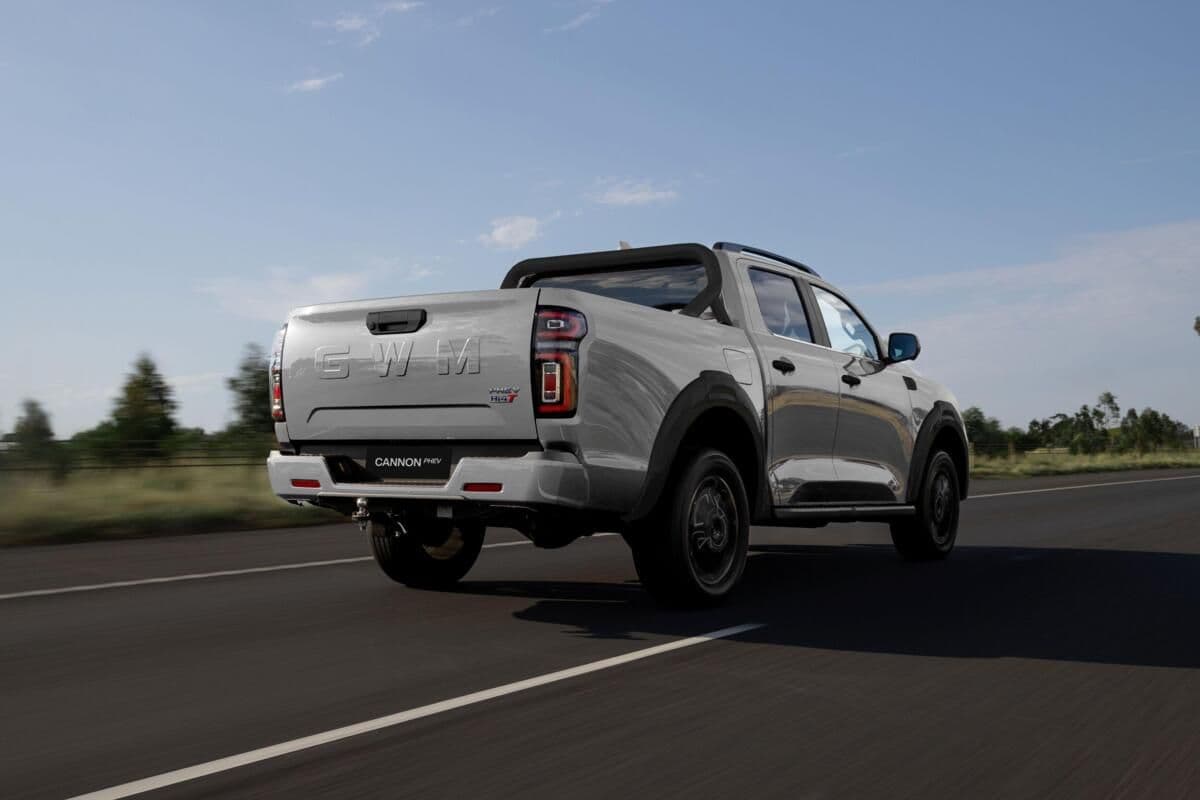
- GWM has detailed the Cannon Hi4-T PHEV, a second plug-in hybrid ute that will sit below the larger Cannon Alpha Hi4-T in the range.
- It combines a 2.0-litre turbo petrol engine and an electric motor for a combined 310kW and 750Nm, with NEDC fuel use of 2.4L/100km.
- Australian pricing and full specifications have not been confirmed. Q3 2026 launch expected.
GWM has released details on the Cannon Hi4-T, a new plug-in hybrid ute that will slot in below the larger Cannon Alpha Hi4-T PHEV. Once it goes on sale, it will make GWM the only car maker in Australia offering two separate plug-in hybrid utes.
The Cannon Hi4-T is aimed squarely at the BYD Shark 6 and Ford Ranger PHEV. GWM has released power, range and towing figures for the ute in a media statement, though Australian pricing and a full local specification sheet are yet to be confirmed.
Key Specs Confirmed
Power comes from a 2.0-litre turbocharged petrol engine paired with an electric motor, for a combined 310kW and 750Nm, according to GWM. Combined fuel use is rated at 2.4L/100km on the NEDC test cycle. GWM's Australian statement does not break down the individual outputs of the engine and motor.
GWM says a 33.1kWh battery delivers 115km of electric-only driving range on the NEDC cycle (~92km WLTP), with a combined range of 1,037km once the petrol engine is used. NEDC figures typically read higher than the WLTP standard used to rate many rival PHEVs, so real-world range may come in lower than these claims.
GWM's press release states a 3,500kg braked towing capacity for the Cannon Hi4-T, matching the segment standard set by the Ford Ranger, Toyota HiLux and more recently the BYD Shark 6 Performance.
The Cannon Hi4-T includes Vehicle-to-Load (V2L) capability, with 230V power outlets built into the tub. GWM says this lets owners run power tools on a work site, camping equipment off-grid, or household appliances, directly from the vehicle.
Cannon Hi4-T vs Cannon Alpha Hi4-T PHEV
The Cannon Hi4-T will sit below the Cannon Alpha Hi4-T PHEV, GWM's existing plug-in hybrid ute, once it arrives. Both use the same Hi4-T mechanical four-wheel drive architecture, and the headline outputs are close, but GWM is positioning the two utes for different buyers. The Alpha is the larger, more expensive flagship; the Hi4-T is pitched as the more accessible option.
Cannon Hi4-T PHEV vs Cannon Alpha Hi4-T PHEV
Spec | Cannon Hi4-T PHEV | Cannon Alpha Hi4-T PHEV |
Engine | 2.0L turbo petrol + electric motor | 2.0L turbo petrol |
Combined power / torque | 310kW / 750Nm | 300kW / 750Nm |
Battery | 33.1kWh LFP | 37.1kWh ternary lithium |
Electric-only range (NEDC) | 115km | 115km |
Combined range (NEDC) | 1,037km | 1,060km |
Fuel use, combined (NEDC) | 2.4L/100km | Not stated by GWM |
Braked towing capacity | 3,500kg | 3,500kg |
Driveaway price | Not yet confirmed | From $57,490 (Lux) to $64,490 (Ultra), VIC private buyers |

How it stacks up against the Ford Ranger PHEV and BYD Shark 6
The Cannon Hi4-T will compete most directly with the Ford Ranger PHEV and BYD Shark 6, the two established plug-in hybrid utes in the segment. All three utes claim a 3,500kg braked towing capacity, though only the range-topping Shark 6 Performance reaches that figure. The entry Shark 6 Dynamic and Premium variants tow 2,500kg.
Cannon Hi4-T PHEV vs Ford Ranger PHEV vs BYD Shark 6 Performance
Spec | GWM Cannon Hi4-T | Ford Ranger PHEV | BYD Shark 6 Performance |
Combined power / torque | 310kW / 750Nm | 207kW / 697Nm | 350kW / 700Nm |
Battery | 33.1kWh | 11.8kWh | Not confirmed; Premium variant uses 29.58kWh |
Electric-only range | 115km (NEDC) | Over 45km (Ford claim) | Around 100km (NEDC, Premium spec) |
Braked towing capacity | 3,500kg | 3,500kg | 3,500kg |
0-100km/h | Not stated by GWM | Not confirmed | 5.5 seconds |
Price | Not yet confirmed | From $71,990 plus on-road costs | From $62,900 plus on-road costs |

Pricing and availability
GWM has not confirmed pricing for the Cannon Hi4-T. The company says it will be "one of Australia's most affordable plug-in hybrid utes" once local pricing lands.
Multiple outlets have reported an expected arrival in the third quarter of 2026, based on comments from GWM Australia executives. Buyers can register their interest through the GWM Australia website.



About the author

Danny is a consultant and entrepreneur working at the cutting edge of the electric vehicle and energy transition. He is passionate about educating and helping consumers make better decisions through data.
