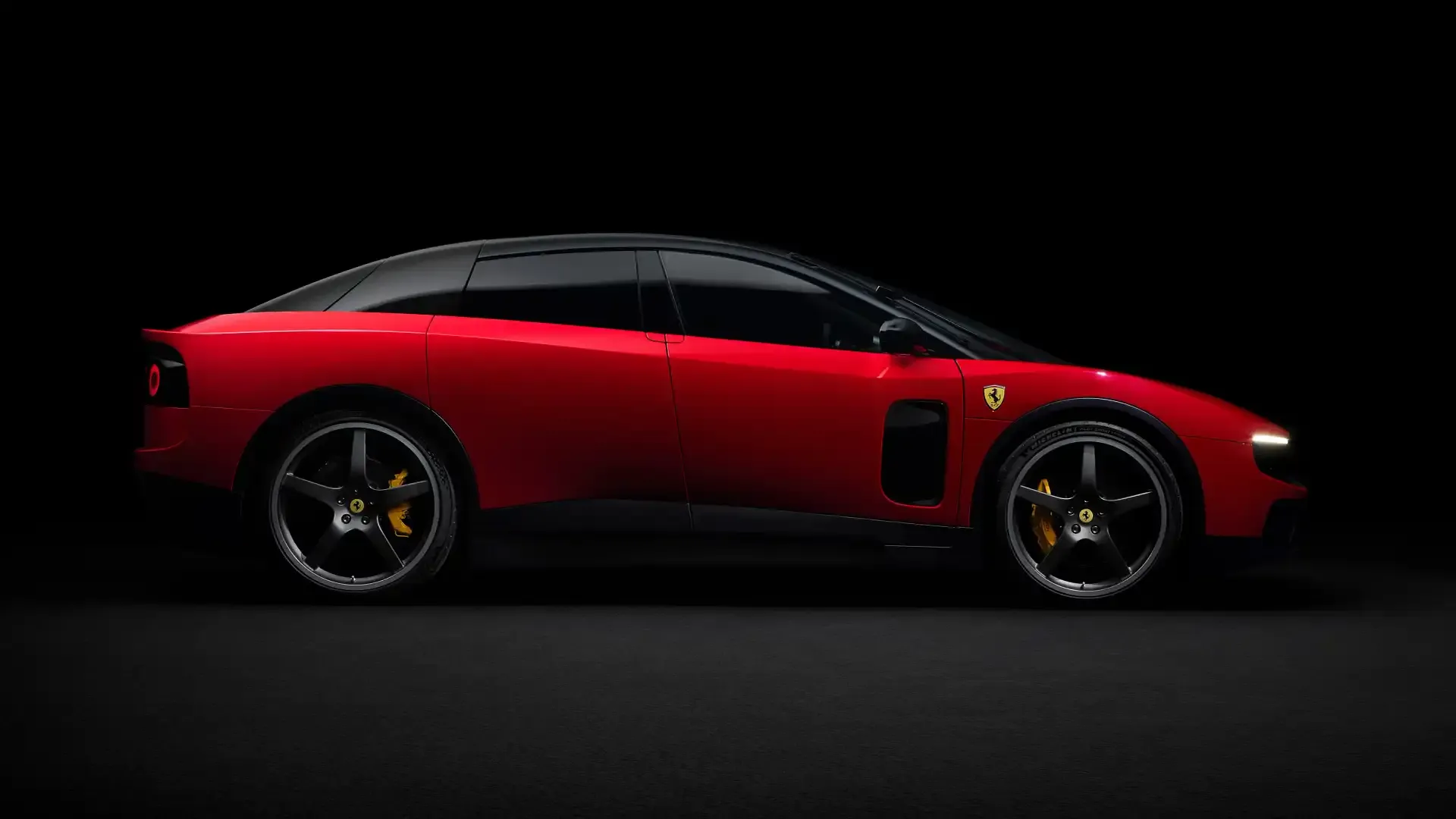
Key Points
- Ferrari Luce becomes Australia’s most expensive new electric vehicle.
- The 772kW EV packs four motors and 122kWh battery.
- Australian deliveries are expected to begin by late 2027.
Ferrari has finally put an Australian price on its first electric car – and it is every bit as extravagant as you might expect.
The 2027 Ferrari Luce will cost $991,446 before on-road costs, making it the most expensive new electric vehicle officially sold in Australia when local deliveries begin.
That price puts Ferrari's first EV ahead of the $933,000 Rolls-Royce Spectre Black Badge, previously Australia's most expensive electric car.
And that is only the starting point. Once options, registration, stamp duty and other government charges are added, the Luce will comfortably push into seven-figure territory.
For Australian buyers, the Luce is expected to arrive by the end of 2027, with a left-hand-drive example already being shown to prospective customers and deposit holders around the country.

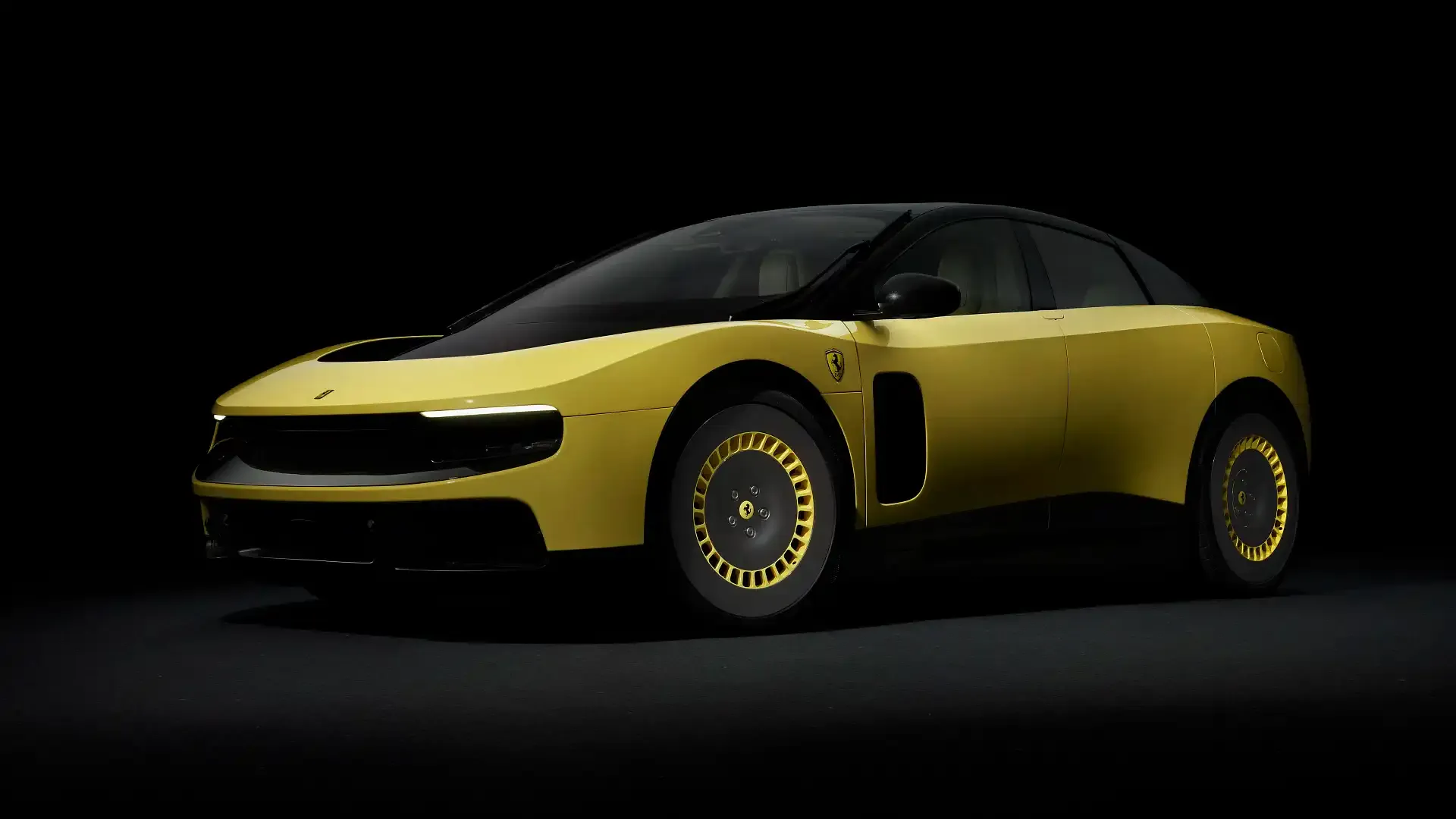
Ferrari's first EV is deliberately unlike anything before it
The Luce is not Ferrari's attempt at simply turning one of its existing supercars electric.
Instead, the four-door, five-seat grand tourer represents a significant departure for Maranello, both in its design and its intended audience.
Ferrari has said the car is designed to attract new customers to the brand, rather than simply convert existing Ferrari owners to electric power.
That helps explain why it looks so different from familiar models such as the 296, 12Cilindri or Purosangue.
The exterior and interior were developed in collaboration with LoveFrom, the design collective founded by former Apple chief design officer Sir Jony Ive and designer Marc Newson.
The result has proved highly divisive.
The Luce's smooth, futuristic exterior has attracted plenty of criticism online, while its cabin takes an unusual approach for a modern car by combining digital displays with a large number of physical buttons, dials, toggles and switches.
That makes the Luce one of Ferrari's biggest design departures in decades – and arguably one of the most controversial.
The reaction has been strong enough to affect Ferrari's share price following its global reveal, although the company has indicated there is significant interest in the new model.
READ MORE: 2027 Denza Z Revealed With 1,471kW As Australia Eyes Electric Supercar


Four motors give the Luce supercar-rival performance
Underneath the unusual bodywork is a much more familiar Ferrari approach: serious performance.
The Luce uses four electric motors, with one powering each wheel. Combined output reaches 772kW, while peak motor torque is rated at 990Nm.
Ferrari claims:
- 0–100km/h: 2.5 seconds
- 0–200km/h: 6.8 seconds
- Top speed: 310km/h
- Power: 772kW
- Torque: 990Nm
- Drive: Four-wheel drive
- Motors: Four, one per wheel
The four-motor layout also allows Ferrari to independently control torque at each wheel, supporting torque vectoring and the company's advanced vehicle-control systems.
The Luce also features four-wheel steering and active suspension technology designed to give Ferrari a level of handling control that goes beyond simply delivering huge straight-line acceleration.
Ferrari's own technical material lists an 800-volt electrical architecture and up to 350kW DC charging capability. The company says the battery can add around 70kWh in approximately 20 minutes when connected to a sufficiently powerful charger.

Specs: Ferrari Luce
| Specification | Details |
| Length | 5,026mm |
| Width | 1,999mm |
| Height | 1,544mm |
| Wheelbase | 2,961mm |
| Kerb weight | 2,260kg |
| Power output | 772kW (1,050cv) |
| Torque | 990Nm (11,500Nm at wheels) |
| 0–100km/h | 2.5 sec |
| 0–200km/h | 6.8 sec |
| Top speed | 310km/h (Performance mode) |
| WLTP range | 530km+ |
| Battery capacity | 122kWh (gross) |
| Maximum DC charging | 350kW |
| Architecture | 800V |
| Number of motors | 12 (4 traction, 8 suspension/steering) |
| Drive type | AWD (front decouples in Range mode) |
| Seats | 5 |
| Rear-wheel steering | Yes |
| Wheel size | 23" front / 24" rear |
The 122kWh battery is a structural part of the car and uses NMC cells developed with SK On, while Ferrari has developed and manufactures the battery system itself in Maranello. The claimed range is around 530km on the WLTP cycle.
Despite having enough performance to rival some of the world's fastest electric cars, the Luce is fundamentally designed as a luxurious long-distance GT rather than a stripped-back track weapon.
It is also a substantial car, weighing around 2,260kg, according to Ferrari's published technical information.

What the Luce means for Australia
The Luce's arrival will give Australia's already small ultra-luxury EV market a new benchmark.
At $991,446 before on-road costs, it will sit above the Rolls-Royce Spectre Black Badge and even cost more than Ferrari's own petrol-electric performance cars, including the $932,648 849 Testarossa and $984,020 296 Speciale A cited in Australian pricing.
The Australian market is already getting an early look at the car.
A left-hand-drive Luce has been brought to Australia for presentations to deposit holders and prospective customers. It is initially being displayed in Sydney before travelling to Brisbane and Melbourne over the following four weeks.
That does not mean Australians will be able to drive one immediately. Local deliveries are not expected until late 2027.
The price is also almost irrelevant for the handful of buyers who can afford one. The first production Luce sold at a US charity auction for US$40 million (about A$56.4 million) in August – an extraordinary figure that bears little relationship to the normal list price.
Ferrari is reportedly already close to meeting its initial 2026 sales target for the Luce, although reports suggest that target could be fewer than 500 vehicles globally.
For Ferrari, then, the Luce is less about chasing high-volume EV sales and more about proving that its interpretation of electric performance can coexist with the badge's increasingly important heritage.
And at almost $1 million before it even reaches the road, Australia is about to get a very expensive glimpse of what Ferrari thinks that future looks like.

