
Key Points
- Default electricity plans fell by up to 8 percent in NSW, Victoria and South East Queensland from 1 July 2026, while South Australia, Tasmania and the ACT rose by up to 4.2 percent.
- The federal Solar Sharer Offer started today, giving eligible households in NSW, South Australia and South East Queensland three hours of free electricity a day, capped at 24kWh.
- The free-power window runs from 11am to 2pm in NSW and South East Queensland and from 12pm to 3pm in South Australia, a useful window for daytime EV charging.
Electricity prices and rules changed for millions of households across Australia from 1 July 2026. Default and market electricity plans moved in NSW, Victoria, South East Queensland, South Australia, Tasmania and the ACT. Most east coast states saw falls, while South Australia, Tasmania and the ACT saw rises.
On the same day, the federal government's new Solar Sharer Offer took effect. It gives eligible households in NSW, South Australia and South East Queensland three hours of free electricity in the middle of the day. For EV owners in those states, the timing lines up with a straightforward opportunity to shift charging into the free window and cut running costs further.
Default Electricity Plans Move Today
Default electricity plans are set by the regulator rather than by retailers, and act as a safety net price for customers who have not shopped around. They changed in six states and territories from 1 July, with falls on the east coast and rises elsewhere.
Change to Default Electricity Plans by State
State | Change | Annual Change (max) | % of Customers on Default Plans |
NSW | -3.4% to -5.0% | -$137 | 7% |
Victoria | -3% to -8% | -$160 | 17% |
South East Queensland | -7.2% | -$155 | 10% |
South Australia | +1.4% | +$33 | 8% |
Tasmania | +4.2% | +$113 | 91% |
ACT | +2.7% | +$64 | 12% |
The figures are based on Canstar analysis of a typical household on a flat electricity tariff for the 2026-27 financial year. Western Australia, north Queensland and the Northern Territory are not part of the National Electricity Market and are not covered by these changes.
Default Market Offers vs Market Offers: What's the difference?
A Default Market Offer (DMO) is the government-regulated price cap that energy retailers cannot exceed for standard residential electricity. It acts as a safety net for customers who have never switched plans or have rolled off a deal.
A Market Offer is any plan a retailer actively sells that competes against the DMO. These can be cheaper or more expensive than the DMO depending on usage, discounts, and contract terms. Most EV-specific plans, time-of-use tariffs, and solar feed-in deals are market offers.
When the government announces electricity price changes each 1 July, it is the DMO that changes. Your market plan rate may be unaffected unless your retailer separately updates it.
Market Plans From Retailers Are Also Changing
Market plans, which are set directly by retailers rather than the regulator, are moving too. Origin, AGL and EnergyAustralia customers in NSW, South East Queensland and South Australia see their prices change from today. Victorian customers with the same three retailers will not see price changes until 1 August 2026.
Average Market Plan Price Change by Retailer and State
State | Origin | AGL | EnergyAustralia |
NSW | -0.8% | -2.4% | +1.8% |
Victoria | -2% | -4.1% | +0.4% |
Queensland | -5.4% | -8.7% | -5.8% |
South Australia | +0.8% | -1.0% | +1.3% |
Supply Charges Are Rising Even as Usage Rates Fall
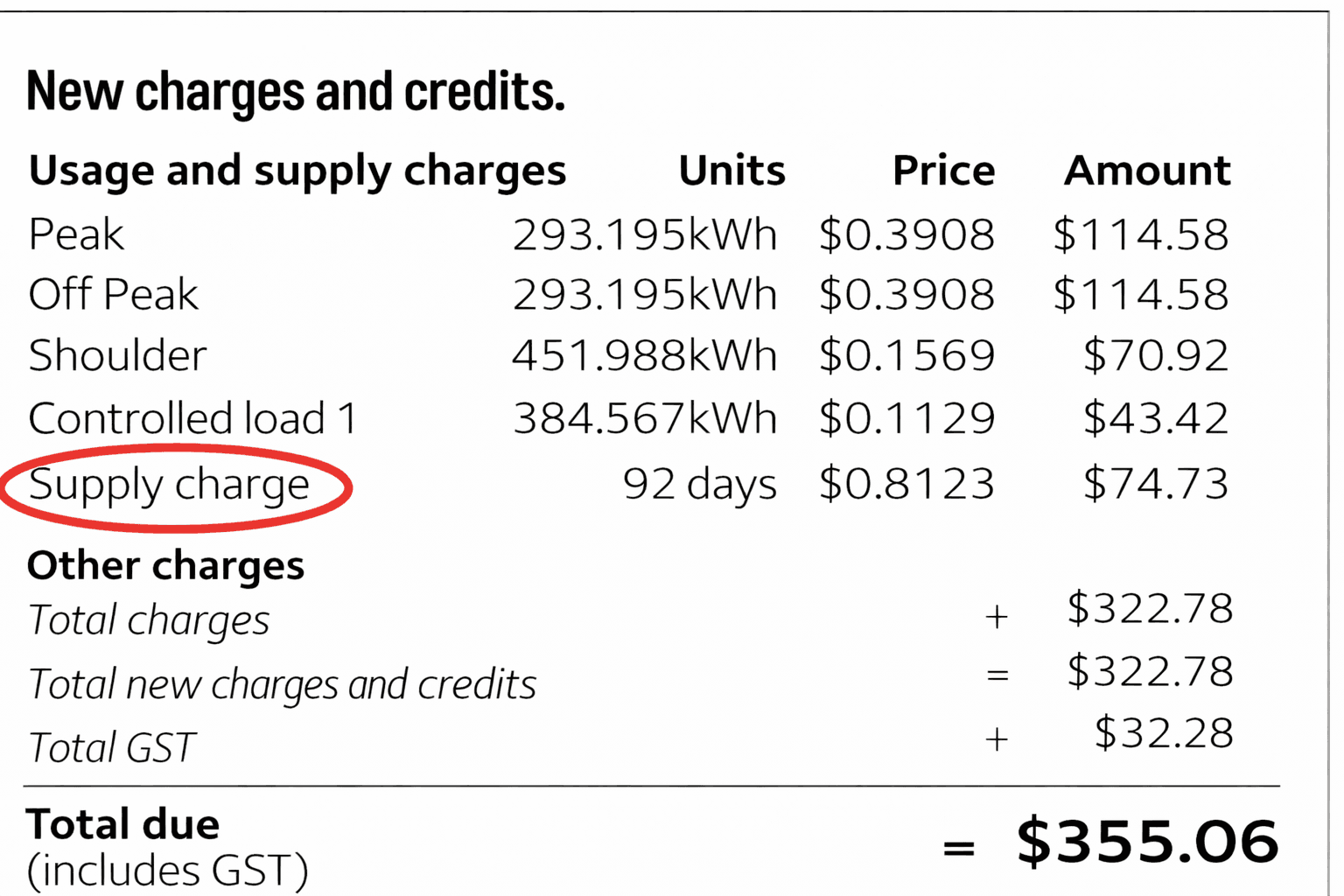
Electricity bills are made up of two parts: the rate charged for electricity used, and a daily supply charge for being connected to the grid. From today, many households will pay less for the electricity they use, but significantly more for their daily supply charge, with some increases reported above 70 percent.
This means that while households on average may be better off under the new pricing structure, low-usage households could end up paying more this financial year.
New Consumer Protections Start Today
The new financial year also brings a set of new rules for electricity customers. In NSW, South East Queensland and South Australia, the following protections now apply:
- Price hikes are limited to no more than once a year.
- Unreasonably high penalties for late bill payment are banned.
- All fees must reflect the actual costs paid by providers.
- Fees for vulnerable customers are banned, except for network charges.
- Hardship customers must be financially no worse off than if they were on the provider's lowest cost plan.
Victoria is regulated separately by the Essential Services Commission and already limits price hikes to once a year. New Victorian rules include:
- Customers on the same plan for four or more years must be moved to a reasonably priced plan, from 1 July. The ESC estimates this could move up to 53,000 households to cheaper plans, saving an average of $230 a year.
- Customers struggling to pay must be automatically moved to their provider's cheapest available plan, from 1 October.
- Providers must offer payment methods other than direct debit, from 1 October.
- The minimum debt owing before disconnection rises from $300 to $1,000, from 1 October.
The Solar Sharer Offer: Three Hours of Free Power
The Solar Sharer Offer (SSO) is a new federal scheme that gives eligible households three hours of free electricity every day, even if they do not have their own rooftop solar. It is designed to share the benefits of Australia's daytime solar surplus, which regularly pushes wholesale electricity prices very low or negative in the middle of the day.
The SSO is available to residential customers in NSW, South Australia and South East Queensland who have a smart meter installed, whether they rent or own their home. Energy retailers with more than 1,000 customers in these areas are required to make the offer available, though customers must opt in through their retailer rather than being switched automatically.
Solar Sharer Offer Free-Power Windows
State | Free-Power Window | Daily Usage Cap |
NSW | 11am to 2pm | 24kWh |
South East Queensland | 11am to 2pm | 24kWh |
South Australia | 12pm to 3pm | 24kWh |
The 24kWh cap is enough to cover an average five-person household. Usage outside the free window, and the daily supply charge, are still billed as normal. The Australian Energy Regulator sets the main tariff settings for the offer. The federal government says it is considering extending the SSO, or a similar offer, to other areas.
Victoria is not part of the SSO, since its retail electricity market is regulated separately. The Victorian Government's own Midday Power Saver plan starts on 1 October 2026, offering a similar three-hour free window between 11am and 2pm.

How EV Owners Can Use the Free Window
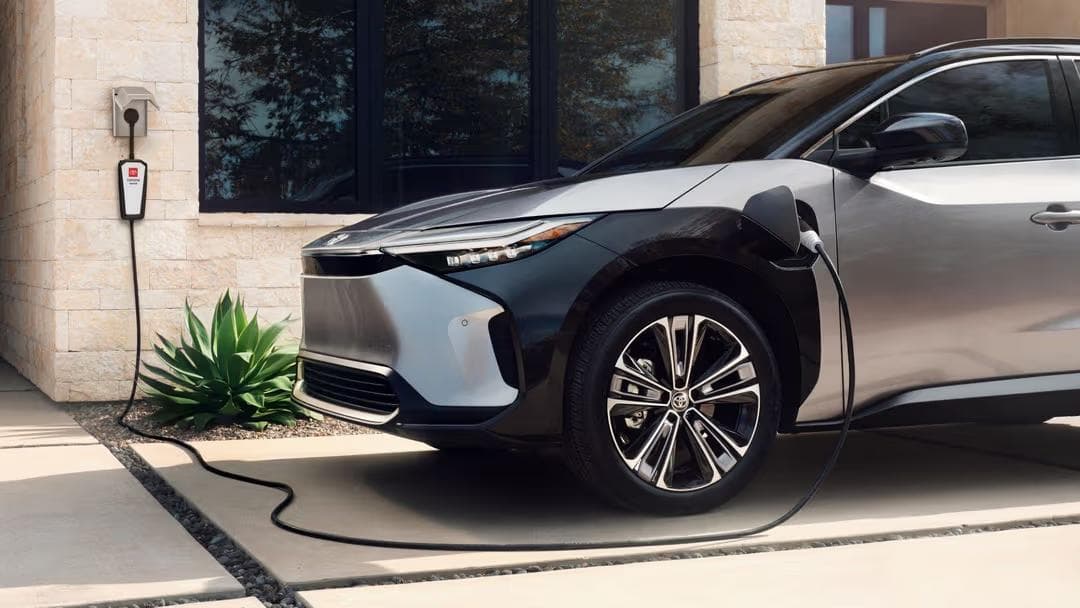
An EV charger is one of the largest loads in most homes, which makes it well suited to a scheme like the Solar Sharer Offer. Households that opt in and can shift charging into the 11am to 2pm window in NSW and South East Queensland, or 12pm to 3pm in South Australia, can charge for free up to the 24kWh cap, provided the vehicle and other daytime usage stay within that limit.
The SSO works best for households that are home during the day, or that can schedule charging remotely through their EV or wallbox app. For households that charge overnight instead, a dedicated EV electricity plan with a cheap overnight rate may deliver more savings than switching to the SSO, since the SSO's other electricity rates outside the free window can be higher than a standard plan.
Whether the SSO or a dedicated EV energy plan works out cheaper depends on individual usage patterns, network area and how much charging can realistically be shifted to the middle of the day.
Compare EV energy plans

What This Means for Your Bill
Households should check the detail of their price change notification rather than assume a headline rate cut means a lower bill overall. A falling usage rate combined with a rising supply charge can leave low-usage households worse off, even in states where average bills are falling.
Customers in NSW, South Australia and South East Queensland who can shift a meaningful share of their electricity use, including EV charging, into the middle of the day should ask their retailer whether they are eligible for the Solar Sharer Offer and compare it against their current plan. Victorian households can look ahead to the Midday Power Saver plan from 1 October.

About the author

Danny is a consultant and entrepreneur working at the cutting edge of the electric vehicle and energy transition. He is passionate about educating and helping consumers make better decisions through data.
