


Key Points
- Chery has officially confirmed the Stockman diesel PHEV ute's performance, range and dimensions ahead of its Q4 2026 Australian launch, though pricing is not yet confirmed.
- The Stockman's Diesel Super Hybrid drivetrain produces a combined 350kW of power and 800Nm of torque, with up to 100km of NEDC electric-only range and 3500kg of braked towing.
- A petrol-powered plug-in hybrid Stockman variant will join the diesel model in Australia in 2027, Chery has confirmed.
Chery has published specifications for the Stockman, its first ute for the Australian market, on the brand's local website ahead of a fourth-quarter 2026 launch. The Stockman uses a 2.5-litre turbo-diesel plug-in hybrid drivetrain, a powertrain setup not currently offered by any other manufacturer in the Australian new-car market.
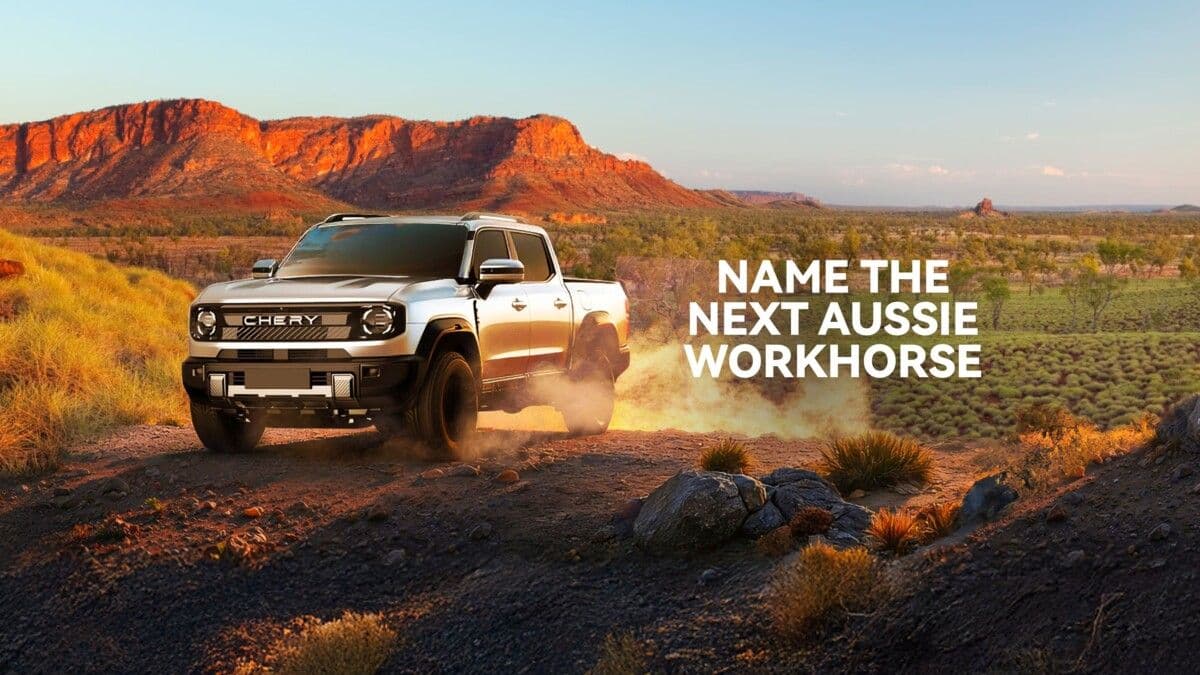
Known internally as KP31, the Stockman was revealed in late 2025 before Chery ran a public naming competition that drew more than 20,000 entries. Stockman won more than 25 per cent of the vote from the shortlisted names. Full pricing has not been announced and is expected closer to launch later in 2026.
Chery Australia has now formally confirmed these details in an official statement, describing the Stockman as a vehicle for tradies, adventurers, families and regional motorists.
Chery has also confirmed a petrol-powered plug-in hybrid variant will join the Stockman lineup in Australia in 2027, expanding the range beyond the initial diesel model due in the fourth quarter of 2026.
Powertrain and Performance
The Stockman is powered by a 2.5-litre turbo-diesel engine paired with Chery's Super Hybrid System, badged Diesel Super Hybrid, producing a combined 350kW of power and 800Nm of torque. Chery quotes combined fuel consumption of 2L/100km.
That output matches the BYD Shark 6 Performance's 350kW figure and beats it by 100Nm of torque, though it falls short of the JAC Hunter's claimed 360kW and 1010Nm combined output.
Chery Stockman Powertrain Specifications
Spec | Figure |
Engine | 2.5L turbo-diesel + electric motor |
Combined power | 350kW |
Combined torque | 800Nm |
Combined fuel consumption | 2L/100km (test cycle not stated by Chery) |
Drive type | 4WD |
Braked towing capacity | 3,500kg |
Unbraked towing capacity | 750kg |
Chery marks the 350kW/800Nm figure with a footnote on its own website and states that power, range, towing and consumption figures are preliminary and subject to change pending final testing, certification and regulatory approval. Treat these figures as indicative until Chery confirms final production specifications closer to launch.
Electric-Only Range and Battery
The Stockman is capable of up to 100km of electric-only driving on a full charge, based on the older NEDC test cycle, this would equate to ~80km on the WLTP standard which has been adopted in Australia. Battery capacity has not been confirmed but based on the range and weight it will be about 30kWh, similar to the BYD Shark 6 and JAC Hunter PHEV.
Off-Road Capability
The Stockman will feature three differential locks, a crawl control system and a tight turn assist feature to help off-road capability, along with all-terrain tyres as standard. Ground clearance is a minimum of 247mm. Chery says the Stockman uses a leaf spring rear suspension with double wishbone front suspension, and that ride, handling and driver assist systems will be locally tuned to Australian conditions.
Interior and Features
Full features are yet to be announced, but Chery has confirmed a head-up display will be available, along with leather upholstery, heated and ventilated front seats, wireless phone charging and a premium audio system. Chery's local website also describes suede trim across the dashboard, door cards and roof lining, plus a flat rear floor with extra legroom over key rivals. Chery has not said which features will be standard versus optional, or how many grades the Stockman will offer in Australia.


Dimensions
Chery Stockman Dimensions
Measurement | Figure |
Length | 5,450mm |
Width | 2,010mm |
Height | 1,890mm |
Wheelbase | 3,250mm |
Ground clearance | ≥247mm |
Cargo tray (L x W x H) | 1,560 x 1,560 x 500mm |
Chery says the Stockman is longer than most of its dual-cab rivals, measuring 120mm longer than the Ford Ranger, 130mm longer than the Toyota HiLux and 170mm longer than the Isuzu D-Max and Mazda BT-50. Compared with the BYD Shark 6, the Stockman is wider by 39mm, rides on a 10mm longer wheelbase and has a larger tray, though it is shorter in overall height. Reported figures on the exact length difference between the Stockman and Shark 6 vary between sources, so that specific comparison should be treated as unconfirmed until independently verified.

Colours
The Stockman will be available in four colours at launch: Obsidian (black), Sandstone (sandy beige), Serpentine (green) and White Opal. Motoring outlet WhichCar has speculated that White Opal will be the only no-cost colour option, though Chery has not confirmed pricing for premium paint.
How the Stockman Compares to the BYD Shark 6 Performance
Chery is positioning the Stockman against the BYD Shark 6 Performance, the current benchmark for power and towing capacity among PHEV utes in Australia. Based on figures published by Chery and BYD, here is how the two compare on paper.
Chery Stockman vs BYD Shark 6 Performance
Spec | Chery Stockman | BYD Shark 6 Performance |
Price (plus on-road costs) | Not yet confirmed | $62,900 |
Powertrain | 2.5L turbo-diesel PHEV | 2.0L turbo-petrol PHEV |
Combined power | 350kW | 350kW |
Combined torque | 800Nm | 700Nm |
0-100km/h | Not stated | 5.5 sec |
EV-only range | Up to 100km (NEDC) | 80km (WLTP) |
Combined fuel consumption | 2L/100km (test cycle not stated) | 1.3L/100km (SOC above 25%, NEDC) |
Battery size | Not confirmed, est. ~30kWh | 29.58kWh (confirmed) |
Braked towing capacity | 3,500kg | 3,500kg |
Length x Width x Height | 5,450 x 2,010 x 1,890mm | 5,457 x 1,971 x 1,925mm |
Wheelbase | 3,250mm | 3,260mm |
Ground clearance | ≥247mm | 230mm |
Front / rear suspension | Double wishbone / leaf spring | Double wishbone / double wishbone |
ANCAP rating | Not yet tested | 5 stars (tested September 2024) |
Availability | Q4 2026 | On sale now |
The two utes claim identical peak power, though the Stockman's 800Nm torque figure is 100Nm higher on paper. Test standards for consumption are not standardised between the two: Chery has not stated which cycle its 2L/100km fuel consumption figure uses, while BYD now tests the Shark 6 Performance's electric range under the stricter WLTP standard. Based on the a typical 20% reduction from NEDC to WLTP figures, it is likely the Stockman will match the Shark 6’s 80km electric range. The Stockman also has not been crash tested by ANCAP, and Chery has not confirmed a battery capacity, so both figures above should be treated as provisional.

Availability
The Stockman is due in Australian showrooms in the fourth quarter of 2026 as a Diesel Super Hybrid model, with a petrol-powered plug-in hybrid variant confirmed to join the range in 2027. Full pricing and specifications are expected to be announced closer to launch.
"The Stockman represents Chery's vision for the next generation of dual-cab utes, combining exceptional performance with impressive efficiency and genuine capability. Offering both petrol and diesel plug-in hybrid options allows us to cater for customer demands, be it off-road performance or a more urban focus," said Lucas Harris, Chief Operating Officer of Chery Australia.
"Ute buyers expect a vehicle that can work hard during the week, tackle weekend adventures and deliver strong value. Our Super Hybrid technology is designed to meet those expectations by combining electric driving capability with the power, towing and off-road performance customers demand."


About the author

Danny is a consultant and entrepreneur working at the cutting edge of the electric vehicle and energy transition. He is passionate about educating and helping consumers make better decisions through data.
