
Key Points
- The BYD Sealion 7 Premium costs $54,990 before on-road costs, $9,000 more than the Geely EX5 Inspire at $45,990.
- The Sealion 7 Premium has a bigger usable battery (82.5kWh vs 68.39kWh) and 32km more WLTP range (482km vs 450km).
- The EX5 Inspire is around 410kg lighter (1815kg vs 2225kg) and has a tighter turning circle, while the Sealion 7 Premium has a bigger boot, a frunk and rated towing capacity that the EX5 lacks.
The BYD Sealion 7 Premium and Geely EX5 Inspire both compete in Australia's super competitive mid-size electric SUV segment, but they sit at different price points and target slightly different buyers. This comparison looks at the most comparable variants of each model. The Sealion 7 Premium costs $54,990 before on-road costs, $9,000 more than the EX5 Inspire at $45,990.
Both cars use LFP batteries and offer a five-star ANCAP rating, but the Sealion 7 is the bigger and longer-range car of the two. The EX5 Inspire undercuts it on price and adds faster DC charging, a more comprehensive comfort feature list at the top trim. Beyond the specs however, the Sealion 7’s RWD drivetrain provdes a more dynamic driving experience.
Note: Pricing and specifications are current as of June 2026 and sourced from Zecar's EV Database and each manufacturer's official Australian channels.
Pricing
The Sealion 7 Premium costs $9,000 more than the EX5 Inspire before on-road costs.
Price comparison (before on-road costs)
Variant | Price |
Geely EX5 Complete | $41,990 |
Geely EX5 Inspire | $45,990 |
BYD Sealion 7 Premium | $54,990 |
BYD Sealion 7 Performance | $63,990 |
At entry level, the EX5 Complete undercuts the Sealion 7 Premium by $13,000. Stepping up to the EX5 Inspire narrows that gap to $9,000. Both top-spec variants compared here, the Sealion 7 Premium and EX5 Inspire, are the better-equipped trim in each respective range rather than the entry model.
The EX5 Inspire adds a panoramic sunroof, ventilated and massaging front seats, a head-up display and a 16-speaker sound system over the Complete. The Sealion 7 Premium and Performance share the same feature list, with the Performance adding all-wheel drive, larger 20-inch alloys and a heated steering wheel. Paint and trim are the main optional costs on both ranges; metallic paint is a common added cost on Chinese-market EVs sold in Australia, so confirm the as-tested price including paint before comparing drive-away figures.


Dimensions and Size
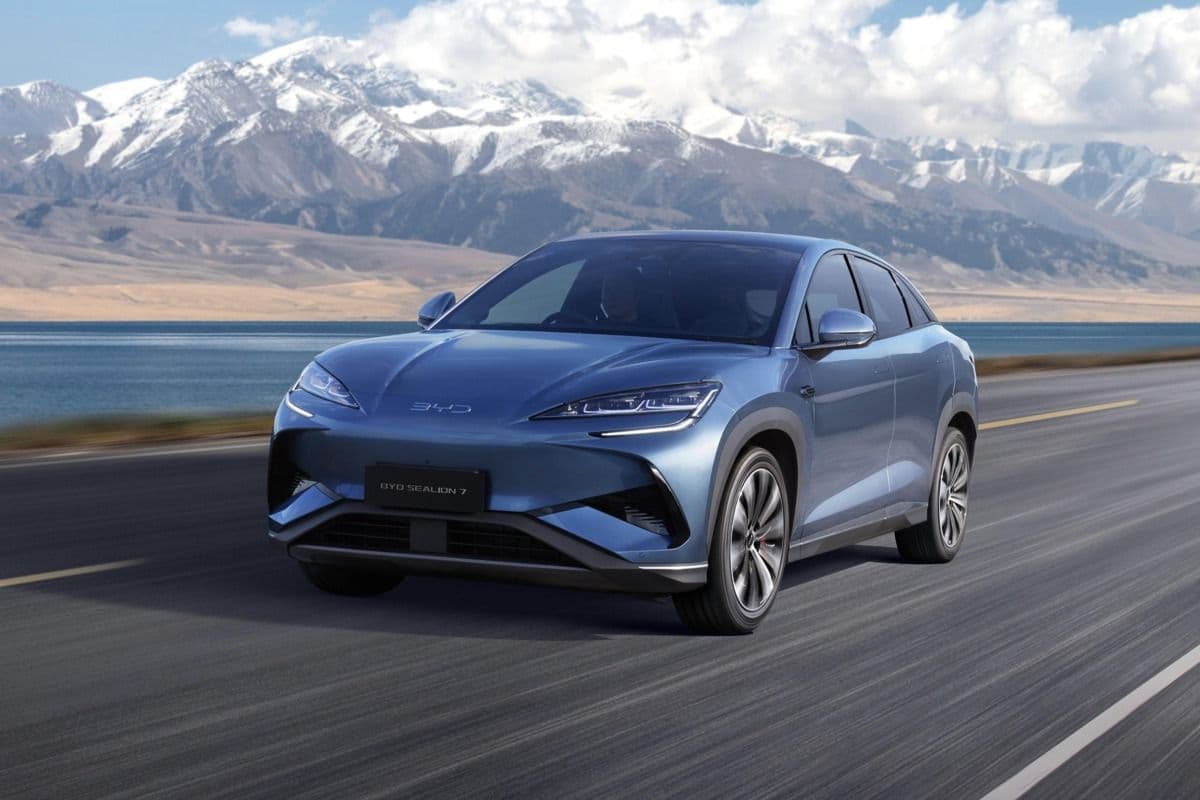
The Sealion 7 is longer, wider and heavier than the EX5, in keeping with its larger SUV coupe body.
Dimensions and size comparison
Measurement | BYD Sealion 7 Premium | Geely EX5 Inspire | Difference |
Length | 4,830mm | 4,615mm | Sealion 7 +215mm longer |
Width (excl. mirrors) | 1,925mm | 1,901mm | Sealion 7 +24mm wider |
Height | 1,620mm | 1,670mm | EX5 +50mm taller |
Wheelbase | 2,930mm | 2,750mm | Sealion 7 +180mm longer wheelbase |
Ground clearance | 165mm | 168mm | EX5 +3mm higher |
Turning circle | 12.4m | 11.8m | EX5 turns 0.6m tighter |
Kerb weight | 2,225kg | 1,815kg | EX5 -410kg lighter |
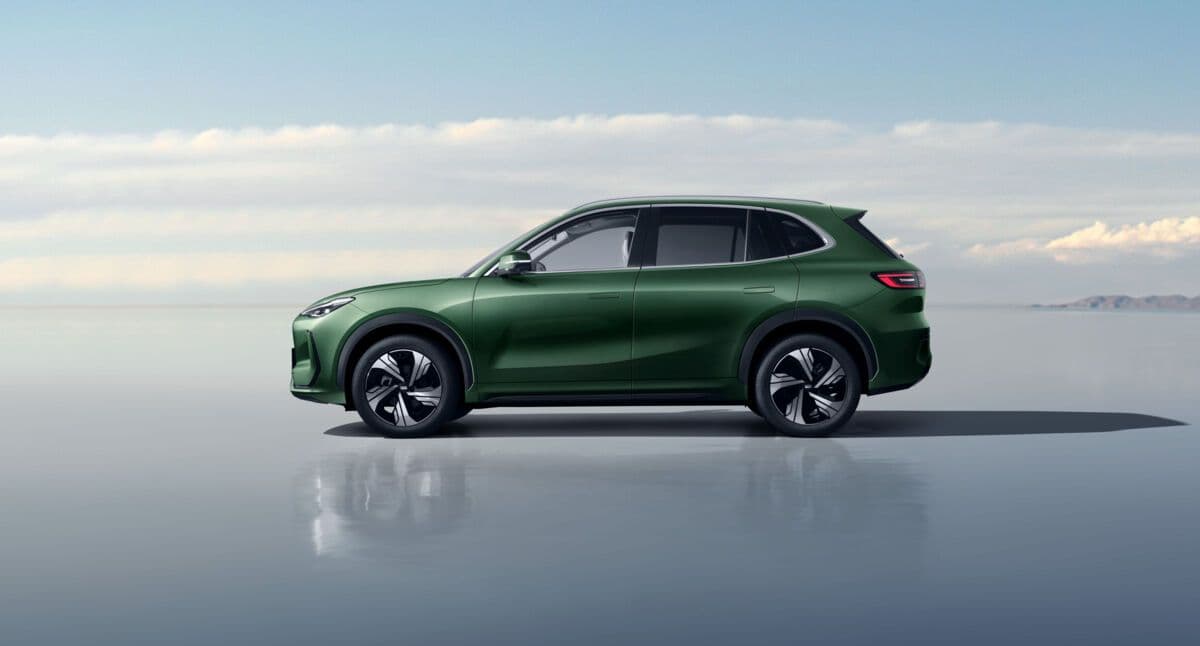
The Sealion 7 Premium is 215mm longer and 24mm wider than the EX5 Inspire, reflecting its position as a large SUV rather than a medium SUV in Zecar's database. The EX5 is 50mm taller, which combined with its lighter weight points to a more upright, efficiency-focused body design against the Sealion 7's lower, coupe-style roofline.
The 410kg weight difference is the standout figure here. For context, a Toyota RAV4 Hybrid weighs around 1,700-1,750kg, putting the EX5 Inspire closer to a mid-size petrol SUV than to the Sealion 7, which is closer in mass to a Toyota Kluger. The EX5's tighter 11.8m turning circle will be more noticeable than any of the dimensional gaps when parking in tight multi-storey car parks.
Range and Performance
The Sealion 7 Premium has more range than the EX5 Inspire due to substantially larger battery
Range and performance comparison
Spec | BYD Sealion 7 Premium | Geely EX5 Inspire |
WLTP range | 482km | 450km |
0-100km/h | 6.7s | 7.6s |
Top speed | 200km/h | 175km/h |
Towing (braked/unbraked) | 1,400kg / 750kg | Not listed by Geely* |
The Sealion 7 Premium beats the EX5 Inspire on range by 32km despite weighing 410kg more. That comes down to battery size. The Sealion 7's 82.5kWh usable pack is about 14kWh larger than the EX5's 68.39kWh pack, more than offsetting the additional weight. The EX5 is slower off the mark, the Sealion 7 Premium's 6.7-second 0-100km/h time beats the EX5 Inspire's 7.6 seconds, despite the Sealion 7 being the heavier car.
Towing capacity is a clear advantage for the Sealion 7, which is rated to pull up to 1,400kg braked. The EX5's Australian spec sheet does not list a towing figure for either variant, which is worth checking directly with Geely if towing matters to you.

Battery and Charging
The EX5 Inspire charges faster on DC despite a lower peak charging rate, while the Sealion 7 carries the bigger battery.
Battery and charging comparison
Spec | BYD Sealion 7 Premium | Geely EX5 Inspire |
Usable battery capacity | 82.5kWh | 68.39kWh |
Chemistry | LFP | LFP |
Max AC charging power | 11kW | 11kW |
AC 0-100% charging time | 8hrs 18mins | 7hrs 12mins |
Max DC charging power | 150kW | 100kW |
DC fast charge time | 10-80% in approx. 32 minutes | 30-80% in approx. 20 minutes (Geely AU claim)* |
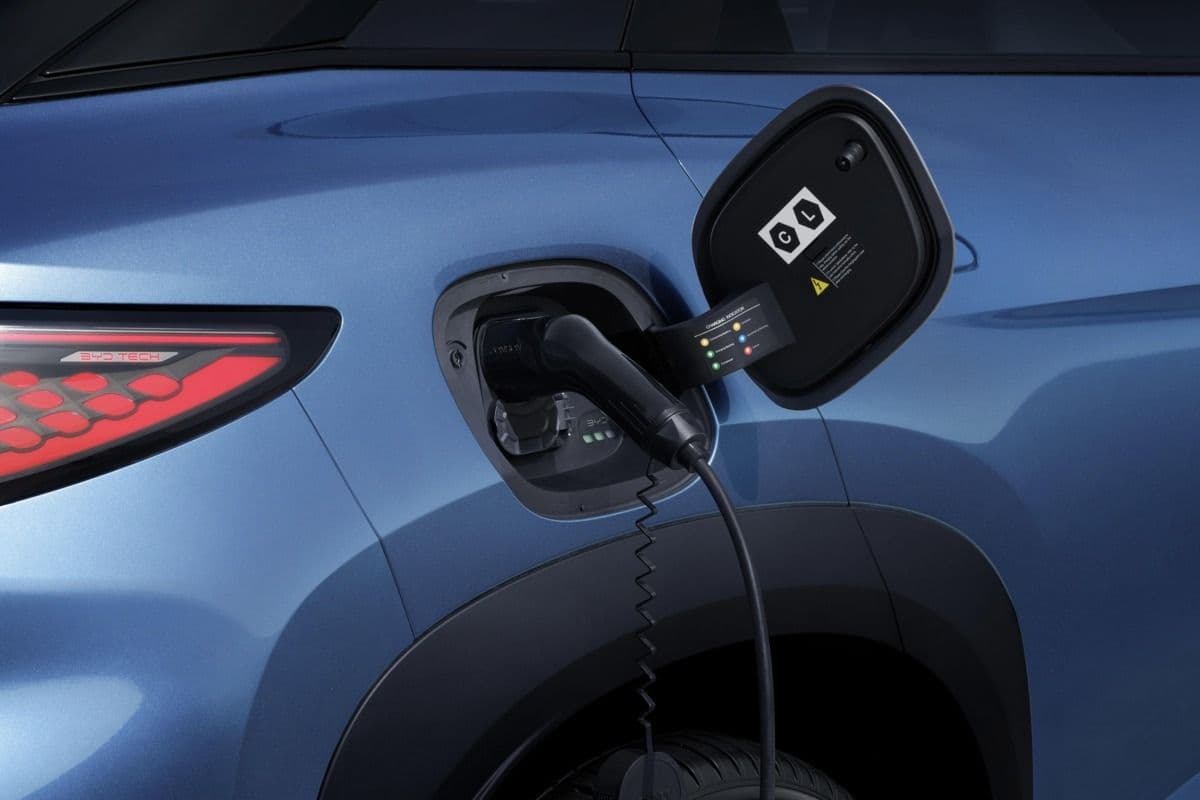
Bidirectional charging | V2L | V2L |
Bidirectional power output | 6.6kW | 3.3kW |
*Geely Australia's official site states the EX5 charges from 30-80% in around 20 minutes; Zecar's own charging guide for the Inspire estimates a slower 10-80% time of around 34 minutes on a high-power charger, which is the more relevant figure for typical road-trip top-ups. Treat both DC figures as approximate until tested under Australian conditions.
Despite having a higher peak DC charging rate, 150kW against the EX5's 100kW, the Sealion 7 Premium's bigger 82.5kWh battery means a full top-up still takes longer in real terms. AC charging is close between the two, with the EX5 Inspire's smaller battery filling about an hour quicker on the same 11kW onboard charger.
Both cars support Vehicle-to-Load (V2L) as standard, letting you run appliances, camping gear or tools from the car's battery. The Sealion 7 has the edge here too, with a 6.6kW V2L output against the EX5's 3.3kW, roughly double the available power. Neither car offers Vehicle-to-Home (V2H) or Vehicle-to-Grid (V2G) capability in Australia.
Driver Technology
Both cars run a comparable Level 2 driver assistance suite, with different branding and a five-star ANCAP rating each.
Both the Sealion 7 Premium and EX5 Inspire carry a five-star ANCAP safety rating and come standard with a similar suite of Level 2 driver assistance features: adaptive cruise control, lane keeping assist, automatic emergency braking, blind-spot monitoring, rear cross-traffic alert and a 360-degree camera.
The EX5 adds a Highway Assist style lane-centring function and Geely's Traffic Sign Information system, which can automatically adjust the car's target speed to match posted limits. The Sealion 7 Premium's ADAS suite is built around 360-degree camera coverage and BYD's standard radar and camera array. Neither car offers hands-free or eyes-off driving in Australia. Both require the driver to keep hands on the wheel and stay alert at all times.
Infotainment and Connectivity
Both cars centre their cabin around a large central touchscreen with wireless smartphone mirroring.
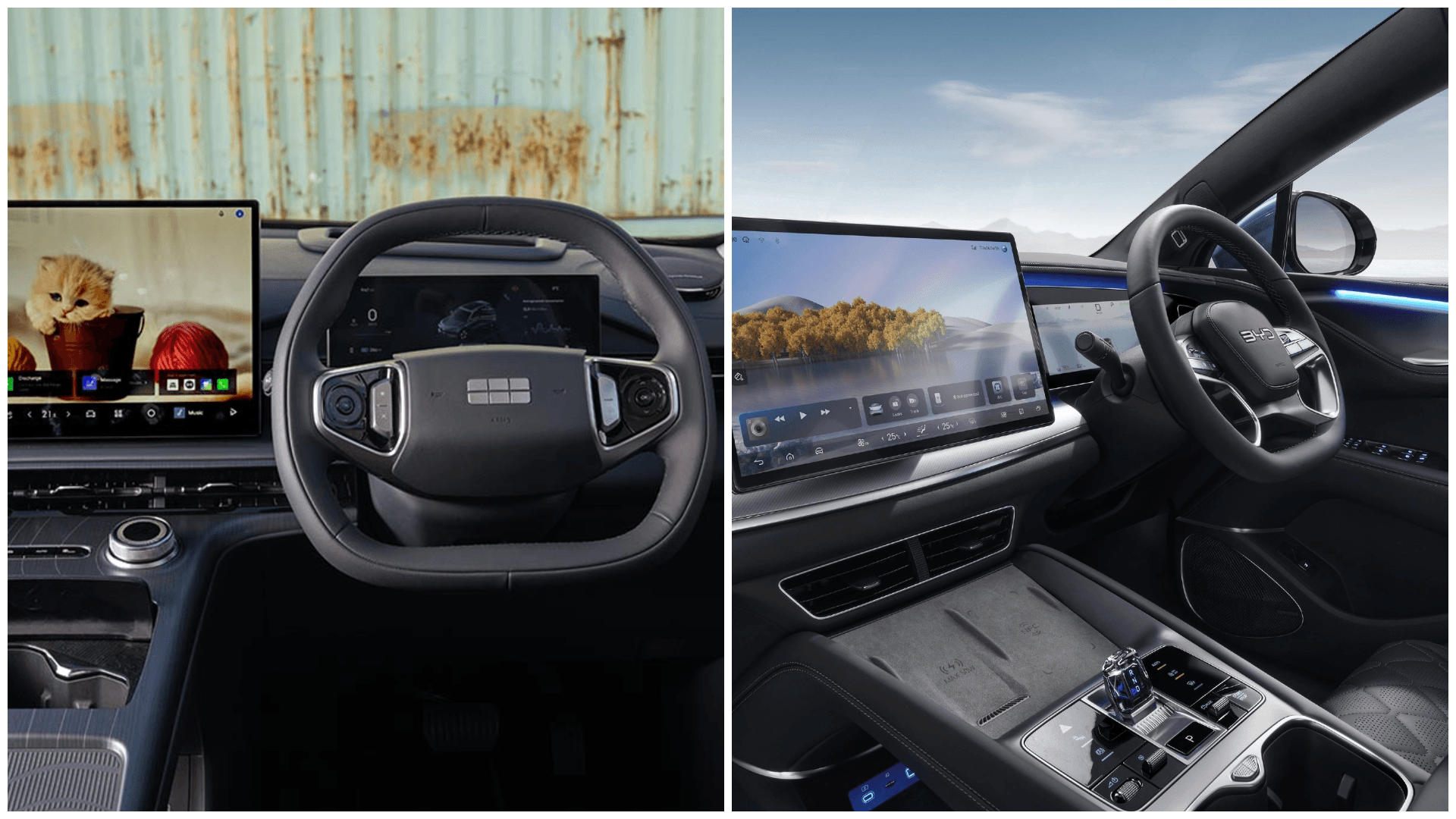
The Sealion 7 Premium uses a 15.6-inch rotating touchscreen with Apple CarPlay and Android Auto, paired with a 10.25-inch digital instrument cluster and a head-up display. The EX5 Inspire runs a 15.4-inch HD touchscreen powered by Geely's Flyme Auto operating system, also with CarPlay and Android Auto support, plus its own head-up display on the Inspire trim. Both cars support over-the-air software updates.
Sound system specs differ slightly: the Sealion 7 Premium comes with a 12-speaker setup, while the EX5 Inspire steps up to 16 speakers over the Complete's 6-speaker system. Both offer wireless phone charging as standard on these trims.
Other Features
Exclusive to the BYD Sealion 7 Premium:
- Frunk storage in addition to rear cargo space, 58L under the bonnet
- Rated towing capacity of 1,400kg braked / 750kg unbraked
- Bigger boot capacity, 500L standard against the EX5's 410L
- Higher V2L output at 6.6kW, useful for running larger appliances or power tools
Exclusive to the Geely EX5 Inspire:
- Significantly lighter kerb weight, 410kg less than the Sealion 7 Premium
- Massaging front seats and a 16-speaker sound system on the Inspire trim
- Tighter 11.8m turning circle for easier low-speed manoeuvring

Verdict
The Geely EX5 Inspire wins on value, the BYD Sealion 7 Premium wins on range, size and capability.
Neither car is a clean sweep. If price is the deciding factor, the EX5 Inspire undercuts the Sealion 7 Premium by $9,000 before on-road costs but offers many of the features the Sealion 7 Premium offers and more. Being lighter the EX5 will be more efficient which should result in slightly lower running costs.
The Sealion 7 Premium is the better all-rounder for buyers who want more range, a bigger boot, a frunk and a rated towing capacity. Its 82.5kWh battery and 482km WLTP range make it the more capable car for road trips and family use.
On spec sheet numbers alone, the Sealion 7 Premium edges ahead for buyers who prioritise range, practicality and towing. The EX5 Inspire is the stronger choice for buyers who want to spend less and don't need the extra size or capability.

About the author

Danny is a consultant and entrepreneur working at the cutting edge of the electric vehicle and energy transition. He is passionate about educating and helping consumers make better decisions through data.
