Key Points
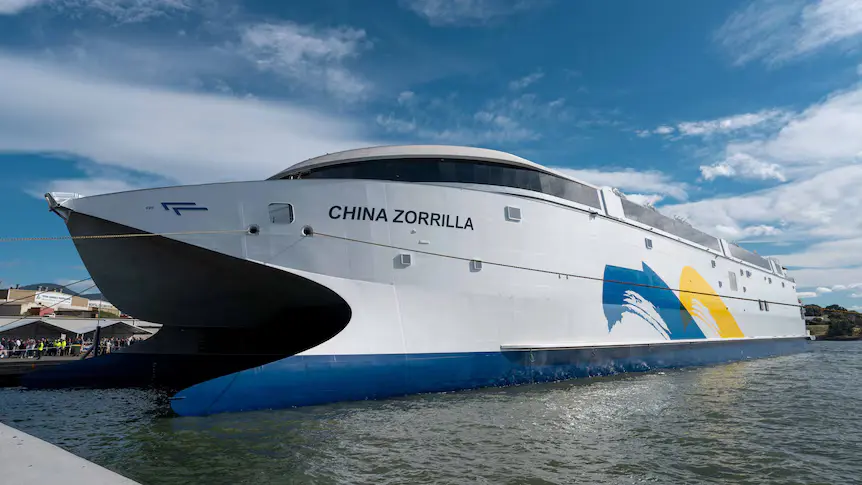
- The 130 metre China Zorrilla has entered commercial service between Argentina and Uruguay
- The battery powered ferry can carry up to 2,100 passengers and 225 vehicles
- Battery electric propulsion removes onboard exhaust emissions from the vessel’s operation
The world’s largest battery electric ship has officially begun carrying passengers, marking a major milestone for electric transport and putting Australian shipbuilding on the global stage.
Built by Incat Tasmania at its Hobart shipyard, the 130 metre ferry, named China Zorrilla, has started commercial operations between Buenos Aires in Argentina and Colonia in Uruguay. The vessel can carry up to 2,100 passengers and 225 vehicles, including cars and buses, using battery power alone.
The ferry was delivered to South American operator Buquebus in September, and its maiden commercial voyage has now brought years of engineering work to fruition. Incat says the achievement demonstrates that large, high capacity commercial vessels can operate on electricity, with Tasmania playing a central role in making it happen.

World’s Largest Electric Ship Begins Commercial Service
The China Zorrilla completed its first commercial voyage between Buenos Aires and Colonia on the River Plate, following an official launch ceremony in Buenos Aires on Wednesday.
The route spans around 30 nautical miles, making the ferry a key link between the two South American cities. Its entry into service follows delivery to Buquebus in September, after the vessel was transported from Tasmania aboard the heavy lift semi submersible ship MV Black Marlin.
▶️MORE: Review of XPENG’s Land Aircraft Carrier: The Future of Transport
Incat Tasmania chair Robert Clifford described the ferry’s first passenger service as a historic moment for the company, Tasmania and the wider maritime industry.
The vessel was initially expected to use liquefied natural gas, or LNG. However, Buquebus changed direction in 2023, deciding that the ferry should run entirely on batteries and operate without direct exhaust emissions during its journeys.
That decision led to the development of one of the largest battery electric vessels ever built, bringing electric propulsion into a class of commercial shipping where diesel engines have traditionally been the norm.

A Massive Battery With Room For 225 Vehicles
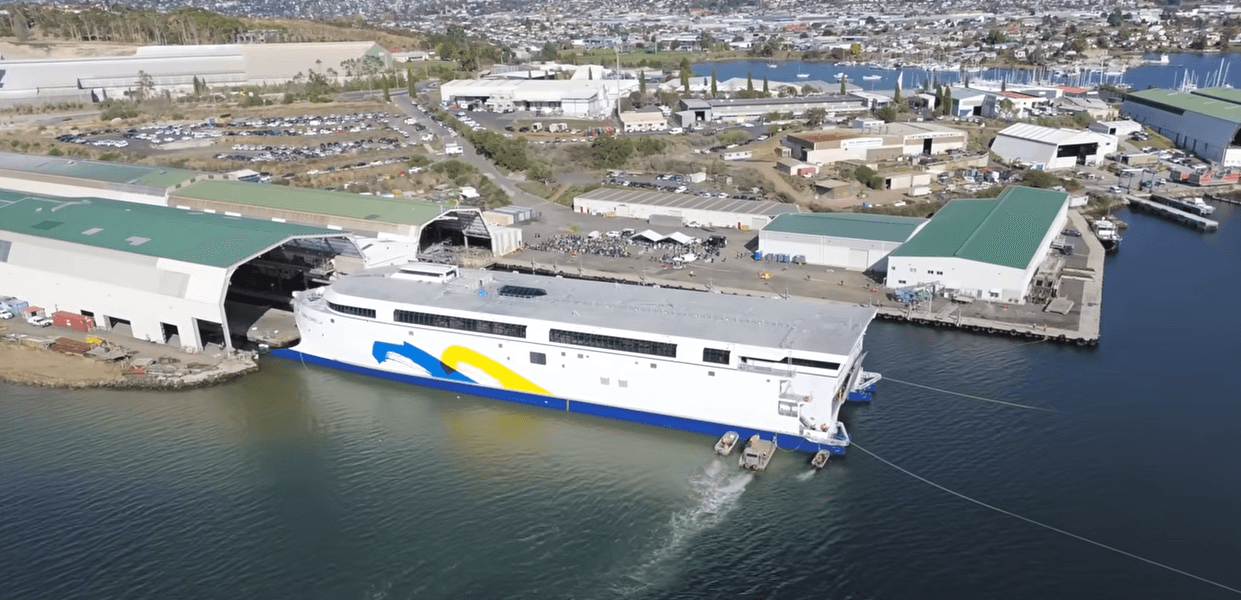
At 130 metres long, the China Zorrilla combines the capacity of a large passenger ferry with a fully battery powered drivetrain.
Its capacity includes:
- Up to 2,100 passengers, allowing it to transport large numbers of people on each crossing.
- 225 vehicles, including cars and buses, making it a practical option for passengers travelling with their vehicles.
- A 30 nautical mile route, connecting Buenos Aires and Colonia across the River Plate.
Unlike conventional ferries that rely on diesel engines, the vessel is powered entirely by batteries. This eliminates exhaust emissions from onboard propulsion while the ship is operating on battery power.
The change also affects the passenger experience. Incat managing director Craig Clifford, who travelled aboard the ferry for its maiden commercial voyage, said the lack of conventional engine noise and vibration was immediately noticeable.
Passengers would normally expect to hear machinery and feel vibration beneath their feet on a vessel of this size. On the China Zorrilla, that familiar experience is largely absent, offering a quieter alternative to conventional engine powered shipping.

How The Electric Ferry Became A Reality
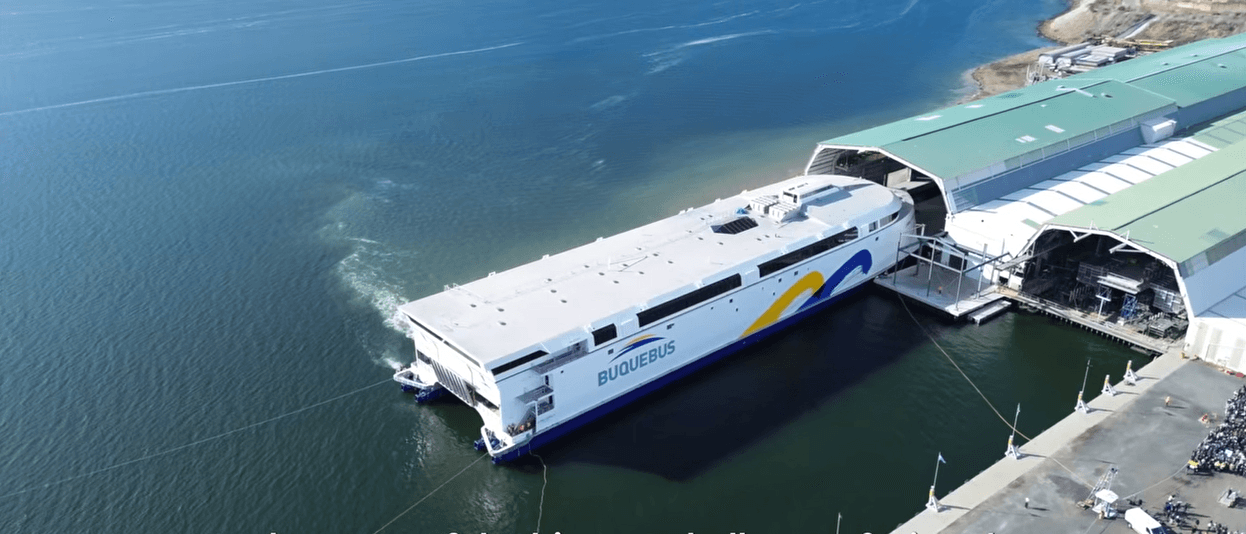
The ferry’s journey from a shipyard project to commercial service involved several stages of battery installation, testing and trials in Tasmania.
In October 2025, the first of the vessel’s four battery rooms was energised. An electric motor trial in December then brought the battery systems fully online.
In January 2026, the ferry began harbour trials on Tasmania’s River Derwent, marking the first time it moved under its own battery electric propulsion.
These tests helped move the project from battery installation to real world operation before the vessel was delivered to South America.
The decision to move away from LNG was also a turning point. Buquebus had originally planned to order an LNG powered ferry, but its 2023 decision to pursue a fully battery electric vessel set the project on a different path.
The result is a commercial ferry designed to complete its regular route without relying on traditional onboard combustion engines for propulsion.
Why It All Started In Tasmania
For Tasmania, the ferry’s entry into commercial service is a significant achievement for its shipbuilding industry. The vessel was built by Incat Tasmania in Hobart, with hundreds of workers contributing to the project.
Incat chair Robert Clifford said the ship had required the workforce to overcome major technical challenges and push beyond established expectations for electric shipping.
He said its entry into service showed that large, high capacity commercial vessels could operate on electric power, rather than battery electric shipping remaining an idea for the future.
The project also demonstrates how Australian engineering can contribute to changes in transport beyond the road vehicle market. While electric cars and buses are becoming more familiar, large passenger ships present a different challenge because of their size, energy requirements and operating demands.
The China Zorrilla now provides a working example of battery electric propulsion in commercial ferry operations. Its quieter operation and lack of onboard propulsion exhaust emissions highlight potential benefits for both passengers and the maritime industry.
For Incat Tasmania, seeing the vessel carry paying passengers is the culmination of years of design, construction and testing. For Australia, it is a reminder that local manufacturing can play a role in the global shift towards lower emission transport.

