

Key Points
- World’s largest battery-electric ship has been powered up for the first time in Tasmania
- Incat-built Hull 096 will carry 2,100 passengers using a record-breaking 40 MWh battery system
- The fully electric ferry marks a global first for large-scale maritime electric propulsion
- Incat’s success strengthens Tasmania’s role as a leader in next-generation electric transport.
Australia has just powered up a piece of maritime history. On the banks of the River Derwent, Incat Tasmania has switched on what it says is the largest battery-electric ship ever built anywhere in the world, marking a major moment not just for local shipbuilding, but for global electric transport.
The vessel, known for now as Hull 096, completed its first e-motor trial in Hobart over the weekend, drawing government leaders, industry figures and international attention. It is being built for South American ferry operator Buquebus and, once finished, will also claim the title of the largest electric vehicle of any kind on the planet.
▶️MORE: Introduction to Electric Vehicles: BEV vs PHEV vs HEV
A Global First Takes Shape in Hobart
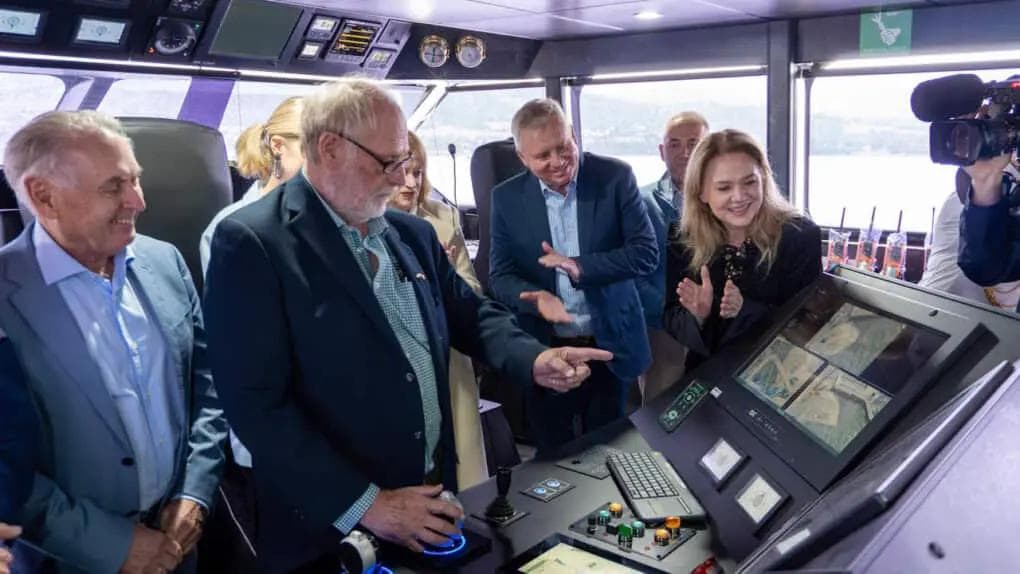
Sunday’s milestone saw the ship’s electric propulsion system powered up for the first time, a moment Incat chairman Robert Clifford described as a turning point for the industry.
According to Incat, this is the first time a ship of this scale has been trialled using 100 per cent battery-electric propulsion. Clifford himself had the honour of activating the vessel’s waterjets during the trial, underscoring how significant the achievement is for the company and for Tasmania’s manufacturing sector.
Built entirely at Incat’s Tasmanian shipyards, Hull 096 stretches 130 metres long and is designed to carry up to 2,100 passengers along with more than 220 vehicles. Originally planned as an LNG-powered ferry and named China Zorrilla, the project was reworked during the pandemic as Buquebus pivoted to a fully electric future.
▶️MORE: Review of XPENG’s Land Aircraft Carrier: The Future of Transport
Battery Power on an Unprecedented Scale
What truly sets Hull 096 apart is what sits beneath its decks. The ship will run on more than 250 tonnes of batteries, delivering over 40 megawatt-hours of installed energy capacity. That figure is roughly four times larger than any previous maritime battery system deployed worldwide.
When complete, the propulsion setup will become the largest battery-electric system ever installed on a vessel, pushing electric technology into territory previously dominated by fossil fuels. It also reinforces Tasmania’s long-standing reputation as a leader in aluminium shipbuilding, now paired with cutting-edge clean energy innovation.
Following its official launch in May, Hull 096 will now move through a series of further trials before departing for South America later this year.
Incat’s Electric Ferry Momentum Builds
The electric super-ferry is not a one-off. Incat Tasmania has been rapidly building momentum in battery-powered shipping, particularly in Europe.
In recent months, the company has secured contracts to build three fully electric high-speed ferries for Danish operator Molslinjen. Each of these vessels will measure 129 metres in length and feature a massive 45 megawatt-hour battery system.
Designed for the busy Kattegat route between Jutland and Zealand, the ferries will carry up to 1,483 passengers and 500 cars while operating at speeds exceeding 40 knots, all without burning a drop of fuel.
For Australia, the successful power-up of Hull 096 sends a clear message. Electric transport innovation is no longer limited to cars and buses. From Hobart, Tasmania is now exporting world-leading battery technology to the oceans, proving that the future of zero-emission transport can be built at home and delivered at scale.
