

Key Points
- Ampol has launched AmpCharge EV fast charging at its Foodary M1 Wyong Northbound service station in NSW, with the Southbound site due later in November.
- Each site has 500 kVA of dedicated grid capacity and can draw up to another 750 kVA when Ausgrid's network has room, for a potential 1,250 kVA.
- The Driven reports the dynamic connection cost about $90,000, where a conventional upgrade could have run to millions of dollars.
Ampol has launched AmpCharge EV fast charging at its Ampol Foodary M1 Wyong Northbound service station on the NSW Central Coast. The site uses a dynamic grid connection with Ausgrid, so it can draw more power when the network has spare capacity. Mobility Plaza reported the launch on 13 November 2026, and the Southbound site is due to open later this month.
This type of connection is one of the first of its kind in Australia for an EV charging site. It follows Ampol's earlier warnings that grid connection problems are holding back its rollout, and sits alongside its purchase of Evie Networks.
What Ampol has switched on at Wyong
The M1 as Australia's busiest inter-capital highway. Ampol's Brent Merrick, Executive General Manager, Commercial Fuels and Energy, said the project will deliver a stronger and more resilient charging experience in both directions of the M1.
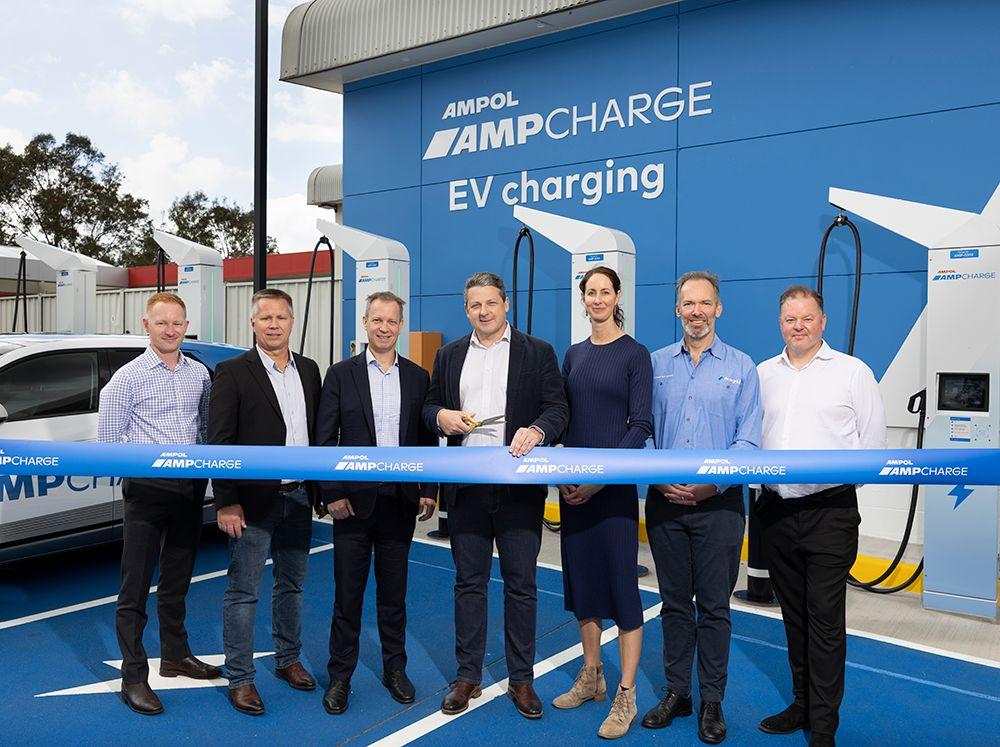
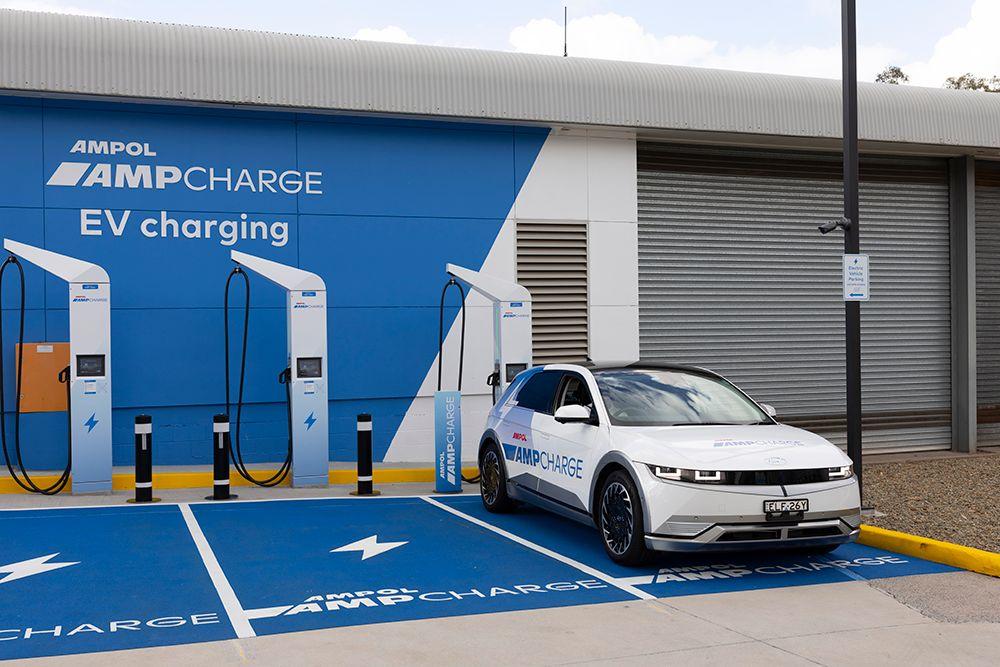
Each site has eight charging bays. Two of them are drive-through, built for larger commercial vehicles and EVs towing caravans or trailers. Chargers can deliver up to 200 kW, depending on the vehicle, site demand and network conditions.
AmpCharge M1 Wyong: key figures per site
Item | Figure |
Dedicated grid capacity | 500 kVA |
Extra capacity when available | Up to 750 kVA |
Potential total capacity | 1,250 kVA |
Charging bays | 8 (2 drive-through) |
Maximum charging power | Up to 200 kW |
Whether a car can use the full 200 kW depends on its own peak charging rate. Our list of the fastest-charging EVs shows which models come closest.
How a dynamic connection works
A normal grid connection is sized for the most a site could ever draw. The network builds, and the customer pays for, that peak capacity all year. Upgrades can cost millions of dollars and take more than a year, even though the extra capacity may only be needed during rare demand peaks.
A dynamic connection changes the approach. The site gets a guaranteed base amount of capacity, plus extra capacity it can use when the network has room.
At Wyong, it works like this:
- Each site has a fixed 500 kVA of dedicated capacity that is always available.
- AmpCharge receives real-time information from Ausgrid's distribution management system showing how much spare capacity the network has.
- When there is room, each site can draw up to another 750 kVA, for a potential 1,250 kVA.
- On the few days each year when the local network is under pressure, the extra capacity is cut back. Ausgrid's Connections Manager Angela Burford said the chargers keep operating during those events.
Ausgrid's Head of Customer Network Solutions, Adam Baxter, said the approach gave Ampol a "faster and cheaper solution". Baxter also said chargers do not draw their maximum demand all day, so a connection can allow for that fluctuation.
The charging technology comes from Kwetta, which links directly to Ausgrid's network and lets each site adjust its charging capacity to network demand in near real time. Ampol's Z Energy network in New Zealand uses the same Kwetta infrastructure at 13 public sites. The two Wyong sites can also share capacity in certain outage scenarios.

Why it matters for the charging rollout
Grid connection cost and delay have been a major constraint for EV charging networks. The Driven reports the Ampol and Ausgrid agreement turned what could have been a multimillion-dollar connection into one costing about $90,000.
If the model can be replicated, it could help get high-powered chargers connected faster and for less. Ausgrid is now working on a low-voltage version of the dynamic connection. It is also talking with other charging companies about sites near its distribution substations.
Ausgrid operates the network across parts of Sydney, the Central Coast and the Hunter.
Another option: battery-buffered EV charging
A dynamic connection is not the only way to get fast charging without a big network upgrade. Battery-buffered charging puts a large battery at the site. The battery absorbs some of the peak power demand, so the grid connection can be smaller than the chargers' maximum output.
Between charging sessions, the battery tops up slowly from the grid or from onsite solar. When cars plug in, it supplies extra power alongside the grid connection.
Australia has several examples:
- In Goulburn, NSW, Chargefox paired a 180 kW grid connection with a 250 kW/273 kWh battery.
- Chargefox and PowerTec have said sites using their bespoke batteries need on average 50% less peak power than traditional ultra-fast charging sites.
- At Cockburn in Western Australia, eLumina Global has energised a 400 kW DS400 charger with integrated battery storage. It charges its battery from a 70 kW trickle feed of rooftop solar.
Dynamic connection vs battery-buffered charging
Feature | Dynamic connection | Battery-buffered charging |
Where the extra power comes from | Spare network capacity, when available | Energy stored in an onsite battery |
What limits grid draw | Network signals reduce demand when the grid is under pressure | The battery covers demand peaks |
Extra equipment | Real-time link to the network operator | Large onsite battery and controls |
Australian example | Ampol AmpCharge, M1 Wyong | Chargefox, Goulburn; eLumina, Cockburn WA |
The two approaches are not mutually exclusive. A dynamic connection relies on the network having spare capacity most of the time. A battery can help where that capacity is limited. The sources do not say whether Ampol plans to add batteries at Wyong.

About the author

Danny is a consultant and entrepreneur working at the cutting edge of the electric vehicle and energy transition. He is passionate about educating and helping consumers make better decisions through data.
