
Key Points
- A Tesla Supercharger site with V4 cabinets has reportedly opened at The Italian Forum in Leichhardt, Sydney, on 14 October 2026.
- A Hyundai Ioniq 6 reportedly logged 170 kW at 40 per cent charge, against a 100 kW ceiling at older Tesla sites.
- V4 cabinets support 400 to 1,000 V and up to 500 kW per post, which should help 800 V non-Tesla EVs charge faster.
Tesla has opened what looks like its first full V4 Supercharger site in Australia, at The Italian Forum carpark in Leichhardt, Sydney. The opening was shared on in a post on the r/AustralianEV subreddit.
The site has six stalls and, according to the poster, runs on V4 cabinets rather than the older V3 power hardware. That matters for drivers of other brands. V4 cabinets support up to 1,000 V, which suits 800 V cars from brands such as Hyundai, Kia, Zeekr and XPeng.
What has opened in Leichhardt
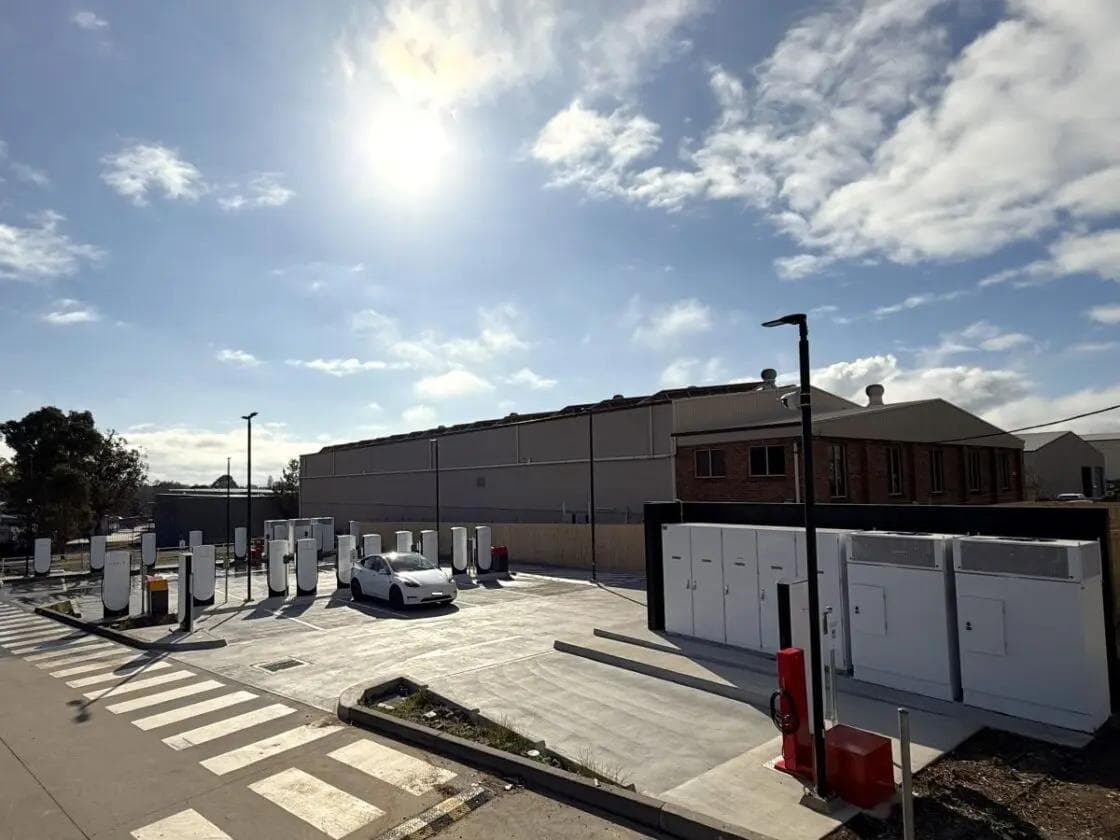
The site is located at the Italian Forum carpark featuring six stalls connected to V4 cabinets, capable of 800 to 1,000 V charging.
The chargers were funded under the NSW Government's fast charging grants which require the chargers to be open to non-Tesla vehicles.
The site joins about 158 Tesla sites across the Australian charging network, according to carloop data cited by The Driven in July. Here is what has been reported so far:
- Location: The Italian Forum carpark, Leichhardt, Sydney
- Stalls: six V4 Superchargers on V4 cabinets, per the Reddit post
- Access: open 24/7, with CCS compatibility listed on PlugShare and open access required under the NSW grant
- Listed maximum: up to 415 kW on PlugShare, which Tesla has not confirmed
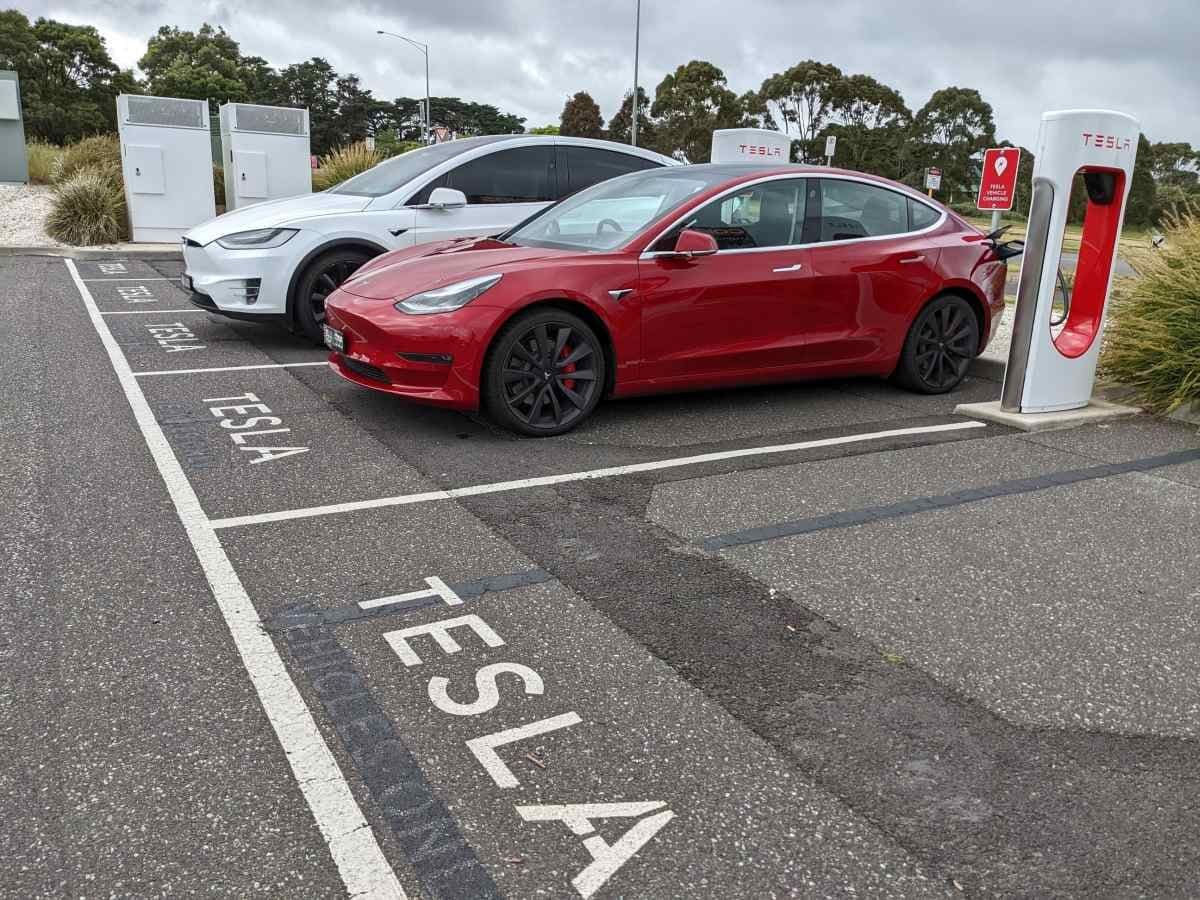
A user has already reported on Plugshsre their Hyundai Ioniq 6 reaching 170 kW at 40 per cent state of charge. The same user says they have never seen more than 100 kW at older Tesla sites.
How V4 differs from V3
Tesla's naming has been confusing for its new generation superchargers. "V4" has described two separate pieces of hardware: the post, which is the stall you plug into, and the cabinet, which is the power electronics behind it.
V4 posts reached Australia first, opening in Albury in December 2023 with V4 posts and a longer cable. Power still came from V3 cabinets, so speeds stayed at up to 250 kW.
Tesla announced the V4 cabinet in November 2024. It can power up to eight posts, shares up to 1.2 MW between them and delivers up to 500 kW to a car. CarExpert reported it supports 400 to 1,000 V, against a V3 cabinet limit of 480 V.
V3 vs V4 Supercharger
Feature | V3 | V4 |
Cable length | 1.98 m | 2.98 m |
Power per post | Up to 250 kW | Up to 500 kW (1.2 MW shared) |
Voltage range | Up to 480 V | 400 to 1,000 V |
Posts per cabinet | Up to 4 | Up to 8 |
Payment | Tesla app | Tesla app or card terminal |
Cabinet efficiency | Baseline | About 2% better |
The longer cable applies to every V4 post, including those still running on V3 cabinets. The power and voltage gains only arrive with the V4 cabinet.
Electrek reported that Tesla activated its first full V4 station in Redwood City, California, in September 2025. At the time, only the Cybertruck could use the full capacity. The cabinet shares power across its posts, so a stall gets more when its neighbours draw less.

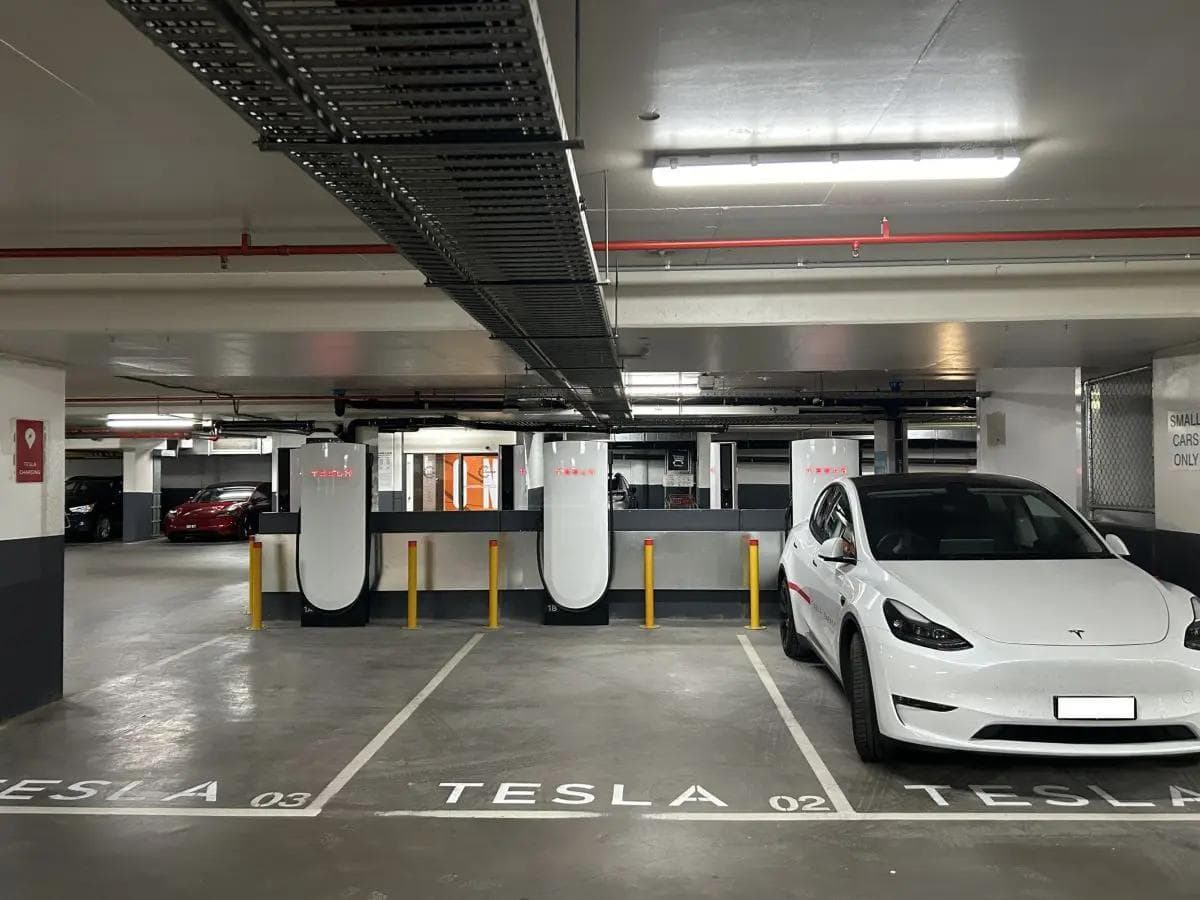
What it means for non-Tesla EV owners
Drivers of other brands stand to gain the most from the upgraded architecture. V3 Superchargers are built around 400 V, so 800 V cars cannot use their full charging curve there. The V4 cabinet supports up to 1,000 V, which lets 800 V vehicles from Hyundai, Kia, Zeekr and XPeng reach much higher speeds than they can at V3 sites. Model 3 and Model Y owners in Australia top out at 250 kW, which older cabinets already deliver, according to The Driven.
The main changes for other brands:
- Speed: 800 V cars should see much higher peaks than at V3 sites, where the Ioniq 6 owner says it never passed 100 kW
- Cable: the 2.98 m cable reaches charge ports at the front, rear or side more easily
- Payment: V4 posts have a card terminal, so drivers do not need the Tesla app, CarExpert reported
- Price: other brands still pay more than Tesla owners
Pricing is $0.34 to $0.52 per kWh for Tesla vehicles and subscribers, and $0.48 to $0.73 per kWh for other vehicles. Pricing varies by time of day. Here is how that compares with other NSW sites.
Supercharger pricing: Tesla vs non-Tesla
Site | Tesla (per kWh) | Non-Tesla (per kWh) |
Leichhardt (reported) | $0.34 to $0.52 | $0.48 to $0.73 |
Pokolbin (March 2026) | $0.46 | $0.65 |
Goulburn (at opening, 2025) | $0.52 | $0.73 |
At the top rate, non-Tesla drivers pay about 40 per cent more than Tesla owners in all three examples. Our guide to the cost to charge a Tesla explains how a Supercharger membership changes the rate.

➡️TRY: Calculate Your EV Charging Costs


About the author

Danny is a consultant and entrepreneur working at the cutting edge of the electric vehicle and energy transition. He is passionate about educating and helping consumers make better decisions through data.
