
The MSI EZgo Smart EV portable charger stands out from most portable chargers because it is genuinely smart.
Like the portable chargers that come with most new electric cars, it plugs into a standard wall socket. But unlike those basic cables, it adds smart features you would normally expect from a home wall charger.
One of its key advantages is the use of swappable tails, allowing you to switch between different plug types and charging speeds. This is rare for portable chargers and adds a level of flexibility most alternatives do not offer.
It is still a Level 1 charger, so charging speeds are slower than a dedicated wall unit. But it works anywhere there is a power point, and that flexibility is its biggest strength.
This review looks at one of the most well featured and built portable EV chargers available. It offers capabilities not typically found in this category, though at a higher price than basic alternatives.
zecar rating
Good points
- Flexible, works with any standard 10A or 15A wall socket
- Smart features (Built-in LCD display, app control, scheduled charging)
- High quality construction
- IP66 rated - waterproof and dustproof
- Strong 2-year warranty and US$5 million product liability insurance
Could be better
- App only works within Bluetooth range - no remote monitoring
- $449 is on the higher end for a level 1 charger available
Understanding EV Charging Levels
Before looking at the EZgo, it helps to understand the three levels of EV charging. Level 1 and 2 charging is typically done in homes or workplaces where power points or dedicated chargers are used for charging.
EV Charging Levels Explained
Level | Power Source | Output | Charge Time (approx.) |
Level 1 | Standard wall socket (10A or 15A) | 2.3 kW to 3.45 kW | 12 to 24+ hours |
Level 2 | Dedicated home wall charger (32A) | 7 kW+ | 4 to 8 hours |
Level 3 | Public DC fast charger | 50 kW to 350 kW | Under 1 hour |
Level 2 chargers need to be installed by an electrician. Expect to pay anywhere between $700 to $1,500 for the unit and around $500 to $2,000 for installation.
Level 3 public fast chargers are much faster, are found at public charging stations, but cost more per kWh than charging at home.
What Is the MSI EZgo?
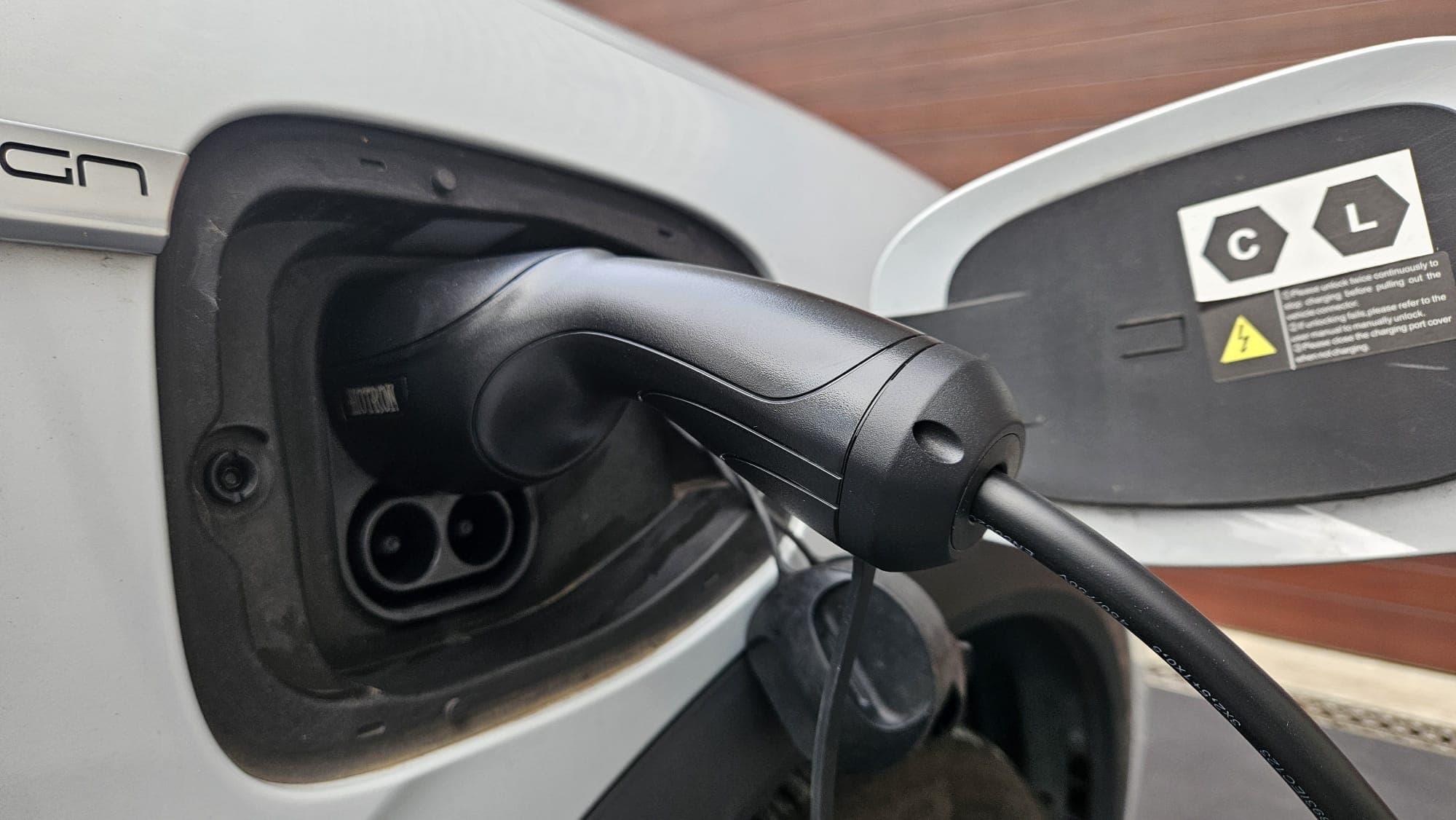
The MSI EZgo is a portable Level 1 EV charger priced at $449 in Australia. It comes with a carry case, a 5-metre Type 2 EV cable, two AC power cables (10A and 15A), a wall-mounted holder, and a cable hook. Everything you need is in the box.
The charger is 289mm long and weighs 4 kg with all cables and the bag. It is built from UL94-V0 fire-safe materials and rated IP66, meaning it handles rain, dust, and outdoor use without issue. It has also been tested to survive up to 2 tonnes of pressure. During our time with the EZgo it felt like a very high quality piece of equipment which corresponds with its premium $449 price t
The EZgo is a premium take on otherwise ‘dumb’ portable charger. It offers a plethora of unique features that are often not found in portable chargers that come complimentary with EVs.
it’s key point of differentiation is the ‘smarts’ that it comes with, which provide more functionality than nearly all portable chargers, including the popular Tesla mobile connector. These include
- Smart scheduling - allows you to charge times to align with cheap energy rates
- App control - allows you to adjust settings via your phone
- Swappable tail - allows you to take advantage of increased power, up to 15A
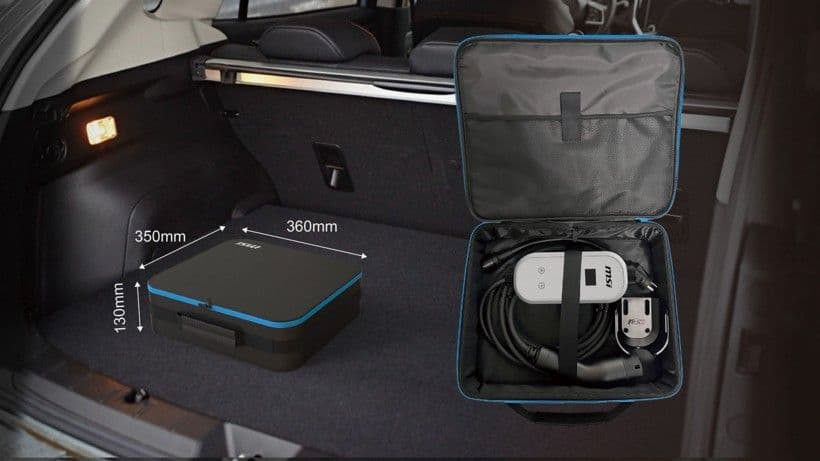
Key Specifications and Features
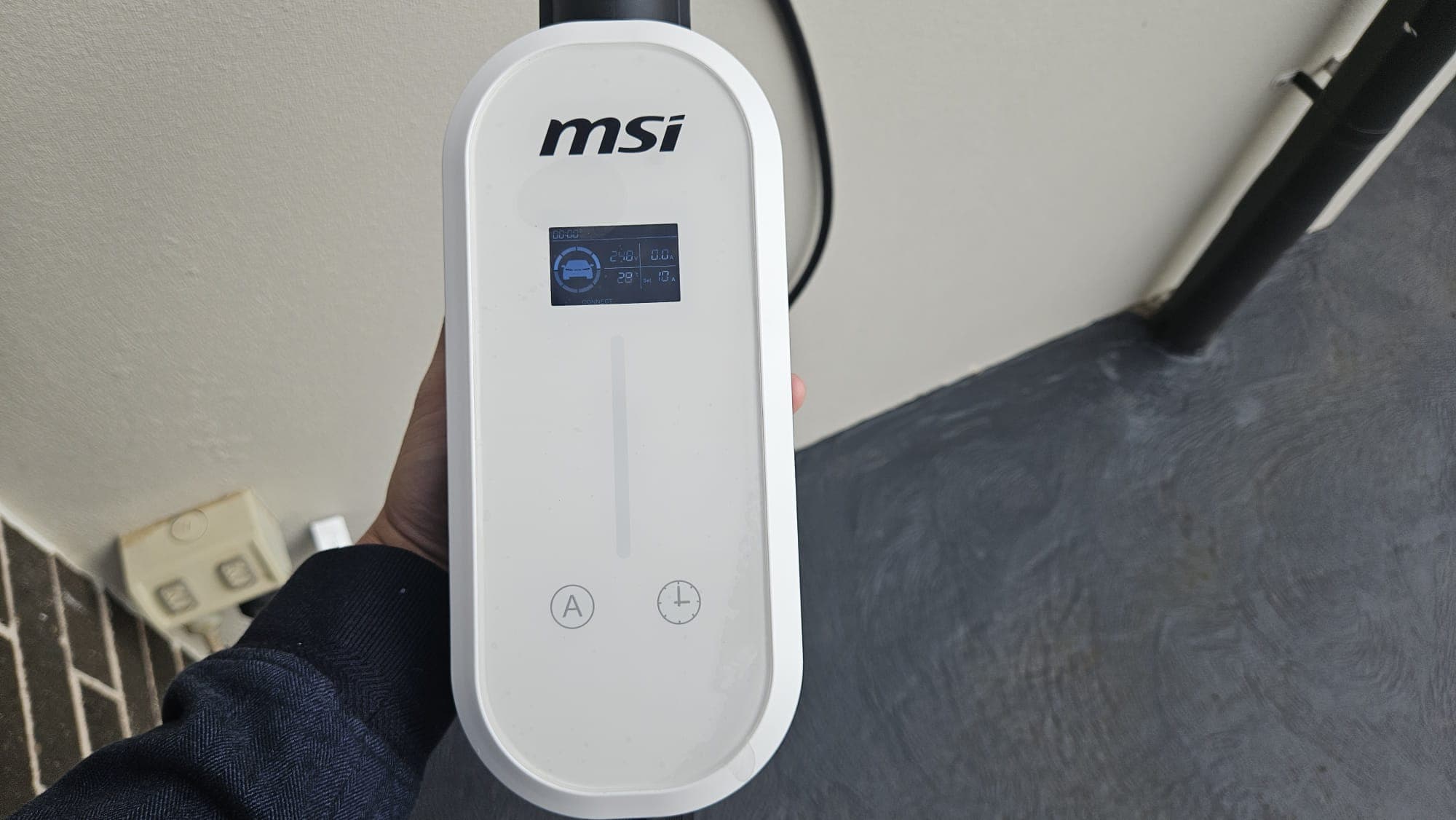
The EZgo has a 1.8-inch LCD screen on the front. It shows the current voltage, amps, kilowatt-hours delivered, and charger temperature in real time. Most budget Level 1 chargers do not have a screen at all, so this is a clear step up.
A pulsating light strip on the unit shows charging status at a glance: ready, charging, or complete.
The large A button lets you set the current draw. The charger is smart enough to cap the amps based on which cable is connected. With a 10A cable plugged in, it will not let you set it above 10A.
The Timer button lets you delay the start of charging. This is useful if your electricity provider offers cheaper rates overnight or during off-peak windows.
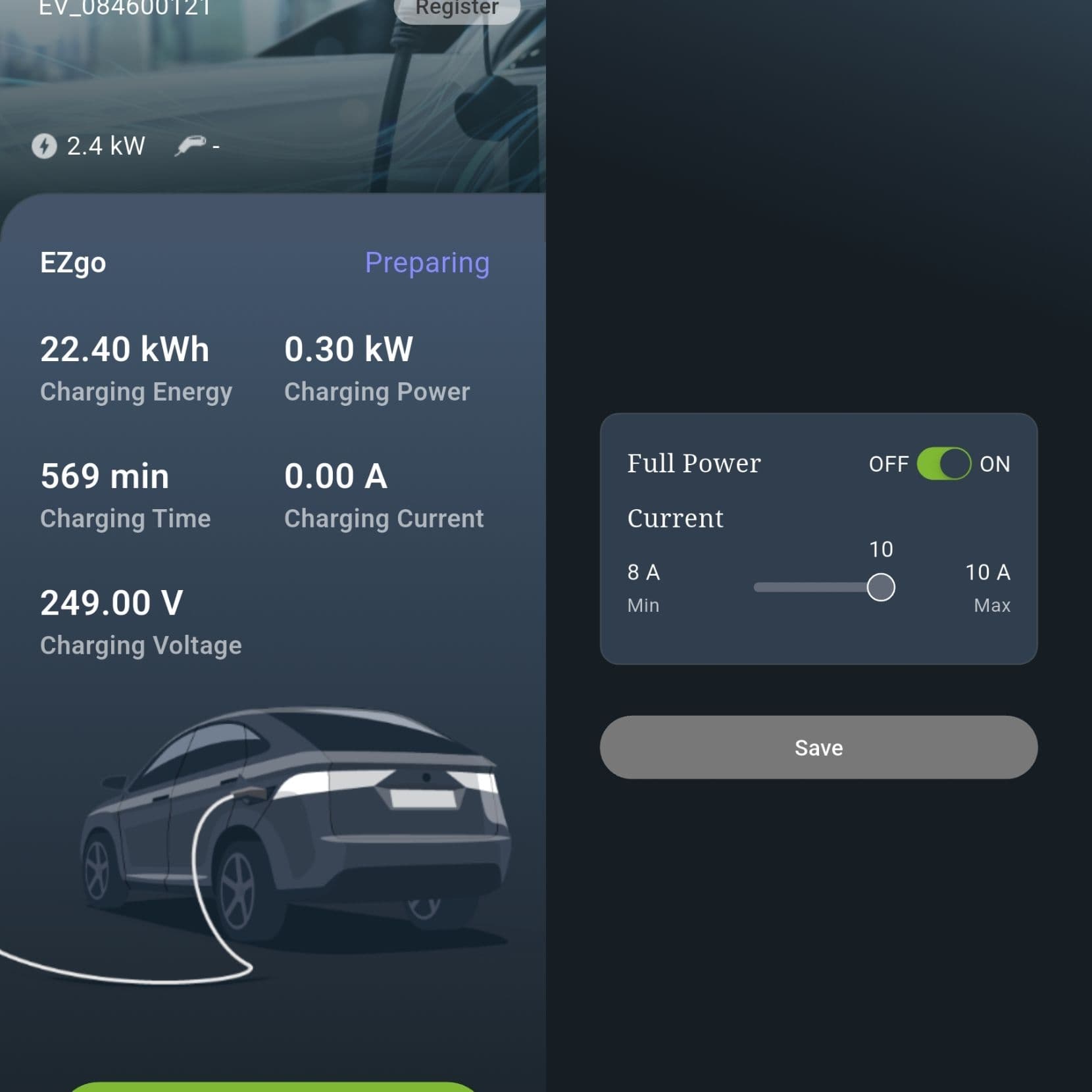
The MSI aConnect app (iOS and Android) connects via Bluetooth. It lets you monitor charging progress, adjust current draw, and set charging schedules. The app is more useful than expected, particularly for scheduling around cheap off-peak pricing for EV charging. The one limitation is that it only works within Bluetooth range, so you cannot check on your car from inside the house if the charger is in the driveway.
MSI EZgo Smart EV Portable Charger Specifications
Specification | Detail |
EV Connector | Type 2 |
AC Plug | Type I Australian (10A and 15A cables included) |
Input Voltage | Single-phase L+N, 200V to 240V AC |
Frequency | 50/60 Hz |
Max Output (10A) | 2.3 kW |
Max Output (15A) | 3.45 kW |
Display | 1.8-inch LCD |
Connectivity | Bluetooth (MSI aConnect app) |
Weather Rating | IP66 |
Operating Temp | -30 to +50 degrees Celsius |
Cable Length | 5 metres (Type 2 EV cable) |
Weight | 4 kg (charger, cables, bag) |
Warranty | 2 years |
Price | $549 RRP |
The EZgo includes a full set of built-in protections that are not always found in portable chargers.
Built-in Safety Protections
Protection Type |
Over Temperature Protection |
Over Voltage Protection |
Over Current Protection |
Under Voltage Protection |
Ground Fault Protection |
Surge Protection |
Control Pilot Fault |
Residual Current Protection |
It is also backed by a 2-year warranty and US$5 million in global product liability insurance.
Real-World Performance
We tested the EZgo on a BYD Atto 3 using a standard 10A wall socket in a single-phase home. The EZgo delivered a steady 2.4 kW. The BYD onboard display confirmed it was receiving around 2.1 kW at the battery. The small difference is normal as the car uses some power for its own electronics while charging; typical losses are around 10%.
Our overnight charge which lasted 9 hours delivered 20kWh of energy, about 33% of the BYD Atto 3’s total battery capacity. This translates to about 140km of range based on typical mileage we get on the Atto 3.
On a 15A outlet, the EZgo will deliver up to 3.45 kW, 50% more than a 10A outlet. An overnight 8-hour charge at that rate adds roughly 180 km of range for an average EV. That is enough to cover daily driving for nearly everyone without needing a wall-mounted unit. The average driver in Australia drives about 37km a day.
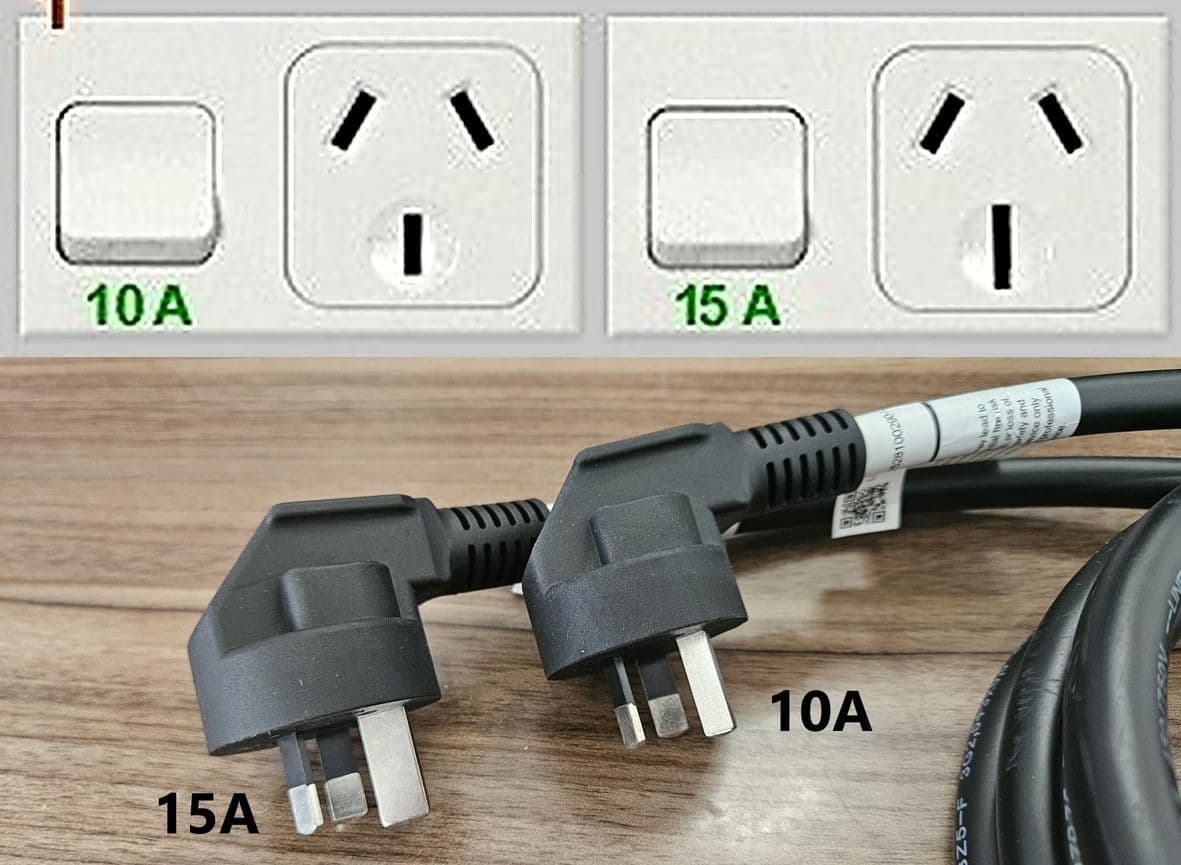
10A vs 15A: What Is the Difference?
The EZgo comes with two AC cables. The 10A cable works in any standard Australian wall socket. The 15A cable is faster but requires a 15A socket, which some homes have in the garage or laundry.
The 15A plug has a larger earth pin so it physically cannot be inserted into a 10A socket.
If you have a single 10A socket in your garage or driveway (meaning it is connected to a single circuit) you should be able to pay an electrician to upgrade to a 15A socket for a few hundred dollars. The upgrade from 10A to 15A is the single biggest upgrade in terms of the home charging experience.
10A vs 15A Charging Comparison
Setting | Output | Range Added Per Hour (approx.) | Overnight Range (8 hrs, approx.) |
10A | 2.3 kW | 12 to 15 km | 96 to 120 km |
15A | 3.45 kW | 18 to 22 km | 144 to 180 km |
Who Is It For?
The EZgo suits a few different types of EV owners: renters who cannot install a wall charger, anyone who regularly drives through regional or remote areas where fast chargers are scarce, EV owners who want a backup option in the boot, and people who want a home charging solution without the cost of a Level 2 installation.
If you already have a Level 2 wall charger at home and rarely travel far from fast charger networks, the EZgo is less essential. But as a backup or travel charger, it earns its place.
Increasingly apartment dwellers are installing smart power sockets which enable residents to charge in common area car parks. MSI advised us that some of these residents have purchased an MSI EZgo portable charger to take advantage of the faster charging available from Nox Energy’s 15A smart socket.

Should You Buy the MSI EZgo?
The MSI EZgo is a well-built Level 1 portable EV charger with useful features that go beyond a basic cable. The display, dual cable options, app scheduling, and solid safety credentials make it a more capable option for everyday use.
At $449, it’s on the expensive side but still cheaper than the popular Tesla Mobile Connector ($550) while offering more functionality. It is a strong choice if you want a high quality portable charger that works at home, on trips, or at a holiday rental.
Verdict: Good.
If you want a step up from a basic charger which is faster, with added control and flexibility. If you are however looking for the lowest price, this might not be the charger for you.
You can purchase MSI EZgo Smart EV portable charger here.
Portable EV Charger Comparison
MSI EZgo vs Tesla Mobile Connector vs Standard Portable Charger
Feature | MSI EZgo Smart EV | Tesla Mobile Connector | Standard Portable Charger |
Price | $449 | $550 | $200 to $300 |
10A Cable Included | Yes | Yes | Yes (most models) |
15A Cable Included | Yes | Yes | Rarely included |
Max Output (10A) | 2.3 kW | 2.3 kW | 2.3 kW |
Max Output (15A) | 3.45 kW | 3.45 kW | Not available (no 15A cable) |
Built-in Display | Yes - 1.8-inch LCD | No | No |
App Control | Yes - Bluetooth (MSI aConnect) | Yes - Tesla app (Wi-Fi) | No |
Charging Timer | Yes | Via Tesla app | No |
Weather Rating | IP66 | Not rated | Varies |
Fire-Safe Housing | Yes - UL94-V0 | Not specified | Varies |
Crush Tested | Yes - up to 2 tonnes | Not specified | No |
Warranty | 2 years | 1 year | Varies (often 1 year) |
Product Liability Insurance | US$5 million | Not specified | Not specified |

About the author

Danny is a consultant and entrepreneur working at the cutting edge of the electric vehicle and energy transition. He is passionate about educating and helping consumers make better decisions through data.
