

Key Points
- German testing by motoring club ADAC found EV charging losses ranged from 5.1 per cent at a home wallbox to 24.2 per cent at a standard household power point.
- DC fast charging loses only about 3 per cent of energy in the charger itself, but heating or cooling the battery can add another 2 to 8 per cent, taking total losses to between 5 and 15 per cent.
German motoring club ADAC has published test results measuring exactly how much electricity disappears between the power grid and an EV battery during charging. The tests, run across nine vehicles from five brands, found the losses are far from trivial and depend heavily on where and how you charge.
Australia operates on the same voltage standard as Germany, 230V single-phase and 400V three-phase, so the findings apply directly to home charging setups here. That makes ADAC's results a useful benchmark for Australian EV owners trying to work out the best charging setup and where their electricity bill is really going.
Home Charging: Power Point vs Wallbox
ADAC tested three home charging scenarios across five EV models: a standard household power point at 2.3kW, a wallbox at its maximum output of 11kW or 22kW, and a wallbox running at a reduced 4.1kW to simulate charging from solar panel surplus. Every test charged the battery between 10 and 90 per cent state of charge, with the battery starting each test between 20 and 30 degrees Celsius, to keep the results consistent.
AC Charging Losses by Model
Model | Power point | Solar (PV) charging | 11kW wallbox | 22kW wallbox |
Mercedes CLA 350 EQ | 24.2% | 12.8% | 6.9% | Not tested |
Renault R5 E-Tech | 13.7% | 8.0% | 5.1% | Not tested |
Tesla Model Y | 12.7% | 9.4% | 6.1% | Not tested |
Volvo EX30 | 14.2% | 9.1% | 7.0% | 6.7% |
VW ID.7 | 15.3% | 10.6% | 6.9% | Not tested |
Every vehicle lost less energy on a wallbox than on a household socket. The Mercedes CLA 350 EQ had the highest losses of any car at the power point, 24.2 per cent, which ADAC put down to a weaker onboard charger that draws only 8 amps instead of the already modest 10 amp standard. The other four cars lost between 12.7 and 15.3 per cent at the socket.
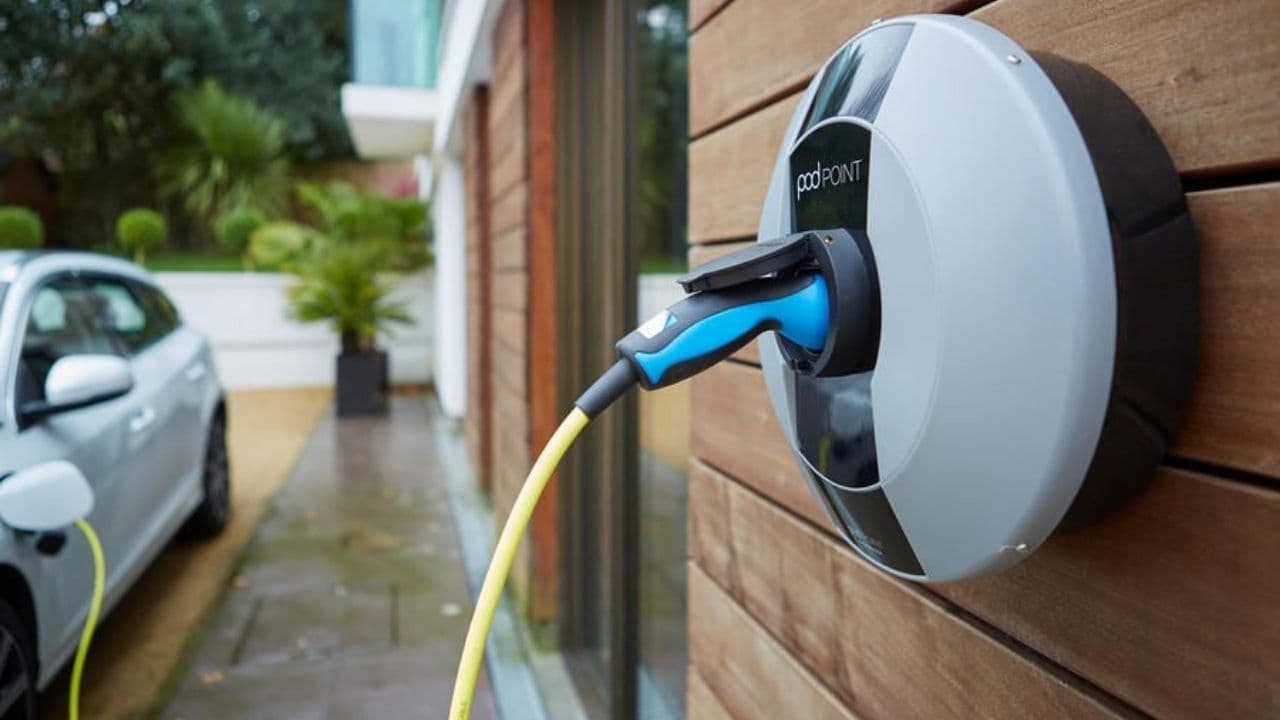
At the wallbox, losses for all five cars sat between 5.1 and 7.0 per cent, roughly half the losses seen at the power point. ADAC noted that a wallbox pays for itself over time through lower running costs, on top of the safety and convenience benefits. Charging from solar surplus lost between 8.0 and 12.8 per cent, which ADAC considers acceptable given the electricity is essentially free.
Why AC Charging Loses Energy
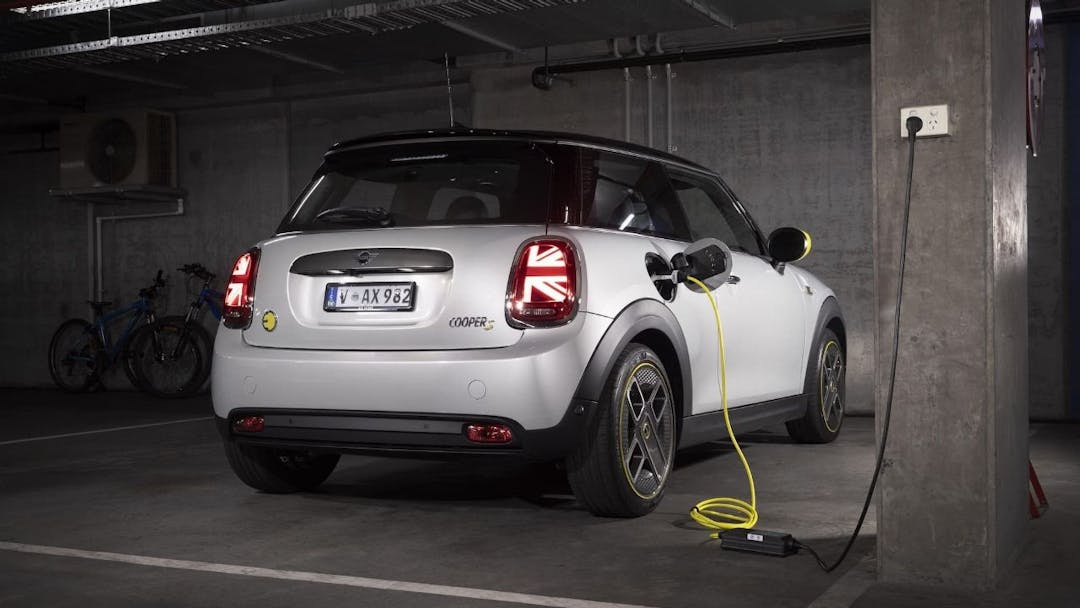
An EV battery only stores direct current (DC), but a home power point supplies alternating current (AC). The car's onboard charger has to convert AC to DC, and that conversion is where most of the loss happens.
A second source of loss comes from the 12-volt system in the car, which stays active during charging to run the components that manage the charge itself. ADAC found this draws between 100 and 300 watts. At a slow 2.3kW power point, a full charge takes far longer, so these standing losses have more time to add up. On a wallbox, the same charge happens much faster, so the car's onboard electronics are only drawing that standby power for a fraction of the time.
A long or under-rated extension lead to the power point can also add losses. Australian wiring rules allow for some loss in a fixed household circuit, so it is worth having an electrician check older wiring before relying on it for regular EV charging.

How to Cut Charging Losses at Home
ADAC's rule of thumb is straightforward: the higher the charging power, the shorter the charging time, and the lower the losses. Charging at a wallbox's maximum rate, rather than throttling it back, is the most efficient way to top up an EV at home.
Get an EV Charger Quote Today

DC Fast Charging: Lower Conversion Losses, But Battery Heating Adds Up
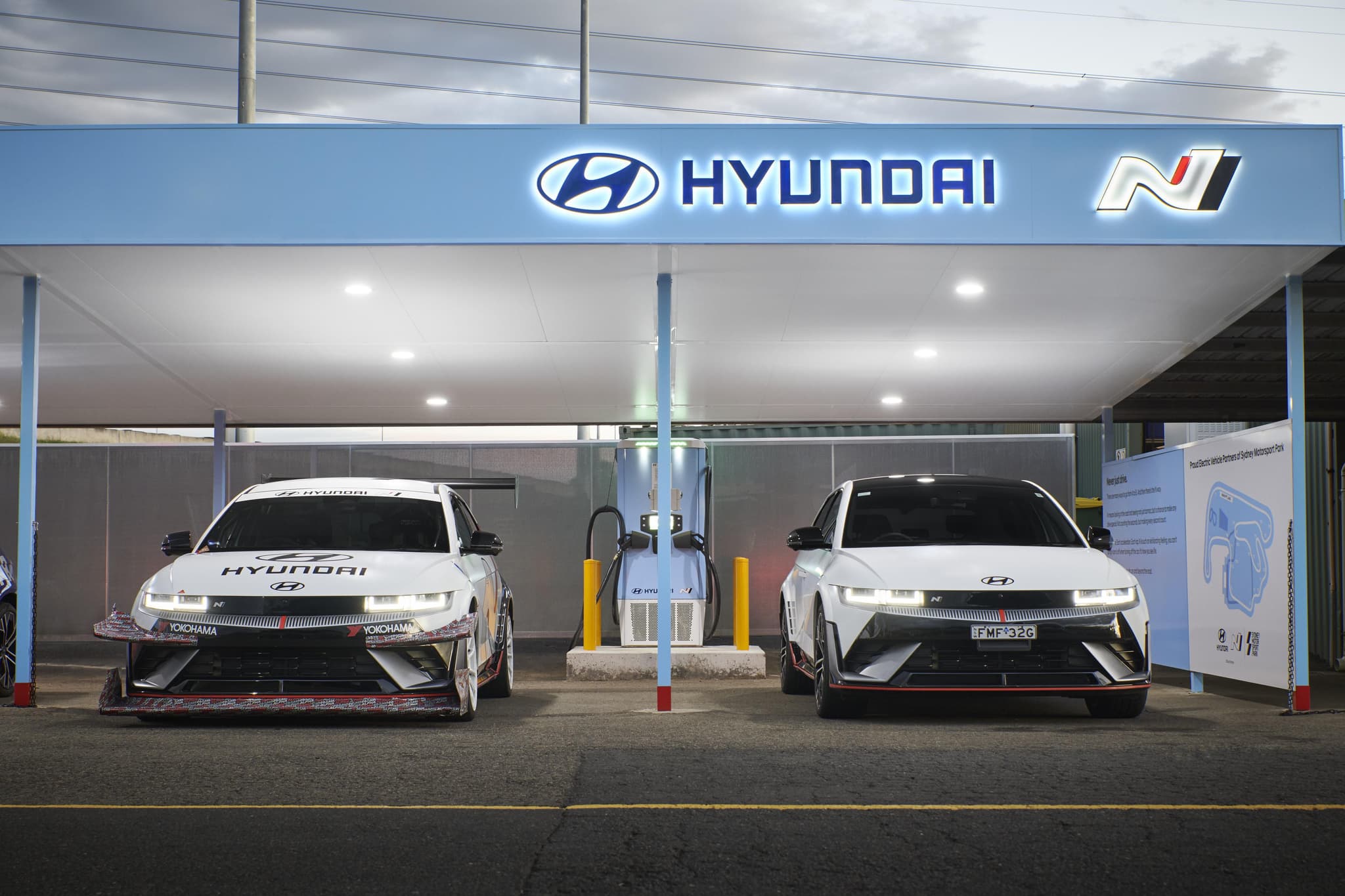
Public DC fast chargers work differently. The conversion from AC grid power to DC happens inside the charging station itself, not the car, so the car's onboard charger is bypassed. ADAC measured this conversion loss at the charger at around 3 per cent on average, far lower than AC charging at home.
The catch is battery temperature. Lithium-ion batteries need to sit within a specific temperature range to charge efficiently, so the car often has to actively cool the battery during a high-power DC session to stop it overheating. That cooling energy comes straight from the charger, not the battery, so it counts as a loss. If the battery is cold, the car may also need to heat it before fast charging can begin, which uses even more energy.
DC Charging Losses by Scenario
Scenario | Hyundai Ioniq 6 | Renault Megane E-Tech | Tesla Model Y | VW ID.3 |
Preconditioned battery, 23°C | 1% | 4% | 3% | 3% |
Preconditioned battery, 0°C | 1% | 6% | 4% | 5% |
Not preconditioned, 0°C | 6% | 8% | 10% | 7% |
ADAC tested four vehicles, the Hyundai Ioniq 6, Renault Megane E-Tech, Tesla Model Y and VW ID.3, charging each with 30kWh across three scenarios. The Renault and VW do not have an active battery preconditioning function, so their losses were higher in cold weather without a warm-up drive beforehand. Warming the battery up while driving to the charger saves time once you arrive, but ADAC found it does not save energy overall, since the car uses extra power to warm the battery on the way instead.
Across all scenarios, ADAC measured total DC charging losses of between 5 and 15 per cent, once conversion losses and battery temperature management are combined.
Home Charging Still Works Out Cheaper
DC fast charging can result in less efficiency losses than AC charging at home so long as the battery does not need to be pre-conditioned. But ADAC found that once you factor in the higher price per kWh typically charged at public DC stations, those efficiency gains however do not offset the extra cost. DC charging only comes out cheaper than AC charging if both are billed at the same rate per kWh, which is rarely the case on Australian public networks.

Tips for Australian EV Owners
ADAC's findings translate into a few practical takeaways for anyone charging an EV in Australia:
DC fast charging is the most energy efficient option when the battery is already at a comfortable temperature, but AC home charging is usually the cheapest overall.
A wallbox roughly halves the charging losses of a standard household power point, on top of being safer and faster.
Reducing the charging power on a DC fast charger, where the car allows it, can lower losses but will extend charging time.
Warming the battery up on the drive to a fast charger saves time at the charger but does not save energy.

About the author

Danny is a consultant and entrepreneur working at the cutting edge of the electric vehicle and energy transition. He is passionate about educating and helping consumers make better decisions through data.
