As Australia’s electric vehicle (EV) market continues to grow, more drivers are realising the convenience and cost savings of installing a home EV charger. While public charging networks are expanding, nothing beats waking up to a fully charged car every morning. Home charging is the most convenient way to charge, and it is also the cheapest. A home charger gives EV owners the right balance of speed, cost and convenience.
Short answer: supplying and installing a home EV charger in Australia typically costs $1,250 to $4,500. That is $500 to $2,000 for the charger and $750 to $2,500 for a licensed electrician to install it. A switchboard upgrade or a long cable run adds to the total.
Home EV charger installation cost in Australia (2026)
Item | Typical cost |
Charger unit (7kW) | $500–$2,000 |
Standard installation (labour) | $750–$2,500 |
Switchboard upgrade (if needed) | $500–$2,000 |
Cable run / trenching | Trenching ~$50–$100 per metre; cable runs over 15m add cost |
Total supply + install | ~$1,250–$4,500 |
Indicative ranges only. The total covers the charger and standard installation, and excludes switchboard upgrades and trenching. Always get an itemised quote from a licensed electrician. Refer our EV Charger comparison tool for prices and features,
▶️MORE: EV Charging Basics
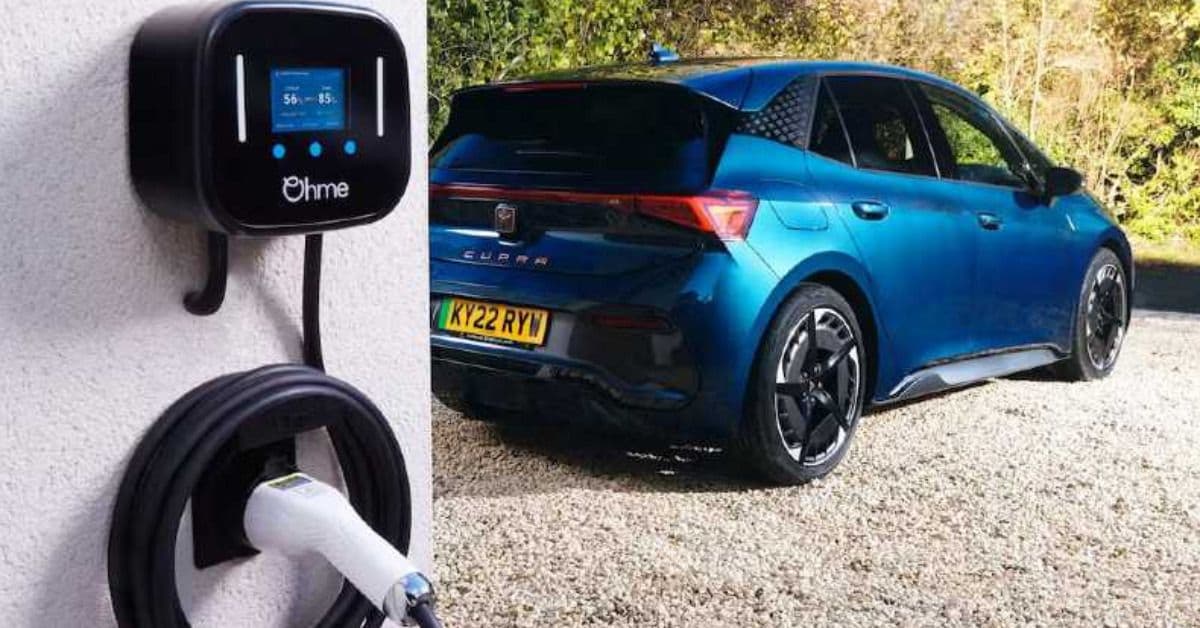
How Much Does a Home EV Charger Cost to Install?
The price of a home EV charger installation depends on the charger being installed and the complexity of the job. The charger unit itself ranges from $500 to $2,000. Installation costs between $750 and $2,500. The combined installed cost will therefore cost between $1,250 for a basic charger and installation to $4500 for a smart charger with more complicated installation requirements.
Several factors influence installation costs, including:
- Your home’s electrical system (single-phase vs. three-phase power)
- Distance from your switchboard to the charging location
- Whether additional wiring or trenching is required
Some automakers offer free or discounted home chargers as part of their EV packages, so check with your dealership. For example, Lexus and Polestar have both provided complimentary home chargers on select models.
▶️GUIDE: Exploring the Benefits of Smart EV Charging
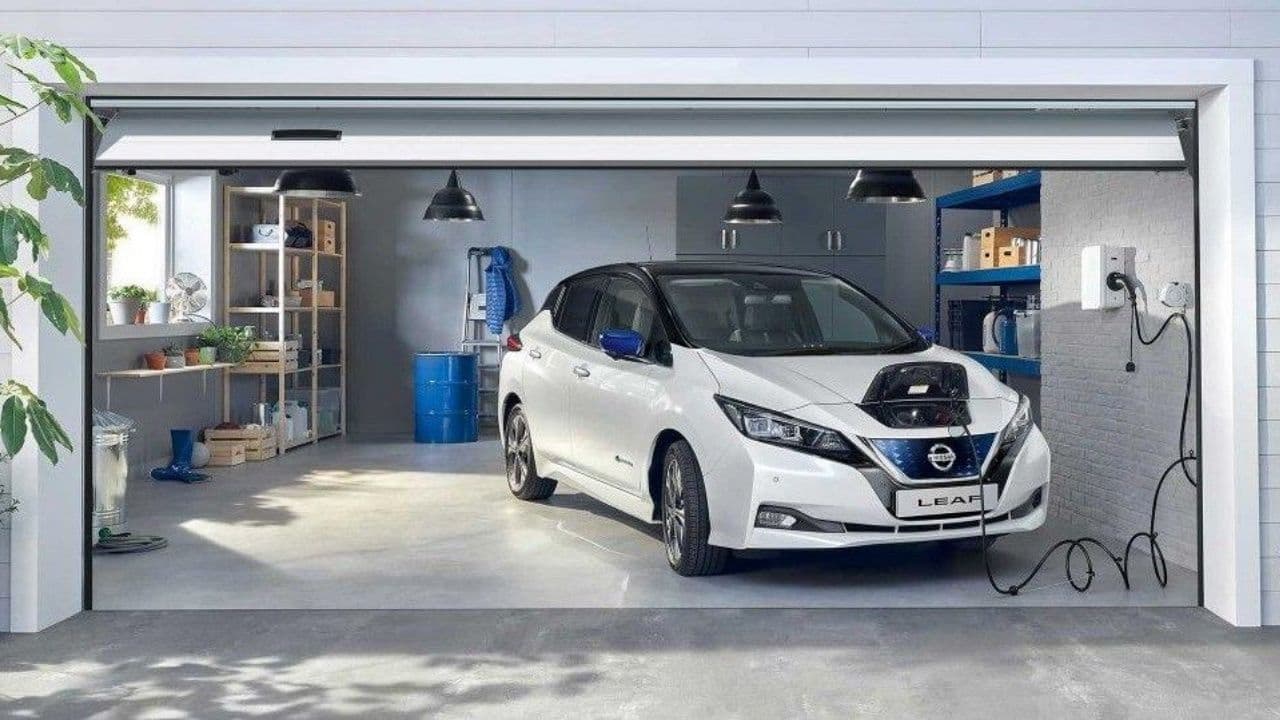
Understanding EV Charging Levels: Which One Do You Need?
Not all EV chargers are created equal. The right choice depends on your driving habits and home setup.
Level 1 (Trickle Charging)
- Uses a standard 10-amp household power socket
- Adds about 10km of range per hour
- Can take over 24 hours for a full charge
- Best used as a backup or for emergency top-ups
✅ If you drive less than 100km per day, this will meet your needs. Refer our EV Charging Calculator for a personalised estimate of your charging needs.
Level 2 (Home Wall Chargers)
- Requires professional installation
- Charges at 16 or 32 amps
- Can add 20–40km of range per hour
- Most EV owners in Australia opt for a Level 2 home charger
▶️EXPLORE: EV Charging Calculator
✅ If you drive over 150km a day, consider installing a home charger.
Level 3 (DC Fast Charging)
- Typically found at public charging stations
- Can charge an EV to 80% in 30 minutes or less
- Expensive and not practical for most home installations
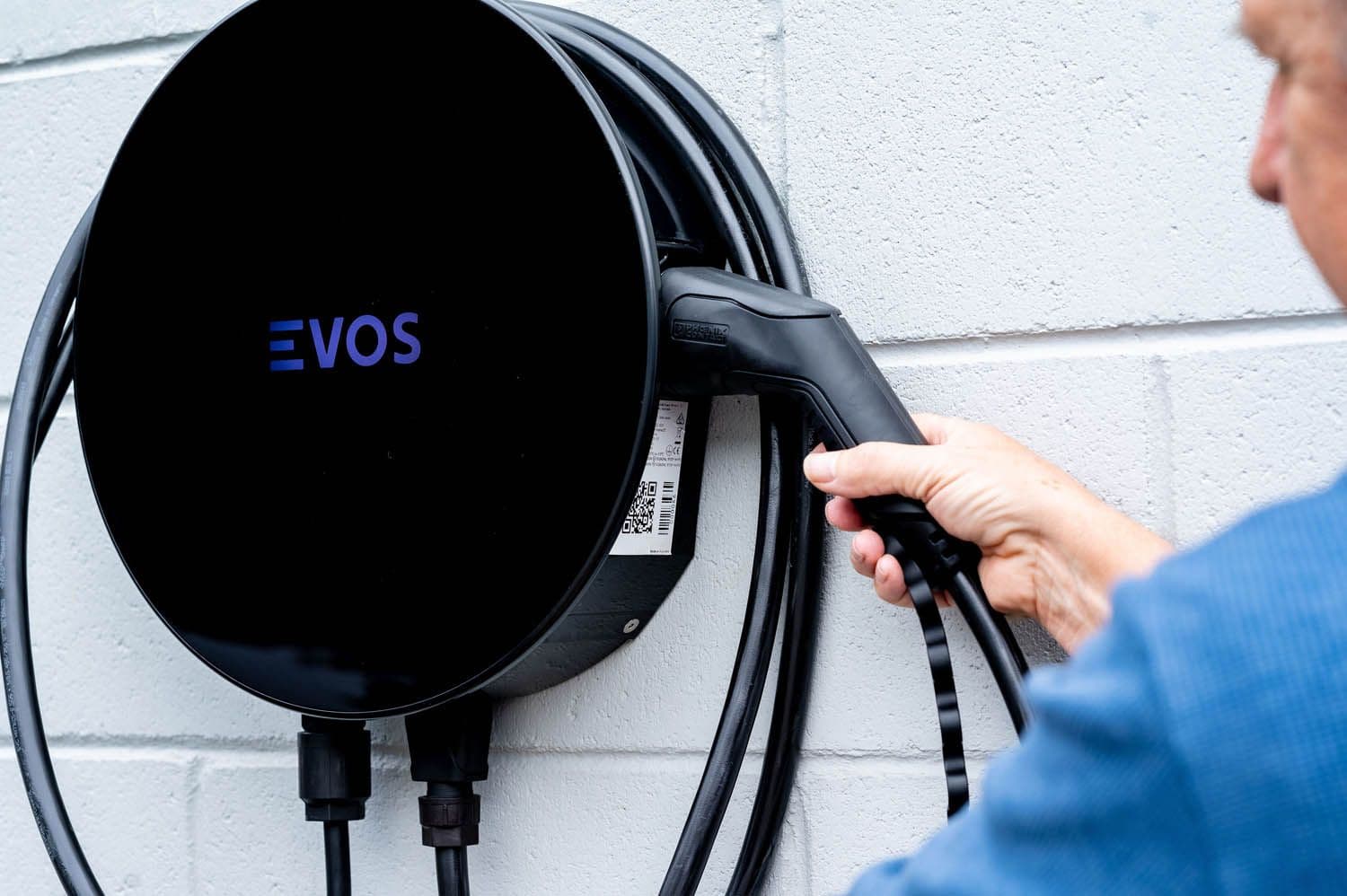
Best Home EV Chargers in Australia (2026)
Zecar's 2026 ranking of home EV chargers covers ten Level 2 wall chargers sold in Australia. Here is how they compare on price, output and who each one suits.
Best home EV chargers in Australia 2026 at a glance
Charger | Price (hardware) | Output | Best for |
Autel MaxiCharger AC Lite | $770 | 7.4kW | Budget buyers wanting OCPP and a 4-year warranty |
myenergi Zappi v2.1 | $1,595 | 7kW / 22kW | Solar homes with any inverter brand |
Ocular IQ Home Solar | $899–$1,200 | 7kW / 22kW | Hot climates, with built-in solar charging |
$800 | Up to 22kW | Simple, reliable charging without smart features | |
Sigenergy Sigen EVAC | $1,200–$1,500 | 7kW / 11kW / 22kW | Homes with a Sigenergy battery |
Evnex E2 | $799–$1,399 | 7.4kW | Three price tiers; solar on Core and Plus |
Sungrow AC22E-01 | $950 | Up to 22kW | Homes with a Sungrow inverter |
MSI Eco Series | $999–$1,199 | 7kW / 22kW | Long 7.5m cable and RFID access |
GoodWe HCA Series | $850–$1,100 | 7kW / 11kW / 22kW | Homes with a GoodWe battery |
Anker Solix V1 | $799–$999 | 7.4kW / 22kW | OCPP and gesture controls at a low price |
Prices are hardware-only RRP in AUD. Installation is extra.
▶️MORE: Best Home EV Chargers in Australia 2026: full reviews and specs
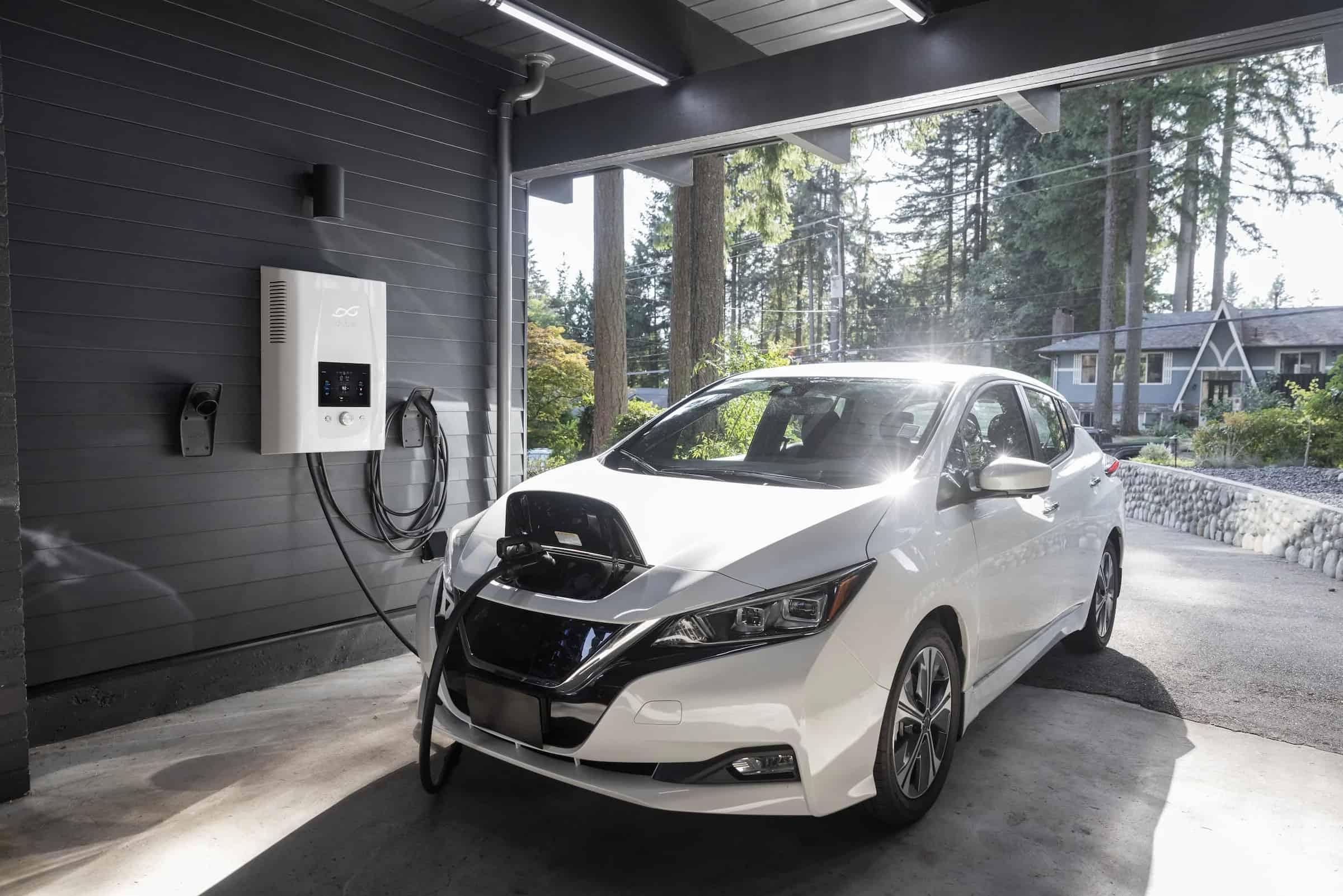
Can You Install an EV Charger Without a Driveway or Garage?
For many city dwellers without off-street parking, installing an EV charger has been a challenge. However, new solutions are emerging. Melbourne-based start-up Kerb Charge is trialling lockable, private kerbside EV chargers in street parking spaces in the City of Port Phillip. The installation costs between $6,500 and $7,000 and involves running a power line beneath the footpath to the home’s switchboard. Expansion into other states is on the horizon, which would make home charging more accessible for apartment and urban EV owners.
▶️MORE: Best EV Charging Networks in Australia
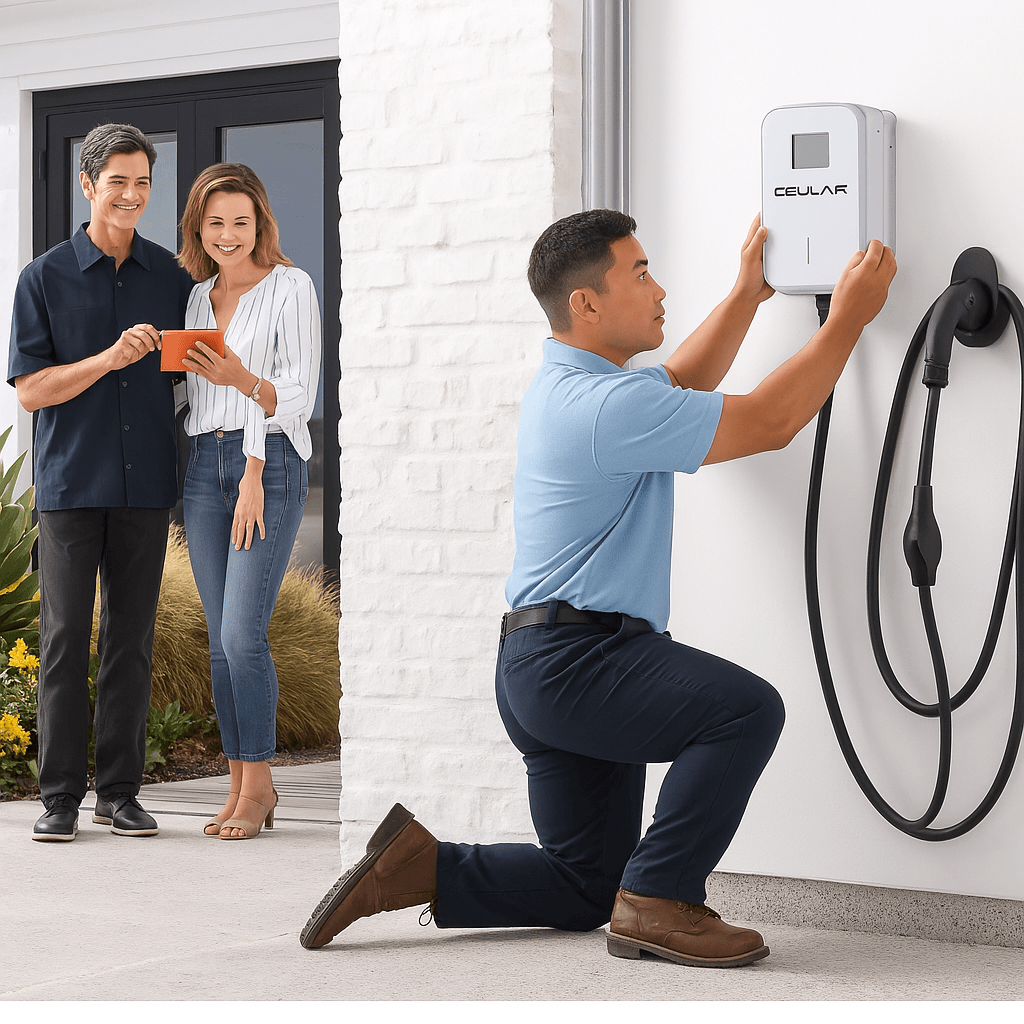
What Affects the Cost of Installation?
When installing a home charger, several factors can drive up the cost:
- Your home’s electrical system – Upgrading from single-phase to three-phase power can be costly.
- Wiring requirements – The further the charger is from the main switchboard, the more expensive the installation.
- Installation complexity – Extra work like trenching or switchboard upgrades adds to the bill.
- Smart charging features – Some chargers integrate with solar systems, only charging when solar power is available to reduce costs.
Do You Need a Licensed Electrician to Install an EV Charger?
Yes. In Australia, only licensed electricians can install EV chargers. Before hiring an installer, ask:
- Are you licensed and insured?
- Do you have experience with EV charger installations?
- Can you provide references?
- What’s your warranty for installation and equipment?
- Will you handle necessary permits and approvals?
▶️GUIDE: How To Use A Public EV Charging Station (Step-By-Step Guide)
Is a Home EV Charger Worth It?
While some drivers rely solely on public chargers, a home EV charger is far more convenient. You can plug in overnight, use off-peak electricity rates, and avoid hunting for an available public charging station. Over time, the savings compared with public charging make a home charger a worthwhile investment.
That said, if you live near free public chargers or rarely drive long distances, you may be able to get by without a home charger. It comes down to your driving habits and whether the convenience is worth the upfront cost.
Need to Install an EV Charger? We Can Help
We specialise in securing competitive quotes for both commercial and residential EV charging installations across Australia. Whether you’re a homeowner, strata manager or business owner, we streamline the process of finding certified installers for your project.
We vet the experts so you don’t have to. Our trusted installer network services all of Australia, including:
- Sydney
- Melbourne
- Brisbane
- Perth
- Adelaide
- Canberra

About the author

Danny is a consultant and entrepreneur working at the cutting edge of the electric vehicle and energy transition. He is passionate about educating and helping consumers make better decisions through data.
