
BYD is not waiting for Australia's public charging network to catch up. Its premium sub-brand Denza will begin installing ultra-fast flash charging stations at Australian dealerships from October 2026, according to Denza Australia Chief Operating Officer Mark Harland.
The move follows a difficult Easter holiday period where some Australian EV drivers waited up to five hours to charge. EV sales now account for around 14.6 per cent of new car sales in Australia, and the public charging network has struggled to keep up with demand.
The Rollout Plan
The first phase targets three dealerships in Melbourne, Sydney and Adelaide, with installations starting in October 2026. Harland says the broader goal is to have the majority of Denza's planned 20 to 25 Australian dealer locations fitted with a flash charger by end of 2026.
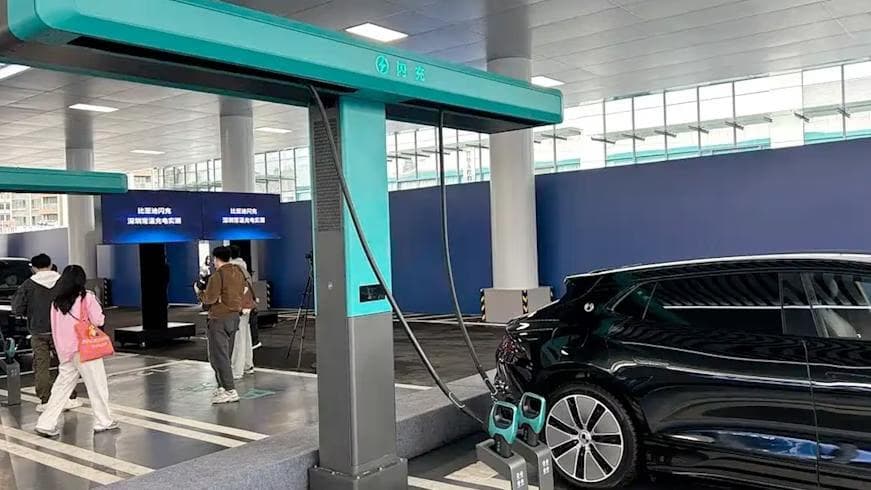
Each charging site takes up the equivalent of about three car parking spaces. It includes a battery storage unit, overhead charging booms and a vehicle bay. Government figures put the cost of fast-charging infrastructure at more than $1 million per site. BYD has not confirmed the total investment figure for Australia.
BYD is also exploring highway and public road charging through third-party operators. That would extend the network beyond dealership sites.

How the Technology Works
BYD's flash charging system delivers up to 1,500kW per charging gun and operates at 1,000V. The key difference from conventional fast chargers is that it does not require a direct connection to the grid at high power. Instead, a large on-site battery storage system is kept charged by solar panels. That stored energy is then used to deliver the fast charge to the vehicle.
This approach avoids the need for a substation upgrade at each site, which is typically one of the main cost and time barriers to deploying high-power charging infrastructure in Australia.
Speaking to news.com.au, BYD Australia COO Stephen Collins described the charging experience as comparable to refuelling a petrol car. BYD's Blade Battery 2.0, which underpins the flash charging system, can charge from 10 per cent to 97 per cent in around nine minutes on a compatible charger.
Denza Z9 GT Key Specs
Spec | Detail |
Charge (10% to 97%) | ~9 minutes |
Max charge output | Up to 1,500kW (flash charger) |
WLTP range | 820 km (claimed) |
Peak power | 850 kW |
0 to 100 km/h | Under 3 seconds |
Australia status | Confirmed |
Which BYD Models Will Support Flash Charging in Australia?
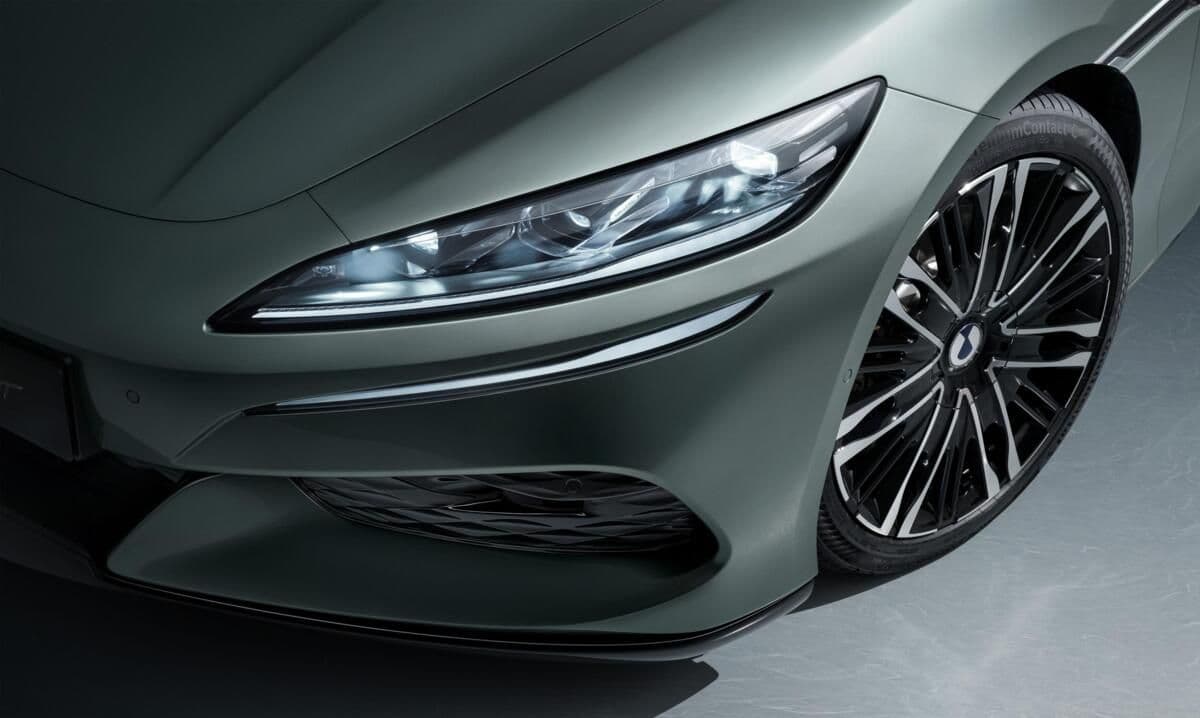
The Denza Z9 GT is the first confirmed BYD-family model with flash charging capability heading to Australia. It is a high-performance electric wagon with 850kW of peak power, a sub-3-second 0-100km/h time and a claimed 820km range. The Z9 GT uses BYD's Blade Battery 2.0 and charges from 10 to 97 per cent in approximately nine minutes.
The BYD Atto 5 is another likely candidate. It has been confirmed for New Zealand and is widely expected to follow in Australia. Like the Z9 GT, it is built on BYD's next-generation platform with flash charging support. On a compatible flash charger, it charges from 10 to 80 per cent in around 10 minutes.

BYD has confirmed that the flash charging network will not be limited to Denza and BYD owners. Any vehicle that can physically connect via the app or compatible plug will be able to use the chargers.
Impact on the Australian Market
Australia's public charging network has faced mounting pressure as EV adoption grows. The Easter 2026 period highlighted the problem clearly, with queues of several hours reported at busy charging locations. The lack of a reliable fast-charging corridor remains one of the main concerns for buyers considering an EV.
BYD's approach is to fund and build its own infrastructure rather than wait for government or third-party networks to scale. Government-funded fast chargers have been slow to arrive at the density needed for long-distance travel, particularly outside capital cities.
The battery-plus-solar model used by BYD's flash chargers is particularly relevant for Australia. It reduces the infrastructure burden on the grid and could enable faster deployment in locations where grid upgrades would otherwise cause long delays.

About the author

Danny is a consultant and entrepreneur working at the cutting edge of the electric vehicle and energy transition. He is passionate about educating and helping consumers make better decisions through data.
