Key Points
- BYD accounts for roughly 20% of all plug-in vehicles sold globally
- Cumulative global plug-in vehicle sales passed 75 million units in 2024
- BYD’s growth has been driven by affordable mass market electric models
- Tesla leads pure BEV sales but trails BYD in total plug-in volume
The global electric vehicle story just crossed a milestone that puts BYD in rare company. Worldwide cumulative plug-in vehicle sales passed 75 million units late last year, and hidden inside that big round number is a statistic that reshapes how we think about the EV market’s true heavyweight.
Roughly 20% of every plug-in vehicle ever sold carries a BYD badge.
That means one in five plug-in vehicles on the road today comes from a single manufacturer, a staggering level of influence for a company that only entered the automotive industry in the early 2000s and began selling electrified vehicles at scale well after many established brands.
This is not just a sales headline. It is a shift in market gravity.
▶️MORE: BYD Becomes First Automaker to Build 15 Million EVs & PHEVs


From niche player to global anchor
BYD recently confirmed it has produced more than 15 million new energy vehicles, a category that includes battery electric and plug-in hybrid models. When placed against the global total of 75 million cumulative plug-in sales, the scale of that achievement becomes clearer.
This was not growth driven by a single breakout model or region. BYD’s expansion has been broad, sustained and methodical, built on volume cars that ordinary buyers can afford rather than niche premium offerings.
The company’s early years were slow and cautious. It took more than a decade to reach its first million electrified vehicles. Then momentum kicked in. Production accelerated sharply through the early 2020s as battery costs fell, domestic demand in China surged, and BYD’s vertically integrated approach began to pay off.
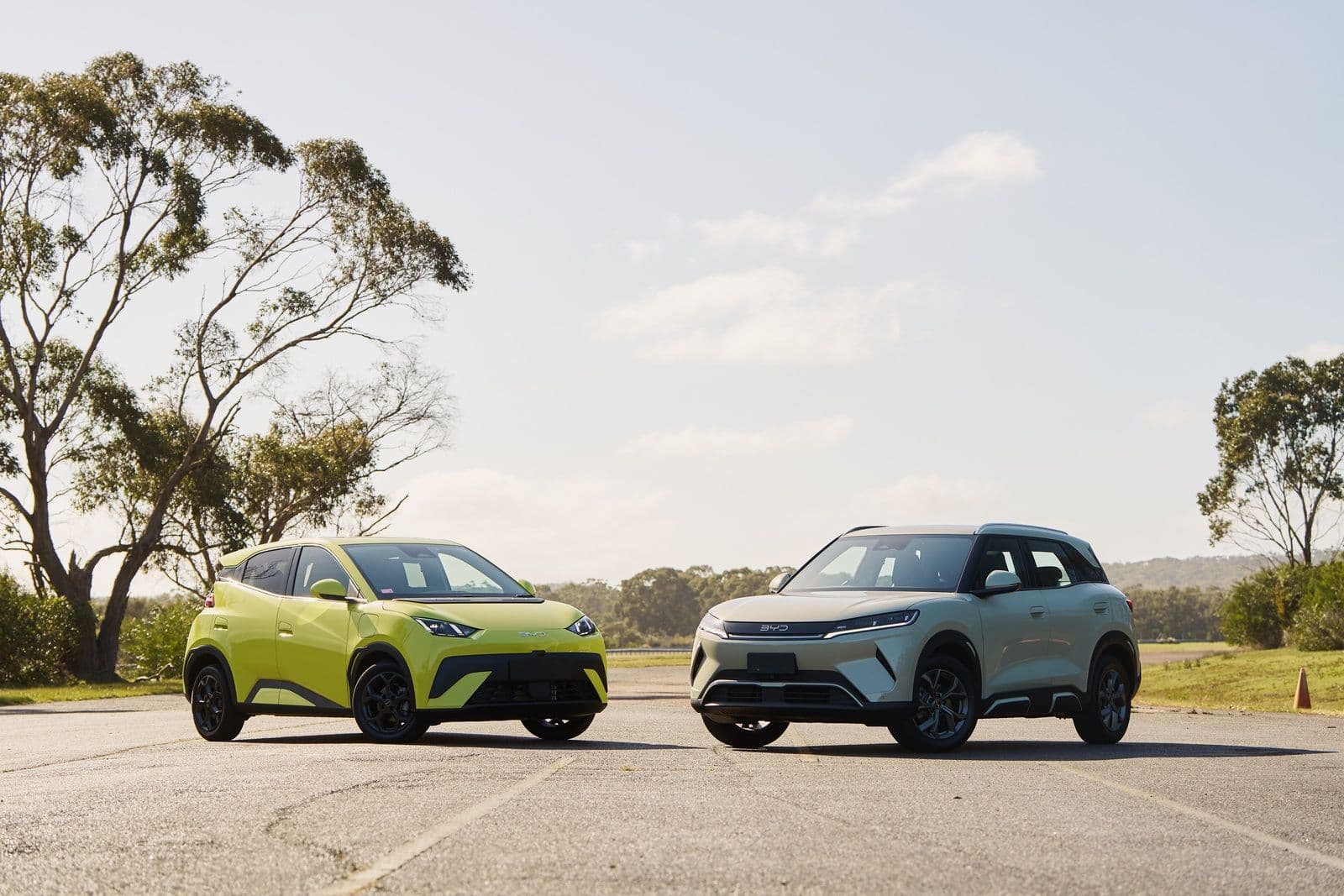
Today, BYD sells everything from compact city hatchbacks to large SUVs, alongside plug-in hybrids designed for markets where charging infrastructure is still developing.
▶️MORE: What BYD electric cars are coming to Australia?


How BYD compares with Tesla and others
Whenever cumulative EV numbers are discussed, Tesla inevitably enters the conversation. Tesla remains the largest pure battery electric manufacturer in the world, with cumulative deliveries sitting just under nine million vehicles.
That equates to roughly 12% of all plug-in vehicles ever sold, a significant achievement given Tesla’s exclusive focus on full battery electric cars and absence from the plug-in hybrid segment.
BYD’s higher share reflects a different strategy rather than outright superiority. Plug-in hybrids form a substantial part of its sales mix, particularly in China and export markets where buyers want electric driving without range anxiety. That dual approach has allowed BYD to scale faster and reach customers Tesla does not target.
Legacy manufacturers trail well behind. Even when combining battery electric and plug-in hybrid output, most established auto groups sit at a fraction of BYD’s cumulative volume.
▶️MORE: Every Plug-in Hybrid EV (PHEV) Available in Australia (2025)


Expansion beyond China accelerates
While BYD’s dominance was built at home, its future share will depend on how successfully it grows outside China. That expansion is already underway.
BYD is gaining ground across Europe, Southeast Asia, South America and parts of Africa, supported by aggressive pricing, local partnerships and a growing export logistics network. Overseas deliveries are rising quickly, with annual exports now approaching the million-vehicle mark.
To reduce exposure to tariffs and trade friction, BYD has also begun shifting some production closer to end markets, including plans for manufacturing in Turkey to serve Europe. The company is even investing in its own car carrier ships, a move that underscores how seriously it takes control over global distribution.
For Australia, this matters. BYD’s scale allows it to price competitively, refresh models quickly and introduce new technology faster than brands reliant on external suppliers.
What this milestone really tells us
A 20% lifetime share of global plug-in sales is unlikely to be sustained indefinitely as the market expands and competition intensifies. But that does not diminish the importance of what BYD has already achieved.
This milestone shows that the EV transition is no longer being led by traditional automotive giants or a handful of Silicon Valley disruptors. It is being shaped by manufacturers that control batteries, motors, software and supply chains at scale.
BYD’s rapid growth will benefit Australian buyers: more choice, sharper pricing and faster innovation.
