Thinking about electric vehicles (EVs) but worried about range anxiety? A plug-in hybrid electric vehicle (PHEV) might be the perfect middle ground for you. Demand for PHEV's is surging with sales for the first ten months of 2026 are already 81 per cent above the whole of 2025.
PHEVs combine an electric motor with a petrol engine, giving you the flexibility to drive on electric power for short trips and the security of a petrol engine for longer journeys.
Rather than rank every PHEV on sale, we have picked one winner in each of seven categories, from the cheapest way into a plug-in hybrid to the best ute, the best seven-seater and the longest electric range.
Prices are before on-road costs unless marked driveaway, electric ranges are manufacturer claims (WLTP unless marked NEDC, which runs higher), and details were checked on 12 November 2026.
▶️ MORE: Every Plug-in Hybrid (PHEV) in Australia (2026 Guide)
▶️ MORE: Cheapest Plug-in Hybrid Cars in Australia (2026)
The Best PHEVs in Australia at a Glance
| Award | Winner | Price from |
| Best Value | BYD Atto 2 DM-i | $24,990 |
| Best Handling | BYD Seal 6 Touring | $39,990 |
| Best Overall Ute | BYD Shark 6 | $55,900 |
| Best Value Ute | GWM Cannon Hi4-T | $49,990 driveaway |
| Best Electric Range | GWM Haval H6GT PHEV | $52,990 driveaway |
| Best 7-Seat | BYD Sealion 8 | $56,990 |
| Best All-rounder | Geely Starray EM-i Inspire AWD | $44,990 |
Best Value: BYD Atto 2 DM-i
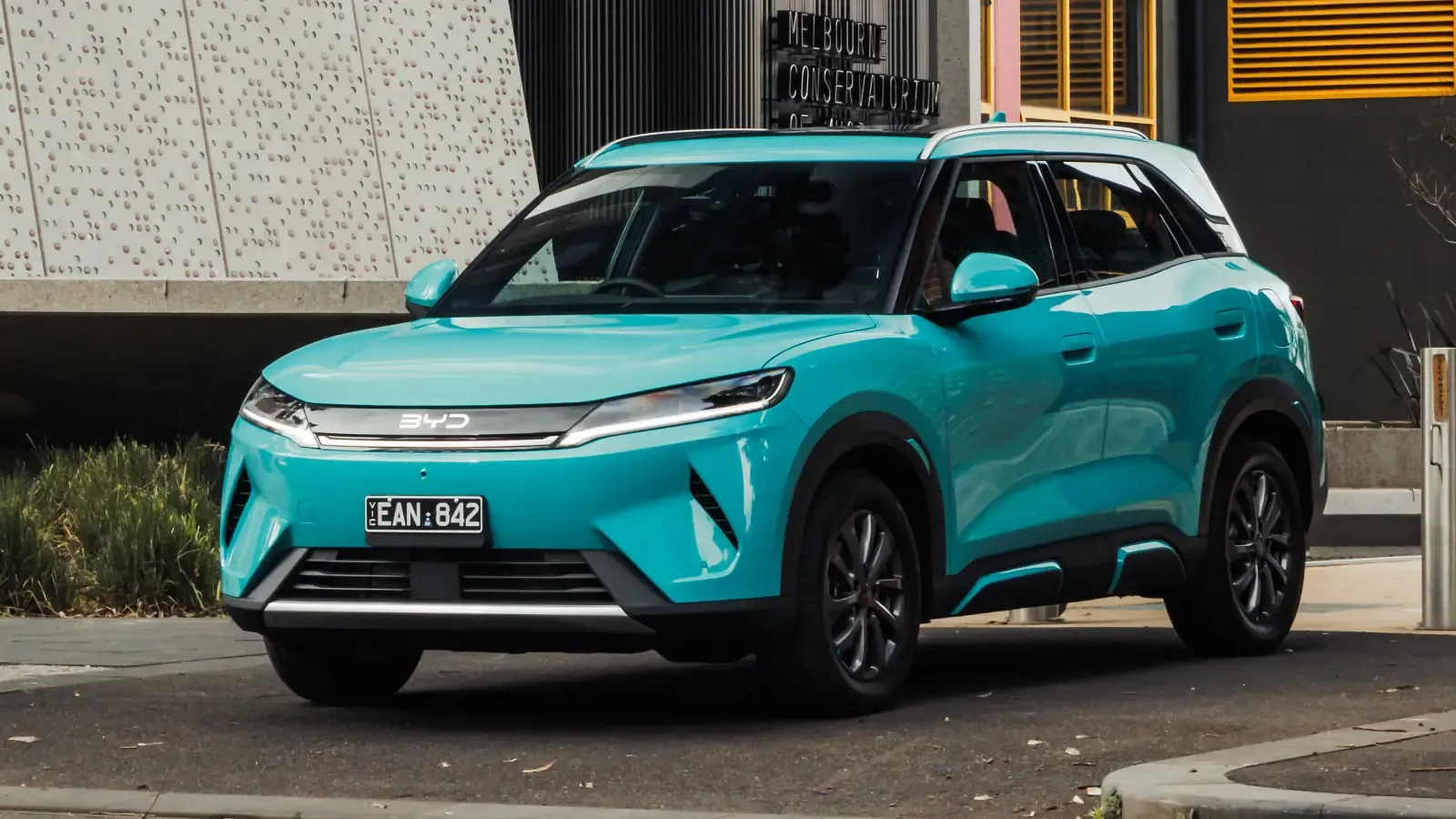
| Award | Best Value |
| Price | From $24,990 (Essential), $29,990 (Premium) |
| Body shape | Small SUV |
| Electric range | 39 km (Essential), 90 km (Premium) WLTP |
| Hybrid range | 845 km (Essential), 895 km (Premium) |
| Consumption | 1.8L/100km (Essential), 0.7L/100km (Premium) WLTP |
| Acceleration (0-100 km/hr) | 9.1 s (Essential), 7.5 s (Premium) |
| Battery | 7.85kWh / 18.03kWh Blade LFP |
Why it wins: Nothing else on sale in Australia gets you into a plug-in hybrid for less. At $24,990 before on-road costs, the Atto 2 DM-i is the cheapest plug-in hybrid in Australia, sitting $9,000 below the next-cheapest, the BYD Sealion 5 Essential.
The sweet spot is the $29,990 Premium. For $5,000 more than the Essential it gets an 18.03kWh battery and 90km of WLTP electric range, more than the 84km a Mitsubishi Outlander PHEV claims at almost double the price. It also adds a 12.8-inch touchscreen, panoramic sunroof, heated front seats, a 50W wireless phone charger and vehicle-to-load capability.
Both grades use BYD’s DM-i system, pairing a 1.5-litre petrol engine (72kW/122Nm) with a 145kW/300Nm electric motor that drives the front wheels. Standard safety kit is generous for the money, including six airbags, autonomous emergency braking, adaptive cruise control, blind-spot monitoring and a 360-degree camera. Boot space is 425 litres with the rear seats up.
What to know: charging is AC-only at 3.3kW with no DC fast charging, both grades are front-wheel drive, and the Essential’s 7.85kWh battery manages just 39km of electric range, so most buyers should stretch to the Premium. Add on-road costs to get the drive-away price.
▶️ MORE: BYD Atto 2 DM-i Is Australia's Cheapest PHEV at $24,990
▶️ MORE: Cheapest Plug-in Hybrid Cars in Australia (2026)
▶️ MORE: 2026 BYD Atto 2 Premium Review (fully electric version)
Best Handling: BYD Seal 6 Touring
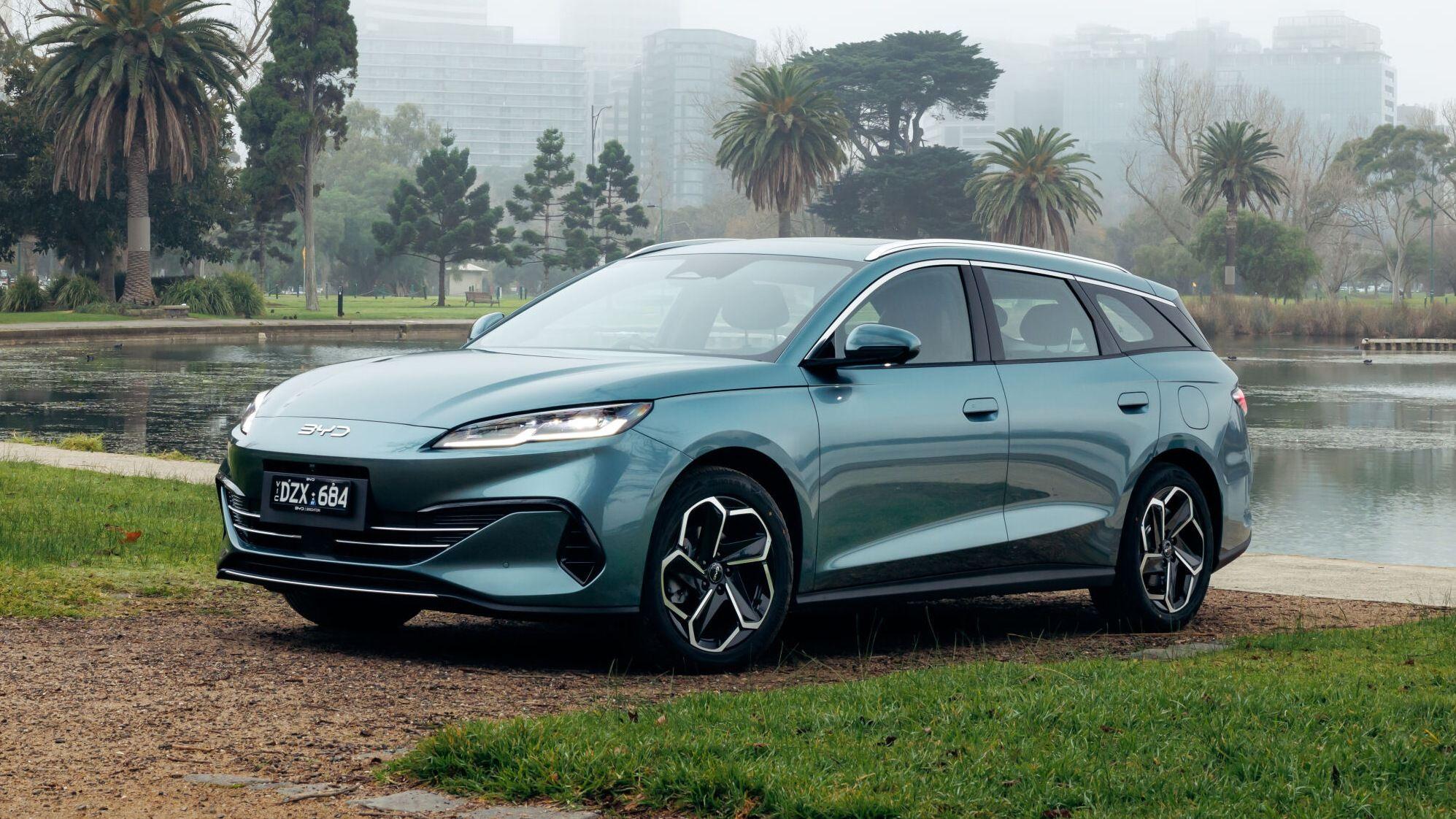
| Award | Best Handling |
| Price | From $39,990 (single Premium grade) |
| Body shape | Mid-size wagon |
| Electric range | 100 km (WLTP) |
| Hybrid range | 1,300+ km (claimed) |
| Consumption | 0.8L/100km (NEDC, battery above 25%) |
| Acceleration (0-100 km/hr) | 8.1 s (BYD claim) |
| Power and battery | 163kW/260Nm, front-wheel drive, 19kWh Blade LFP |
Why it wins: Suspension tuning is the Seal 6 Touring’s standout, and a 1,000km Sydney to Melbourne road trip gave us plenty of road to judge it on. It stayed composed over undulating, poorly maintained regional roads and an unsealed, muddy gravel section, settling after a single movement rather than wallowing through repeated bounces. Through the wet Alpine Country twisties it was calm and predictable on slippery surfaces.
The steering is well weighted and gives direct feedback, a welcome contrast to the light, artificial feel common in other Chinese-made models. In our Seal 6 Touring review we called it one of the better-sorted suspension setups of any Chinese-made vehicle sold in Australia. To be clear, it is a family wagon rather than a performance car, and an 8.1-second 0-100km/h claim reflects that. It earns this award because it is the PHEV that feels best resolved when the road gets interesting.
Practicality is strong too. The boot holds 670 litres (1,535 litres with the seats folded), the Premium grade adds a six-way power driver’s seat with memory, a panoramic sunroof and a 12.8-inch touchscreen, and the Seal 6 has a five-star ANCAP rating. On our road trip, real-world fuel use tracked close to BYD’s claim and the convoy covered the full distance on one tank and one charge.
What to know: the Touring is a single Premium grade at $39,990 plus on-road costs, it is front-wheel drive, and the driver attention monitor was overly sensitive in our testing.
▶️ MORE: BYD Seal 6 Touring Review: Best Value PHEV Wagon in Australia?
▶️ MORE: BYD Seal 6 Sedan and Touring: Price, Specs and Range in Australia
▶️ MORE: BYD Seal 6 Launches in Australia: 100km EV Range, 1000km Total
Best Overall Ute: BYD Shark 6
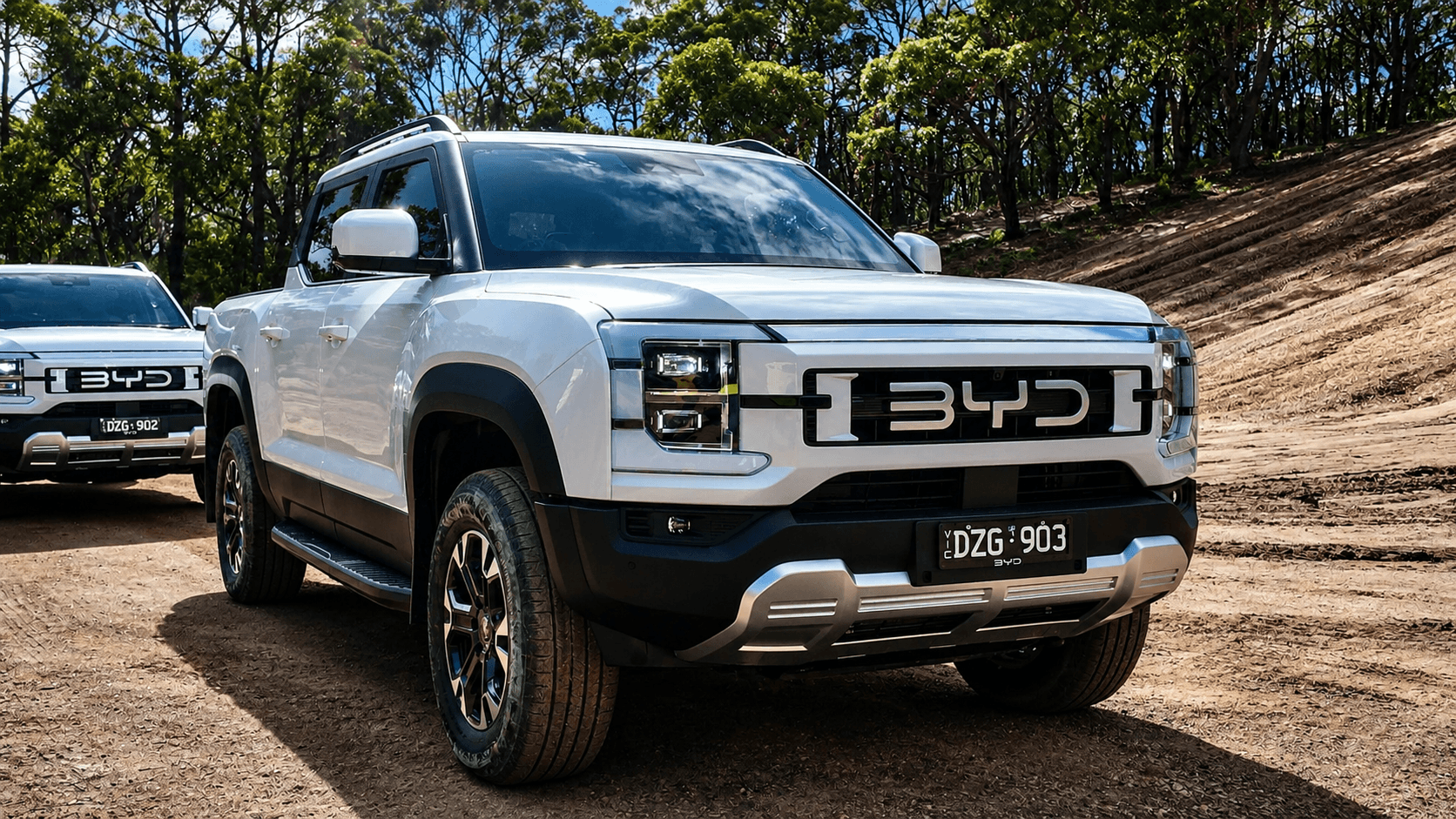
| Award | Best Overall Ute |
| Price | From $55,900 (Dynamic cab-chassis), $57,900 (Premium), $62,900 (Performance) |
| Body shape | Dual-cab ute (cab-chassis available) |
| Electric range | 80 km WLTP (Performance), 100 km NEDC (Premium) |
| Hybrid range | 640 km WLTP (Performance) |
| Consumption | 1.3L/100km WLTP (Performance) |
| Acceleration (0-100 km/hr) | 5.5 s (Performance), 5.7 s (Premium) |
| Power and towing | 350kW/700Nm, 3,500kg braked towing (Performance) |
Why it wins: The Shark 6 Performance is the plug-in ute that does the most things well. It fixes the original Shark 6’s biggest weakness by matching its PHEV rivals on towing, with a 3,500kg braked rating, and in our Shark 6 Performance review it felt planted and composed at 100km/h with a 3.5-tonne caravan hitched up. Refinement is the other big win: it is quiet in EV mode, rides better than most utes and rivals many electric SUVs for freeway comfort.
Away from the bitumen, independent front and rear electric motors allow precise torque vectoring, and Crawl Mode and Hill Descent Control did useful work on muddy climbs. There is no low-range gearing or locking differentials, so it is tuned for fire trails, farm tracks and moderate inclines rather than hardcore rock crawling. With 350kW and 700Nm, hills are effortless, and we covered roughly 80km on electric power, closely matching the WLTP claim.
It is strong value too. At $62,900 before on-road costs, the Performance undercuts the Ford Ranger PHEV (around $71,990) and the GWM Cannon Alpha PHEV (around $69,990) with more power and a quicker 0-100km/h time (5.5 seconds against roughly 6.8 to 7.0). If you don’t need to tow more than 2,500kg, the Premium dual cab at $57,900 saves $5,000, and the Dynamic cab-chassis starts at $55,900. We rated the Performance 8.4/10.
What to know: payload is below diesel-ute norms (790kg listed in our review), DC charging peaks at 40kW, and as a PHEV it misses out on the EV FBT exemption. Zecar attended the Shark 6 Performance media drive as a guest of BYD Australia, as disclosed in our review.
▶️ MORE: BYD Shark 6 Performance Review: The Electrified Ute That Can Do It All
▶️ MORE: BYD Shark 6 Performance: 5 Things You Need to Know
▶️ MORE: BYD Shark 6 Range Expands to Three Models: Cab-Chassis and Performance Arrive
Best Value Ute: GWM Cannon Hi4-T
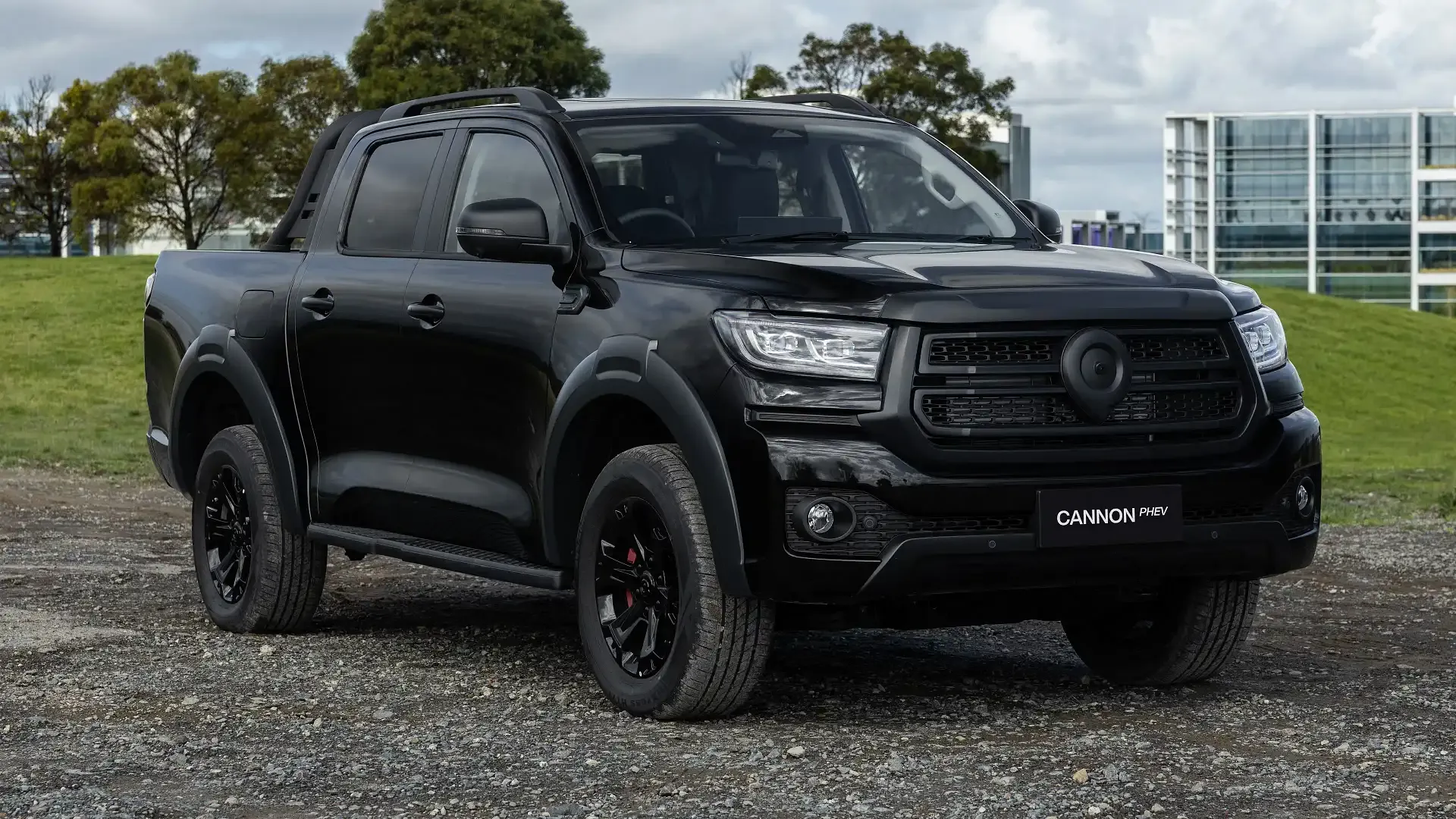
| Award | Best Value Ute |
| Price | From $49,990 driveaway (Lux, ABN), $53,990 (Ultra); $2,000 launch bonus until 30 Nov 2026 |
| Body shape | Dual-cab ute |
| Electric range | 115 km (NEDC) |
| Hybrid range | 1,037 km (NEDC) |
| Consumption | 2.4L/100km (NEDC) |
| Acceleration (0-100 km/hr) | 6.1 s (claimed) |
| Power, towing and payload | 310kW/750Nm, 3,500kg braked towing, 835kg payload |
Why it wins: GWM’s Cannon Hi4-T is the cheapest PHEV ute in Australia. It starts at $49,990 driveaway for ABN buyers ($50,990 for private buyers), or $47,990 with GWM’s $2,000 launch bonus, which has been extended to 30 November 2026. That takes the title from the JAC Hunter PHEV, which launched at $49,988 before on-road costs.
Cheap does not mean compromised. A 2.0-litre turbo petrol engine and electric motor combine for 310kW and 750Nm, the 33.1kWh LFP battery is bigger than the Shark 6’s 29.6kWh pack and good for up to 115km of NEDC electric range, and braked towing is 3,500kg, against 2,500kg for the Shark 6 Dynamic and Premium. GWM quotes DC fast charging of up to 110kW, with a 30-80 per cent top-up in 18 minutes, which is quick for a PHEV.
Compared with GWM’s own Cannon Alpha PHEV, the Hi4-T is roughly $8,000 to $10,000 cheaper (the Alpha runs $57,490 to $64,490 driveaway) yet has a higher 835kg payload against 685kg and the same 3,500kg towing rating. Standard kit includes a 15.6-inch Coffee OS touchscreen and an electronic rear differential lock.
What to know: this award is based on confirmed pricing and specifications. The headline price is for ABN buyers and the bonus is time-limited, electric range is on the generous NEDC cycle, and as a PHEV it is not eligible for the EV FBT exemption.
▶️ MORE: GWM Cannon Hi4-T Is Australia's Cheapest PHEV Ute: $47,990
▶️ MORE: GWM Cannon Hi4-T PHEV Ute Detailed: 310kW, 115km EV Range
▶️ MORE: GWM Cannon Hi4-T PHEV Arrives, $47,990 Launch Offer Extended to 30 Nov
Best Electric Range: GWM Haval H6GT PHEV
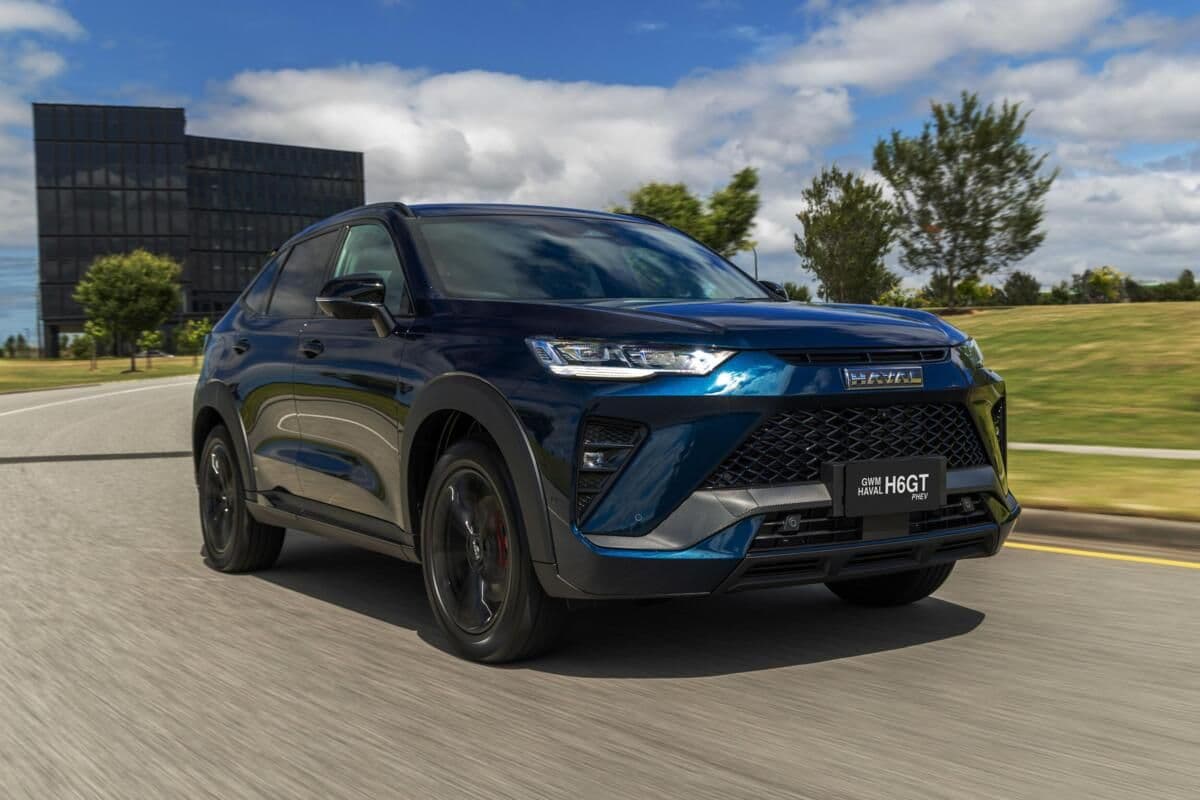
| Award | Best Electric Range |
| Price | $52,990 driveaway |
| Body shape | Mid-size SUV (coupe-styled) |
| Electric range | 183 km (NEDC) |
| Hybrid range | 1,000 km+ (theoretical) |
| Consumption | 5.3L/100km (low-charge, GWM “Condition B”) |
| Acceleration (0-100 km/hr) | 4.6 s (claimed) |
| Power and battery | 321kW/642Nm, 35.43kWh, Hi4 AWD |
Why it wins: Nothing on sale in Australia claims more electric-only range than the Haval H6GT PHEV. Its 35.43kWh battery is rated at 183km on the NEDC cycle, ahead of the Chery Tiggo 9 SH at 170km. The mainstream rivals are well behind: the Toyota RAV4 PHEV ($58,840 plus on-road costs) manages 100km WLTP and the Mitsubishi Outlander PHEV ($58,990 plus on-road costs) around 84km WLTP.
It is also priced to compete, at $52,990 driveaway after a $1,000 price cut, and it is far quicker than its rivals. The Hi4 all-wheel-drive system combines a 1.5-litre turbo petrol engine with dual electric motors for 321kW and 642Nm, enough for a claimed 4.6 seconds from 0-100km/h. Inside, a 14.6-inch Coffee OS touchscreen and a column-mounted gear selector give the cabin a modern layout.
Once the battery is depleted the engine takes over, and GWM quotes 5.3L/100km in low-charge mode. Combined with the large battery and fuel tank, theoretical total range exceeds 1,000km. Warranty is 7 years with unlimited kilometres, and the battery is covered for 8 years or 160,000km.
What to know: 183km is an NEDC figure, which flatters real-world range. On the stricter WLTP cycle the number would be lower, so treat it as a ranking of claims rather than what you will see on the freeway. We haven’t tested this car yet, so the award is based on official specifications and pricing.
▶️ MORE: 2026 GWM Haval H6 GT PHEV Update Spotted Testing in Australia
▶️ MORE: 2026 GWM Haval H6GT Hi4 PHEV: Updated Interior, AWD and Australian Pricing
Best 7-Seat: BYD Sealion 8
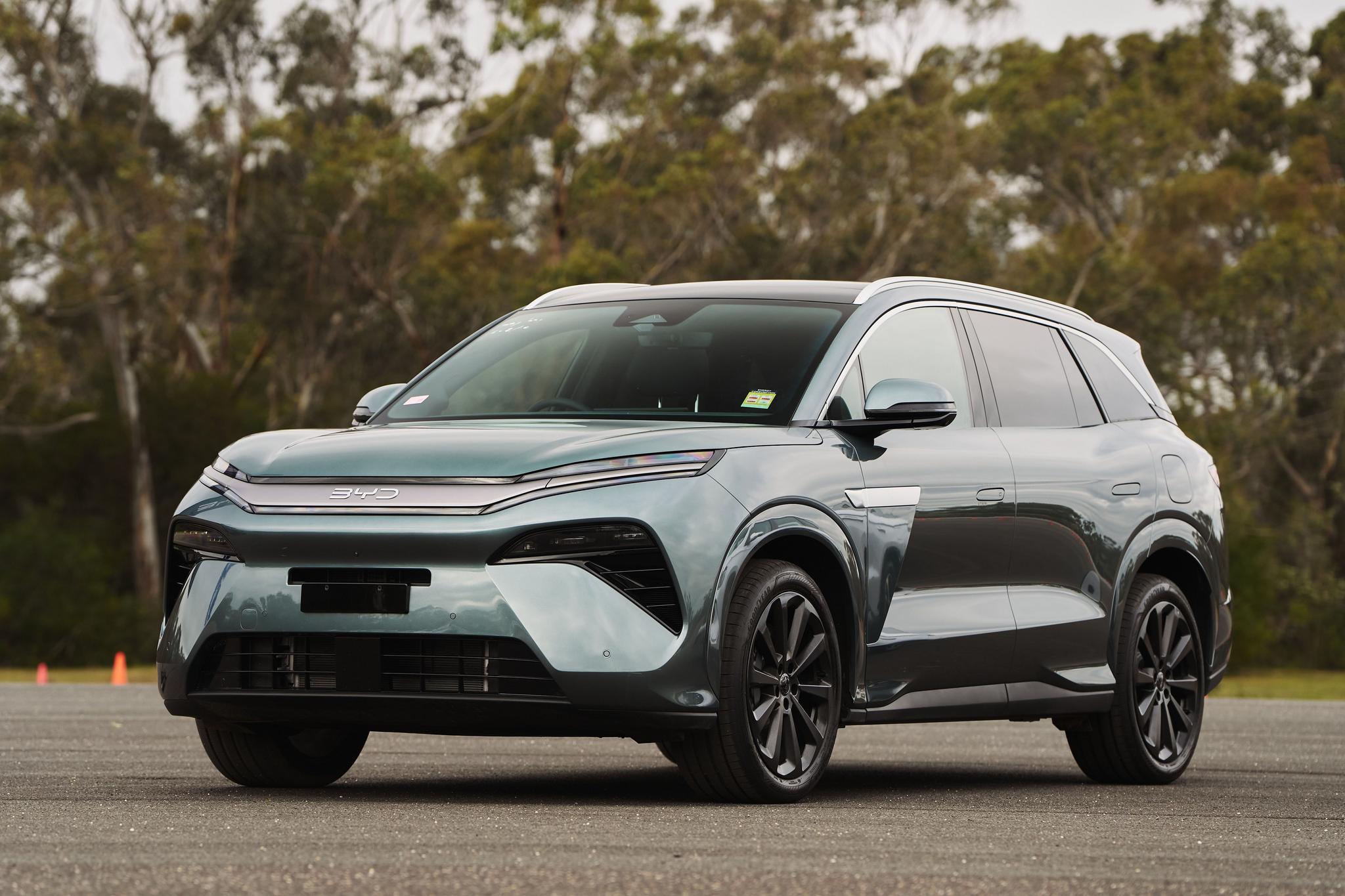
| Award | Best 7-Seat |
| Price | From $56,990 (DM-i Dynamic FWD), $63,990 (DM-p Dynamic AWD), $70,990 (DM-p Premium AWD) |
| Body shape | Large SUV, seven seats |
| Electric range | 103 km (DM-i) / 152 km (DM-p), NEDC |
| Hybrid range | Around 1,200 km |
| Consumption | From 1.0L/100km |
| Acceleration (0-100 km/hr) | 8.6 s (DM-i), 4.9 s (DM-p Premium) |
| Size and power | 5,040mm long, 2,950mm wheelbase; DM-p Premium 359kW/675Nm, 35.6kWh |
Why it wins: The BYD Sealion 8 is the only seven-seat PHEV SUV here that combines genuinely big-car space with a price that undercuts the hybrid establishment. It starts at $56,990, below the Toyota Kluger Hybrid ($59,990) and Hyundai Santa Fe Hybrid ($58,500), and unlike those rivals it offers real plug-in electric range.
At 5,040mm long and 1,996mm wide with a 2,950mm wheelbase, it has the footprint to make the third row usable, and in our first impressions it was very spacious across all three rows. You can pick your powertrain: the DM-i is front-wheel drive with a 19kWh battery and 103km of NEDC range, while the DM-p adds all-wheel drive and a 35.6kWh battery good for 152km NEDC. The top DM-p Premium makes 359kW/675Nm and hits 100km/h in 4.9 seconds.
Charging is flexible. DC fast charging runs at 40kW on the DM-i and 74kW on the DM-p, AC charging is up to 11kW, and vehicle-to-load is included. For families doing school runs on battery power and road trips on petrol, the Sealion 8 is a hard package to beat.
What to know: our first impressions found the suspension soft and the steering light, so it prioritises comfort over sharpness. Range figures are NEDC, and variant names and pricing differ across sources, so confirm the exact variant and driveaway price with your dealer.
▶️ MORE: BYD Sealion 8 Price and Specs

▶️ MORE: 2026 Jaecoo J8 SHS: Seven-Seat PHEV SUV for Australia
▶️ MORE: Geely M9 Confirmed for Australia: 7-Seat PHEV SUV With 1,300km Range
Best All-Rounder: Geely Starray EM-i Inspire AWD
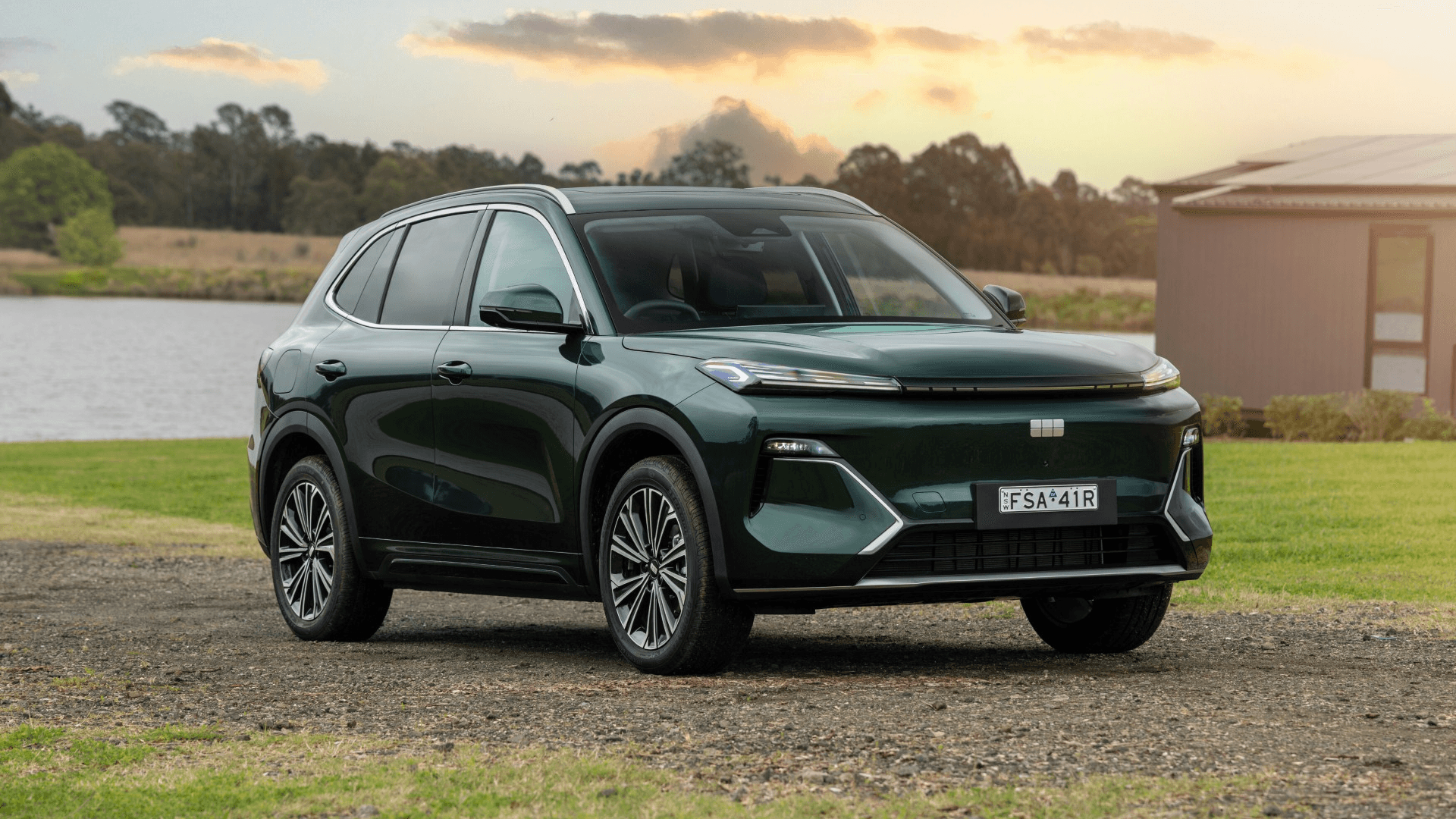
| Award | Best All-Rounder |
| Price | From $44,990 before on-road costs |
| Body shape | Mid-size SUV |
| Electric range | 130 km (WLTP) |
| Hybrid range | 1,065 km (WLTP combined) |
| Consumption | 1.7L/100km (WLTP) |
| Acceleration (0-100 km/hr) | 6.3 s |
| Power and battery | 220kW/412Nm, 29.8kWh LFP, AWD |
Why it wins: The Starray EM-i Inspire AWD has no glaring weakness. It is the first Geely sold in Australia with all-wheel drive, and at $44,990 before on-road costs it is far cheaper than the Toyota RAV4 PHEV XSE AWD ($63,340) and Mitsubishi Outlander AWD ES ($58,990), while beating them on electric range, with 130km WLTP against 100km and 84km respectively.
An 80kW rear motor lifts total output to 220kW and 412Nm for a 6.3-second 0-100km/h time, and the drive modes include Snow and Off-road. Efficiency is a highlight: the WLTP combined range is 1,065km, and Geely set a Guinness record of 3.83L/100km on a Sydney to Melbourne run (see the record attempt). Practical touches include a 428L boot (2,065L with the seats folded), a 15.4-inch touchscreen, a 10.2-inch driver display, a panoramic roof, a head-up display and 6.6kW vehicle-to-load.
Ownership costs are covered well, too, with a 7-year unlimited-kilometre vehicle warranty and an 8-year unlimited-kilometre battery warranty.
What to know: our test of the front-wheel-drive Inspire found soft suspension and some body wallow, which is why the Starray doesn’t take the handling award, and the AWD adds traction rather than sharper dynamics. It is a better all-rounder than a driver’s car.
▶️ MORE: Geely Starray EM-i Inspire AWD Price and Specs in Australia
▶️ MORE: Geely Starray EM-i Inspire Review
▶️ MORE: Geely Starray EM-i Inspire Extended Range (MY27): Price and Specs
▶️ MORE: Geely Starray Sets World Record Fuel Efficiency, Sydney to Melbourne
Other PHEVs Worth Considering
- Toyota RAV4 PHEV: the best-selling plug-in hybrid, with a premium over the Chinese-brand alternatives.
- Jaecoo J7 AWD PHEV: an all-wheel-drive compact SUV option.
- JAC Hunter PHEV: a budget PHEV ute.
- Chery Stockman diesel PHEV ute: a diesel-electric take on the plug-in ute.
▶️ MORE: Every PHEV Available in Australia
Best PHEVs in Australia: FAQ
Which PHEV has the longest electric range in Australia?
The GWM Haval H6GT PHEV claims 183km on the NEDC cycle, the longest on sale. On the stricter WLTP cycle, the Geely Starray EM-i Extended Range claims 136km and the Starray Inspire AWD 130km.
What is the cheapest PHEV in Australia?
The BYD Atto 2 DM-i Essential, from $24,990, is the cheapest. See our full list of the cheapest PHEVs.
Do PHEVs qualify for the FBT exemption?
No. From 1 April 2025, the exemption applies only to battery-electric and hydrogen fuel-cell vehicles, unless a binding lease commitment was in place before that date. A novated lease can still help with the running costs of a PHEV.
Do PHEV owners actually plug in?
It matters, because a PHEV used without charging is just a heavy hybrid. See our look at how often PHEV owners plug in.
Prices and specifications were checked on 12 November 2026 and may change. Range figures are manufacturer claims on the cycle noted (NEDC or WLTP), so compare like with like.

