Autel brought several announcements to its first Australian Innovation Forum in Sydney this week, headlined by a new ultra-slim DC fast charger available now and a preview of a value-driven smart home charger expected to land in October. The company also signalled a new direction for its AC charger range with a card payment-enabled model on the way.
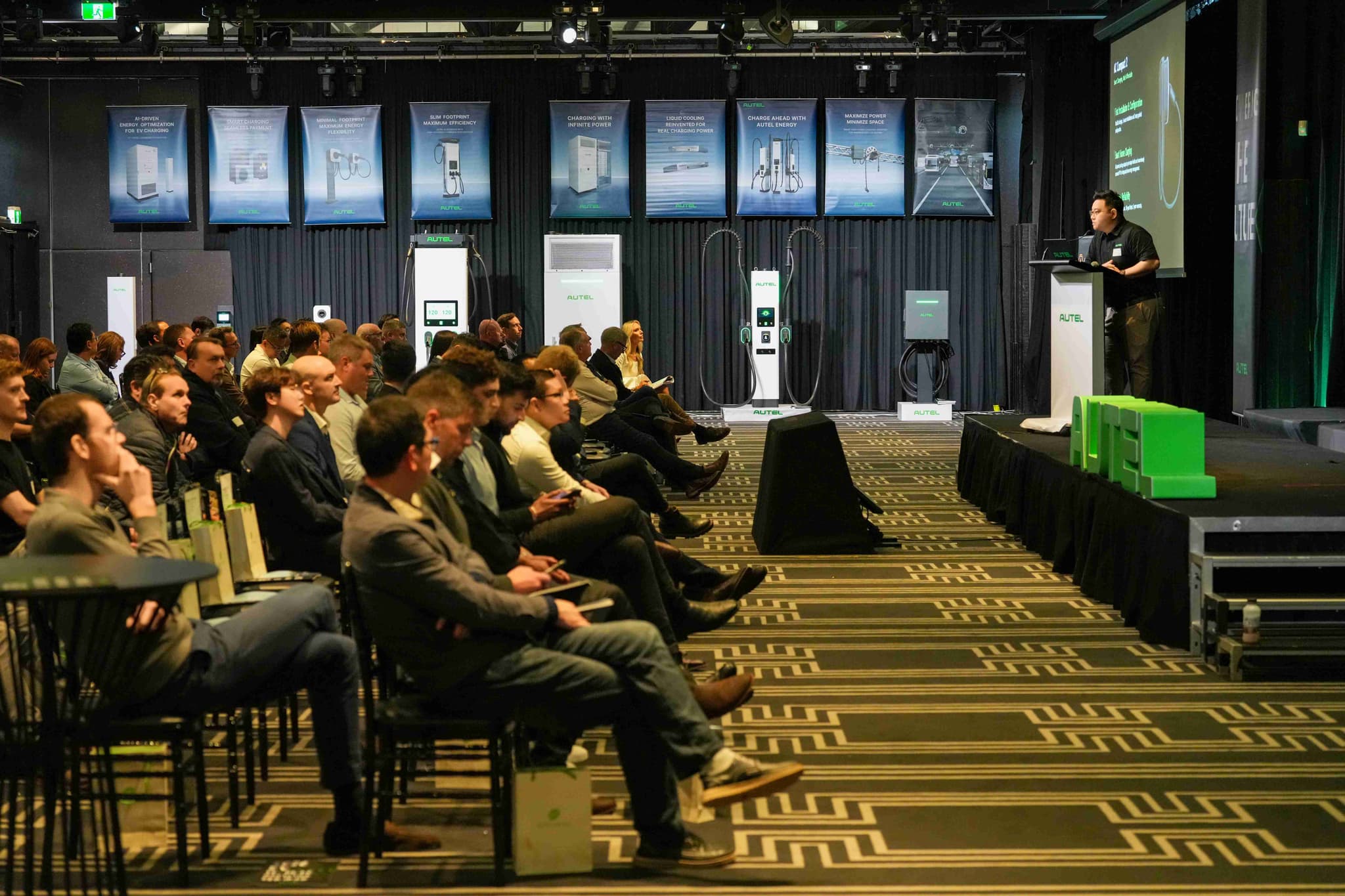
The forum was held at Doltone House on 9 June and attended by around 80 to 100 charge point operators, fleet managers, installers, and industry partners.
A DC Fast Charger That Actually Fits
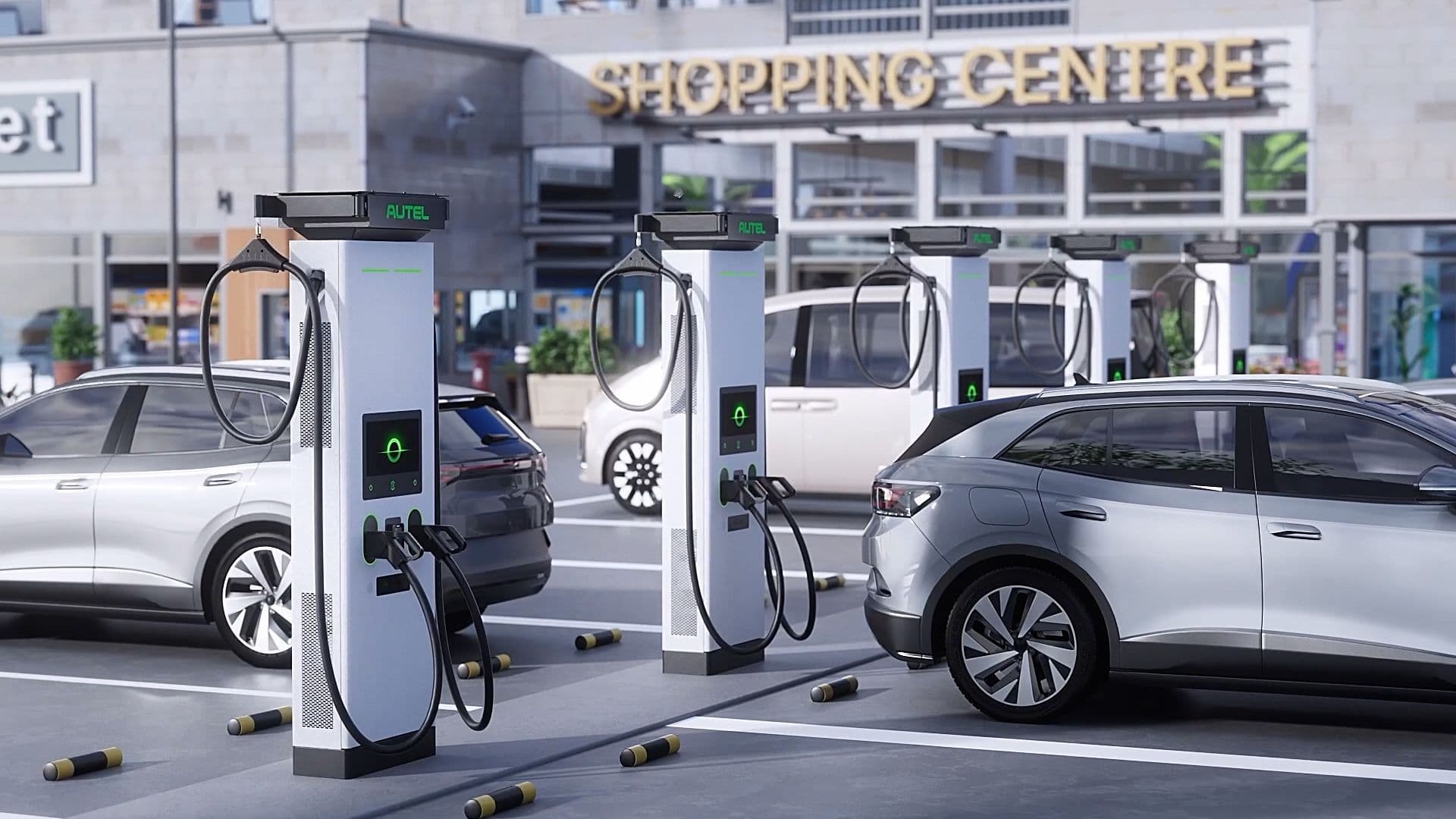
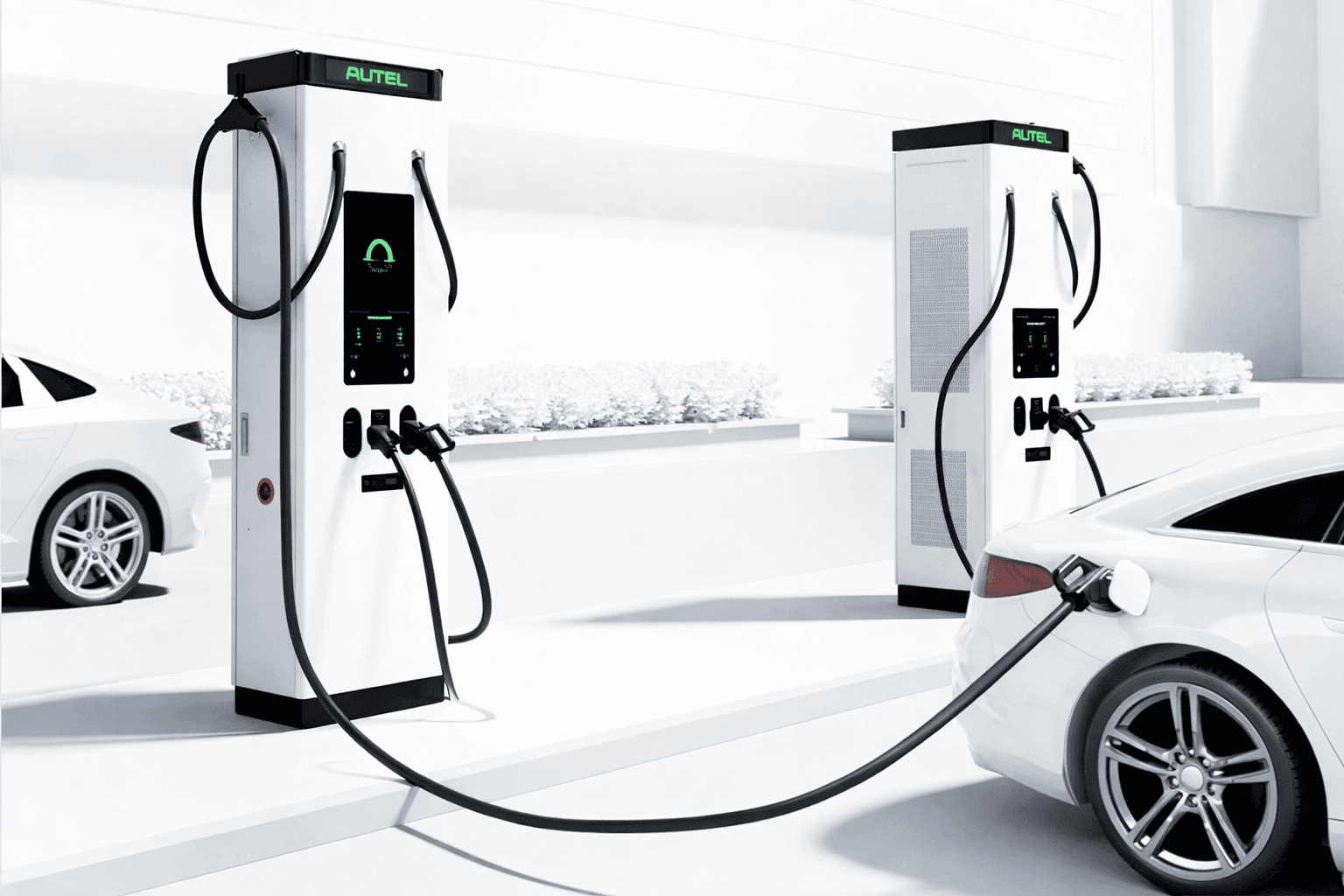
The DH100 and DH120 are Autel's new integrated DC fast chargers, offering 100 kW and 120 kW of output respectively. The standout detail is the size: at just 250mm deep, these are among the slimmest DC chargers on the market.
Most DC chargers are bulky units that need significant wall clearance or a dedicated bay. The DH-series is designed to fit into tighter carpark configurations and urban sites where space is at a premium.
The dual SIM feature will solve one of the most common frustrations of public charging. Connectivity dropouts are one of the most common causes of charger downtime in public and commercial settings. The DH-series builds in automatic failover so that if one network connection fails, the charger switches to the backup without any manual intervention. For anyone running a network of chargers, that kind of reliability is worth paying attention to.
Both models are available in Australia now through JetCharge, Autel's primary installation and infrastructure partner.
The Home Charger to Watch: AC Compact 2
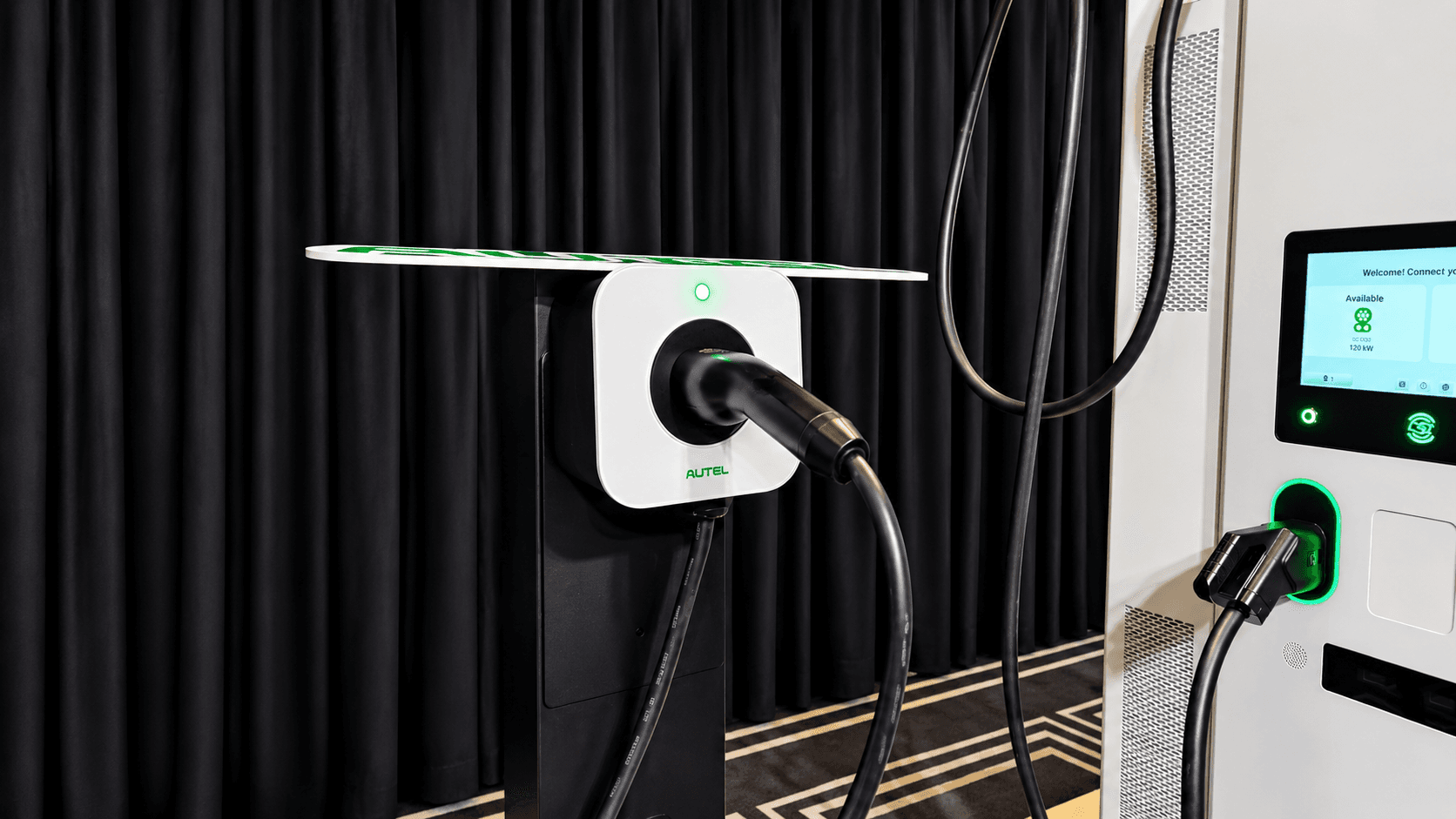
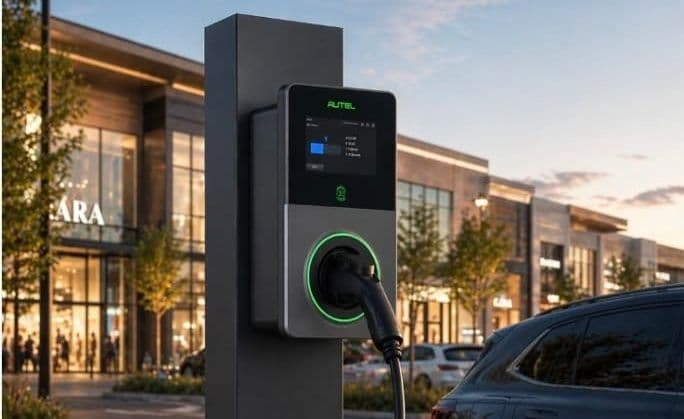
The more interesting announcement for everyday EV owners was the preview of the AC Compact 2, a smart home charger targeting the residential market. It is not available yet, with an October launch expected pending RCM certification.
Pricing has not been confirmed. Based on where Autel sits in the market, it will likely come in under $700. The current entry-level MaxiCharger AC Lite retails at $770, and the Compact 2 has been positioned as a more accessible option. No official price however has been announced.
If it lands under $700, the AC Compact 2 would be one of the few genuinely smart home EV chargers under $1,000 in Australia. That is a meaningful gap in the market right now.

Works with Your Smart Home
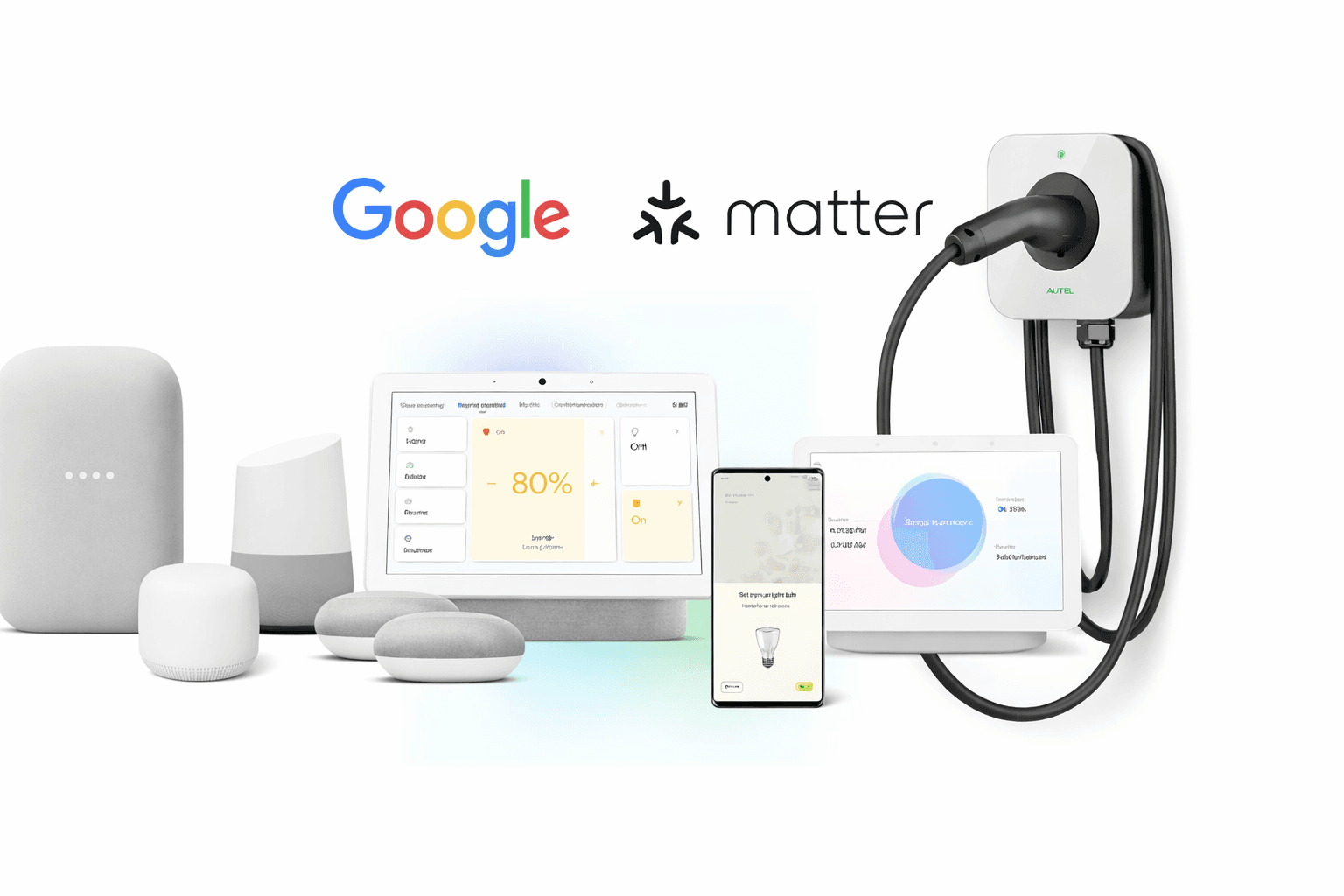
The feature that sets the AC Compact 2 apart from most home chargers is Matter support.
Matter is the smart home standard backed by Apple, Google, Amazon, and Samsung. If you have a smart home hub, whether that is an Apple HomePod, a Google Nest, or an Amazon Echo, the AC Compact 2 should connect to it directly without needing a separate app or a workaround.
Most home EV chargers in Australia use their own proprietary app and do not talk to the rest of your smart home at all. Matter support at this price point is uncommon.
Charges When Power is Cheapest
The AC Compact 2 uses AI to learn your household's charging habits and automatically schedules sessions when electricity tariffs are at their lowest. If you are on a time-of-use plan, which rewards off-peak charging with lower rates, the charger handles the scheduling for you.
V2G Ready
The Compact 2 is also designed to support Vehicle-to-Grid charging, which would allow a compatible EV to send power back to the grid during high-price periods. Unlike DC V2G Chargers, the Compact 2 is an AC V2G Charger which uses the vehicle’s on-board charger to discharge energy from the vehicle. This will require the on-board charger of the vehicle to be compliant with local grid codes.
It is unlikely this feature will be usable at launch due to lack of vehicle compatibility. It is however a feature worth having for future-proofing, but not one to factor into a buying decision right now.

Also in the Pipeline: MaxiCharger AC Single with Card Payment
Autel also flagged an updated MaxiCharger AC Single with built-in POS integration, adding tap-to-pay card payment directly at the charger. A release date has not been announced.
For commercial operators, this fills a gap that has limited AC charger deployments in pay-to-use settings. Most AC chargers in Australia rely on app-based payment or RFID, which creates friction for casual users. Built-in card payment makes an AC charger viable at servos, shopping centres, hospitality venues, and any site where a customer is unlikely to have a specific charging app pre-installed.
It also lowers the barrier for smaller operators who want to offer paid charging without integrating a full back-end payment platform.
What Else Came Out of the Forum
Beyond the product announcements, the day included a presentation from Tim Washington, CEO of JetCharge. Washington's company is Autel's primary installation and infrastructure partner in Australia and has deployed Autel chargers across a number of well-known commercial sites, including Woolworths, IKEA, and NRMA.
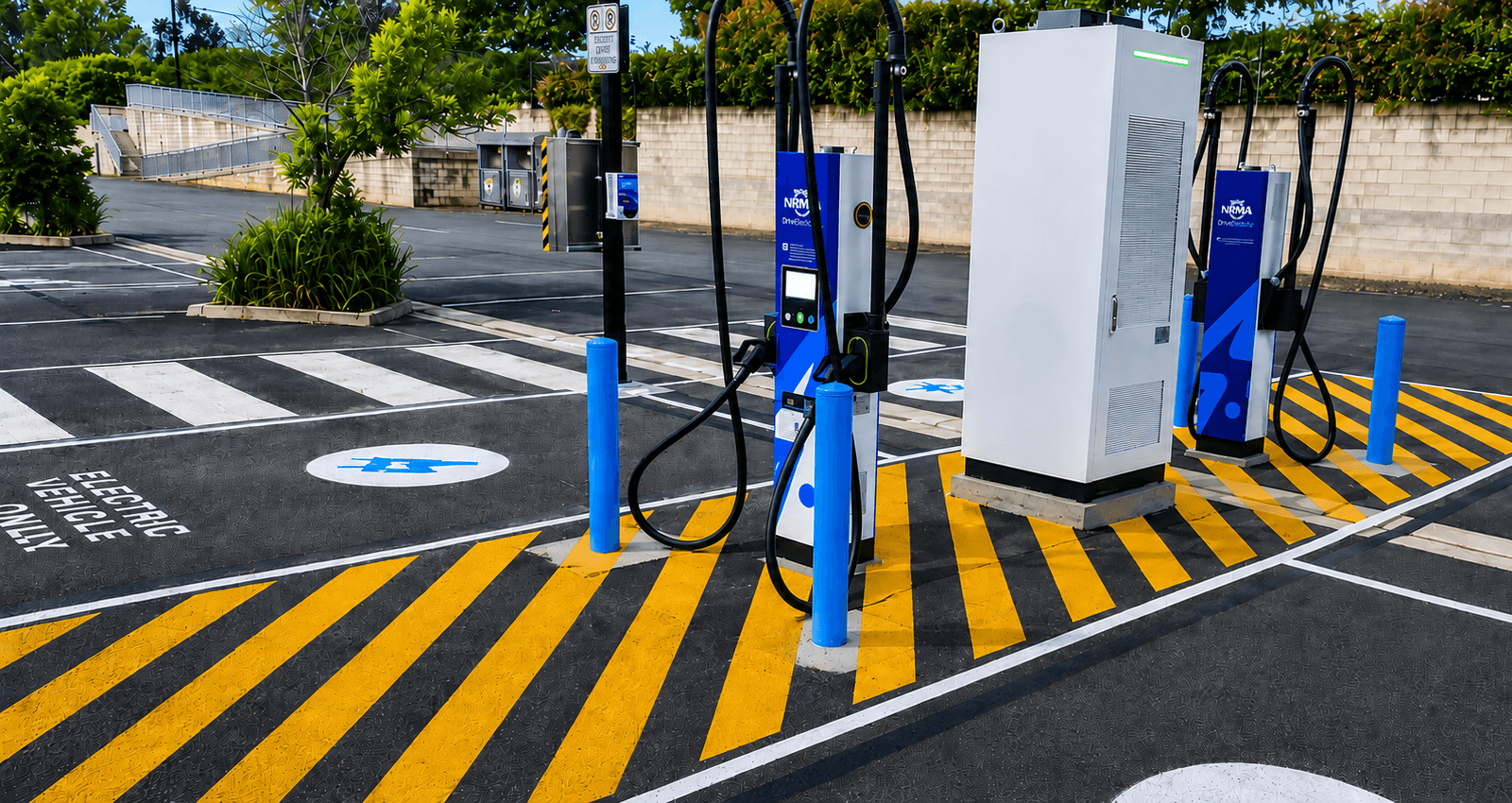
Washington's key point on fleet charging was direct: workplace charging approvals from landlords and building managers can take over a year. For fleets on three to five year lease cycles, that makes workplace infrastructure an unreliable path to hitting 2030 decarbonisation targets. His suggested alternative is home charging for tool-of-trade drivers, which bypasses the approval process entirely.

On commercial charging economics, he described how JetCharge's Melbourne office integrated a DC charger into the wholesale electricity market. By automatically pausing when spot prices exceeded $200 per megawatt-hour, they reduced their total energy cost to 17 cents per kilowatt-hour. Many small businesses currently pay around 40 cents per kWh. The gap between those two figures is the business case for smart charging done properly.
Autel has now delivered around 10,000 AC charging points and 900 DC points across Australia in under five years, with 57% local revenue growth in 2025.
zecar will publish a full review of the AC Compact 2 once Australian units are available. For enquiries about the DH100 and DH120, contact JetCharge.
This article was produced in partnership with Autel Energy.

About the author

Danny is a consultant and entrepreneur working at the cutting edge of the electric vehicle and energy transition. He is passionate about educating and helping consumers make better decisions through data.
