
The Australian Renewable Energy Agency (ARENA) has injected an additional $13.6 million into Amber Electric's vehicle-to-grid (V2G) project, taking total government funding to $16.8 million. The funding will scale the number of households participating in bi-directional V2G charging from 50 to 1,000, while also doubling the smart charging trial from 950 to 2,000 households.
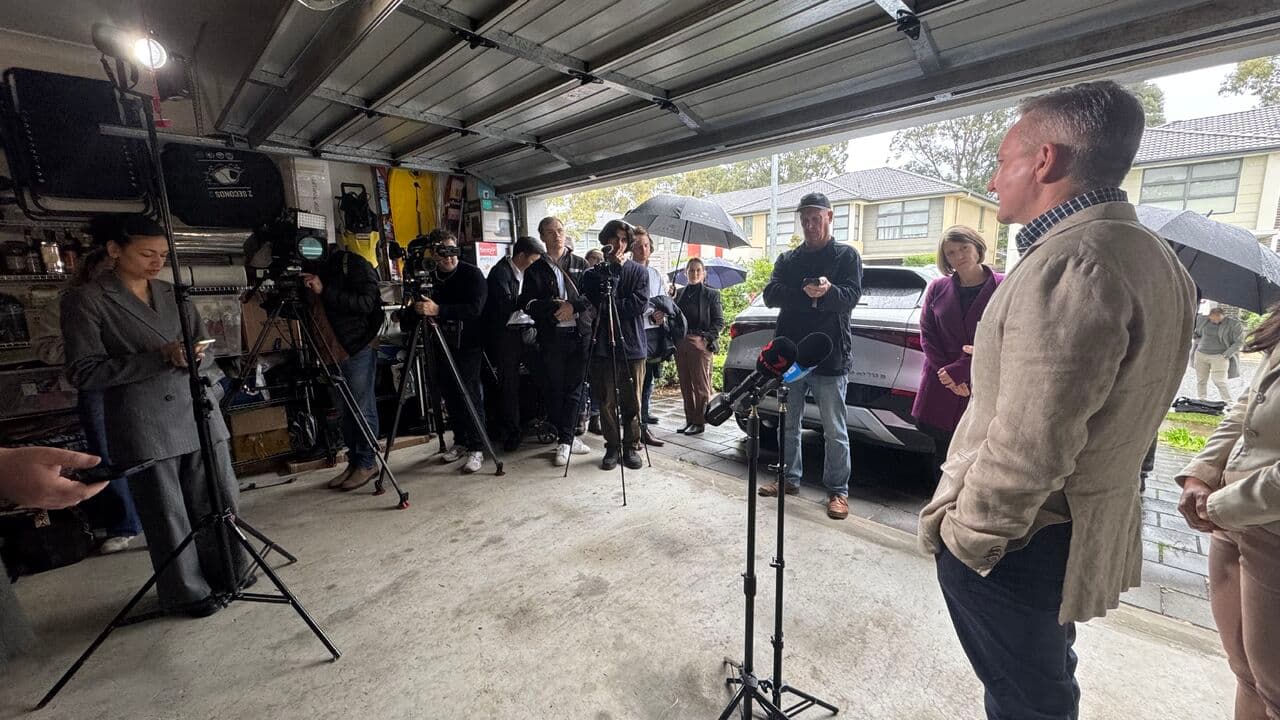
Federal Energy Minister Chris Bowen announced the expansion on 29 May 2026 at the home of an Amber pilot participant in Lidcombe, Western Sydney. The project is funded under the Driving the Nation Program and is designed to build the real-world evidence base needed to support a national V2G rollout.
Why ARENA Is Scaling Up Now
Amber's original ARENA-funded trial, which received $3.2 million in government support, was targeting just 50 households for V2G participation. It was overwhelmed with more than 6,000 expressions of interest, signalling strong consumer appetite for the technology.
ARENA CEO Darren Miller says unlocking V2G at scale requires bringing together customers, manufacturers, network operators, and technology providers. He has set a target of one million V2G-capable EVs on Australian roads by 2035.
"A big part of that is giving manufacturers the confidence their vehicles will perform as expected, including through validated approaches to battery use and warranties. This project brings those pieces together to demonstrate how EVs can become an active part of the energy system. That means savings for owners and better utilisation of the grid, which can bring down the cost of the network for everyone." — Darren Miller, ARENA CEO
The expanded trial will deliver insights into customer behaviour, technology performance, and market integration, with the results expected to inform future policy and industry investment decisions.
What the Expanded Trial Covers
Under the expanded project, Amber will run two parallel programs:
Program | Previous Scale | Expanded Scale |
V2G (bi-directional) households | 50 | 1,000 |
Smart charging households | 950 | 2,000 |
Total ARENA funding | $3.2 million | $16.8 million |
V2G allows EV owners to export electricity from their car battery back to the grid when prices are high. Smart charging, by contrast, is one-directional: the car only draws power, but does so automatically when wholesale electricity prices are lowest and emissions are minimal.
▶️MORE: V2H and V2G Chargers in Australia: Bidirectional EV Charging Guide
BYD is the Only Brand Providing a Warranty Exemption for the Trial
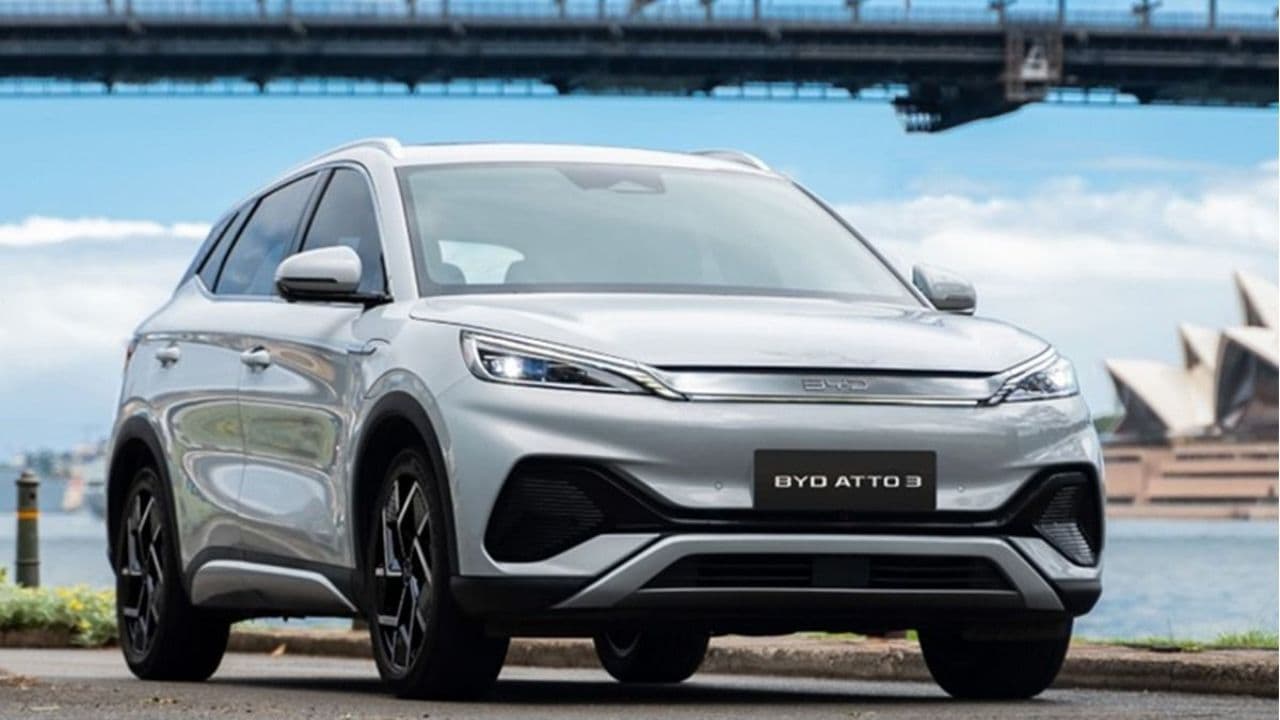
All vehicles currently participating in the V2G portion of the Amber trial are BYD models. BYD has agreed to a special exemption from its standard battery warranty conditions for the purposes of the pilot, allowing real-world battery testing and bi-directional use. Amber says it is actively working to bring in additional manufacturers.
Battery warranty has been the primary barrier slowing the wider rollout of V2G in Australia. Most car manufacturers have been reluctant to formally support bi-directional use, given concerns about accelerated battery degradation. The project aims to address this by working with manufacturers on validated approaches to battery management during V2G operation.
"There are car manufacturers who are more forward leaning and helpful, like BYD. There are others who will take longer, but I think ultimately, consumers and the community will demand this. If you're deciding what EV to buy, and you've got one that will allow you to do vehicle-to-grid or smart charging, and another won't, well, that'll impact your decision as a consumer." — Chris Bowen, Minister for Climate Change and Energy
What EV Owners Could Earn
Amber says participants in the trial can save around $2,500 a year from combining smart charging with V2G exports. One South Australian customer reportedly made $500 in a single day during the Australia Day heatwave in January 2026, when wholesale electricity prices spiked sharply.
Drivers stay in control of their vehicle via the Amber app. Users can set a target state of charge by a specific time each morning and set minimum charge limits, so the car is always ready to drive when needed.
Minister Bowen also pointed to a forthcoming Solar Sharer Offer that will allow EV owners without their own solar panels to charge with up to 24 kWh of free electricity each day.
Other V2G Trials Currently Underway in Australia
Amber's expanded trial is not the only V2G program running in Australia. Both AGL and Origin Energy have launched their own separate trials.
AGL launched a year-long residential V2G trial with 100 participants across Victoria, New South Wales, Queensland, and South Australia. The trial is open to owners of eligible Hyundai, Kia, BYD, and Zeekr models, with each manufacturer confirming that participation will not affect vehicle battery warranties. AGL is working with all major National Electricity Market distribution network service providers as part of the rollout. The first 50 participants received discounted bi-directional chargers, with a broader commercial V2G offering planned for AGL customers in 2026.
Origin Energy has taken a different approach, offering a subscription bundle that includes a BYD Atto 3 on novated lease, a StarCharge V2G Halo bi-directional charger, and access to Origin's smart tariff with free home charging. The package is priced at under $800 a month after tax savings and includes up to 320 kWh of free energy per month, roughly equivalent to 24,000 km of annual driving, provided the vehicle is connected to the charger for at least 12 hours a day, 20 days a month. Origin's trial is limited to 50 customers and commenced in 2026.

Vehicle-Grid Network: The National Coordination Layer
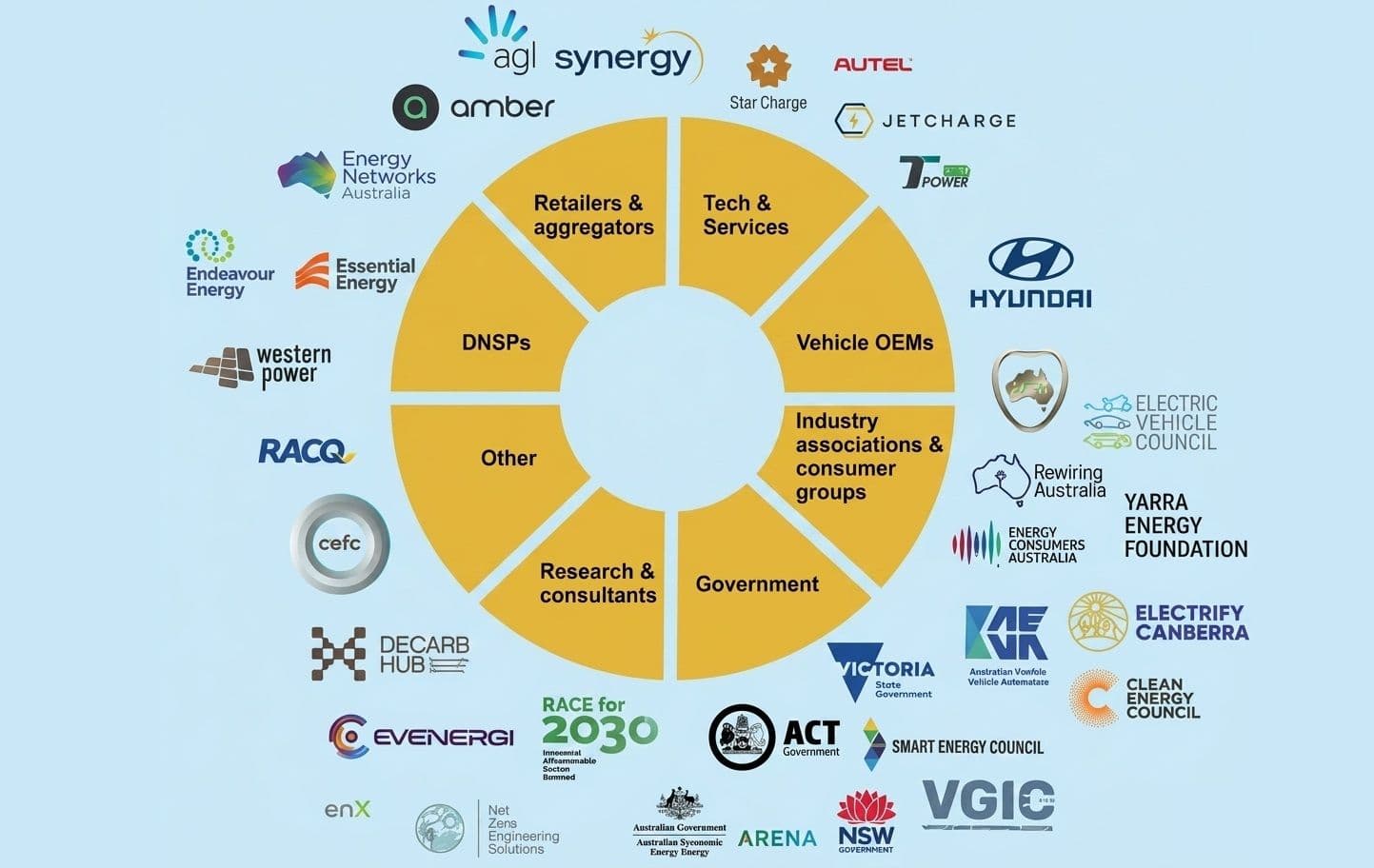
Sitting above the individual trials is the Vehicle-Grid Network (VGN), a nationally coordinated initiative announced in December 2025 by Minister Bowen and led by Climate-KIC Australia and the University of Technology Sydney's Institute for Sustainable Futures. The VGN received $2.37 million in funding, with ARENA contributing $1.09 million and additional support from the RACE for 2030 CRC.
The VGN runs until November 2029 and is designed to address the coordination problem that has held back V2G: aligning regulators, energy retailers, car manufacturers, network operators, and equipment suppliers around common standards and market frameworks. Industry partners include the Electric Vehicle Council and JET Charge.
Why V2G lnterest Will Gather Pace
Consumer and policy interest in V2G is growing partly because the economics of home battery storage are changing. State government battery rebate programs are being wound back across several jurisdictions, making the prospect of using an EV battery as a substitute for a dedicated home battery more attractive. For households that already own or plan to own an EV, V2G removes the need for a separate battery system entirely.
At the same time, the technical infrastructure is maturing. The release of V2G standards for the Australian market in 2024 cleared a key regulatory hurdle. Approved bi-directional chargers using the CCS2 connector, which is the standard port on most new EVs sold in Australia, are now available and listed on the Clean Energy Council's approved products register.
ARENA's REVS (Realising Electric Vehicle-to-Grid Services) project, which concluded in November 2025, validated that V2G technology is viable for a broad range of EV models available in Australia. The Amber trial and the broader rollout activities from AGL, Origin, and the VGN now build on that foundational research.
What Comes Next
Amber has 25 residential V2G sites already operational as part of the initial phase and says the project is delivering strong early results. The expanded trial is intended to bring the technology to a scale where ARENA can generate statistically meaningful data on battery degradation, customer behaviour, and grid integration.
Bowen's comments suggest the government sees consumer pressure as a long-term forcing function. His point that V2G capability will factor into EV purchase decisions, putting pressure on brands that do not support it, reflects a view that the market itself will push manufacturers toward greater openness on battery warranty terms.
The Amber project is part of the Driving the Nation Program. Further details on how organisations can apply are available on the ARENA funding page.

About the author

Danny is a consultant and entrepreneur working at the cutting edge of the electric vehicle and energy transition. He is passionate about educating and helping consumers make better decisions through data.
