Key Points
- Hyundai Ioniq 3 has been officially confirmed for Australia in early 2027.
- New EV hatch will rival MG4, BYD Dolphin and GAC Aion UT.
- Up to 496km WLTP driving range from a 61kWh battery.
- New Pleos Connect infotainment system debuts in the Ioniq 3.
- Expected to be priced in the low-to-mid $40,000 range locally.
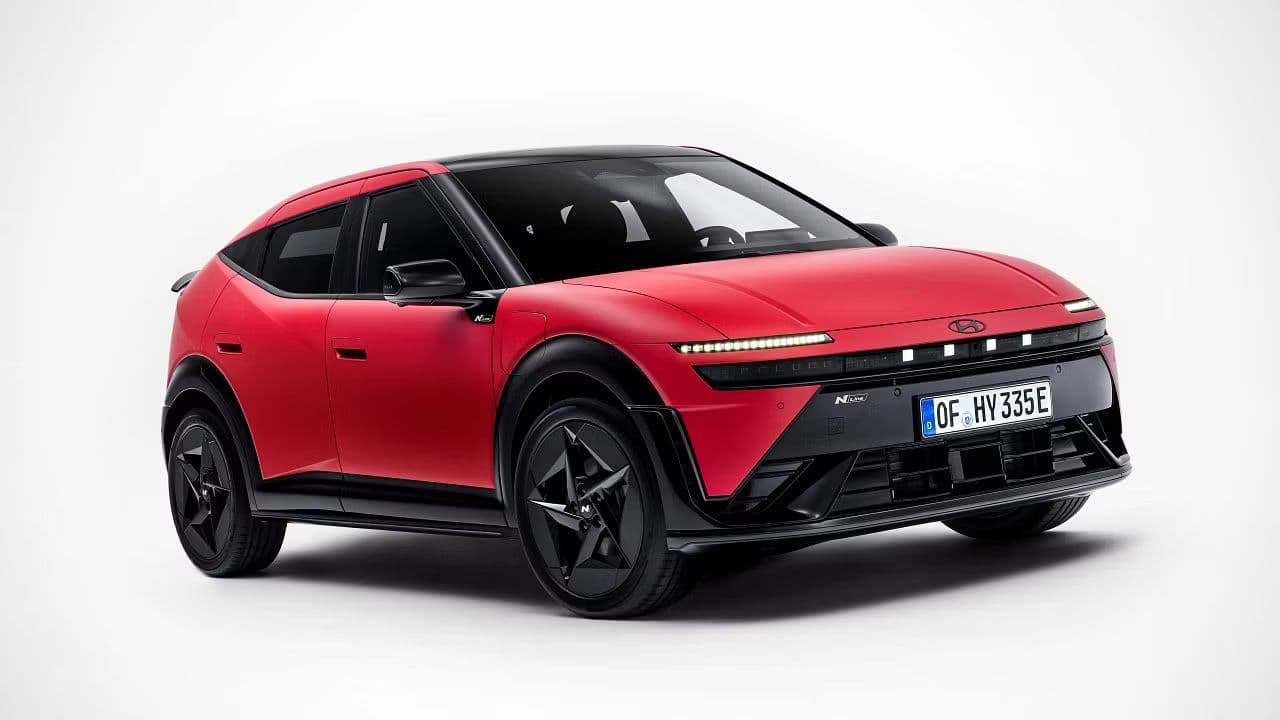
Hyundai has officially revealed its smallest dedicated Ioniq electric vehicle yet, with the all-new 2027 Hyundai Ioniq 3 confirmed for Australia ahead of a local launch expected early next year.
Positioned as a compact five-door electric hatch, the Ioniq 3 gives Hyundai a direct challenger in one of the fastest-growing EV segments in Australia. It will take on value-focused rivals such as the MG4, BYD Dolphin and GAC Aion UT, while also offering a more premium alternative for buyers wanting a recognised mainstream brand.
The newcomer is roughly the size of the outgoing Hyundai i30 hatch, but shifts the brand’s small-car strategy firmly into the electric era.


A new small EV hatch for Australian buyers
The Ioniq 3 is built on Hyundai Motor Group’s dedicated E-GMP electric platform, though it uses a front-wheel-drive 400V layout designed for smaller and more affordable EVs.
Two battery versions have been revealed globally:
- Standard Range uses a 42.2kWh battery
- Long Range uses a 61kWh battery
That gives Hyundai the flexibility to offer both entry-level and longer-distance versions in Australia.
Hyundai says the Long Range model can travel up to 496km (WLTP), which would make it highly competitive in the small hatch category.
Despite compact dimensions, Hyundai claims strong cabin practicality, helped by a flat floor and clever packaging.
Range, charging and everyday practicality
For many Australians, range and charging convenience remain key buying factors and Hyundai appears to be targeting both.
The Ioniq 3 supports AC charging up to 22kW, while DC fast charging is expected to peak around 150kW.
Hyundai claims a 10 to 80 per cent recharge in around 30 minutes using a suitable fast charger.
Other practical highlights include:
- 441-litre total luggage space
- Hidden under-floor storage compartment
- Vehicle-to-load (V2L) power capability
- Dual-zone climate control
- Heated and ventilated seats on higher grades
That could make it one of the most usable electric hatchbacks in its class.


Tech-focused interior with physical controls retained
Inside, the Ioniq 3 debuts Hyundai’s next-generation Pleos Connect infotainment software, based on Android Automotive.
This system is expected to roll out across future Hyundai models, making the Ioniq 3 an important launch vehicle for the brand.
Depending on grade, buyers can expect:
- 12.9-inch or 14.6-inch touchscreen
- Wireless Apple CarPlay and Android Auto
- Bose premium audio
- Digital phone key
- Highway Driving Assist 2
- Remote smart parking assist
- Surround-view camera
- Blind-spot cameras
Importantly, Hyundai has also retained physical buttons for major climate and audio functions — something many buyers still prefer.
How 2027 Hyundai Ioniq 3 Compare To Rivals?
| Category | Hyundai Ioniq 3 (2027) | MG 4 EV Urban (2026) | BYD Dolphin (2026) | GAC Aion UT (2026) |
| Expected Price (AUD) | ~$40k–$45k+ | $31,990–$34,990 drive-away | ~$30k–$41k | $31,990–$35,990 / promo $30,990 |
| Drive Layout | FWD | FWD | FWD | FWD |
| Battery Options | 42.2kWh / 61kWh | 43kWh / 54kWh | ~45kWh / 60.5kWh | 60–62kWh LFP |
| Power | 99.5kW / 108kW | 110kW / 118kW | 70kW / 150kW | 150kW |
| Torque | 250Nm | ~250Nm | 180Nm / 310Nm | 210Nm |
| 0–100km/h | 9.0s / 9.6s | ~8.7–9.0s | 12.3s / 7.0s | 7.3s |
| WLTP Range | 344km / 496km | 316km / 405km | 340km / 427km | 430km |
| DC Fast Charging | ~150kW, 10–80% ~30min | 150kW, ~30min | 60–80kW | 87kW, 30–80% ~24min |
| AC Charging | Up to 22kW | 6.6–11kW | ~7kW | 11kW |
| Boot Capacity | 441L | ~380–400L | ~345–508L | 321L / 689L folded |
| Practical Features | Flat floor, V2L, hidden storage | Heat pump, roomy cabin | Rotating screen, Blade battery | Spacious, V2L, glass roof |
| Tech & Safety | Pleos infotainment, HDA2, cameras | Large screen, driver aids | 12.8" screen, strong safety | Large screen, high spec |
| Ownership | Hyundai dealer network, expected strong resale | MG network, 10-year warranty option | BYD network, long battery warranty | Newer GAC network, 8-year warranty |
| Best For | Brand trust, premium feel, long range | Cheapest EV hatch buyers | Value or performance seekers | Range + features for the money |
2027 Hyundai Ioniq 3 Specifications
| Category | Details |
| Vehicle Type | Compact electric hatchback |
| Platform | Hyundai E-GMP (400V FWD version) |
| Drive Layout | Front-wheel drive |
| Seats | 5 |
| Standard Range Battery | 42.2kWh |
| Long Range Battery | 61kWh |
| Standard Range Power | 99.5kW |
| Long Range Power | 108kW |
| Torque | 250Nm |
| WLTP Range (Std) | 344km |
| WLTP Range (Long) | 496km |
| 0-100km/h (Std) | 9.0 sec |
| 0-100km/h (Long) | 9.6 sec |
| DC Charging | Expected up to 150kW |
| AC Charging | Up to 22kW |
| Fast Charge Time | 10-80% in 29-30 mins |
| Length | 4155mm |
| Width | 1800mm |
| Height | 1505mm |
| Wheelbase | 2680mm |
| Boot Capacity | 441L total |
| Wheels | 16 to 19-inch |
| Production Location | Turkey |
| Australian Launch | Early 2027 |
| Expected Price | From low-$40,000s (est.) |
What this means for the Australian EV market
The Ioniq 3 could become one of Hyundai’s most important EV launches locally.
Australia’s affordable EV hatch segment is currently dominated by Chinese brands, especially MG and BYD. Hyundai now has a chance to offer something different: a small EV hatch with established dealer support, familiar branding, stronger resale confidence and a more polished ownership experience.
If Hyundai prices the Ioniq 3 aggressively in the $40,000 bracket, it could attract buyers who want to go electric but are hesitant about switching to a newer Chinese marque.
It also signals that mainstream global brands are finally taking Australia’s entry-level EV market more seriously.

