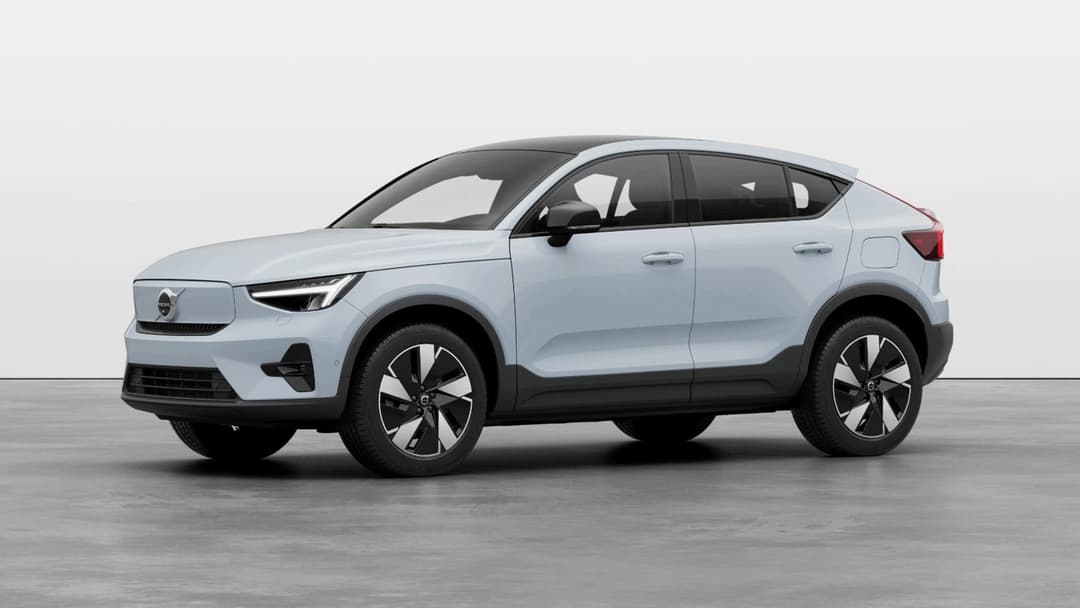
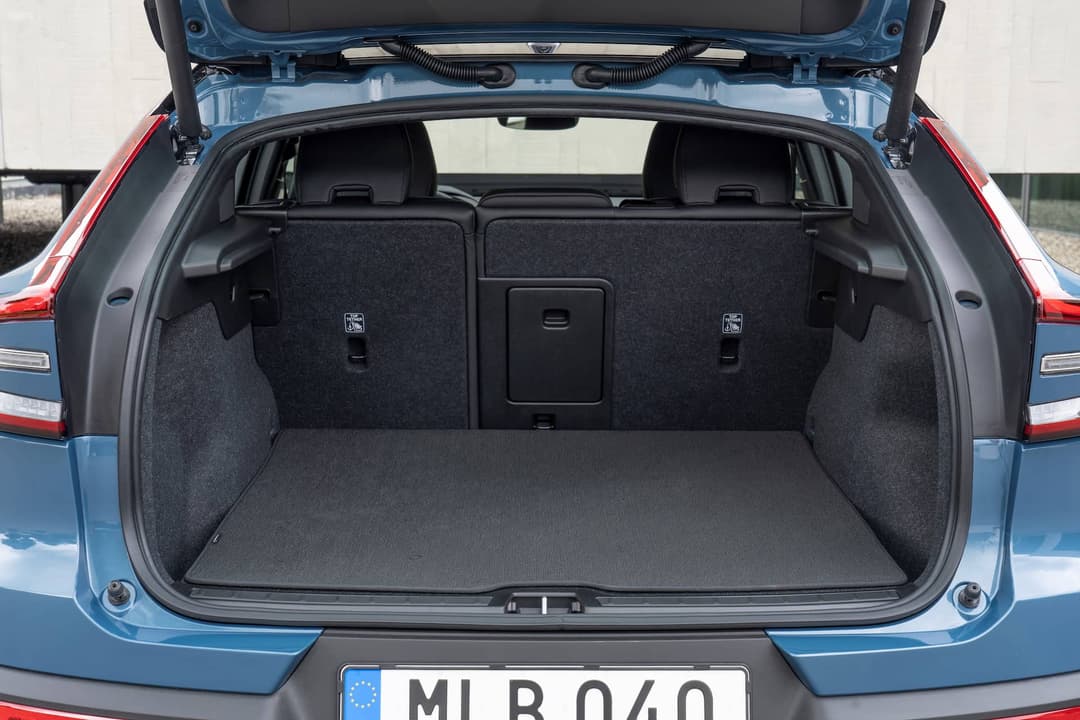
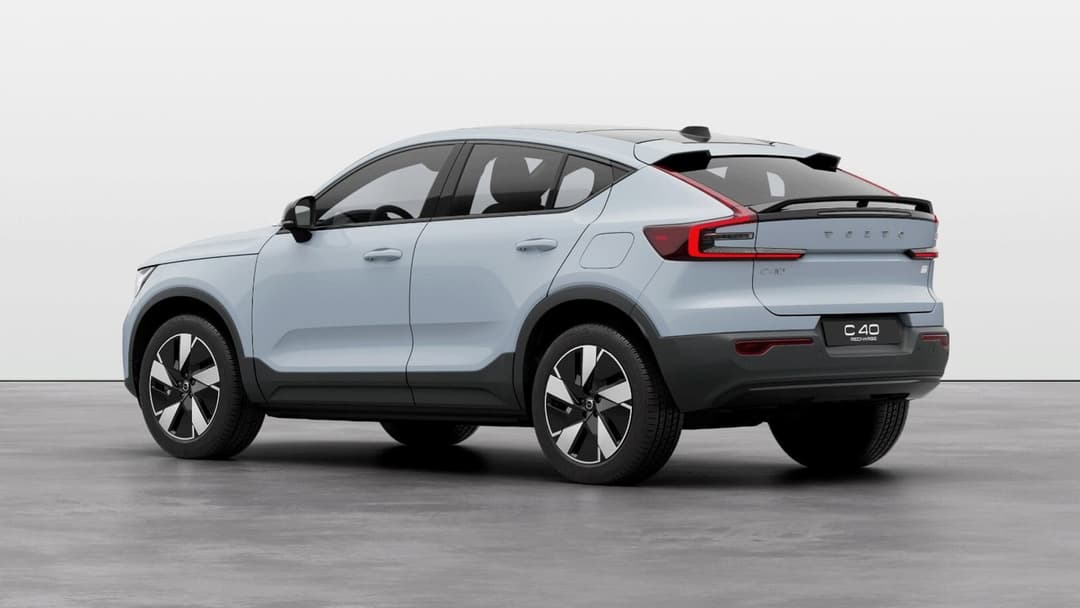
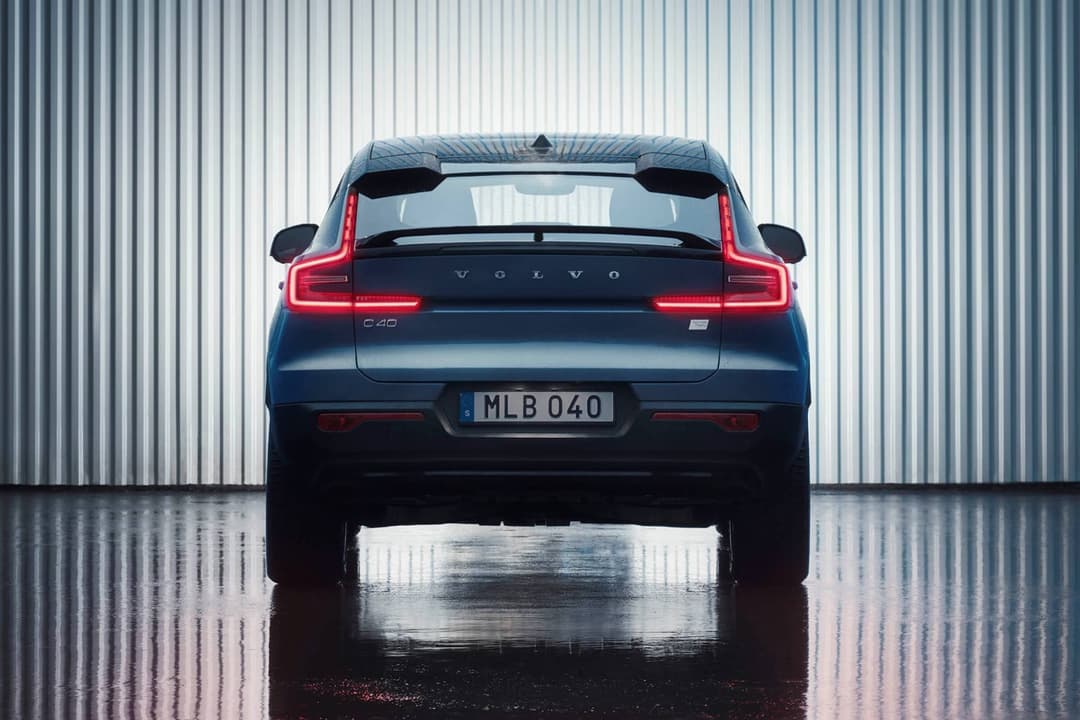
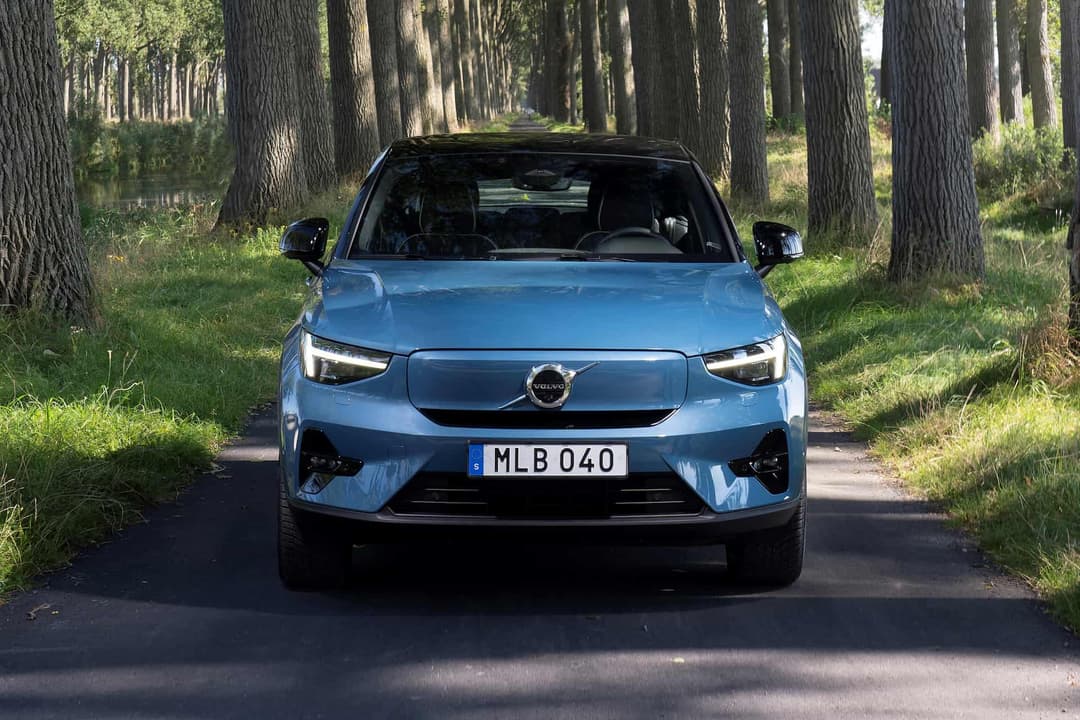
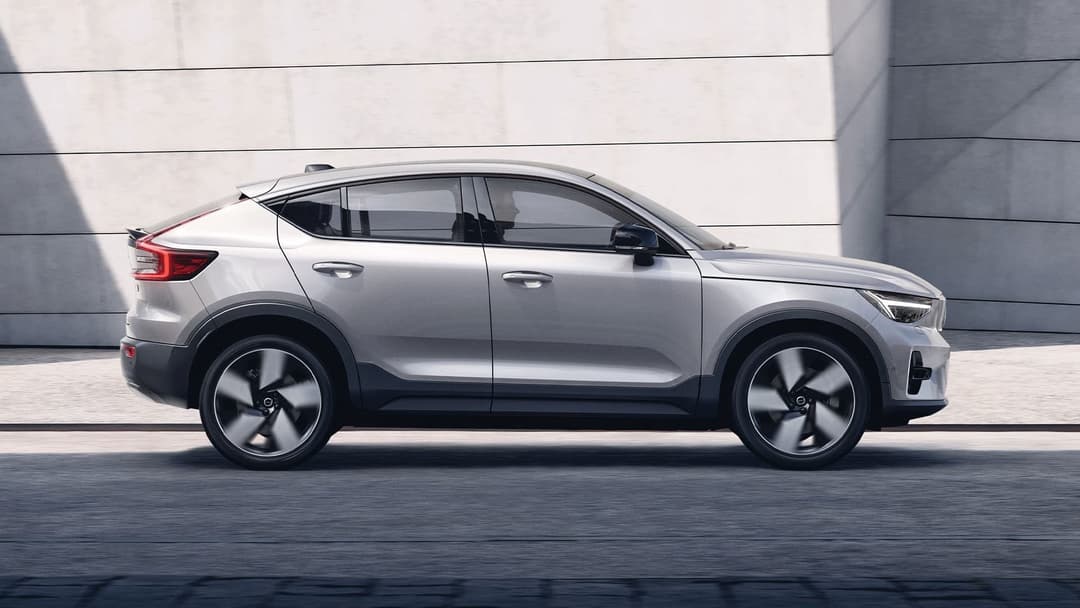
Volvo C40 Recharge Twin Ultimate Charging Guide: Time, Speed, Power
Price: $87,990

Available since 2023


Key EV Specs
82kWh
Battery Size (capacity)
507 km
Range (WLTP)
156 Wh/km
Efficiency
4.7 s
Acceleration (0-100 km/hr)
11 kW AC / 150 kW DC
Charge Power (max)
Volvo C40 Recharge Twin Ultimate Charging Overview and Charging Specs
The Volvo C40 Recharge Twin Ultimate is equipped with a 82 kWh battery and supports both AC and DC charging. With the right setup, you can charge conveniently at home or use public charging stations for faster top-ups. This guide covers charging times, costs, plug types, and tips to maximise efficiency. The C40 Recharge Twin Ultimate uses a Type 2 plug for AC charging and a CCS connector for DC fast charging, both standard in Australia.
| Battery size (capacity) | 82 kWh |
| Battery Size (useable) | 79 kWh |
| Battery Chemistry | NMC |
| Charge Port Type | Type 2 |
| Charge Port Location | Left Side - Rear |
| Charge Power (max) | 11 kW |
| Charge Speed | 47 km/h |
| Charge Time (0-100%) | 8 hrs 30 mins |
Volvo C40 Recharge Twin Ultimate Charging Times and Speeds
The Volvo C40 Recharge Twin Ultimate has a charging limit of 11 kW AC. This means that a three-phase 22kW AC charger will only supply power at 11 kW AC. If you are using a 7.2 kW AC charger, power will be limited to 7.2 kW AC. The table below provides charging times across different charger types.
Use our EV charging calculator if you want to customise your charge level and speed.
Charging Station Comparison
| Charger Type | Power Output (Average) | 0–100% Time | 10–80% Time | Speed |
|---|---|---|---|---|
| Home AC (7kW) | 7 kW | 11.9 hr | - | 45 km/h |
| Public AC (22kW) | 11 kW | 7.6 hr | - | 71 km/h |
| DC Fast (50kW) | 50 kW | - | 70 min | 321 km/h |
| DC Fast (150kW) | 127.9 kW | - | 27 min | 820 km/h |
| Ultra-Fast DC (350kW) | 127.9 kW | - | 27 min | 820 km/h |
Volvo C40 Recharge Twin Ultimate Charging Costs & Energy Use
The cost of charging a Volvo C40 Recharge Twin Ultimate will depend on where it is being charged. The costs of charging from home versus charging as a fast public charging station vary significantly.
The cost of fully charging a Volvo C40 Recharge Twin Ultimate on a typical home flat energy tariff of $0.35/kWh is $28.70.
The cost of fully charging the Volvo C40 Recharge Twin Ultimate at a fast public station, where rates as high as $0.7/kWh will be $57.40.
Use our EV charging calculator to get a personalised estimate of the charging costs for a Volvo C40 Recharge Twin Ultimate
 CCS Compatible
Volvo C40 Recharge Twin Ultimate Fast Charging & Tesla Supercharger Compatibility
The Volvo C40 Recharge Twin Ultimate can charge from 10–80% in approximately 28 minutes on a high-power DC charger.
While most Tesla Superchargers in Australia now support non-Tesla EVs such as the Volvo C40 Recharge Twin Ultimate via the CCS2 standard, always check the Tesla app for station compatibility.
Charging Specifications:
Usable Battery Capacity:
82 kWh
Fast Charge Power (max):
150 kW
Fast Charge Power (avg):
127.9 kW
Max Fast Charging Speed:
600 km/h
Charge Port:
Type 2
Port Location:
Left Side (Rear)
Volvo C40 Recharge Twin Ultimate Recommended Charge Level
The Volvo C40 Recharge Twin Ultimate uses an NMC battery. The typical recommended charge limit is 80% to 90% for daily use and only charge to 100% for longer trips.
The recommended charge limit for NMC batteries is due to higher degradation risk from a higher state of charge.
Check your owners manual for specific recommendations for the Volvo C40 Recharge Twin Ultimate.
Volvo C40 Recharge Twin Ultimate Bidirectional Charging (V2G/V2H/V2L)
The Volvo C40 Recharge Twin Ultimate does not currently support bidirectional charging features such as Vehicle-to-Grid (V2G), Vehicle-to-Home (V2H), or Vehicle-to-Load (V2L).
| Feature | Supported | Max Power Output |
|---|---|---|
| Vehicle-to-Grid (V2G) | No | - |
| Vehicle-to-Home (V2H) | No | - |
| Vehicle-to-Load (V2L) | No | - kW |