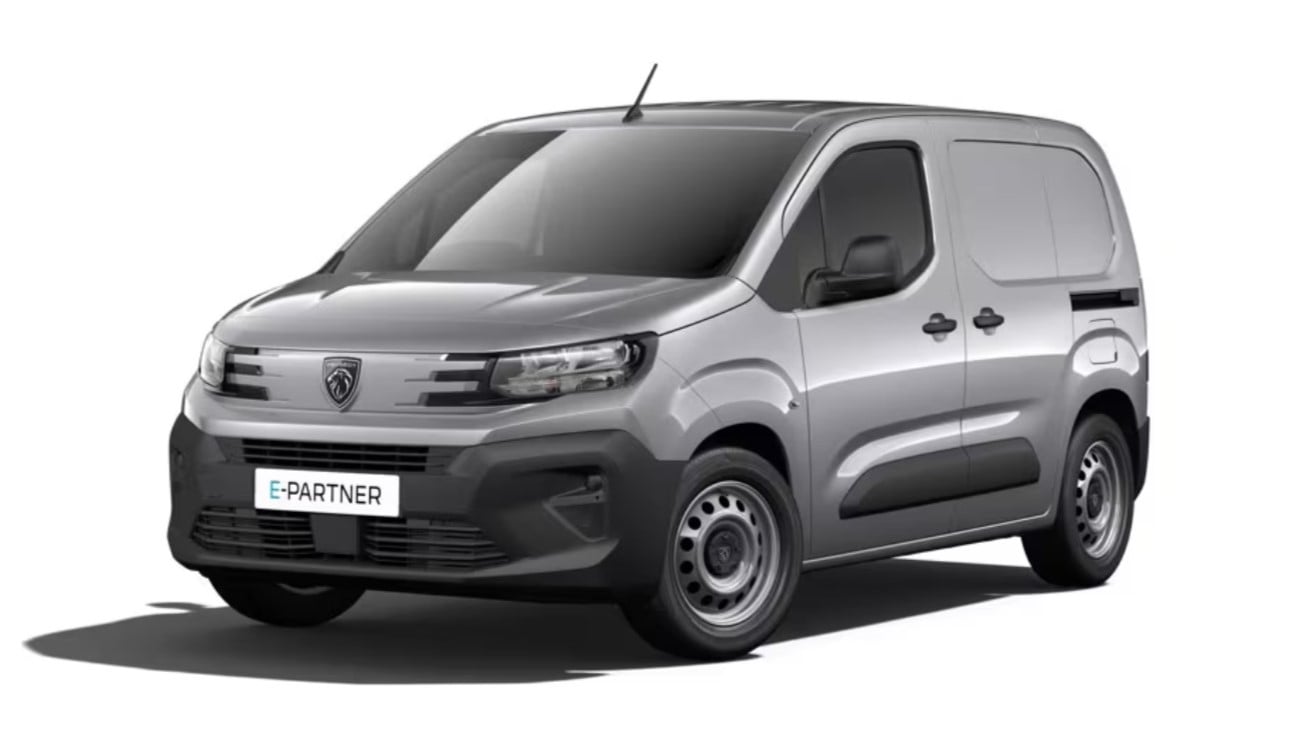
Peugeot e-PARTNER Test Charging Speed, Time and Cost
Van · 2022 – CurrentFBT exempt
- Usable Battery
- 45kWh
- AC Charging
- 74kW
- DC Charging
- 100kW
- 10–80% Time
- 26min
The Peugeot e-PARTNER Test charges at up to 100 kW on a DC fast charger and 74 kW on AC. It takes about 26 minutes to charge from 10 to 80% and 6.8 hours to charge from empty on a 7 kW home charger. It has a 45 kWh battery.
Peugeot e-PARTNER Test Key Battery and Charging Specs
| Usable Battery | 45 kWh |
|---|---|
| Charge Port | Type 2 (AC), CCS2 (DC) |
| Charge Port Location | Left Side (Front) |
| 0 to 100% at Home (7 kW) | 6.8 hrs |
| Efficiency | 197 Wh/km |
Compare the best home EV charger in Australia and work out how much electric car charging costs for your driving.
Peugeot e-PARTNER Test Charging Times
Peugeot e-PARTNER Test Max Charging Speed
| Type | Max Speed |
|---|---|
| AC charging speed | 74 kW |
| DC charging speed (peak) | 100 kW |
How Long Does a Peugeot e-PARTNER Test Take to Charge?
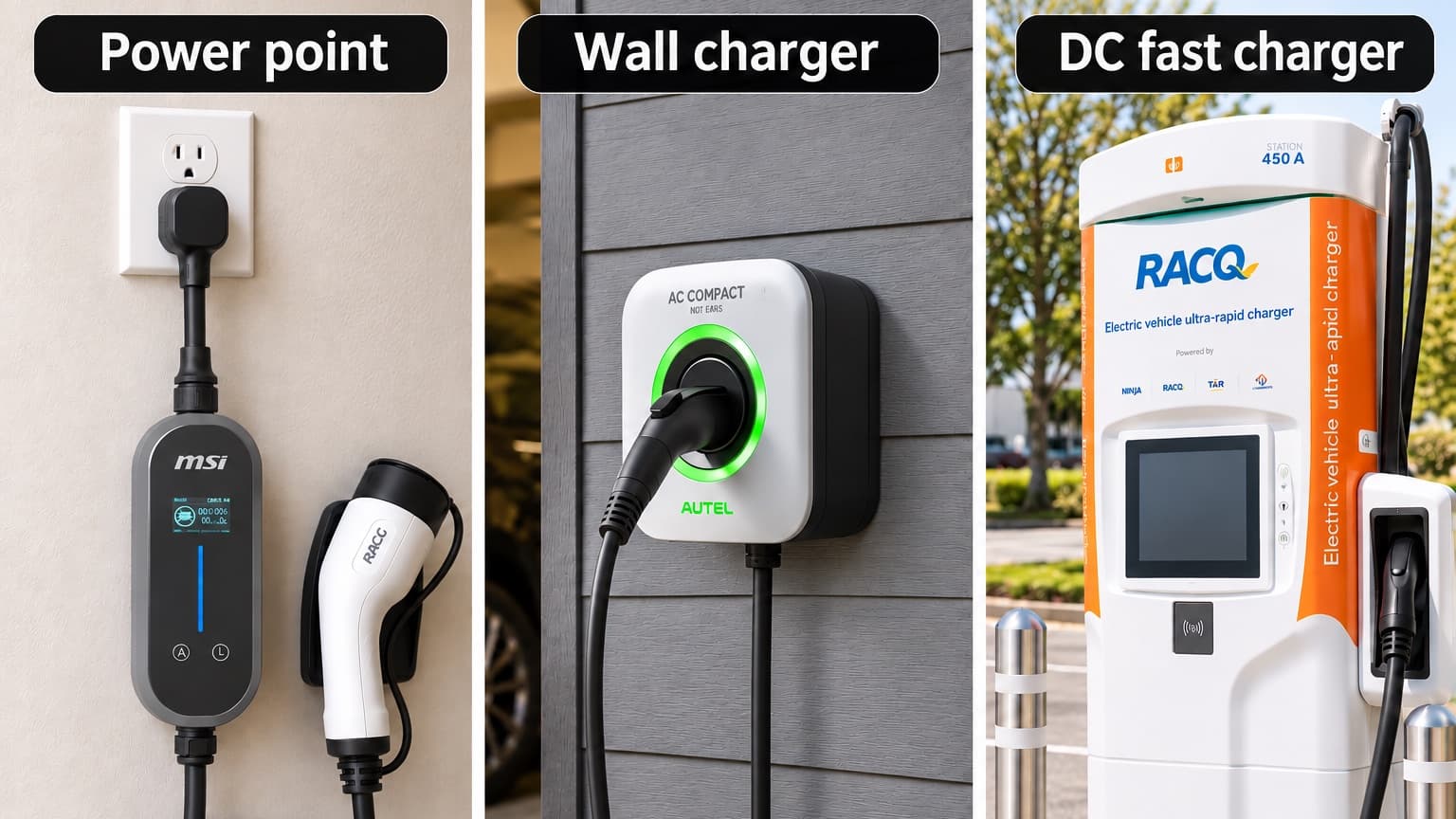
| Charger | Power Used | Time | Range Added |
|---|---|---|---|
| 10A power point (2.3 kW) | 2.3 kW | 20.7 hrs (0 to 100%) | 12 km per hour |
| 15A power point (3.6 kW) | 3.6 kW | 13.2 hrs (0 to 100%) | 18 km per hour |
| 7 kW home wall charger | 7 kW | 6.8 hrs (0 to 100%) | 36 km per hour |
| 11 kW three-phase charger | 11 kW | 4.3 hrs (0 to 100%) | 56 km per hour |
| 22 kW public AC charger | 22 kW | 2.2 hrs (0 to 100%) | 112 km per hour |
| 50 kW DC fast charger | 47.5 kW | 40 min (10 to 80%) | 60 km in 15 min |
| 150 kW DC fast charger | 72.7 kW | 26 min (10 to 80%) | 92 km in 15 min |
Icons: grey = power point, green outline = home charger, dark = public DC fast charger.
Best Home Charger for the Peugeot e-PARTNER Test
A 7 kW single-phase wall charger suits the Peugeot e-PARTNER Test. It charges the battery from empty to full in 6.8 hrs and adds about 36 km of range every hour. If your home already has three-phase power, a 22 kW charger uses the Peugeot e-PARTNER Test's full AC speed and charges it in 2.2 hrs.
Find the Right Charger for Your Peugeot e-PARTNER Test
See the real charging speed each home charger gets with this car. 3 quick questions.
| Detail | 7 kW Single Phase | 22 kW Three Phase |
|---|---|---|
| 0 to 100% | 6.8 hrs | 2.2 hrs |
| Range per hour | 36 km | 112 km |
| Needs three-phase power | No | Yes |
| Typical installed cost | $1,200 to $2,800 | $1,800 to $3,500 with existing three-phase power. $4,000 to $12,000+ if your home needs converting |
Installed costs are indicative for Australia and include the charger and standard installation. A switchboard upgrade, if needed, can add $900 to $3,500.
Does the Peugeot e-PARTNER Test Come With a Charger?
New EVs like the Peugeot e-PARTNER Test normally come with a complimentary portable charger that plugs into a standard 10A power point. It's handy for top-ups but takes about 20.7 hrs to fully charge the battery. A 7 kW wall charger does it in 6.8 hrs.
How Much Does It Cost to Charge a Peugeot e-PARTNER Test?
A full charge costs $3.15 at home on an EV plan at $0.07/kWh, and $15.75 on a typical flat tariff of $0.35/kWh. At a public DC charger at up to $0.70/kWh it costs $31.50. A petrol mid-size van uses about 7.6 L/100 km, which at $2.00 a litre costs $15.20 per 100 km.
| Where You Charge | Full Charge | Per 100 km | Per Year | Saving vs Petrol |
|---|---|---|---|---|
| Petrol mid-size van | Not applicable | $15.20 | $2,280 | Not applicable |
| Home, flat rate $0.35/kWh | $15.75 | $6.90 | $1,034 | $1,246 |
| Home, EV plan $0.07/kWh | $3.15 | $1.38 | $207 | $2,073 |
| Public DC $0.70/kWh | $31.50 | $13.79 | $2,069 | $211 |
Icons: grey = petrol, green outline = home charging, dark = public charging.
Per year is based on 15,000 km a year.
Switching from a flat tariff to an EV plan saves about $827 a year on charging the Peugeot e-PARTNER Test at home.
Peugeot e-PARTNER Test Fast Charging Rank and Road Trip Charging
The Peugeot e-PARTNER Test ranks 2 of 12 van EVs priced within $10,000 of it for DC fast charging power.
| Rank | Vehicle | Price | Peak DC (kW) | 10–80% time |
|---|---|---|---|---|
| 1 | Kia PV5 Cargo S Long Range | $55,990 | 128 | 30 min |
| 2 | Farizon V7E SR | $49,990 | 100 | 21 min |
| 2 | Farizon V7E LR | $53,990 | 100 | 35 min |
| 2 | Peugeot e-PARTNER | $59,990 | 100 | 26 min |
| 2 | Peugeot e-PARTNER Test | $59,990 | 100 | 26 min |
Peugeot e-PARTNER Test 500 km and 1,000 km Road Trips
Using Zecar's estimated highway range of 167 km and an average of 100 km/h: A 500 km trip needs 3 fast charging stops of about 26 minutes each, 1 hr 18 min in total, for a total trip time of about 6 hr 18 min. A 1,000 km trip needs 8 fast charging stops of about 26 minutes each, 3 hr 28 min in total, for a total trip time of about 13 hr 28 min.
| Trip | Charging stops | Charging time | Total trip time |
|---|---|---|---|
| 500 km | 3 | 1 hr 18 min | 6 hr 18 min |
| 1,000 km | 8 | 3 hr 28 min | 13 hr 28 min |
Total trip time is driving at an average of 100 km/h plus charging time. Estimates assume a start at 100%, arrival at no less than 10% and charging from 10% to 80% at a 100 kW-capable charger. Real times vary with weather, speed, load and charger.
Plan your trip costs with the EV charging calculator →Peugeot e-PARTNER Test Bidirectional Charging (V2X): V2L, V2H and V2G
- V2L powers appliances from the car's socket.
- V2H powers your home during an outage or peak pricing.
- V2G sends energy back to the grid.
| Feature | Supported | Max Output |
|---|---|---|
| V2L | No | |
| V2H | No | |
| V2G | No |
The Peugeot e-PARTNER Test does not support bidirectional charging.
Peugeot e-PARTNER Test Deals and Finance
Pricing starts from $59,990. A novated lease lets you pay for the car and its running costs from your pre-tax salary, and eligible EVs are exempt from fringe benefits tax. How the EV FBT exemption works
Get a Novated Lease QuotePeugeot e-PARTNER Test Charging FAQ
6.8 hrs for 0 to 100% on a 7 kW home charger, and 26 minutes for 10 to 80% at a DC charger of 100 kW or more.
74 kW on AC and 100 kW on DC, adding about 92 km of range in 15 minutes on a fast charger.
Type 2 for AC and CCS2 for DC, on the left side (front).
$3.15 at home on an EV plan, $15.75 on a flat tariff, or $31.50 at a public DC charger (compare EV energy plans).
Yes, at Superchargers open to non-Tesla EVs, using its CCS2 plug, so check the Tesla app for which sites are open.
No, the Peugeot e-PARTNER Test does not support V2L.
Track the Peugeot e-PARTNER
Get e-PARTNER price drops, offers and news by email.