Key Points
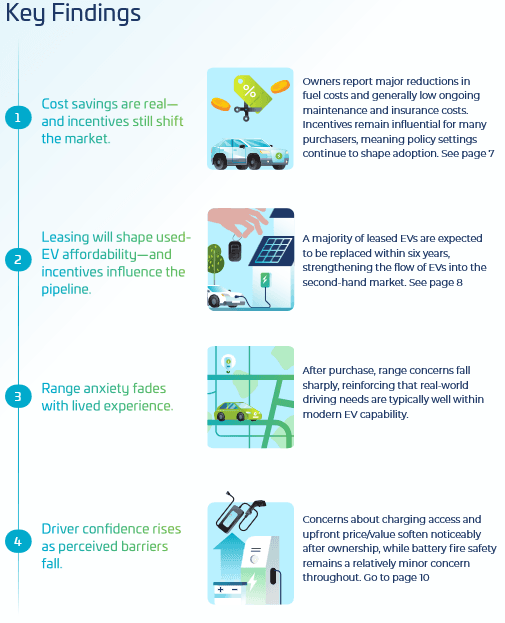
- EV owners report major savings on fuel, maintenance and insurance costs.
- Government incentives remain a key factor influencing EV purchases.
- Range anxiety drops significantly after drivers begin owning an EV.
- Most EV owners charge at home, often using rooftop solar.
- Leasing is expected to increase the supply of used EVs in the coming years.
Electric vehicles are still a relatively new addition to Australian driveways, but for many owners the transition from petrol or diesel has already become routine. Questions around charging, running costs and driving range have long dominated the EV debate, yet the experiences of people who actually own these vehicles often tell a very different story.
A new survey from the Electric Vehicle Council offers one of the clearest snapshots yet of what EV ownership looks like in Australia today. The 2025 EV Ownership Survey (Second Edition) collected responses from 1,839 battery-electric and plug-in hybrid vehicle owners between May and July 2025, providing insight into how Australians are using their EVs and how their views change after living with one.
The findings paint a picture of a market that is steadily maturing. Many of the concerns that once slowed EV adoption, such as range anxiety or charging access, appear to fade once drivers gain real-world experience. At the same time, practical benefits such as lower running costs and the convenience of charging at home are becoming increasingly clear.
In many ways, the results highlight something that early adopters have been saying for years: the reality of EV ownership often feels very different from the perception before purchase.
▶️MORE: EV Interest Surges Across Australia as Fuel Crisis Bites
Who Are Australia’s EV Owners?
The survey offers a snapshot of the typical Australian EV owner today. While electric vehicles are gradually spreading across the population, early adopters still share several common characteristics.
Most EV drivers currently live in urban areas, tend to have higher education levels, and often have access to home charging, particularly rooftop solar.
Key ownership trends
- 80% of EV owners are male
- 69% hold a bachelor’s degree or higher
- 62% are employed
- Two-thirds live in major cities
- 93% own their home
Solar energy also plays a major role in the EV ownership experience.
- 79% of EV households have rooftop solar
- 73% have no children living at home
- Average household: two adults
Vehicle preferences are also becoming clearer.
- SUVs dominate EV ownership (52.2%)
- Followed by hatchbacks and sedans
- Tesla remains the most popular brand (25%)
- Followed by BYD (17%), MG, Hyundai and Kia
Interestingly, EVs are not always the only vehicle in the household.
- 34% use their EV as their only car
- 66% have multiple vehicles, typically pairing an EV with a petrol or diesel model
Driving patterns also reveal that EVs are already handling everyday transport needs comfortably.
- Average annual distance in cities: 13,950 km
- Regional and rural drivers: 17,620 km
Perhaps most notable is the steady fall in EV prices.
- Average purchase price: $63,500
- Down $6,500 compared with the 2024 survey
This gradual drop in price suggests electric vehicles are slowly becoming more accessible to a wider range of Australian buyers.
Why Aussies Are Switching to EVs
While environmental concerns often dominate public discussions about EVs, the survey shows that the motivations for switching are far more varied.
For many buyers, practical considerations — including government incentives and lower running costs — remain the biggest drivers of adoption.
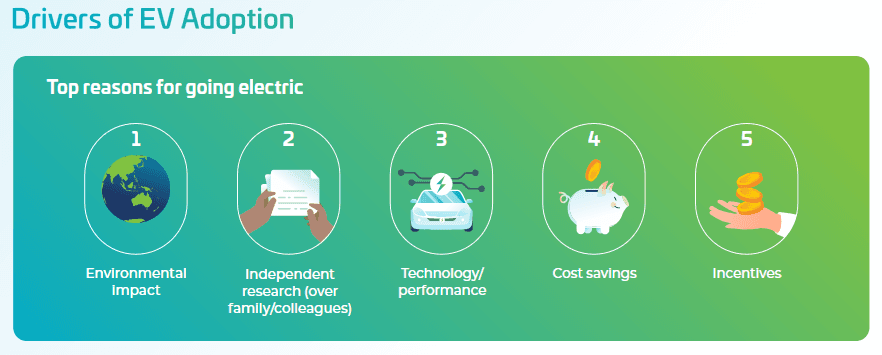
Top reasons Australians buy EVs
- Government incentives
- Advanced technology and performance
- Lower running costs
- Independent research and reviews
- Environmental impact
Financial incentives still play a crucial role in accelerating EV adoption.
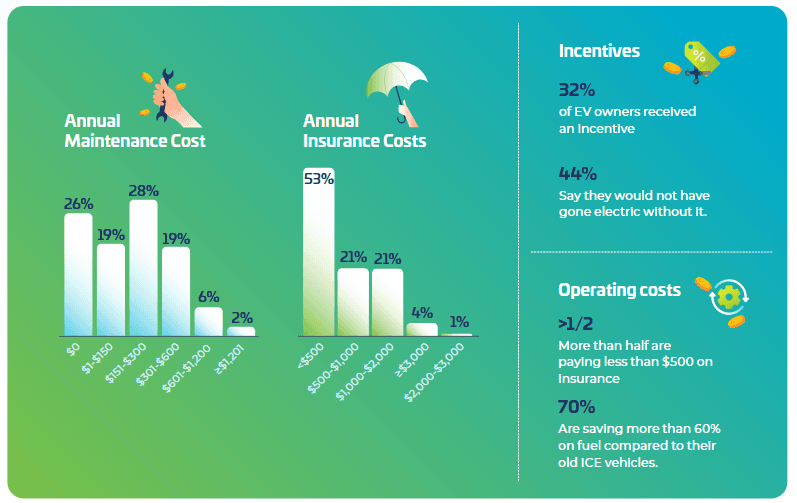
- 32% of buyers received a government incentive
- 44% say incentives were the deciding factor
Ownership models also reveal how Australians are entering the EV market.
- 75% purchased their EV outright
- 25% chose leasing
- 95% bought new vehicles
Second-hand EVs are still relatively rare in Australia, though this is expected to change as the market matures.
▶️MORE: Why EVs Still Win the Emissions Battle – Even With Battery Production
Big Savings on Fuel, Maintenance and Insurance
Perhaps the most striking finding from the survey is just how much EV owners are saving once they switch.
For many households, the move to electric appears to significantly reduce day-to-day running costs — an outcome that may resonate strongly with Australians dealing with rising fuel prices.
Running cost savings reported by EV owners
Fuel savings
- 70% report fuel costs dropping by more than 60%
- Electricity costs roughly one-quarter the price per kilometre of petrol
Maintenance
- 73% spend less than $300 per year
- More than half spend under $150 annually
Insurance
- 95% pay less than $2,000 per year
- Over half pay under $500
These figures suggest that, despite the higher upfront purchase price, many owners quickly recover the difference through lower operating costs.
▶️MORE: Why EVs Are Cheaper to Maintain Than ICE Cars in 2025?
Home Charging Dominates the EV Experience
One of the most important realities of EV ownership in Australia is that most charging happens at home.
Rather than relying heavily on public charging stations, EV drivers typically charge their vehicles overnight — often using solar power generated during the day.
Charging behaviour among EV owners
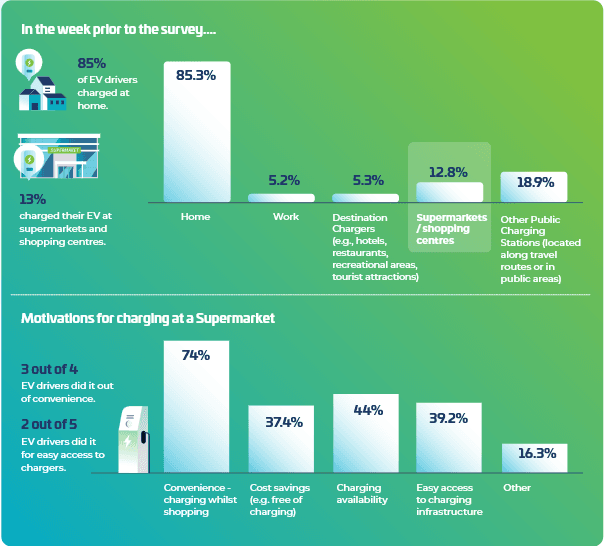
- 93% can charge at home
- 85% charged at home in the week before the survey
- 80% of home chargers are powered by rooftop solar
For many drivers, this convenience is one of the biggest benefits of EV ownership.
- 92% say their home charging setup meets their needs
- 89% consider home charging extremely important
Costs remain relatively low.
- Average electricity cost: $0.27 per kWh
- 70% spent less than $1,000 installing charging equipment
Many households also made small electrical upgrades.
- 62% upgraded home electrical systems
Overall, the findings highlight how EVs are increasingly integrated into everyday household energy systems.
▶️MORE: How to save money on EV charging (including free charging)
Range Anxiety and Concerns Fade After Ownership
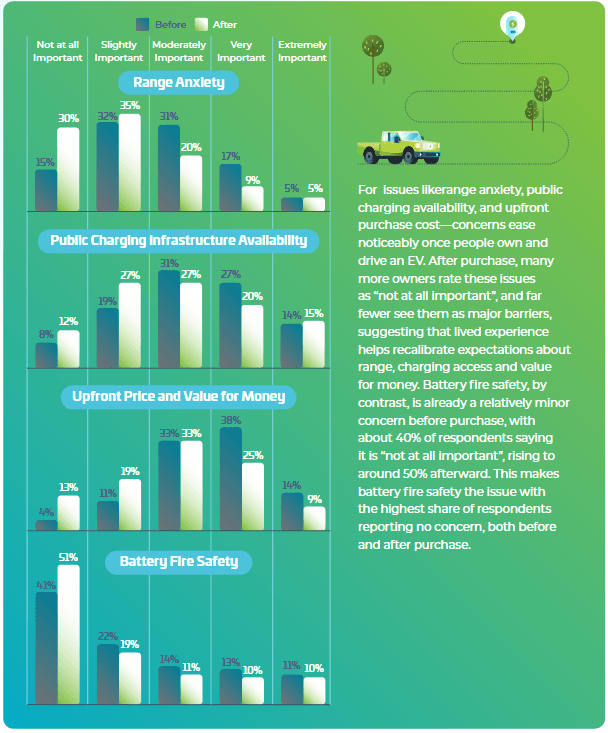
Before buying an EV, many potential buyers worry about range limits and charging availability.
However, the survey suggests these fears tend to disappear quickly once drivers gain real-world experience with electric vehicles.
Concerns about several key issues drop sharply after purchase:
- Driving range
- Public charging infrastructure
- Vehicle purchase price
- Battery safety
This shift in perception highlights an important trend: EV ownership often changes attitudes toward electric vehicles.
In many cases, drivers discover that modern EV ranges easily cover their daily travel needs.
▶️MORE:EV Battery Life: New Data Challenges Long-Held Concerns
Boosting the Second-Hand Market Through Leasing
Leasing is also emerging as an important mechanism for expanding Australia’s EV market.
Because leased vehicles are typically replaced sooner, they help create a pipeline of used EVs entering the second-hand market.
Leasing trends from the survey
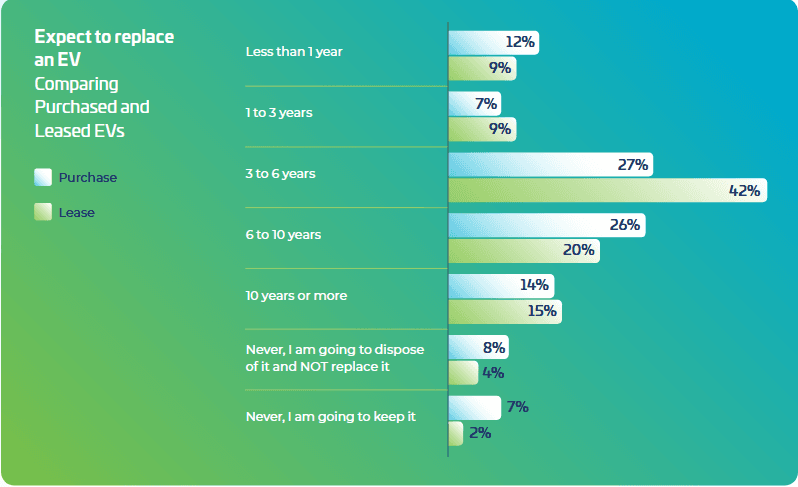
- 25% of EV owners leased their vehicle
- 59% of leased EVs will be replaced within six years
- Only 45% of purchased vehicles are replaced in that timeframe
This faster turnover could significantly increase the number of used EVs available in Australia over the next decade.
For many households, the growing second-hand EV market may ultimately provide the most affordable entry point into electric driving.
What this means for Australia
Taken together, the survey results offer an encouraging snapshot of Australia’s evolving EV landscape.
The findings reinforce a trend seen globally: once drivers experience electric vehicles firsthand, many of the concerns that once slowed adoption begin to fade.
Lower running costs, convenient home charging, and improving vehicle range are steadily shifting perceptions about electric mobility.
At the same time, the survey highlights how government incentives, solar power integration and a growing used-car market will likely play a major role in accelerating EV adoption in Australia over the coming years.
If these trends continue, electric vehicles may soon move from early adopters into the mainstream of Australian motoring.
Add zecar as a preferred source on Google Search 🔍
