


Key Points
- Range Rover Electric is the brand's first fully electric model, on sale in Australia now from $317,718 plus on-road costs.
- Twin 260kW motors produce up to 405kW and 850Nm, with a 118.5kWh battery rated at up to 600km on the outdated NEDC test, which converts to roughly 510km under the more common WLTP standard.
- It can wade through 900mm of water, climb 45-degree slopes and DC fast-charge from 10 to 80 per cent in about 22 minutes.
Range Rover has opened orders for the Range Rover Electric, the first fully electric model in the brand's 56-year history. It is built alongside petrol, mild-hybrid and plug-in hybrid Range Rovers at the company's Solihull factory in the UK, and is on sale in Australia now, priced from $317,718 plus on-road costs.
The SUV uses two electric motors, a 118.5kWh battery and an 800-volt electrical system. Land Rover says it keeps the brand's off-road ability, including wading through nearly a metre of water, while cutting cabin noise and adding more low-end torque than any Range Rover built before it, including the V8 petrol.
Range Rover's First Electric Model
Land Rover built Range Rover Electric on a shared architecture as its combustion and hybrid siblings, so it looks almost identical to the rest of the range. The company describes its approach as “Range Rover first, Electric second”: the exterior gains an aerodynamically optimised grille, new wheels and a tailored underbody to help extend range at motorway speeds, but the rest of the design is unchanged.
Martin Limpert, Managing Director of Range Rover, said the model was the result of a decade of engineering work. “Range Rover Electric is the result of a decade of considered engineering and technological development, setting a new benchmark for The Original Luxury SUV,” he said. “Electric propulsion is perfectly suited to the exquisite refinement of Range Rover, elevating the sense of calm and secluded sanctuary for occupants.”
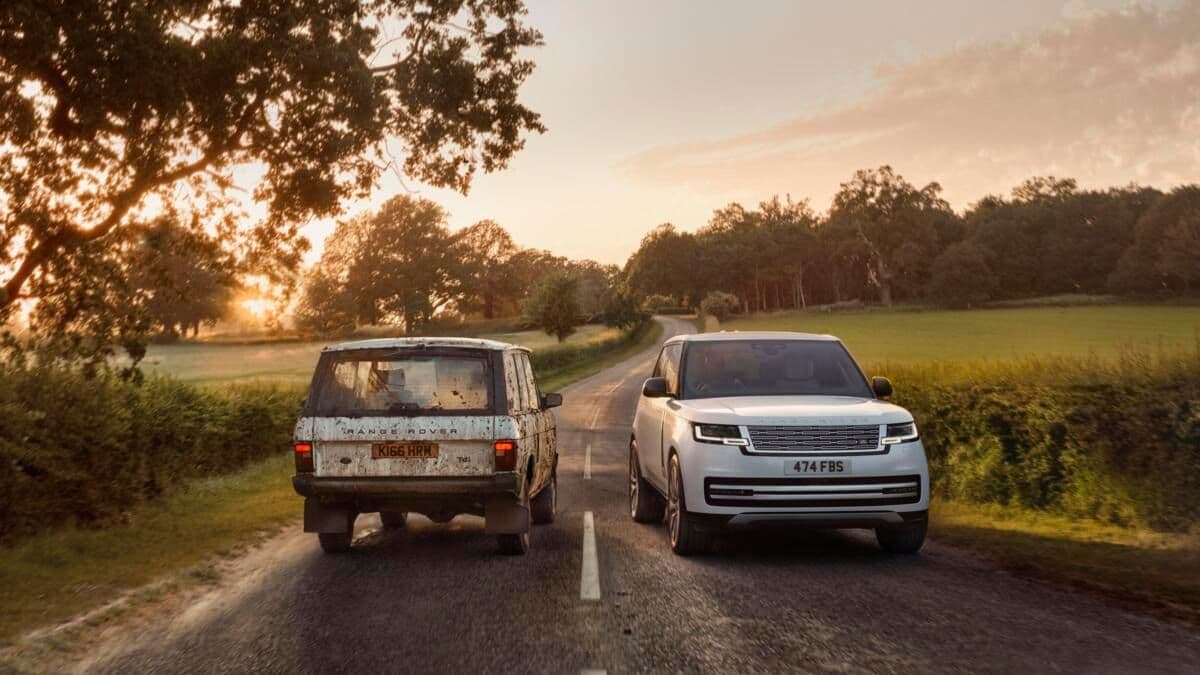
Motors, Battery and Off-Road Capability
Range Rover Electric uses dual eletric motors, each rated at 260kW, for a combined output of up to 405kW and 850Nm of torque. This is more torque than any Range Rover to date, including the 4.4-litre V8 petrol, which produces 750Nm.
Power comes from a double-stacked 118.5kWh usable battery made up of 344 prismatic cells, running on an 800-volt architecture that allows split charging. A new heat management system called ThermAssist optimises range, charging speed and battery life in extreme temperatures, adding up to 25 miles (40km) of range and cutting heating energy use by up to 40 per cent in cold weather.
Two systems manage traction. Integrated Traction Management adjusts motor speed within 50 milliseconds, up to 100 times faster than a combustion engine. A new Single Pedal mode lets the driver pull away on slopes up to 33 degrees, or climb slopes up to 45 degrees while rolling. It offers three levels of regenerative braking, with the strongest recovering up to 0.5g of energy back into the battery.
Land Rover says all-terrain capability is unchanged from petrol and diesel models, including wading through water up to 900mm deep. A lower centre of gravity and twin-chamber air suspension are aimed at improving on-road handling. The 0-100km/h sprint takes 4.5 seconds, and an 80-120km/h overtake takes 2.7 seconds.
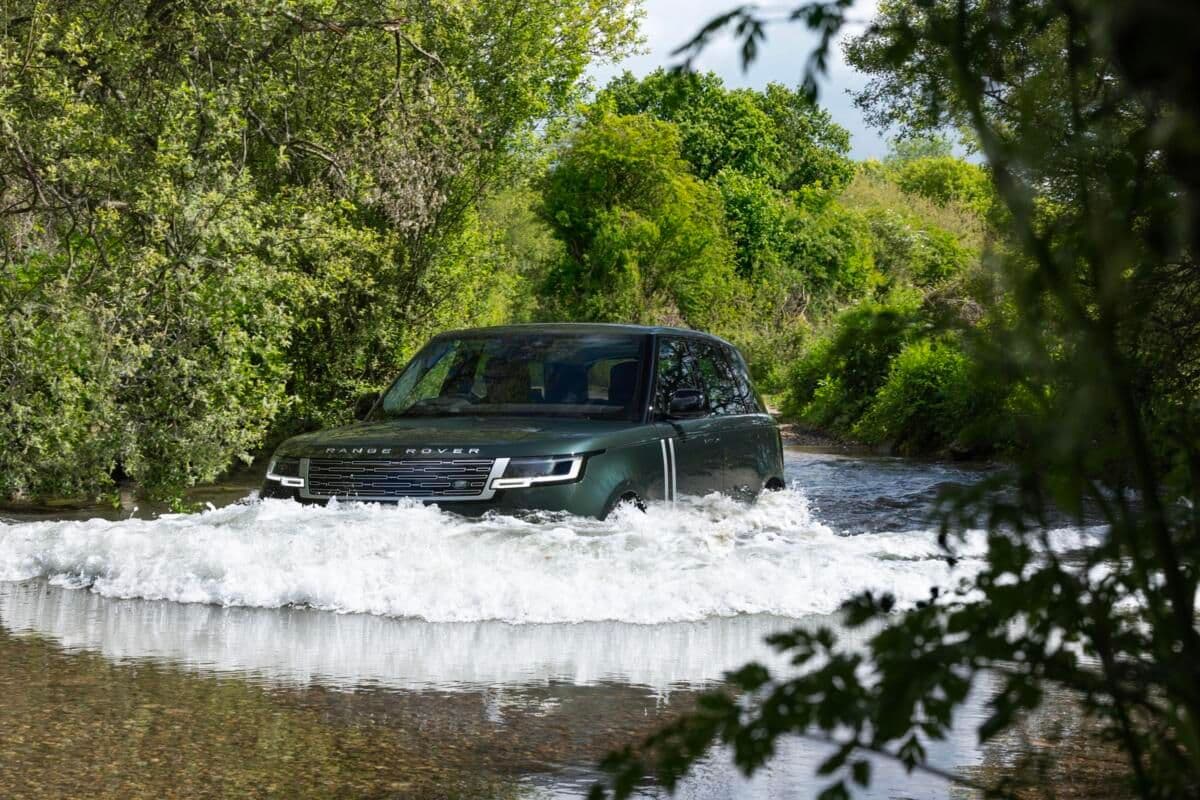
Range Rover Electric Key Specifications
Spec | Range Rover Electric |
Motors | Twin permanent magnet, 260kW each |
Combined power | Up to 405kW |
Torque | 850Nm |
Battery | 118.5kWh usable, double-stacked, 800V architecture |
0-100km/h | 4.5 seconds |
Range (NEDC claimed) | Up to 600km |
Range (WLTP-equivalent estimate) | Approx. 510km |
Range (Range Rover's own “real-world” claim) | Up to 535km |
DC charging | 10-80% in about 22 minutes at up to 350kW |
Wading depth | 900mm |
Warranty (propulsion system) | 8 years / 160,000km |
Range and Charging
Range Rover quotes its headline range figure, up to 600km, on the NEDC test cycle or a “real-world” range of up to 535km.
On a 350kW public DC charger, Range Rover Electric can charge from 10 to 80 per cent in around 22 minutes, or add 220km of range in 10 minutes when charging at its maximum rate. In Australia, buyers get access to more than 5,000 public charging locations and a one-year Chargefox subscription, capped at 500kWh, covering 942 sites nationwide.

Range Rover Electric Price in Australia
Range Rover Electric is available to order now in three trims, all excluding on-road costs:
Range Rover Electric Australian Pricing
Variant | Price (excl. on-road costs) |
HSE | $317,718 |
Autobiography | $357,718 |
SV | $417,418 |
Land Rover also sells petrol versions of the same three trims, powered by the 4.4-litre V8 used in the Autobiography and SV. Compared with those equivalent petrol models, Range Rover Electric carries a premium of between roughly $5,800 and $13,500, depending on trim.
Range Rover Electric vs Equivalent Petrol V8
Variant | Electric price | Petrol V8 price | Difference |
HSE | $317,718 | $304,200 | +$13,518 |
Autobiography | $357,718 | $346,100 | +$11,618 |
SV | $417,418 | $411,600 | +$5,818 |

How It Compares: Porsche Cayenne Electric and Mercedes-Benz GLC Electric
The closest electric rivals to Range Rover Electric in the luxury SUV space are the Porsche Cayenne Electric and the Mercedes-Benz GLC 400 4MATIC Electric. Neither is a direct size-for-size match: the Cayenne and GLC are both smaller, mid-size SUVs, while Range Rover Electric is a full-size luxury SUV, which is reflected in the price gap below.
Luxury Electric SUV Comparison
Model | Price (excl. on-road costs) | Battery | Power | Torque | WLTP range | 0-100km/h |
Range Rover Electric (HSE) | $317,718 | 118.5kWh | Up to 405kW | 850Nm | ~510km (estimated from NEDC) | 4.5s |
Porsche Cayenne Electric | $167,800 | 113kWh | 300kW (325kW launch) | 835Nm | 642km | 4.8s |
Porsche Cayenne Turbo Electric | $259,900 | 113kWh | Up to 850kW (launch) | 1500Nm | 623km | 2.5s |
Mercedes-Benz GLC 400 4MATIC Electric | From $112,200 | 94.4kWh | 360kW | 800Nm | 630km | 4.3s |
On paper, both the Cayenne Electric and GLC 400 Electric offer more driving range than the Range Rover Electric and cost significantly less. Range Rover's advantage is size, all-terrain capability and towing-oriented capability rather than outright efficiency or price.

Testing, Warranty and Ownership
Land Rover put the Range Rover Electric through more than 1.5 million kilometres of physical testing (38 laps of the planet) and over 250,000 hours of virtual testing, more than any previous Range Rover, in conditions from minus 40 degrees Celsius in Arjeplog, Sweden, to the Dubai desert and the UK's Eastnor Castle. More than 300 patent applications have been filed, the most of any Range Rover model.
The propulsion system carries an eight-year/160,000km warranty. The Range Rover App lets owners check lock status, location, charge status and range, remotely start cabin purification or the heated steering wheel, and schedule charging for off-peak rates.
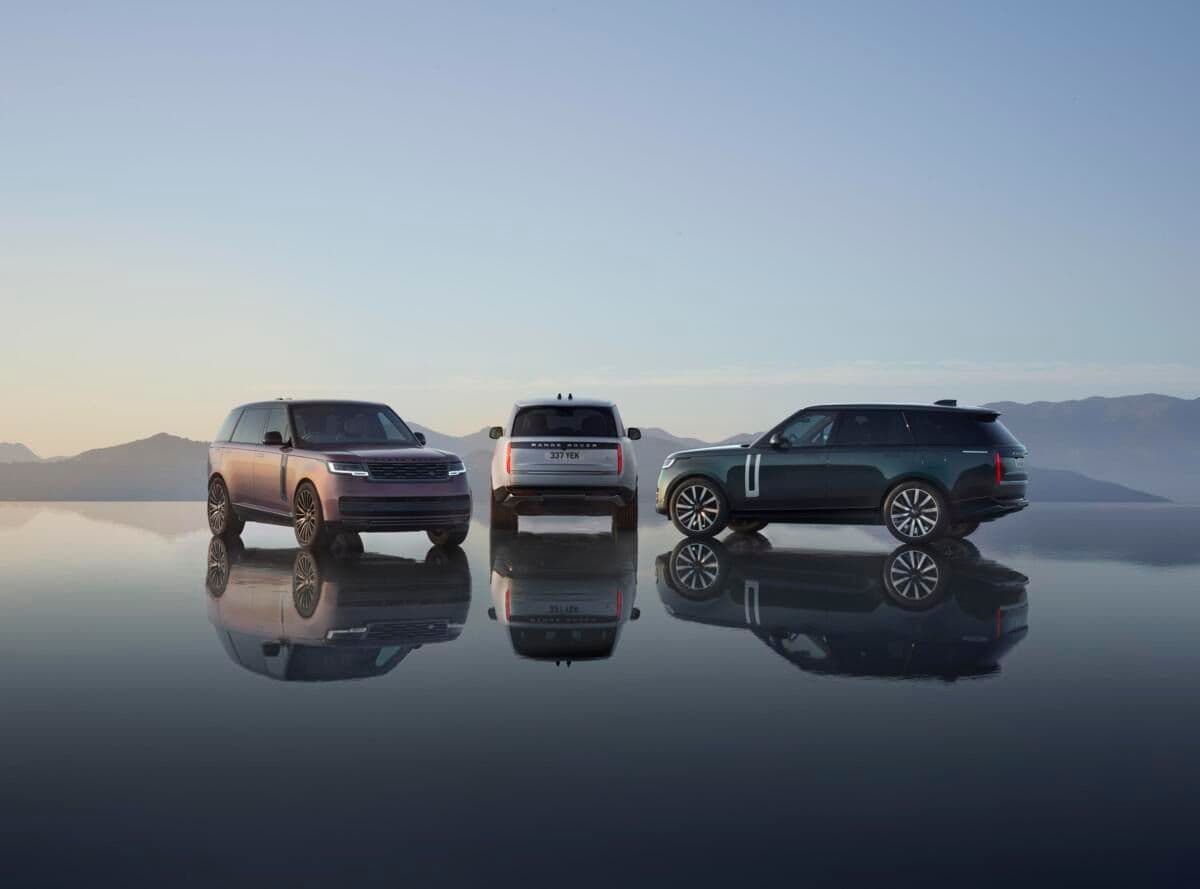
Built in Solihull
Range Rover Electric is built at Land Rover's Solihull plant, home of Range Rover production since 1970. JLR has upskilled 9,000 manufacturing employees there for electrification, plus 1,500 more across the West Midlands.
Chief Operations Officer Nigel Blenkinsop said the plant combines "more than five decades of Range Rover manufacturing expertise with the latest electrification and advanced manufacturing technology," adding that production supports thousands of UK and European businesses, with over two-thirds of supplier spend staying in the region.
Batteries and electric drive units are made at JLR's Electric Propulsion Manufacturing Centre in Wolverhampton, which also builds combustion engines, making it, JLR says, the UK's largest combined ICE and electric powertrain plant. The first phase of its redevelopment covered 40,000 square metres and took over two million hours of work across four years, adding 13 new production lines, nine kilometres of conveyors and 182 kilometres of cabling. AI-enabled cameras check components during assembly, and every battery cell is tested individually before going into a pack.
Ordering and Availability
Order books are open now for Range Rover Electric in standard-wheelbase HSE, Autobiography and SV specifications. Buyers who want a more personalised vehicle can use the Range Rover Bespoke commissioning service, which offers an extended range of paint colours, finishes, materials and personalisation details, including custom embroidery.
Get a novated lease quote
About the author

Danny is a consultant and entrepreneur working at the cutting edge of the electric vehicle and energy transition. He is passionate about educating and helping consumers make better decisions through data.
