
Key Points
- CATL launched both the 3rd-gen Shenxing LFP and 3rd-gen Qilin NCM batteries at the same 2026 Tech Day event.
- The Qilin 3rd Gen delivers 3,000kW peak discharge power and over 1,000km range. BYD has no NCM battery to match it.
- CATL also unveiled a condensed matter battery at 350Wh/kg, enabling 1,500km range in executive sedans.
On April 21, 2026, CATL held its annual Tech Day event. The company launched four new batteries in one session: the 3rd-gen Shenxing LFP, the 3rd-gen Qilin NCM, the Freevoy II, and the Naxtra ‘salt’ battery. It also unveiled a ‘semi-solid state battery’ for passenger vehicles.
BYD had recently launched its Blade Battery 2.0, a second-generation LFP battery with ultra-fast charging. CATL's response at Tech Day was direct: the Shenxing 3rd Gen charges faster than the Blade 2.0, and the Qilin 3rd Gen is a product BYD simply does not have an answer to yet.

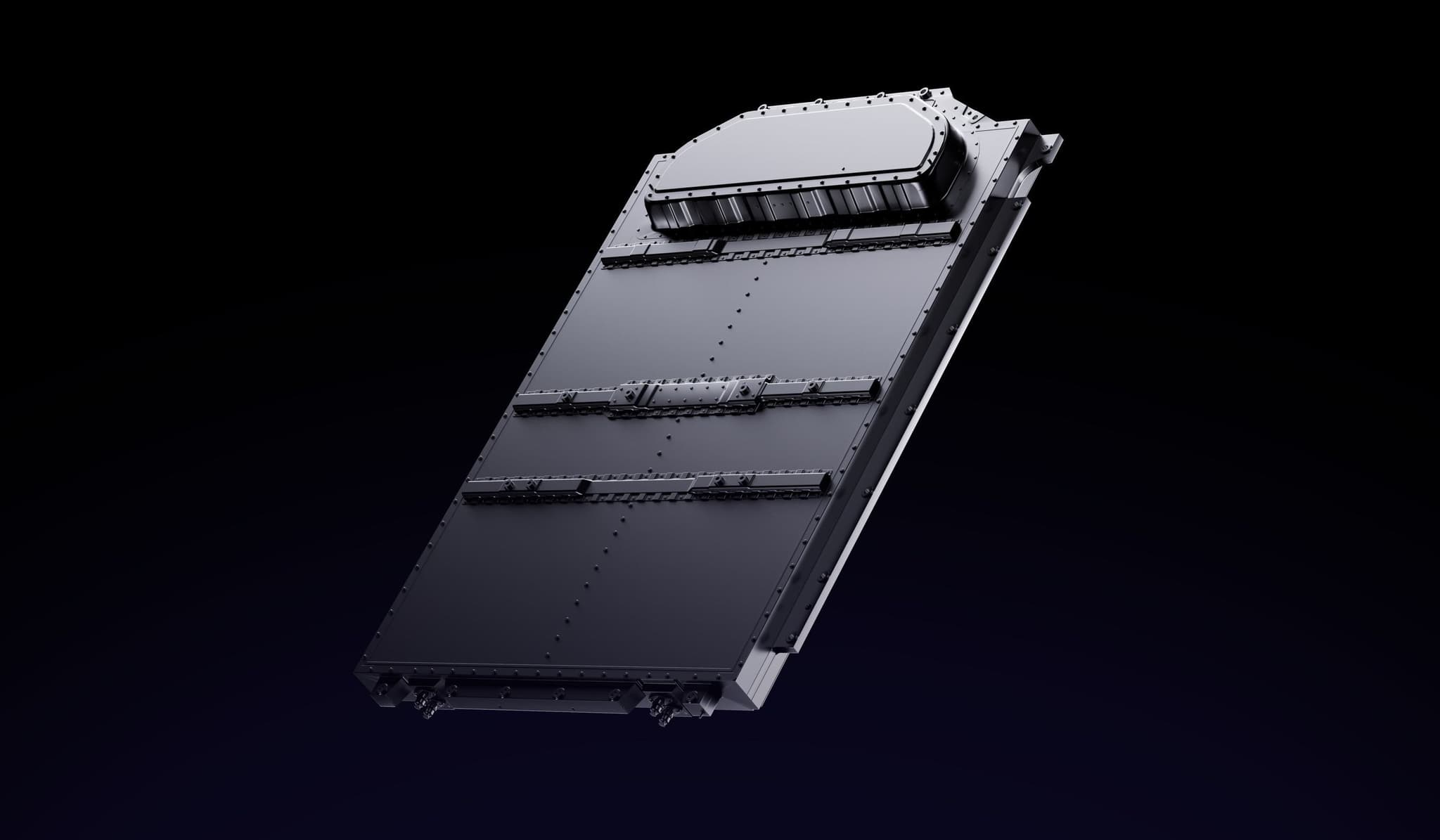
3rd-Gen Shenxing LFP: Faster Than BYD Blade 2.0
The Shenxing 3rd Gen is CATL's latest LFP battery. It can charge from 10% to 98% in 6 minutes 27 seconds. That is faster than BYD's Blade 2.0, which takes 9 minutes to reach 97%.
BYD launched the Blade 2.0 earlier in 2026. It was a major step forward for LFP charging, with 10% to 70% in 5 minutes. CATL's Shenxing 3rd Gen beats it on every charging metric.
Shenxing 3rd Gen LFP Charging Times
Charge Range | Time |
10% to 35% | 1 minute |
10% to 80% | 3 minutes 44 seconds |
10% to 98% | 6 minutes 27 seconds |
10% to 98% at -30C | 9 minutes (any charger) |
3rd-Gen Qilin NCM: 3,000kW and 1,000km Range
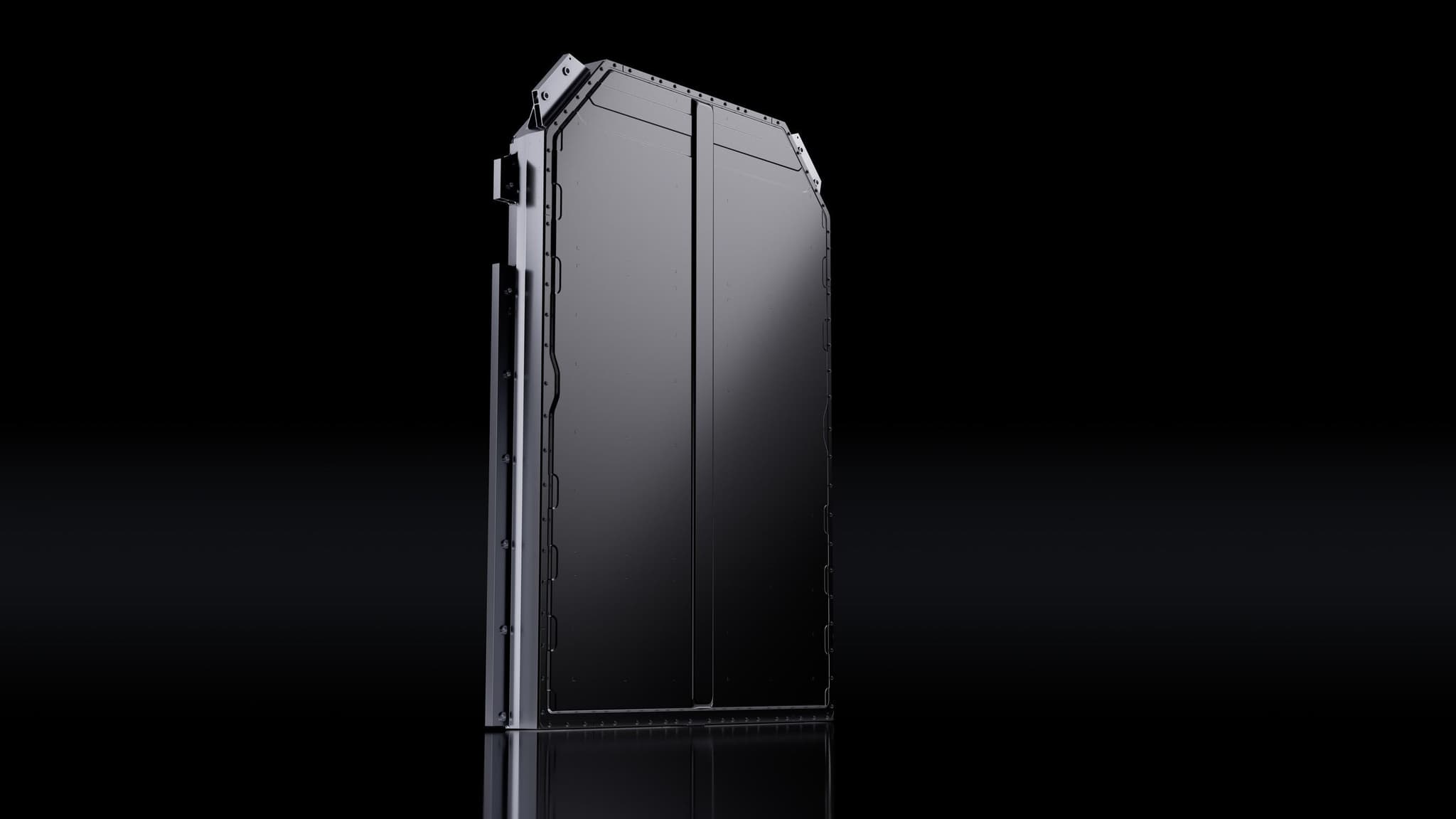
The Qilin 3rd Gen is a ternary lithium (NCM) battery. It was announced at the same Tech Day event as the Shenxing LFP. It supports 10C equivalent charging with a peak discharge power of 3,000kW. Driving range exceeds 1,000km.
The battery has a volumetric energy density of 600Wh/L and a gravimetric energy density of 280Wh/kg. A 125kWh pack weighs 625kg. That is 255kg lighter than a comparable LFP pack. CATL noted that any battery pack over 750kg is a waste, a clear reference to some of BYD's heavier LFP options.
The lighter weight has real performance benefits. Reducing 255kg from the vehicle improves acceleration, braking, handling, and component life.
Qilin 3rd Gen: Performance Benefits vs Heavier LFP Pack
Metric | Improvement |
0-100 km/h acceleration | 0.6 seconds faster |
100-0 km/h braking distance | 1.44 metres shorter |
Moose test speed | 8% higher |
Body roll angle | 6.5% lower |
Emergency avoidance capability | 15-25% better |
Chassis component lifespan | 40% longer |
Tyre life | 30% longer (30,000-40,000 km to 40,000-50,000 km) |
Passenger headroom | +18mm (112L space saved) |
Shenxing LFP vs Qilin NCM: Key Differences
Both batteries were launched at the same event and share the same ultra-fast charging speed. But they serve different purposes. Here is how they compare:
3rd-Gen Shenxing LFP vs 3rd-Gen Qilin NCM
Spec | Shenxing 3rd Gen (LFP) | Qilin 3rd Gen (NCM) |
Chemistry | Lithium Iron Phosphate (LFP) | Ternary Lithium (NCM) |
Gravimetric energy density | Not disclosed | 280 Wh/kg |
Volumetric energy density | Not disclosed | 600 Wh/L |
Charging speed (equivalent) | Same as Qilin 3rd Gen | 10C equivalent / 15C peak |
Peak discharge power | Not disclosed | 3,000 kW |
Driving range | Not disclosed | Over 1,000 km |
Pack weight (125 kWh) | ~880 kg (estimated) | 625 kg (255 kg lighter) |
Thermal management | Standard | Thermal-electric separation |
Primary use case | Mass market EVs | Performance and premium EVs |
Where BYD Stands
BYD recently launched the Blade Battery 2.0. It is a second-generation LFP battery with 10% to 70% charging in 5 minutes. It also requires a 1.5MW flash charging station for peak performance in cold weather.
In the LFP space, BYD and CATL are close. The Blade 2.0 is a strong product. But CATL's Shenxing 3rd Gen is faster on every charging metric, and it does not need a special charger to achieve fast charging in cold weather.
In the NCM space, BYD has no equivalent to the Qilin 3rd Gen. CATL holds over 80% of the global ternary lithium market. Its competitors' shares are small. The Qilin 3rd Gen reinforces that lead.
BYD vs CATL: Battery Lineup Comparison
Category | BYD | CATL |
LFP (ultra-fast charging) | Blade Battery 2.0 (2nd gen) | Shenxing 3rd Gen |
NCM (ultra-fast charging) | None | Qilin 3rd Gen |
Semi-solid / condensed battery | None announced | Condensed matter battery (350 Wh/kg) |
NCM market share | Negligible | Over 80% |

Condensed Matter Battery: 350 Wh/kg for Passenger Cars
CATL also unveiled a condensed matter battery at the same event. It has a gravimetric energy density of 350 Wh/kg and a volumetric energy density of 760 Wh/L. The pack weighs under 650 kg.
With this battery, executive sedans can reach 1,500 km of range. Full-size SUVs can reach 1,000 km. The condensed matter battery is what other manufacturers call a semi-solid-state or liquid-solid battery.
CATL has already used this battery in eVTOLs made by AutoFlight, a company CATL has invested in. Now it is bringing the technology to passenger vehicles.

CATL Condensed Matter Battery Specs
Spec | Value |
Gravimetric energy density | 350 Wh/kg |
Volumetric energy density | 760 Wh/L |
Pack weight | Under 650 kg |
Range (executive sedan) | 1,500 km |
Range (full-size SUV) | 1,000 km |
Current application | eVTOLs (AutoFlight), passenger vehicles (upcoming) |
CATL's Market Position
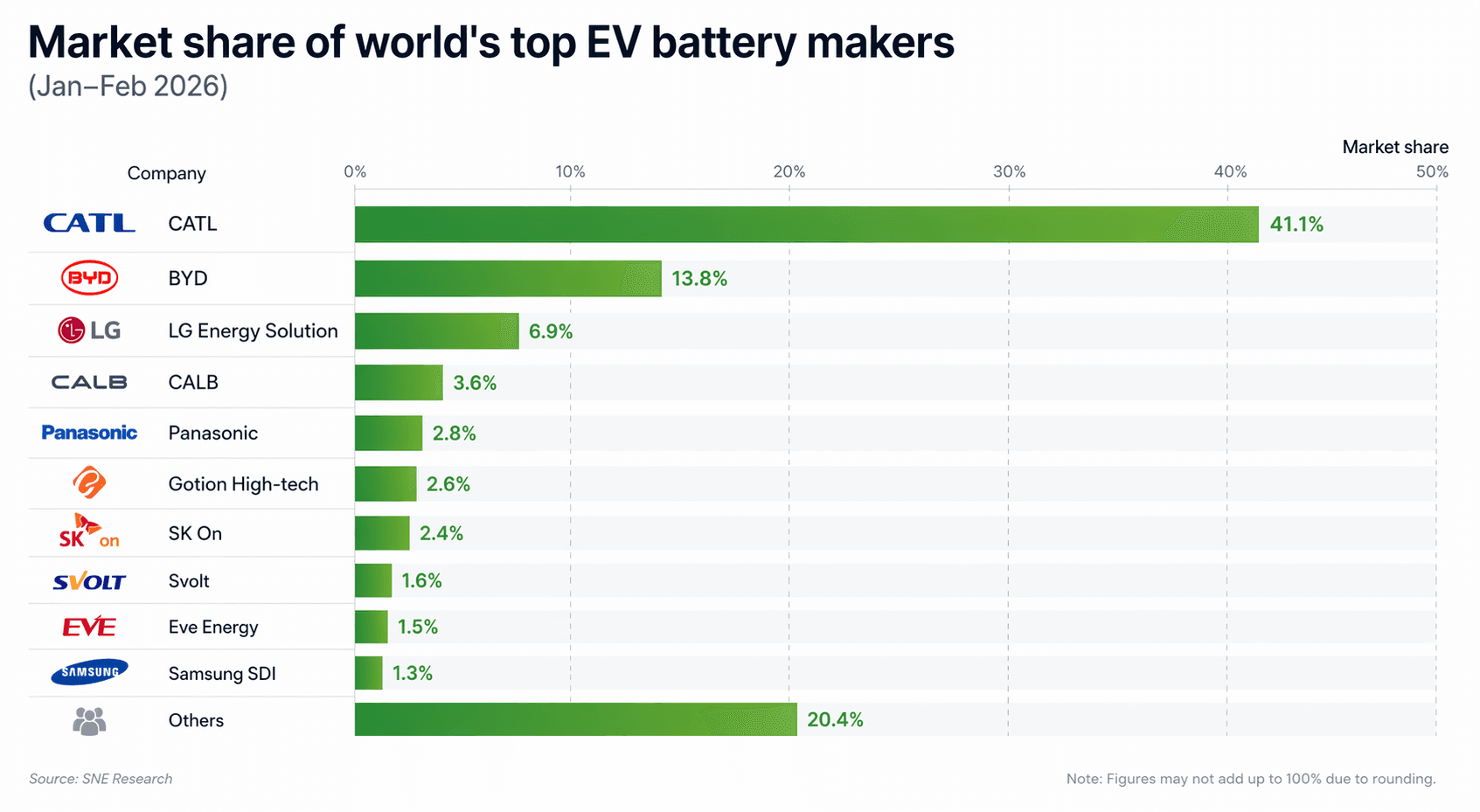
CATL is the world's largest battery maker. It holds a 48.3% share of the global power battery market. In Q1 2026, CPCA data shows its share exceeded 50%. BYD is second at 17%. CALB is third at 5.9%.
Global Power Battery Market Share (2026)
Rank | Manufacturer | Market Share (2026) |
1 | CATL | 48.3% (Q1 2026: over 50%) |
2 | BYD | 17% |
3 | CALB | 5.9% |
CATL supplies batteries to Tesla, BMW, Volkswagen, Toyota, Mercedes-Benz, NIO, Li Auto, and many others. When CATL improves its batteries, it affects most EVs sold globally.


About the author

Danny is a consultant and entrepreneur working at the cutting edge of the electric vehicle and energy transition. He is passionate about educating and helping consumers make better decisions through data.
