Key Points
- Sydney Harbour’s first battery-electric ferry will begin a 12-month trial in early 2028.
- The ferry will be locally designed and built by Richardson Devine Marine in Tasmania.
- Charging infrastructure will be installed at Barangaroo Wharf to support operations.
- The vessel could later operate on the new Sydney Fish Market route from 2029.
- NSW says the trial will help determine the future transition away from diesel ferries.
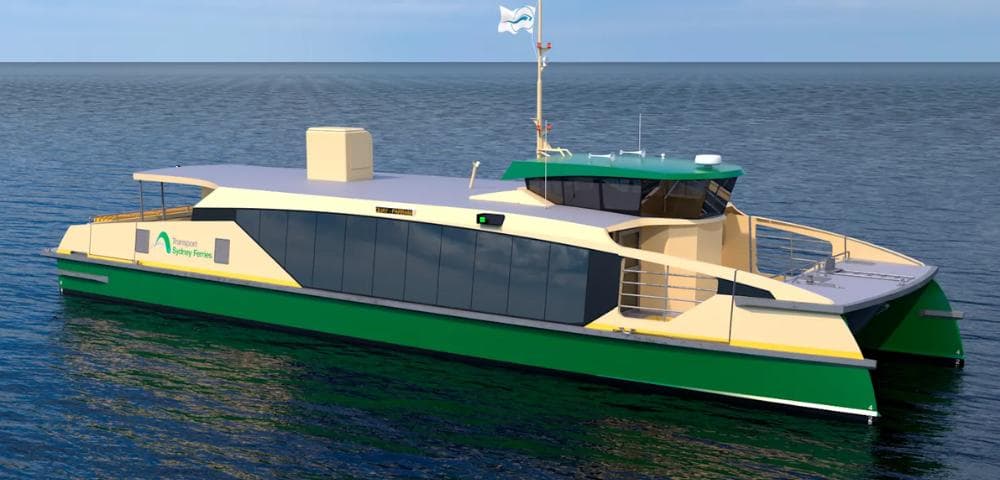
Sydney Harbour’s long-awaited shift toward electric ferries is officially underway, with the New South Wales Government signing contracts for the city’s first battery-electric ferry trial.
Tasmanian shipbuilder Richardson Devine Marine will construct the 24-metre vessel later this year, paving the way for a 12-month operational trial beginning in early 2028. If successful, the ferry is expected to enter regular passenger service in 2029, including potential operation on the new Sydney Fish Market route.
The project marks a major milestone for Australia’s marine electrification efforts and signals the beginning of a gradual transition away from diesel-powered ferries on one of the country’s busiest and most recognisable waterways.
NSW Transport Minister John Graham said the electric ferry trial would help shape the future of Sydney’s harbour fleet.
“The first trial of an electric ferry on Sydney Harbour is an important moment for our iconic ferry fleet which will transition from diesel propulsion over coming years, informed by this first vessel,” Graham said.
“This Northern Beaches-designed, Australian-built ferry will provide a quieter ride and cleaner air on the Harbour.”
▶️MORE: World’s Biggest Battery-Electric Ship Comes to Life in Tasmania
A locally designed electric ferry built for Sydney Harbour
Unlike many recent ferry projects that relied on overseas manufacturing, Sydney’s first electric ferry will be locally designed and Australian built.
The vessel is based on the recently introduced Parramatta River Class ferries, designed by Sydney-based naval architects Incat Crowther. Those ferries entered service progressively from May 2024 and represented a $49.6 million investment by the NSW Government.
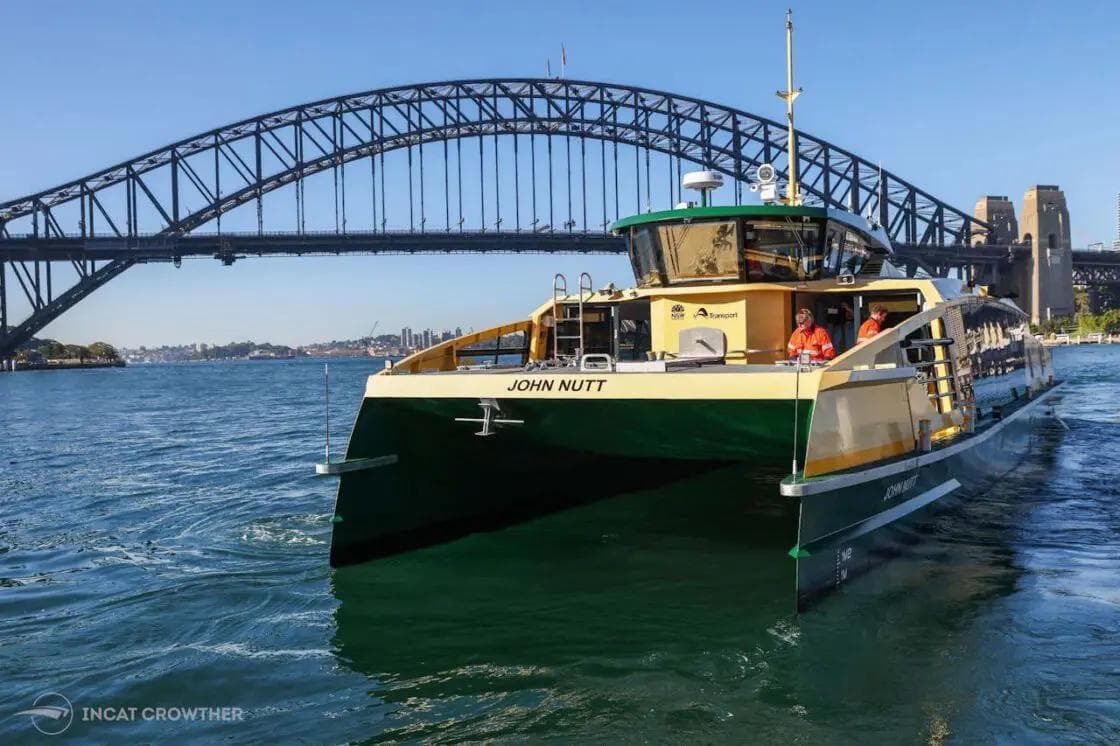
The electric version will retain much of the same platform while replacing conventional diesel propulsion with a battery-electric drivetrain.
Shoreside charging infrastructure will also be installed at Barangaroo Wharf to support the trial operations.
The move follows years of controversy surrounding the imported River Class ferries commissioned under the former Liberal government. Those vessels faced multiple issues, including steering defects, asbestos contamination and safety concerns relating to low bridge clearances on the Parramatta River.
By contrast, the locally built Parramatta River Class ferries have been viewed as a much smoother rollout for Sydney’s ferry network.
▶️MORE: Introduction to Electric Vehicles: BEV vs PHEV vs HEV
How the electric ferry trial will work
The first electric ferry is expected to begin its operational trial in early 2028 and will spend 12 months running in real-world conditions before any wider rollout decisions are made.
Transport for NSW says the trial will focus on several key areas, including:
- Real-world operating range
- Charging performance and reliability
- Passenger and crew feedback
- Harbour operational suitability
- Long-term maintenance requirements
Transport for NSW Coordinator General Howard Collins described the trial as a critical learning phase before committing to broader fleet electrification.
“This 12-month trial is an important learning opportunity,” Collins said.
“It will allow us to test the vessel’s performance, reliability, and charging systems in real-world conditions while gathering feedback from passengers and crew.”
Once in regular service, the ferry could also operate on new routes, including services to the new Sydney Fish Market, expanding access to one of Sydney’s most popular waterfront destinations.
At this stage, the NSW Government has not committed to ordering additional electric ferries until operational data from the first vessel is fully assessed by both Transport for NSW and private operator Transdev Sydney Ferries.
▶️MORE: Review of XPENG’s Land Aircraft Carrier: The Future of Transport
Australia’s marine electrification race is accelerating
Sydney’s electric ferry project arrives amid growing momentum for battery-electric vessels across Australia.
Just last week, Brisbane-based Aus Ships Group announced a partnership with Volvo Penta to build Australia’s first electric-drive passenger ferry, which is already under construction and expected to enter service before the end of the year.
Tasmania is also emerging as a global hub for electric shipbuilding.
Hobart-based Incat recently completed construction of the world’s largest battery-electric ship, known as Hull 096, at its Prince of Wales Bay shipyard. The company is also producing multiple large battery-electric ferries for a Danish operator as part of one of the world’s largest maritime electrification programs.
Together, these projects highlight how Australia is beginning to play a larger role in the global transition toward low-emissions marine transport.

What this means for Australia
The Sydney Harbour electric ferry trial could become one of the most important transport electrification projects in Australia outside the road sector.
While electric cars have dominated headlines in recent years, ferries represent a major opportunity for emissions reduction in urban transport systems. Sydney’s diesel ferry fleet operates continuously across some of the city’s busiest waterways, making electrification particularly impactful for reducing both emissions and noise pollution.
For passengers, the shift could mean quieter journeys, smoother operation and cleaner air around major harbour terminals.
For Australia’s manufacturing sector, the project also strengthens confidence in locally designed and built electric transport solutions at a time when governments are increasingly looking for domestic capability rather than relying entirely on overseas suppliers.
If the trial proves successful, Sydney Harbour could eventually join a growing list of global cities transitioning sections of their ferry fleets to battery-electric propulsion — turning one of Australia’s most iconic transport systems into a showcase for clean maritime technology.

