


Key Points
- The Tesla Model Y L Premium AWD is priced from $74,900 before on-road costs, $3,910 more than the BYD Sealion 8 Premium AWD at $70,990.
- The Model Y L is a fully electric six-seater with 681km of WLTP range, while the Sealion 8 is a seven-seat plug-in hybrid with up to 152km of NEDC electric-only range and over 1,000km combined range.
- The Sealion 8 seats one more passenger, tows more and undercuts on price, but the Model Y L offers significantly more cargo space, much faster DC charging, and doesn't need a drop of petrol.
The Tesla Model Y L and BYD Sealion 8 are two of the newest large family SUVs on the Australian market, both landing within a few thousand dollars of each other at the top of their respective ranges. They take completely different approaches to get there. The Model Y L is a stretched, fully electric six-seater built around a bigger battery and Tesla's Supercharger network, while the Sealion 8 is a seven-seat plug-in hybrid that leans on a turbo-petrol engine to propel the wheels and operate as a generator whenthe battery is depleted.
This comparison focuses on the top-spec grade of each: the Model Y L's sole Premium AWD variant against the Sealion 8's range-topping Premium AWD.
Editor's note: pricing, specifications and offers for both models are subject to change.
Pricing
The comparison focosues on the flagship trims of the two models. The Model Y L has no lower grade at launch, while the Sealion 8 Premium AWD sits above the Dynamic FWD and Dynamic AWD grades.
Variant | Price (before on-road costs) | Powertrain |
Tesla Model Y L Premium AWD | $74,900 | Fully electric |
BYD Sealion 8 Premium AWD | $70,990 | Plug-in hybrid |
The Sealion 8 Premium undercuts the Model Y L by $3,910 before on-road costs. The Model Y L, as a battery-electric vehicle, qualifies for the federal fringe benefits tax exemption on novated leases. The Sealion 8, as a plug-in hybrid, does not qualify for new FBT-exempt novated lease arrangements, since PHEV eligibility for new commitments ended on 1 April 2025 unless grandfathered under a pre-existing agreement.
Get a novated lease quote
Dimensions and Seating
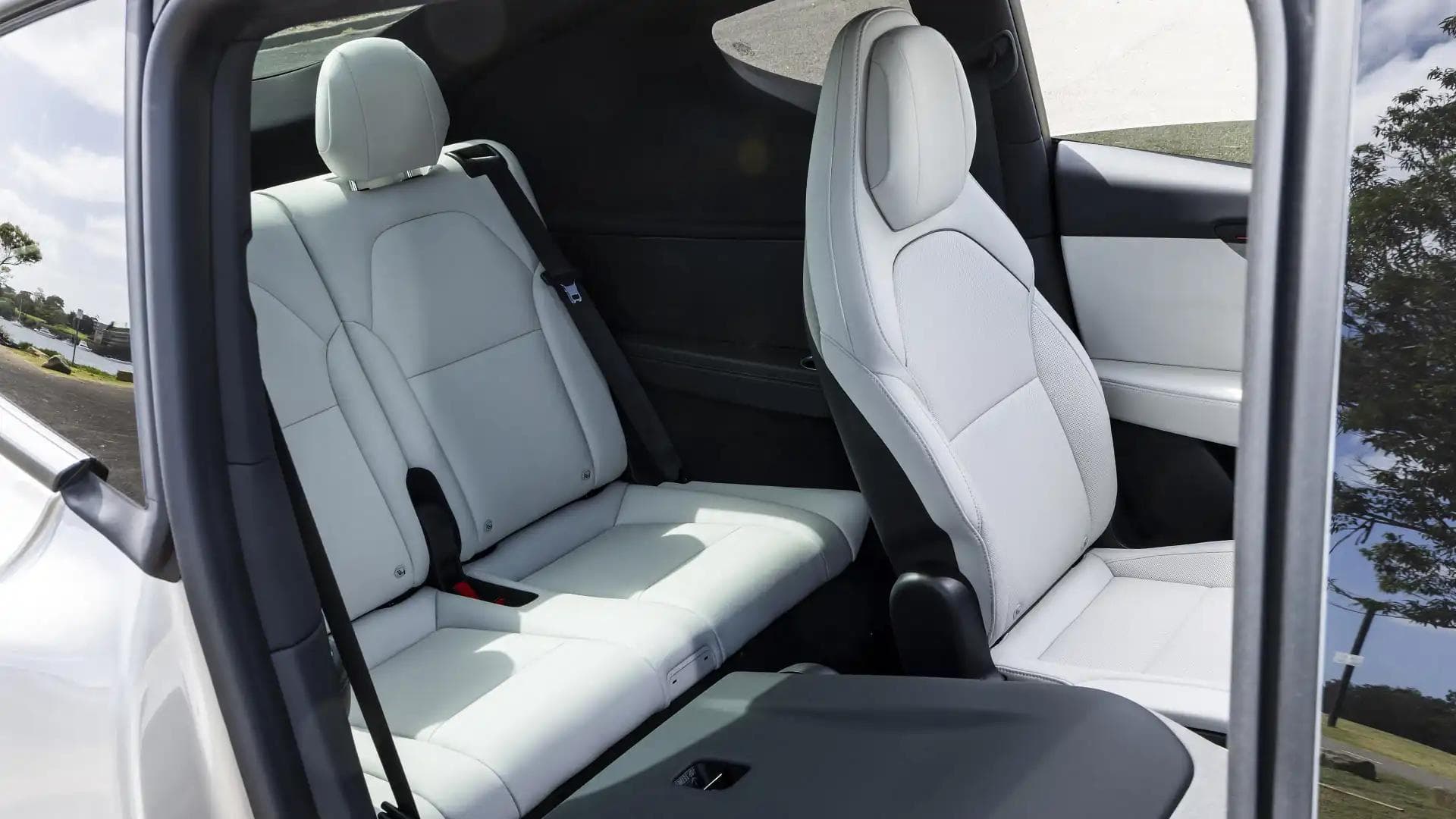
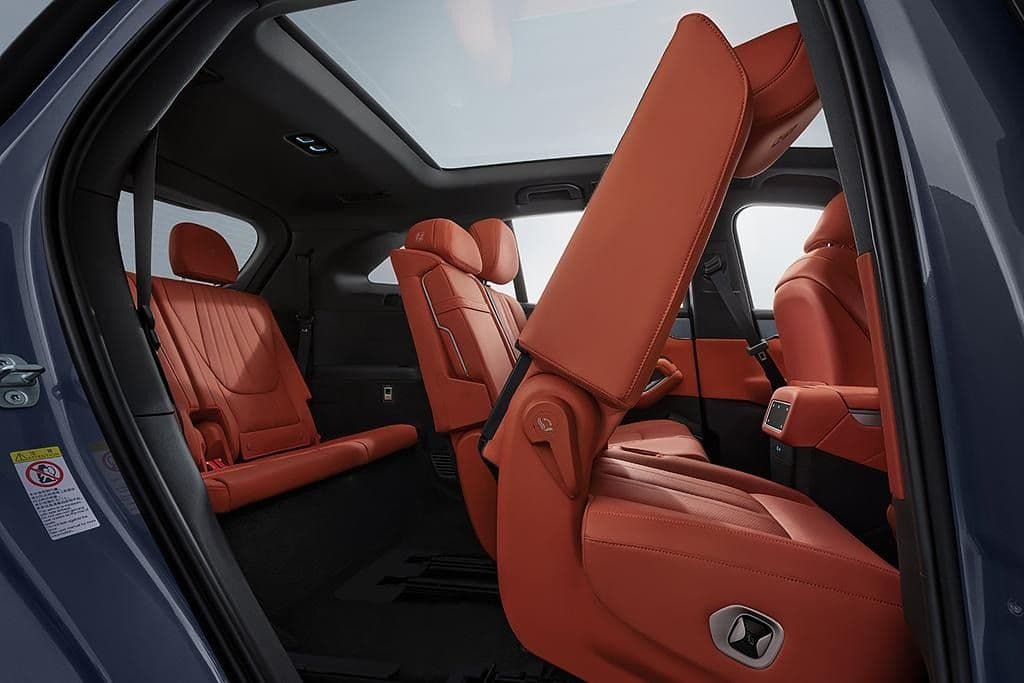
The Sealion 8 is the physically larger car overall, longer and taller, but the Model Y L is wider and rides on a longer wheelbase thanks to its dedicated EV platform. The Sealion 8 holds the key advantage of having one more passenger.
Dimension | Model Y L | Sealion 8 Premium AWD | Difference |
Length | 4,969mm | 5,040mm | Sealion 8 +71mm longer |
Width | 2,129mm | 1,996mm | Model Y L +133mm wider |
Height | 1,668mm | 1,760mm | Sealion 8 +92mm taller |
Wheelbase | 3,040mm | 2,950mm | Model Y L +90mm longer |
Ground clearance | 167mm | 190mm | Sealion 8 +23mm higher |
Seats | 6 (2+2+2) | 7 (2+3+2) | Sealion 8 seats one more |
Kerb weight | 2,088kg | ~2,580kg | Sealion 8 ~492kg heavier |
The Sealion 8's extra mass comes down to running two powertrains at once, a turbo-petrol engine, fuel tank and dual electric motors, on top of a large SUV body. The Model Y L carries only its battery and electric motors, which helps explain the near-500kg gap despite similar overall footprints.
Performance
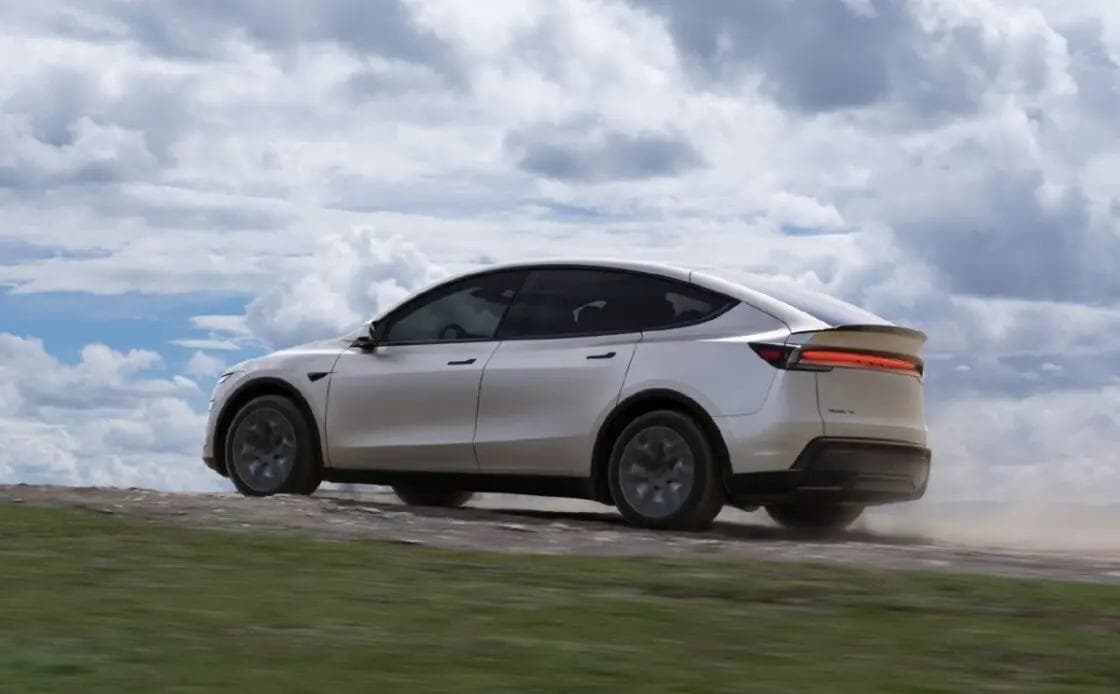
Despite the Sealion 8's substantial weight disadvantage, the two are closely matched in a straight line, with the BYD's combined petrol-electric torque narrowly ahead on the sprint.
Spec | Model Y L | Sealion 8 Premium AWD | |
Drivetrain | Dual-motor AWD (electric) | Turbo-petrol + dual e-motor AWD (PHEV) | |
Combined power | 378kW | 359kW | |
Combined torque | 590Nm | 675Nm | |
0-100km/h | 5.0 seconds | 4.9 seconds (claimed) | |
Top speed | 201km/h | 200km/h |
The Sealion 8's extra torque, delivered through the combination of its turbo-petrol engine and electric motors, is enough to offset roughly half a tonne of extra weight and edge ahead of the lighter, more powerful Model Y L on the sprint. In reality, both are quick for six or seven-seat family SUVs.
Range, Battery and Charging
This is where the two cars diverge most. The Model Y L is a genuine long-range EV, while the Sealion 8 is built for short electric commutes backed by a petrol engine for everything else.
Spec | Model Y L | Sealion 8 Premium AWD |
Battery capacity | 86kWh usable (NMC) | 35.6kWh (LFP) |
Electric range (claimed) | 681km WLTP | ~130km WLTP |
Total range with fuel | 681 km (electric only) | 1,000km+ |
Efficiency / fuel use | 126Wh/km WLTP | 5.3L/100km combined (below 25% SoC) |
Max AC charging | 11kW | 11kW |
AC charge time (0-100%) | 8h 42min | 3h 30min |
Max DC charging | 250kW (CCS combo) | 74kW |
Fuel tank | Not applicable | 60L |
Bidirectional charging | V2L, 3.3kW | V2L, 3.3kW |
The Model Y L's 250kW DC peak more than triples the Sealion 8's 74kW, meaning a Supercharger stop takes a fraction of the time a Sealion 8 needs on a public fast charger. The Sealion 8's smaller battery is designed to be topped up overnight on a home AC charger rather than relied on for DC fast charging, with the petrol engine covering the rest of any longer trip.
Cargo, Towing and Practicality
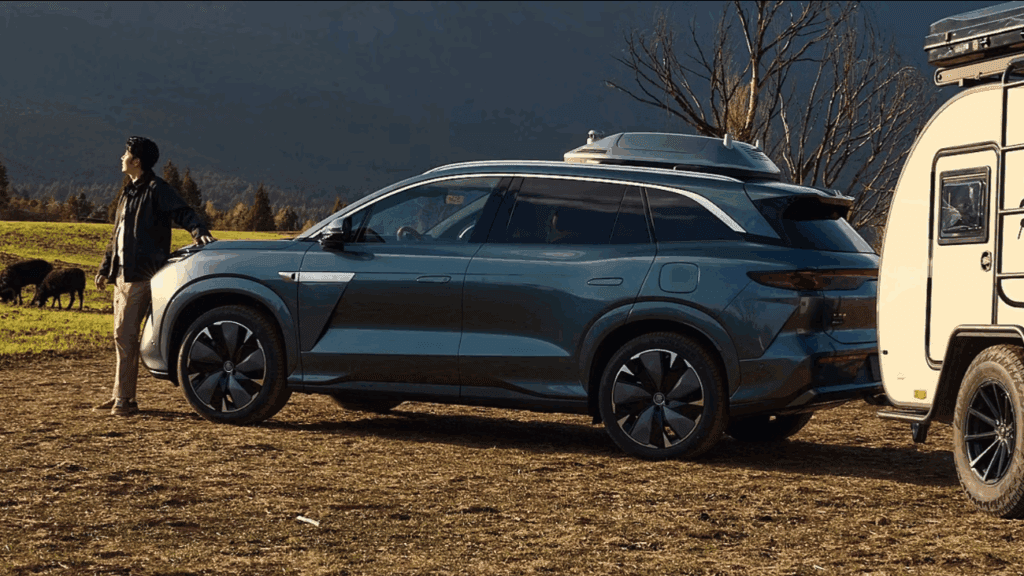
The Model Y L leads on cargo space at every measurement point, while the Sealion 8 has a confirmed towing rating well ahead of the Model Y L's.
Spec | Model Y L | Sealion 8 Premium AWD |
Cargo (all seats up) | 420L | 270L |
Cargo (3rd row folded) | 1,076L | 960L |
Max cargo (rear seats folded) | 2,423L | 1,960L |
Frunk | 116L | N/A |
Towing (braked) | 1,588 kg | 2,000kg |
The Model Y L holds a clear cargo advantage at every measurement point despite the Sealion 8's larger physical footprint, a result of its dedicated electric architecture freeing up more usable space. The Sealion 8's confirmed 2,000kg braked towing capacity provides a practical edge for buyers who need to tow a heavier trailer, boat or camper.
Driver Technology and Infotainment


Both cars centre on large touchscreens but differ in smartphone integration and driver assistance.
The Model Y L pairs a 16-inch central touchscreen with an 8-inch rear display. Tesla offers no wireless CarPlay or Android Auto, so all functions run through its own software. Driver assistance uses Tesla Vision, a camera-only system with Traffic Aware Cruise Control and Autosteer standard, plus an optional Full Self-Driving (Supervised) package. It holds a 5-star ANCAP rating, with the top Safety Assist score of any vehicle tested.
The Sealion 8 Premium AWD has a 15.6-inch touchscreen with wireless CarPlay and Android Auto, a 10.25-inch digital cluster, and a 26-inch head-up display (Premium only). Standard ADAS includes AEB, adaptive cruise control, lane keep assist, lane departure warning, blind-spot monitoring, front/rear cross-traffic alert, a 360-degree camera, parking sensors, traffic sign recognition and driver attention monitoring via an in-cabin RGB/infrared camera. It also adds interactive cockpit modes (Nap, Camping, Car Wash), a first for BYD in Australia, and had not been ANCAP tested at time of writing.
Warranty and Safety
The Model Y L carries a five-star ANCAP rating, largely based on testing of the standard five-seat Model Y with additional third-row and documentation assessments. The Sealion 8 had not been independently crash tested by ANCAP at the time of writing.
Model Y L
- 5-year, unlimited-kilometre vehicle warranty
- 8-year, 192,000km battery and drive unit warranty.
Sealion 8
- 6-year, 150,000km vehicle warranty
- 8-year, 160,000km battery warranty.
Other Features
Exclusive to the Tesla Model Y L:
- 250kW DC fast charging, more than triple the Sealion 8's rate
- Continuous variable damping with Balanced and Rear Comfort modes
- 116L front trunk (frunk)
- Fringe benefits tax exemption on novated leases as a battery-electric vehicle
- 5-star ANCAP rating
Exclusive to the BYD Sealion 8 Premium:
- Seventh seat, for genuine three-across middle-row seating
- Massaging rear seats
- 21-speaker DiSound sound system
- 26-inch head-up display
- Heated steering wheel
- Confirmed 2,000kg braked towing capacity
- $3,910 cheaper before on-road costs
Verdict
These two cars suit different priorities more than they compete head to head on the same terms. The Model Y L is the stronger choice for buyers who want a genuine long-range EV with fast charging, more cargo capacity and are comfortable with six seats instead of seven.
The Sealion 8 Premium makes sense for families who need a genuine seventh seat, want a confirmed higher towing capacity, and would rather have the peace of mind of the petrol engine for longer trips than rely on public DC charging. It's also the cheaper of the two before on-road costs, and adds more standalone luxury features at this trim level.
Buyers who want a pure EV experience with the fastest charging and biggest boot should lean Model Y L. Buyers who want maximum seating, more towing capacity, and PHEV flexibility for a lower price should lean Sealion 8 Premium.
Get a novated lease quote
About the author

Danny is a consultant and entrepreneur working at the cutting edge of the electric vehicle and energy transition. He is passionate about educating and helping consumers make better decisions through data.
