Key Points
- Australia launches the Vehicle-Grid Network with $2.37 million in funding to accelerate vehicle-to-grid technology adoption.
- The network will help EV and PHEV owners sell electricity back to the grid while reducing energy bills.
- Led by Climate-KIC Australia and UTS, the program runs until 2029 and aims to position Australia as a global V2G leader.
The Australian Government has launched the Vehicle-Grid Network (VGN), a national program designed to help electric vehicle and plug-in hybrid owners send power back to the electricity grid.
Federal Climate Change and Energy Minister Chris Bowen announced the initiative on December 1, 2025. The network is led by Climate-KIC Australia and the University of Technology Sydney's Institute for Sustainable Futures (ISF).
The VGN aims to make vehicle-to-grid (V2G) bidirectional charging more accessible across Australia. This technology lets EV and PHEV owners charge their vehicles and send stored power back to the grid when needed.
EV owners who participate could earn money by selling electricity back to the grid during peak demand periods.
What is Vehicle-to-Grid Technology (V2G)?
Vehicle-to-grid technology uses bidirectional chargers to move electricity in both directions. These chargers convert alternating current (AC) from the grid to direct current (DC) for EV batteries. They can also convert DC back to AC, allowing power to flow from the battery to the grid or home.
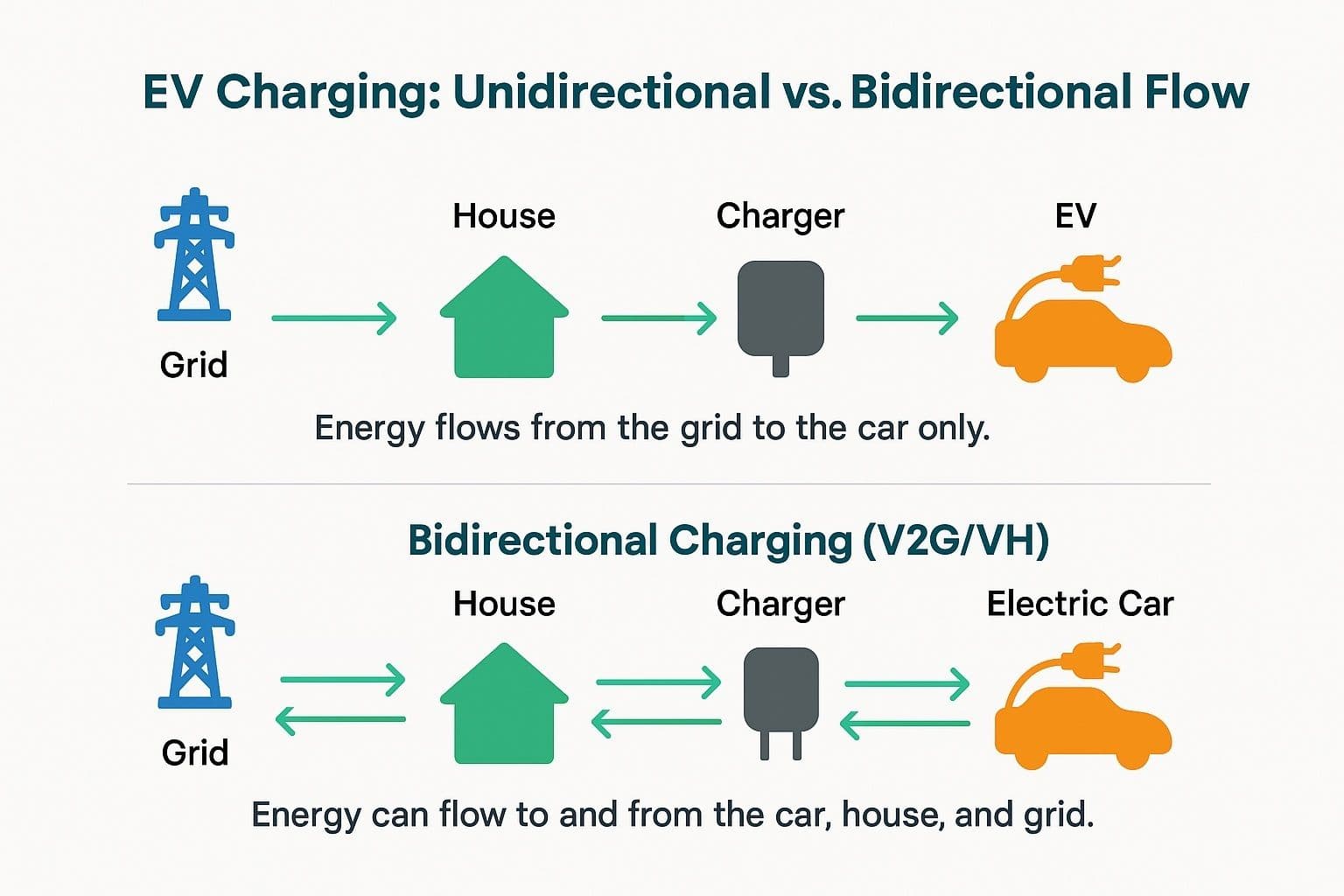
This creates opportunities for energy-sharing applications like V2G (vehicle-to-grid) and V2H (vehicle-to-home). With V2G, your EV becomes a mobile battery that can help stabilise the electricity grid during high demand.
Program Details and Funding
The Vehicle-Grid Network has secured $2.37 million in total funding. The Australian Renewable Energy Agency (ARENA) is providing $1.09 million, with additional support from RACE for 2030 CRC.
Program Overview
Program Detail | Information |
Lead Organisation | University of Technology Sydney (Climate-KIC Australia and Institute for Sustainable Futures) |
Location | Australia-wide |
ARENA Funding | $1.09 million |
Total Project Cost | $2.37 million |
Start Date | December 1, 2025 |
End Date | November 23, 2029 |
Key Partners | RACE for 2030 CRC, University of Technology Sydney (Climate-KIC Australia and the Institute for Sustainable Futures) |
The program will run for nearly four years, ending in November 2029. Industry partners include the Electric Vehicle Council and infrastructure provider JET Charge.
Why Australia Needs This Network
EV sales are growing fast in Australia. By November 2025, electric, hybrid, and plug-in hybrid vehicles made up nearly 30 percent of new light-car sales. Electric vehicle market share reached 8.5 percent, the highest level to date.
EV Sales in Australia
But the path to V2G adoption is not simple yet. Consumers and businesses face complex questions about equipment compatibility, connection approvals, certification requirements, warranties, and how to participate in retail programs.
Different regions have different standards and regulations. This makes it difficult and costly for any single organization to move quickly.
Chris Lee, CEO of Climate-KIC Australia and UTS ISF Industry Professor, explained the network's purpose: 'We're creating the space for industry, government and researchers to share what's working, make sense of emerging technologies together, and identify opportunities to accelerate bidirectional charging at scale and make EVs a win for people, businesses and the grid.'
What the Network Will Do
The VGN will bring together leaders from across the EV ecosystem to address coordination gaps. Over three years, the network will focus on four main goals:
- Establish National Coordination - Create a nationally coordinated industry collaboration network to align industry, government, and researchers on shared priorities for V2G integration.
- Strengthen Technical Foundations - Enable interoperability between different systems, support evolving domestic and international standards, and unlock shared commercial and regulatory barriers.
- Build Capability - Provide trusted information, educational resources, events, and practical tools for both industry and consumers.
- Position Australia for Leadership - Help Australia become an international leader in V2G services to deliver cleaner, more resilient, and affordable transport and energy systems.

The network will run industry roundtables and working groups to tackle critical technical and market challenges. Participants include vehicle manufacturers, charging equipment makers, electricity distributors, retailers, technology providers, peak bodies, non-profit organisations, and government agencies.
Recent V2G Developments in Australia
Several major developments have accelerated V2G adoption in recent months:
V2Grid Australia's Numbat charger became the first CEC-certified bidirectional EV charger in Australia in November 2025. This certification is crucial for connecting to the grid safely and legally.
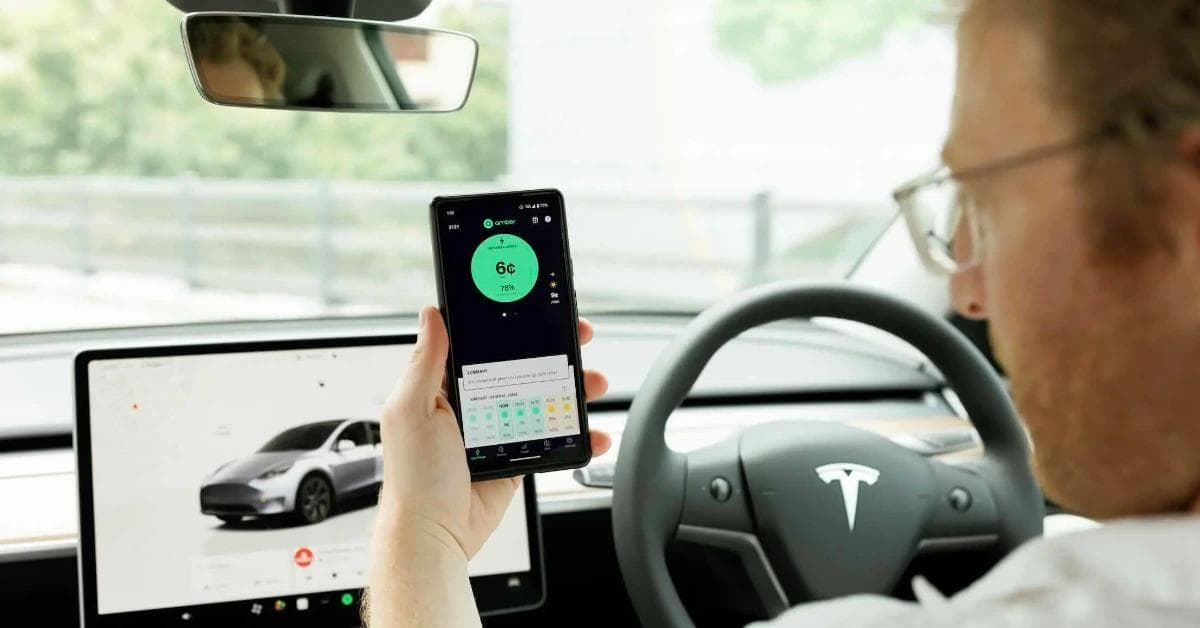
Amber Electric kicked off the first residential V2G charger installations, partnering with BYD to push V2G technology forward. These real-world installations will demonstrate the practical benefits to Australian households.
RedEarth unveiled Australian-made V2G chargers and next-generation home battery systems, showing local manufacturing capability.
A public V2G charging project received government grants to launch in Australia, expanding the technology beyond home use.
The National Electric Vehicle Strategy
The Vehicle-Grid Network builds on Australia's National Electric Vehicle Strategy, created in 2023. That strategy aimed to increase the supply of affordable EVs and develop infrastructure to support higher demand.
The strategy included the New Vehicle Efficiency Standard (NVES), which came into effect on January 1, 2025. The NVES sets carbon dioxide emissions limits for automakers, with fines for those who exceed the limits.
These policies work together to accelerate EV adoption while building the infrastructure needed to support millions of electric vehicles on Australian roads.
What Happens Next
The Vehicle-Grid Network officially started on December 1, 2025. Over the coming months, the network will:
- Convene the first industry roundtables to identify priority challenges
- Develop educational resources for consumers and businesses
- Work with standards bodies to improve equipment interoperability
- Support pilot programs in different regions
- Share learnings from early adopters
The network will publish regular updates on progress and make resources available to anyone interested in V2G technology.
International Context
Australia is not alone in pursuing V2G technology. Countries like Japan, the Netherlands, and the United Kingdom have active V2G programs. However, Australia's approach focuses on national coordination from the start, potentially avoiding the fragmentation seen in other markets.
The VGN aims to position Australia as an international leader in V2G services. Success could create export opportunities for Australian expertise and technology.
Looking Ahead
The Vehicle-Grid Network represents a significant step toward integrating EVs into Australia's energy system. By 2029, the program aims to make V2G technology simple and accessible for all EV owners.
As more Australians drive electric vehicles, the collective battery capacity on wheels will become a valuable resource for grid stability. The VGN will help unlock that potential while ensuring benefits flow to EV owners, not just energy companies.
The next few years will be critical for establishing the standards, systems, and business models that make V2G work at scale. The Vehicle-Grid Network provides the coordination needed to make it happen.

About the author

Danny is a consultant and entrepreneur working at the cutting edge of the electric vehicle and energy transition. He is passionate about educating and helping consumers make better decisions through data.
