
Hyundai Ioniq 5 N Charging Speed, Time and Cost
Medium SUV · 2023 – Current
- Usable Battery
- 80.6kWh
- DC Charging
- 350kW
- 10–80% Time
- 18min
It takes about 18 minutes to charge from 10 to 80%. It has a 80.6 kWh battery.
Hyundai Ioniq 5 N Key Battery and Charging Specs
| Usable Battery | 80.6 kWh |
|---|---|
| Charge Port | Type 2 (AC), CCS2 (DC) |
| Charge Port Location | Right Side (Rear) |
| Efficiency | 179 Wh/km |
Compare the best home EV charger in Australia and work out how much electric car charging costs for your driving.
Hyundai Ioniq 5 N Charging Times
Hyundai Ioniq 5 N Max Charging Speed
| Type | Max Speed |
|---|---|
| DC charging speed (peak) | 350 kW |
How Long Does a Hyundai Ioniq 5 N Take to Charge?
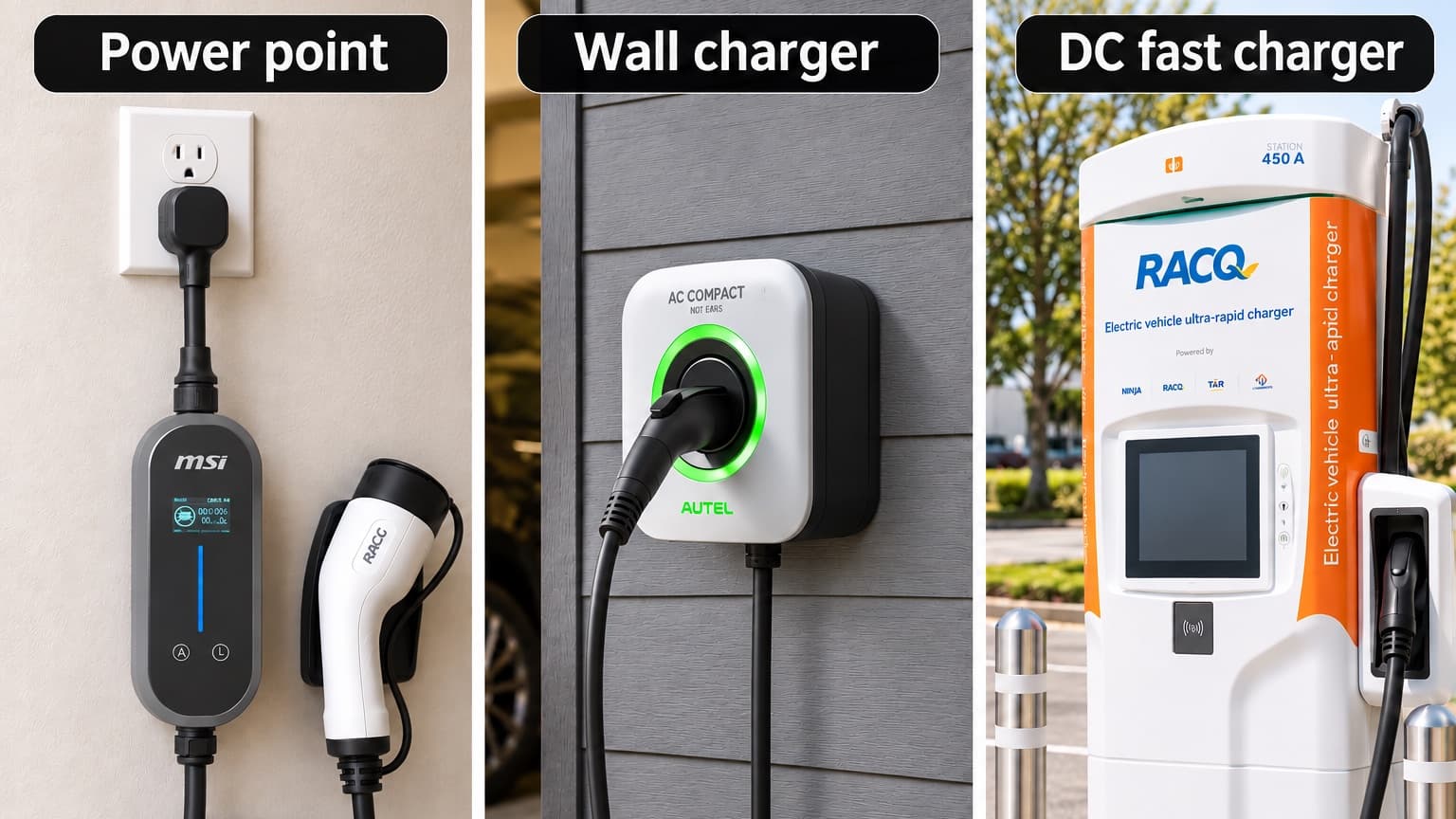
| Charger | Power Used | Time | Range Added |
|---|---|---|---|
| 50 kW DC fast charger | 47.5 kW | 71 min (10 to 80%) | 66 km in 15 min |
| 150 kW DC fast charger | 142.5 kW | 24 min (10 to 80%) | 199 km in 15 min |
| 350 kW DC ultra-fast charger | 188.1 kW | 18 min (10 to 80%) | 263 km in 15 min |
Icons: grey = power point, green outline = home charger, dark = public DC fast charger.
How Much Does It Cost to Charge a Hyundai Ioniq 5 N?
A full charge costs $5.64 at home on an EV plan at $0.07/kWh, and $28.21 on a typical flat tariff of $0.35/kWh. At a public DC charger at up to $0.70/kWh it costs $56.42. A petrol medium SUV uses about 10.2 L/100 km, which at $2.00 a litre costs $20.40 per 100 km.
| Where You Charge | Full Charge | Per 100 km | Per Year | Saving vs Petrol |
|---|---|---|---|---|
| Petrol medium SUV | Not applicable | $20.40 | $3,060 | Not applicable |
| Home, flat rate $0.35/kWh | $28.21 | $6.27 | $940 | $2,120 |
| Home, EV plan $0.07/kWh | $5.64 | $1.25 | $188 | $2,872 |
| Public DC $0.70/kWh | $56.42 | $12.53 | $1,880 | $1,180 |
Icons: grey = petrol, green outline = home charging, dark = public charging.
Per year is based on 15,000 km a year.
Switching from a flat tariff to an EV plan saves about $752 a year on charging the Hyundai Ioniq 5 N at home.
Hyundai Ioniq 5 N Fast Charging Rank and Road Trip Charging
The Hyundai Ioniq 5 N ranks 1 of 5 medium SUV EVs priced within $10,000 of it for DC fast charging power.
| Rank | Vehicle | Price | Peak DC (kW) | 10–80% time |
|---|---|---|---|---|
| 1 | Hyundai Ioniq 5 N | $109,076 | 350 | 18 min |
| 2 | Audi Q6 e-tron e-quattro | $99,900 | 270 | 21 min |
| 2 | Audi Q6 e-tron | $99,900 | 270 | 21 min |
| 4 | Audi Q6 e-tron Performance | $110,000 | 260 | 22 min |
| 5 | Audi Q4 e-tron 55 e-quattro | $107,500 | 175 | 28 min |
Hyundai Ioniq 5 N 500 km and 1,000 km Road Trips
Using Zecar's estimated highway range of 351 km and an average of 100 km/h: A 500 km trip needs 1 fast charging stop of about 18 minutes, for a total trip time of about 5 hr 18 min. A 1,000 km trip needs 3 fast charging stops of about 18 minutes each, 54 min in total, for a total trip time of about 10 hr 54 min.
| Trip | Charging stops | Charging time | Total trip time |
|---|---|---|---|
| 500 km | 1 | 18 min | 5 hr 18 min |
| 1,000 km | 3 | 54 min | 10 hr 54 min |
Total trip time is driving at an average of 100 km/h plus charging time. Estimates assume a start at 100%, arrival at no less than 10% and charging from 10% to 80% at a 150 kW-capable charger. Real times vary with weather, speed, load and charger.
Plan your trip costs with the EV charging calculator →Hyundai Ioniq 5 N Bidirectional Charging (V2X): V2L, V2H and V2G
- V2L powers appliances from the car's socket.
- V2H powers your home during an outage or peak pricing.
- V2G sends energy back to the grid.
| Feature | Supported | Max Output |
|---|---|---|
| V2L | No | |
| V2H | No | |
| V2G | No |
The Hyundai Ioniq 5 N does not support bidirectional charging.
Hyundai Ioniq 5 N Deals and Finance
Pricing starts from $109,076. A novated lease lets you pay for the car and its running costs from your pre-tax salary, and eligible EVs are exempt from fringe benefits tax. How the EV FBT exemption works
Get a Novated Lease QuoteHyundai Ioniq 5 N Charging FAQ
Type 2 for AC and CCS2 for DC, on the right side (rear).
$5.64 at home on an EV plan, $28.21 on a flat tariff, or $56.42 at a public DC charger (compare EV energy plans).
Yes, at Superchargers open to non-Tesla EVs, using its CCS2 plug, so check the Tesla app for which sites are open.
No, the Hyundai Ioniq 5 N does not support V2L.
Track the Hyundai Ioniq 5
Get Ioniq 5 price drops, offers and news by email.