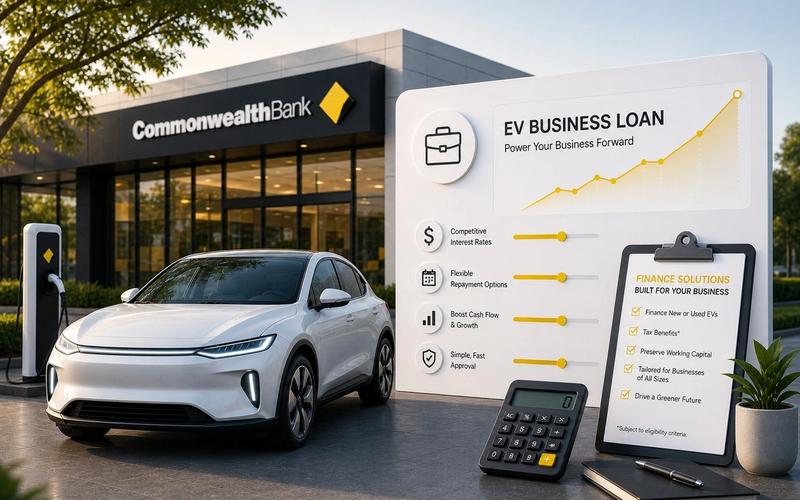
Why Consider a Business Loan for an EV?
Purchasing an electric vehicle through a business loan can offer significant financial advantages for Australian ABN holders. Unlike an outright cash purchase, financing an EV allows you to preserve working capital while still accessing the vehicle your business needs. The interest on a business loan is generally tax-deductible for the business-use portion of the vehicle, and depreciation claims — including potential access to the instant asset write-off — can further reduce your taxable income.
The Australian Government has introduced a Fringe Benefits Tax (FBT) exemption for eligible zero and low-emission vehicles, making EVs an increasingly attractive option for business fleets. Businesses registered for GST may also be able to claim the GST component of the vehicle’s purchase price as an input tax credit, depending on the finance structure chosen. Beyond the financial case, transitioning to an EV fleet signals a commitment to sustainability, which can strengthen your brand and appeal to environmentally conscious clients and partners.
With EV adoption accelerating across Australian business fleets and a growing range of models available at competitive price points, now is a practical time to explore how business finance can help you make the switch without straining your cash flow.
Key reasons to consider an EV business loan:
- Potential GST credit on the vehicle purchase price (structure-dependent)
- Interest on the loan may be tax-deductible for the business-use portion
- Depreciation claims, including potential instant asset write-off
- Preserve working capital rather than tying up cash in a depreciating asset
- Access to newer EV models with the latest safety and technology features
- FBT exemption may apply for eligible zero and low-emission vehicles
- Environmental and brand benefits from operating a cleaner fleet
What Is an EV Business Loan?
The term ‘EV business loan’ is an umbrella term used to describe several different finance structures available to Australian businesses and ABN holders looking to purchase an electric vehicle. Each structure has its own ownership, tax, and cash flow implications, so it’s worth understanding the key differences before you apply.
Chattel Mortgage
A chattel mortgage is one of the most popular business vehicle finance structures in Australia. Under this arrangement, the business takes ownership of the vehicle from day one, while the lender holds a mortgage over the asset as security for the loan. This means the vehicle appears on your balance sheet immediately.
One of the key advantages of a chattel mortgage is that GST on the full purchase price can generally be claimed as an input tax credit in the BAS period of purchase, rather than being spread over the loan term. Interest charges and depreciation are also typically deductible, making this structure well-suited to businesses that want full ownership and maximum tax benefits from the outset.
Commercial Hire Purchase (CHP)
Under a Commercial Hire Purchase arrangement, the financier purchases the vehicle and hires it to the business for an agreed term. The business makes regular repayments and takes full ownership of the vehicle at the end of the term once the final payment is made. This structure is sometimes preferred by businesses that want a lower upfront GST outlay, as the GST is spread across the repayments rather than claimed in a single lump sum.
Interest charges under a CHP are generally tax-deductible, and the business can also claim depreciation on the vehicle. CHP can be a good fit for businesses that want a structured path to ownership without the immediate GST impact of a chattel mortgage.
Business Car Loan
A business car loan is similar in structure to a personal car loan but is specifically arranged for business use. It may be secured against the vehicle or, in some cases, unsecured. The interest on a business car loan is generally deductible for the business-use portion of the vehicle, making it a straightforward option for sole traders and small businesses.
The simpler structure of a business car loan can make it easier to understand and manage, particularly for smaller operators who may not require the more complex tax treatment of a chattel mortgage or CHP. It’s worth comparing the rates and terms available across lenders to ensure you’re getting a competitive deal.
How an EV Business Loan Works
Step-by-Step Process
- Step 1 — Check eligibility: Confirm you hold an active ABN and that the vehicle will be used primarily for business purposes. Lenders will assess your business financials and trading history.
- Step 2 — Choose your EV and get a quote: Research available EV models that suit your business needs and obtain a purchase price or dealer quote. Consider range, charging infrastructure, and total cost of ownership.
- Step 3 — Select your finance structure: Decide whether a chattel mortgage, commercial hire purchase, or business car loan best suits your tax position, cash flow, and ownership preferences.
- Step 4 — Apply with a lender: Submit your application with supporting documents, including your ABN details, business financials (such as tax returns or BAS statements), and vehicle details.
- Step 5 — Approval and settlement: Once approved, the lender will settle the loan directly with the dealer or seller. Review all loan documents carefully before signing.
- Step 6 — Take delivery and start claiming: Take delivery of your new EV and work with your accountant to begin claiming applicable GST credits, interest deductions, and depreciation in the relevant tax period.
- Step 7 — Make repayments over the agreed term: Repay the loan over a term typically ranging from 1 to 7 years, with fixed or variable repayments depending on your loan structure.
Potential Tax Benefits for Business EV Finance
Financing an EV through a business loan structure can unlock a range of potential tax benefits for eligible Australian businesses. These benefits vary depending on the finance structure you choose, how the vehicle is used, and your overall tax position. The information below is general in nature — your actual tax outcomes will depend on your individual circumstances, and you should always consult a qualified accountant or tax adviser before making financial decisions.
Key potential tax benefits include the FBT exemption introduced by the Australian Government for eligible zero and low-emission vehicles, which can make EVs particularly cost-effective when provided to employees. Businesses registered for GST may also benefit from input tax credits, while interest and depreciation deductions can reduce taxable income over the life of the loan.
Potential tax benefits to discuss with your accountant:
- GST input tax credit on the vehicle purchase price (available upfront with a chattel mortgage)
- Interest expense deductibility for the business-use portion of the vehicle
- Depreciation claims, including potential access to the instant asset write-off (subject to ATO thresholds and eligibility)
- FBT exemption for eligible zero and low-emission vehicles provided to employees (check current ATO eligibility criteria)
- Fuel and charging cost deductions for the business-use portion of the vehicle
Tax outcomes depend on your individual circumstances. Always seek advice from a qualified accountant or tax professional before making any financial or tax decisions.
Compare Main EV Finance Options
Not all EV finance products are created equal. The right option for you will depend on whether you hold an ABN, how you intend to use the vehicle, and what tax and ownership outcomes matter most to your business. The table below provides a high-level comparison of the main EV finance structures available in Australia.
EV Finance Options Comparison
Finance Option | Who It Suits | Ownership | GST Benefit | Tax Deductibility | Typical Term |
EV Novated Lease | Employees with salary packaging | Employer (during lease) | Via salary packaging | Pre-tax salary reduces taxable income | 1–5 years |
Bank Loan | Individuals and businesses | Buyer from day one | No GST credit (personal) | Interest deductible for business use | 1–7 years |
Cash Purchase | Those with capital available | Buyer immediately | No GST credit (personal) | Depreciation only | N/A |
Business Finance (Chattel Mortgage / CHP) | ABN holders and businesses | Business (chattel mortgage) or end of term (CHP) | GST credit upfront or spread | Interest + depreciation deductible | 1–7 years |
Is an EV Business Loan Right for You?
It May Suit You If…
- You hold an active ABN and operate a registered business
- You intend to use the vehicle primarily for business purposes
- You want to claim GST input tax credits and tax deductions on interest and depreciation
- You prefer to own the vehicle outright at the end of the loan term
- You want to preserve working capital rather than making a large cash outlay
It May Not Suit You If…
- You are an employee without an ABN and cannot access business finance structures
- You would prefer the simplicity of a novated lease arranged through your employer
- You plan to use the vehicle primarily for personal rather than business purposes
- You prefer an operating lease arrangement with no ownership obligation at the end of the term
Choosing the right EV finance structure is an important decision that can have lasting implications for your cash flow, tax position, and balance sheet. We encourage you to compare your options carefully, speak with your accountant, and use zecar’s comparison tools to find a competitive EV business loan that suits your needs. Get a quote today and take the next step towards a cleaner, smarter business fleet.